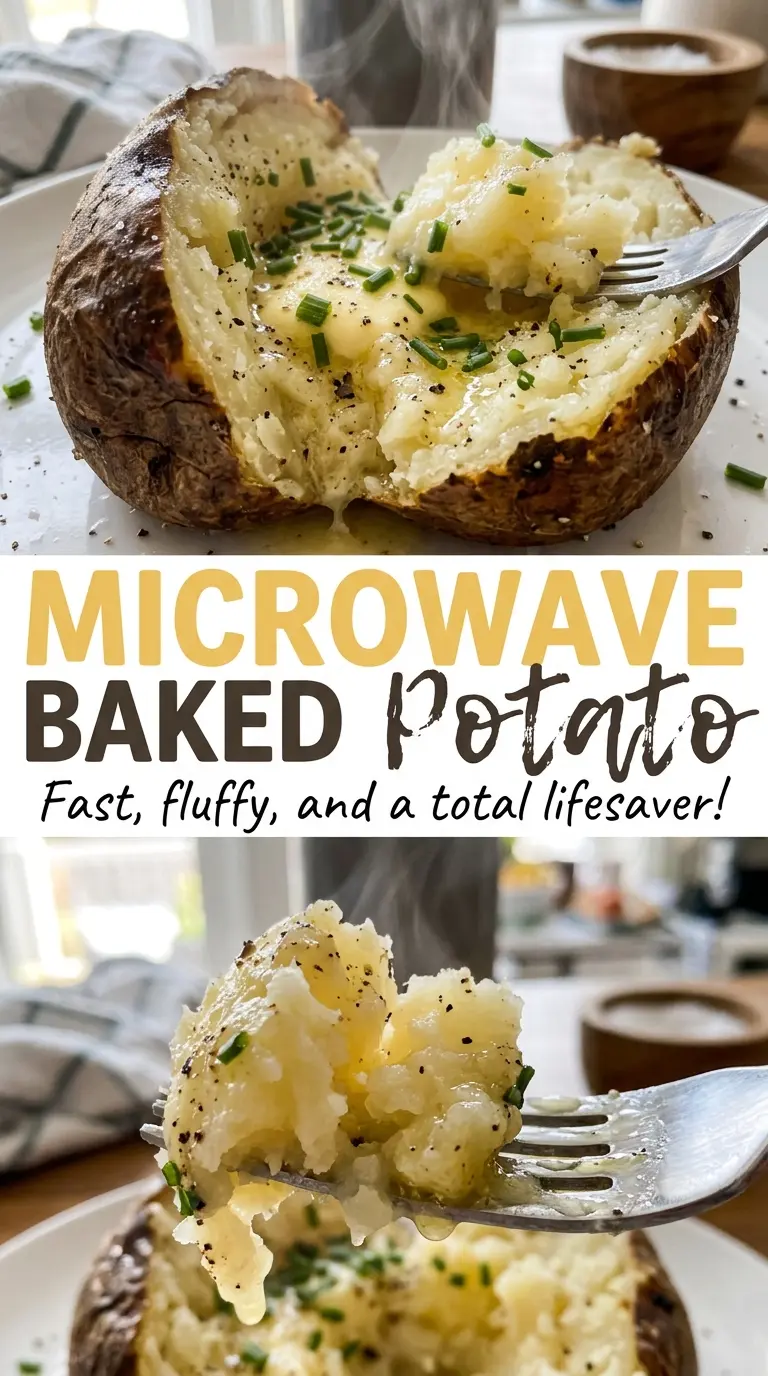
The fork should meet almost no resistance when this potato is ready. If the center is still firm, the outside can look done while the thickest part needs more time; that’s why I check the middle rather than judging by the skin. This microwave baked potato uses one medium russet, about 8 ounces, and takes just a few minutes of hands-on work.
A russet’s dry, starchy flesh turns soft and fluffy in the microwave, while the skin stays tender rather than crisp. Scrubbing, drying, and pricking the potato before it goes in gives it a better start, and turning it halfway through helps it cook more evenly. After a short rest, you’ll have a hot potato with a tender center and its skin intact.

Kitchen Note
Give the potato its full 2-minute rest before cutting into it. The center is piping hot when it comes out, and that pause makes it easier to handle and serve.
Save this microwave baked potato for a quick, fluffy russet with no oven preheating or extra ingredients.
Why This Russet Gets Pricked and Turned
A whole potato heats from the outside toward the center, and a microwave doesn’t warm every spot at exactly the same rate. The thick middle can lag behind the ends, especially when the potato sits in one position for the whole cook. Turning it over halfway through changes which side faces the strongest heating areas and helps the center catch up.
Pricking the skin 6 to 8 times gives steam a way to escape as the potato heats. Skip those holes and pressure can build inside the skin, which may split during cooking. The fork holes don’t need to be deep or evenly spaced; just distribute them around the potato so the skin isn’t left unpierced on one whole side. Together, the small vents and midway turn make this short cook more predictable without wrapping the potato or adding water.
Why an 8-Ounce Russet Fits This Microwave Method
- Russet potato — Russets have a starchy, relatively dry interior that turns fluffy once cooked, which is the texture this simple method is meant to give you. A medium potato around 8 ounces also gives the stated cooking range a useful starting point. Choose one that feels firm and has an even shape; a narrow end cooks differently from a thick, bulky middle. There’s no need to seek out a premium variety for this recipe, but the potato’s size matters more than its appearance. Other potato types can cook in a microwave, though their flesh is usually denser or waxier rather than fluffy, so they won’t give quite the same result.
- Water for washing — Rinse away any soil under running water, then pat the skin dry. The water is for cleaning, not for cooking; the potato goes onto the plate dry.
- A microwave-safe plate — Use a plate labeled microwave-safe, sized to hold the potato without crowding it. The plate catches any moisture that escapes and makes it easy to turn the hot potato halfway through.
Getting the Center Tender Without Overcooking the Edges
Clean, Dry, and Prick the Skin
Scrub the medium russet under running water, then pat it dry before it goes near the microwave. Use a fork to prick the potato 6 to 8 times around its surface. Don’t skip a whole side: a few scattered holes give steam room to escape as the inside heats. Set the prepared potato on a microwave-safe plate.
Microwave, Turn, and Check the Middle
Microwave on HIGH for 5 minutes, then turn the potato over and cook it for 3 to 5 minutes more. The total time depends on how your microwave heats and the potato’s shape, so use the fork test rather than the clock alone. Push a fork into the thickest part; when it slides easily into the center, the potato is ready. If the center still feels firm, it needs more cooking rather than a longer rest.
Let the Heat Settle
Take the plate out carefully, since both the plate and potato will be hot. Leave the potato to rest for 2 minutes before serving. The skin should feel tender, and a fork should pass through the center without a hard spot. Cutting in immediately can release a rush of steam, so give the potato its brief rest first.
Simple Ways to Change the Texture or Format
A fork-mashed center in its skin
After the potato has rested, split it open and gently mash the flesh with a fork while leaving it in the skin. This turns the soft center into a looser, fluffier texture without adding ingredients; keep the fork pressure light if you want the skin to hold its shape.
A plain potato for dairy-free or gluten-free eating
The potato by itself contains no dairy or gluten, so the simplest adaptation is to serve it plain and avoid adding ingredients that don’t fit your needs. You’ll still get the soft russet center, with no substitute needed to make the potato itself suitable for either way of eating.
Bite-size pieces after cooking
Let the potato finish its rest, then cut the cooked potato into chunks instead of leaving it whole. The pieces cool faster and give you a different way to serve the same tender russet, though the cut surfaces lose heat more quickly than the intact potato.
Storage and Reheating
- Refrigerator: Refrigerate leftovers within 2 hours and use them within 3 to 4 days. The flesh may become firmer and less fluffy once chilled.
- Freezer: Freezing a whole cooked russet isn’t a good choice; thawed potato tends to turn dry and mealy, so it’s best eaten fresh or refrigerated.
- Reheating: Reheat the potato in the microwave until steaming hot throughout, reaching 165°F. Avoid heating it for a long stretch without checking, since the edges can dry out before the center is warm.
Questions That Come Up With a Microwave Baked Potato
Microwave Baked Potato
Ingredients
Equipment
Method
- Scrub the potato under running water and pat it dry, then prick it 6 to 8 times with a fork.
- Place the potato on a microwave-safe plate and microwave on HIGH for 5 minutes; turn it over and microwave for 3 to 5 minutes more, until a fork slides easily into the center.
- Let the potato rest for 2 minutes before serving.