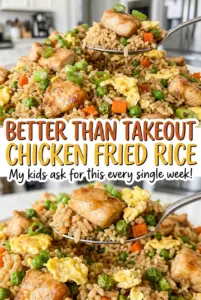
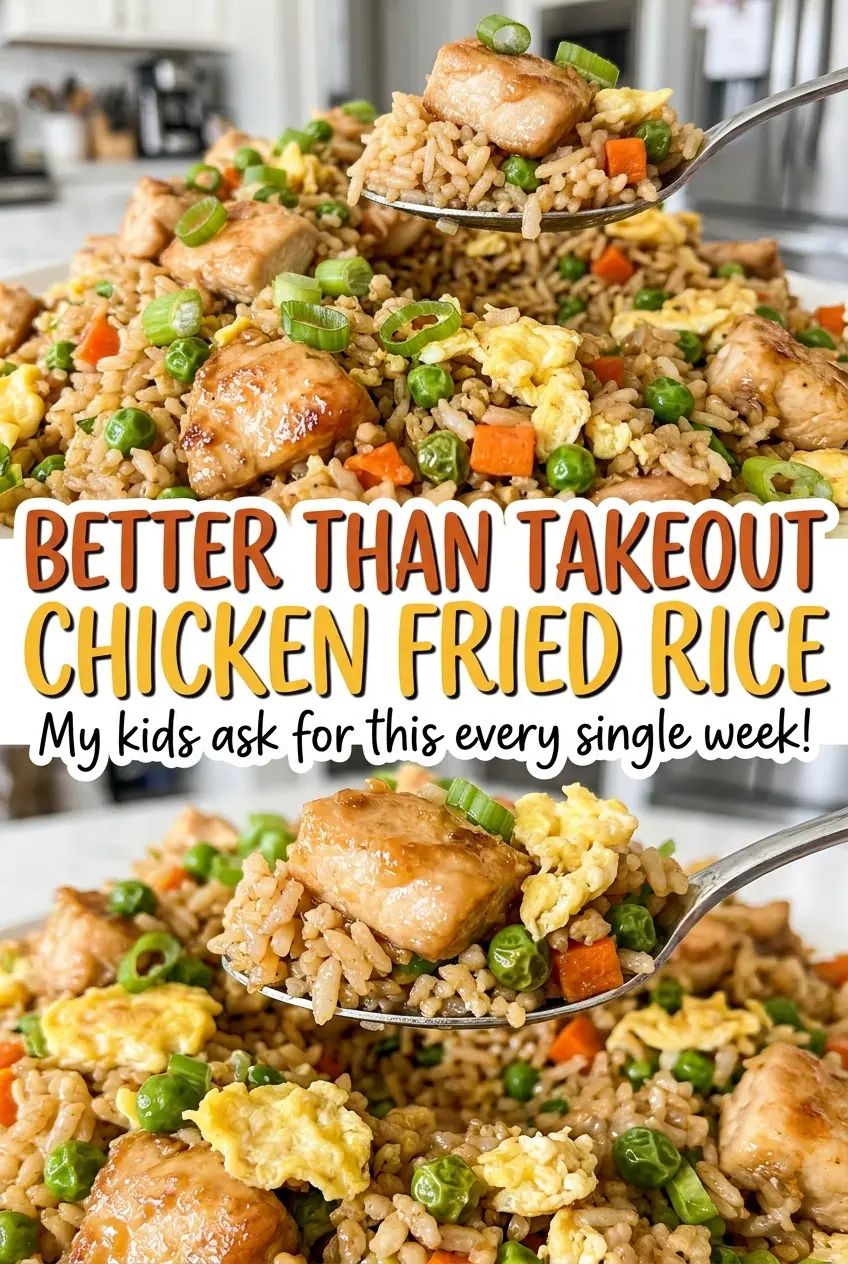
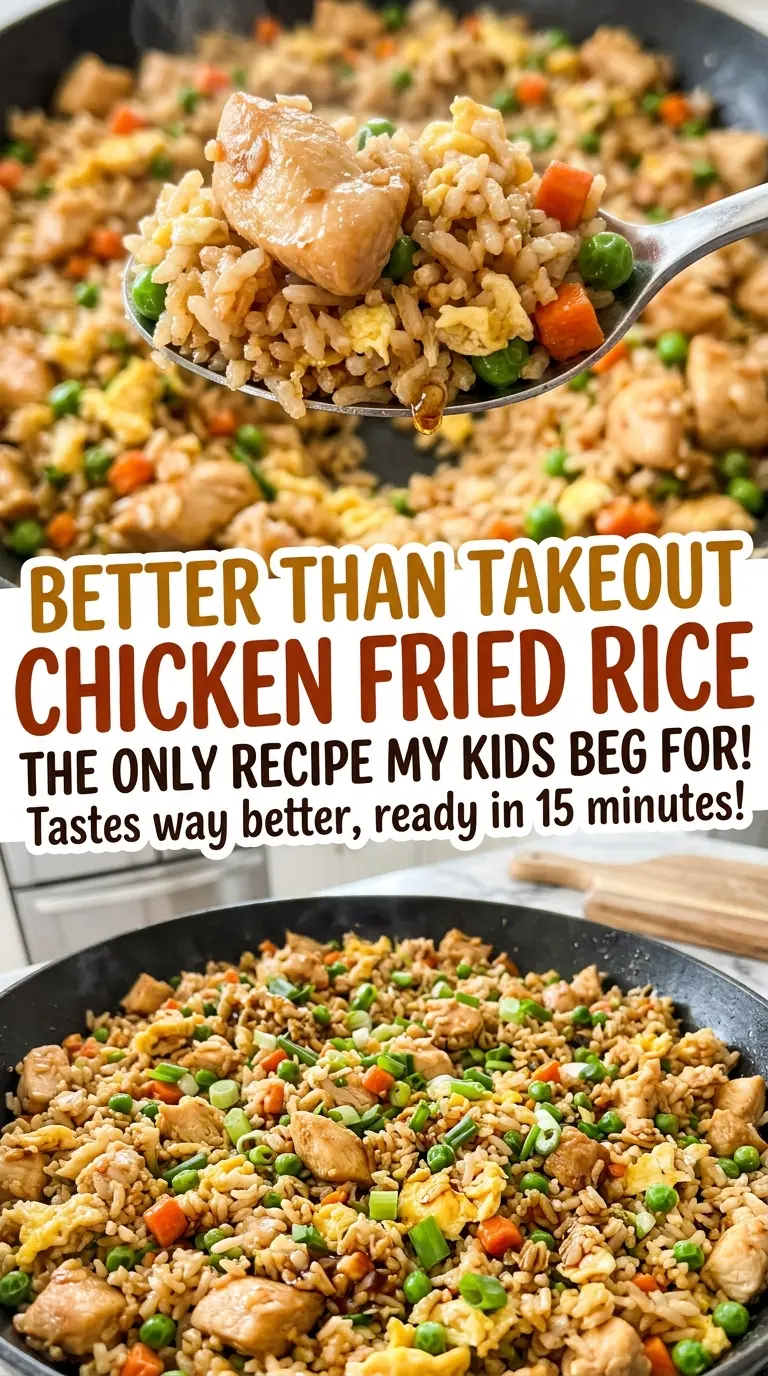
The rice starts to hiss as soon as it hits the hot skillet, and that’s when you want to move quickly. I cook the chicken first, set it aside, and build the rest of this Better Than Takeout Chicken Fried Rice in the same pan. That order keeps the chicken from overcooking while the vegetables soften and the rice gets a chance to heat through.
Cold, cooked long-grain rice is what gives the skillet its separate, distinct grains instead of a soft, sticky mass. Break up any clumps as you add it, then keep tossing until it’s steaming hot. The sauce goes in near the end, so it coats the rice without leaving a puddle at the bottom of the pan. Finish with sesame oil and the scallion greens, and the whole skillet smells like a good takeout order.
Kitchen Note
Stir in the toasted sesame oil after you take the skillet off the heat. Its aroma stays bright and nutty instead of getting lost in the hot pan.
Save this chicken fried rice for a night when you want browned chicken, fluffy rice, and a fast skillet dinner.
Why Fried Rice Needs a Little Space Between Ingredients
Fried rice can turn heavy when everything goes into the skillet at once. Chicken releases moisture as it cooks, and eggs need only a brief turn in the pan; leave both in while the rice cooks, and you make it harder for the grains to heat evenly. Cooking the chicken and eggs first, then transferring them to a plate, gives each part its own moment in the skillet.
The same 12-inch pan then carries the carrot and scallion whites into the rice. That sequence also means the garlic and ginger get only a short cook before the rice goes in, which helps their fragrance come through without letting them sit in the hot pan too long. Once the rice and peas are steaming hot and the grains have separated, the sauces can coat the mixture quickly. Return the chicken and eggs at the end, toss to warm them through, and you’re not asking any one ingredient to stay in the skillet for the entire cooking time.
There’s a practical payoff, too: each ingredient is easy to see and manage as it cooks. If the pan feels busy, keep stirring and tossing rather than pressing the mixture into a layer. You’re aiming for a lively skillet, not a compact rice cake.
Why Long-Grain Rice and Oyster Sauce Matter in This Chicken Fried Rice
- Long-grain white rice — Its separate grains suit a quick skillet toss. Cold, cooked jasmine rice is a useful alternative with a slightly more fragrant aroma; avoid using warm rice, which tends to clump more readily.
- Chicken thighs — Thigh meat stays tender through the skillet cooking and has a little more leeway than leaner chicken. Chicken breast cut into the same small pieces can work, though it’s less forgiving if it stays in the pan too long.
- Low-sodium soy sauce and oyster sauce — Soy sauce seasons the rice, while oyster sauce adds a round, savory note. Low-sodium soy sauce keeps the finished skillet from becoming too salty; oyster sauce quality matters more for its savory depth than for brand.
- Eggs — Lightly beaten eggs make soft, distinct curds when scrambled separately. Use fresh eggs, and take them out as soon as they’re just set rather than waiting for browned edges.
- Scallions, garlic, and ginger — Separating the scallion whites from the greens gives the whites time to cook with the carrot and saves the greens for a fresh finish. Fresh garlic and ginger have the cleanest aroma here, though there’s no need to seek out a special variety.
- Neutral oil — Vegetable or canola oil both work well because neither competes with the sauces. The toasted sesame oil has a different job: it brings its nutty aroma at the finish.
The Fast Skillet Sequence for Chicken, Eggs, and Rice
Brown the chicken in the first round
Season the chicken pieces with kosher salt and black pepper. Heat a tablespoon of neutral oil in a 12-inch skillet over medium-high heat, add the chicken, and cook for 5–7 minutes, stirring occasionally. Look for browned edges, and check that the thickest pieces reach 165°F before transferring the chicken to a plate. If the pieces are still pale, give them time in the pan rather than turning up the heat and risking scorching.
Scramble the eggs until just set
Add another tablespoon of oil to the same skillet, then pour in the lightly beaten eggs. Scramble for 1–2 minutes, moving them around the pan until they form soft curds with no wet egg left. They should look tender, not dry or browned. Transfer them to the plate with the chicken.
Soften the vegetables and wake up the aromatics
Add the remaining oil along with the diced carrot and scallion whites. Cook for 2 minutes, stirring often, until the carrot starts to soften and the scallions smell sweet. Add the minced garlic and grated ginger and cook for 30 seconds, just until fragrant. Keep them moving; garlic can go from fragrant to scorched quickly in a hot skillet.
Toss the rice, sauce, and reserved chicken
Add the cold rice and frozen peas, breaking apart rice clumps as you toss. Cook for 3–5 minutes, stirring and tossing until the rice is steaming hot and the grains are separated. Stir in the soy sauce and oyster sauce, then return the chicken and eggs and toss for 1–2 minutes until heated through. Take the skillet off the heat before stirring in the toasted sesame oil and scallion greens.
Three Useful Changes for This Chicken Fried Rice
Make it gluten-free
Use gluten-free tamari in place of the soy sauce and gluten-free oyster sauce in place of regular oyster sauce. The skillet keeps its savory, salty balance, with the same quick toss at the end.
Leave out the eggs
For an egg-free skillet, skip the eggs and their separate scramble. The chicken, vegetables, peas, and rice still make a complete fried-rice-style meal, though you’ll lose the soft egg curds.
Use jasmine rice for a fragrant twist
Swap in cold, cooked jasmine rice for the long-grain white rice. The grains still work well in the skillet, with a gentle floral aroma that comes through alongside the ginger.
Storage and Reheating
- Refrigerator: Store leftovers in a shallow, airtight container within 2 hours and use them within 3–4 days. The rice will soften a little as it sits.
- Freezer: Freeze cooled portions in airtight containers for up to 3 months. Thaw overnight in the refrigerator for the most even reheating.
- Reheating: Warm a portion in a skillet over medium heat, stirring until steaming hot throughout, or microwave it in a covered microwave-safe dish, stirring partway through. Don’t reheat the whole batch repeatedly; warm only what you plan to eat.
Questions That Come Up With Chicken Fried Rice
Better Than Takeout Chicken Fried Rice
Ingredients
Equipment
Method
- Season the chicken with the salt and pepper.
- Heat 1 tablespoon of the oil in a 12-inch skillet over medium-high heat, add the chicken, and cook for 5–7 minutes, stirring occasionally, until browned and it reaches 165°F; transfer to a plate.
- Add 1 tablespoon of the oil to the skillet, pour in the eggs, and scramble for 1–2 minutes until just set; transfer the eggs to the plate with the chicken.
- Add the remaining 1 tablespoon oil, the carrot, and the scallion whites to the skillet and cook for 2 minutes, stirring often.
- Add the garlic and ginger and cook for 30 seconds, until fragrant.
- Add the rice and peas, breaking up any rice clumps, and cook for 3–5 minutes, stirring and tossing, until the rice is steaming hot and the grains are separated.
- Stir in the soy sauce and oyster sauce, then return the chicken and eggs to the skillet and toss for 1–2 minutes until heated through.
- Remove from the heat and stir in the sesame oil and scallion greens.