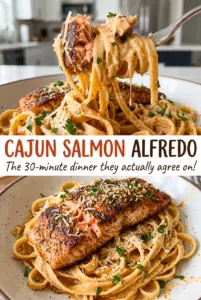
The salmon gives a quiet sizzle when it hits the hot skillet, and that first sear sets the tone for the whole dinner. I used to rush straight into the sauce, but cooking the fish first gives it a browned edge and leaves the skillet ready for the Cajun Alfredo. These salmon pieces stay tender when they’re folded into the pasta at the end instead of stirred around while the sauce cooks.
Cajun Salmon Alfredo brings together the gentle richness of cream and Parmesan with the warm spice of Cajun seasoning. I divide that seasoning between the salmon and sauce so the flavor runs through the dish instead of sitting on the outside of the fish. Fettuccine catches the sauce in its wide ribbons, and a little reserved pasta water helps everything cling.
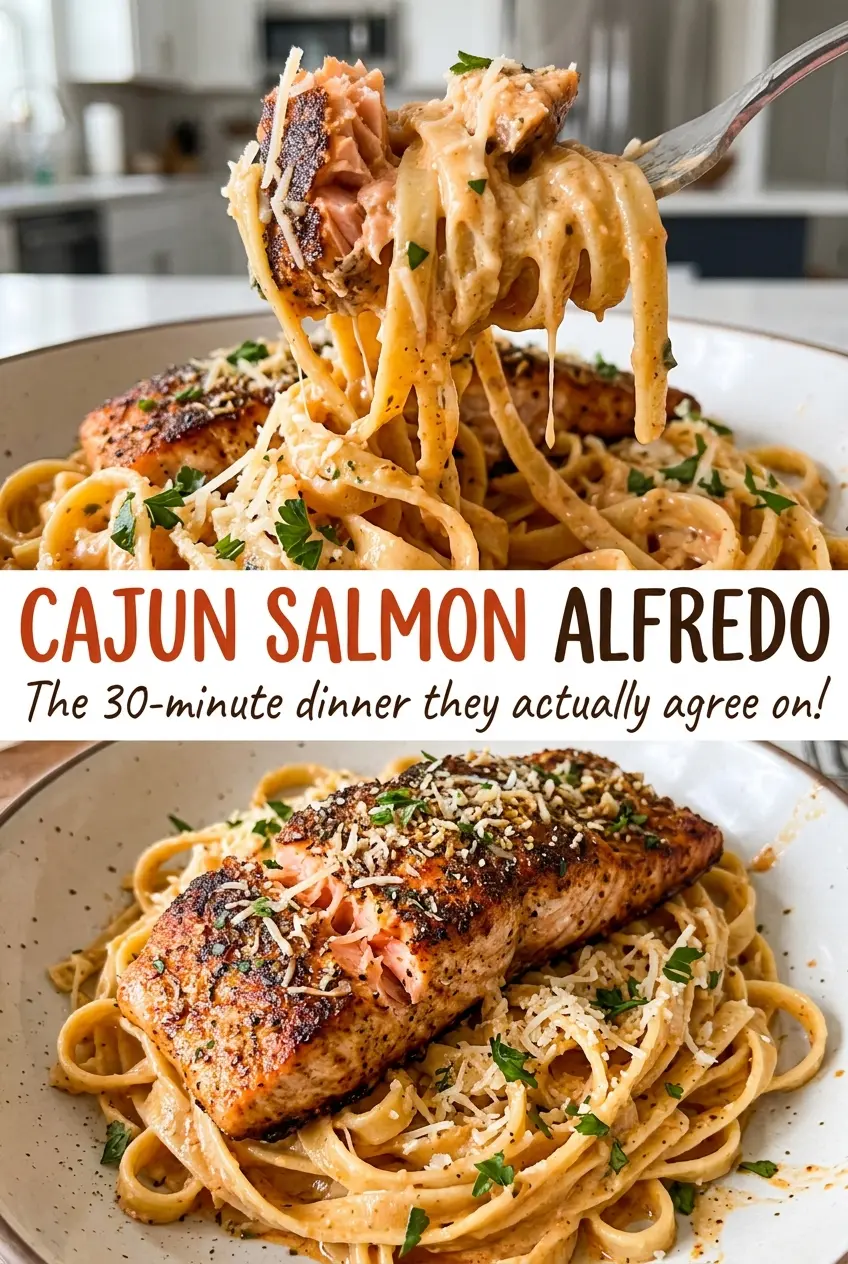
The finished pasta is silky rather than heavy, with big pieces of salmon tucked through every serving. It’s a satisfying skillet dinner with enough Cajun character to keep each bite interesting.
Kitchen Note
Give the salmon portions room in the 12-inch skillet instead of crowding them together. A little space makes it easier to get a good sear on each piece.
Save this Cajun Salmon Alfredo for a creamy, spice-kissed dinner with flaky salmon and sauce-coated fettuccine.
Why This Alfredo Needs Pasta Water, Not More Cream
Fettuccine keeps taking up sauce as it sits. If the pasta looks glossy in the skillet but turns tight on the plate, the noodles have absorbed some of the liquid. More cream can make the sauce heavier without helping it cling evenly to the noodles.
Reserved pasta water gives you a better adjustment. The water carries starch from the cooking pasta, so it helps loosen the cream sauce while keeping it cohesive. That matters here because the sauce has to coat the fettuccine and still leave enough moisture around the salmon.
Set aside the full cup before draining, even though the pasta starts with only a portion of it in the pan. Begin with the amount used to coat the fettuccine, then add the remaining water a tablespoon at a time only if the sauce needs it. The change happens quickly, so toss between additions and stop when the noodles look lightly coated rather than soupy.
What Cajun Seasoning, Cream, and Parmesan Each Bring
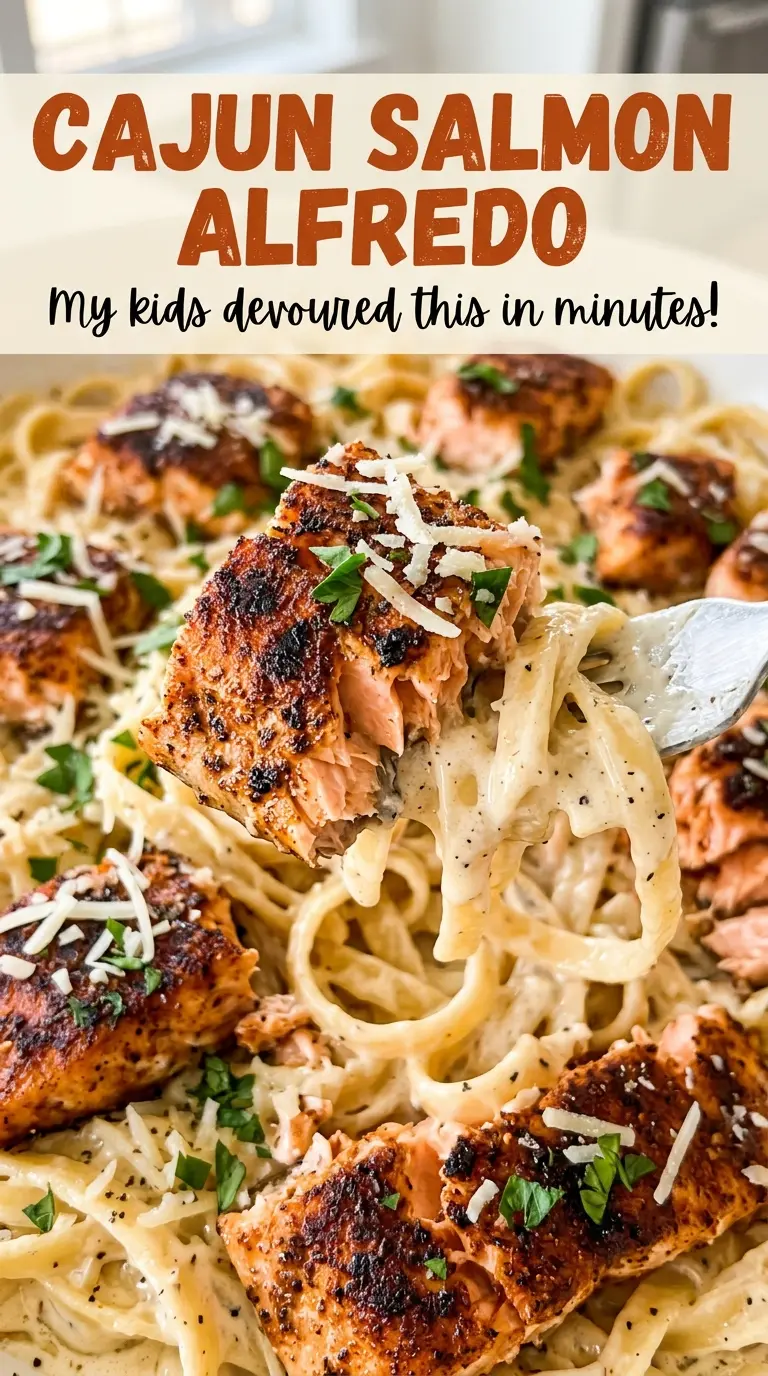
- Salmon — Choose portions that are close in thickness so they cook at a similar pace. Patting the surface dry helps the fish sear instead of steaming; a fresh, mild-smelling fillet matters more than choosing an expensive variety.
- Cajun seasoning — This blend brings both the signature spice and much of the dish’s seasoning. Brands vary in salt and heat, so taste a pinch before cooking and choose a blend whose spice level you enjoy. The divided use seasons the fish and carries the same flavor into the sauce.
- Heavy cream — Its richness gives the sauce body and helps it simmer down without becoming thin. Half-and-half won’t give the same velvety result, so heavy cream is the better choice here; the brand matters less than using cream rather than a lighter milk.
- Parmesan — Finely grated cheese melts into the cream more readily than coarse shreds. A block grated just before cooking gives the smoothest texture, while the cheese’s savory, nutty character is hard to reproduce with a milder melting cheese.
- Fettuccine — The broad noodles hold onto the sauce in a way that suits this creamy dish. Use a good-quality dried pasta you like; linguine is a straightforward shape swap, though its narrower strands won’t carry quite as much sauce in each forkful.
The Three Stages That Keep the Salmon and Sauce in Balance
Sear the Salmon Without Cooking It to Shreds
Pat the four salmon portions dry and season them all over with 2 teaspoons of the Cajun seasoning. Heat the olive oil in a 12-inch skillet over medium-high heat, then cook the salmon for 3 to 4 minutes per side. Check the thickest part for 145°F, then transfer the fish to a plate and loosely cover it with foil. Handle the portions gently; they’ll be folded into the pasta later.
Cook the Fettuccine and Save Its Water
Bring 4 quarts of water and 1 tablespoon kosher salt to a boil in a 6-quart pot. Add 12 ounces of fettuccine and cook according to the package directions until al dente. Before draining, reserve 1 cup of the pasta water; it’s easy to lose the opportunity if you drain first. Drain the noodles, but don’t rinse them.
Simmer the Cream, Then Fold Everything Together
Reduce the skillet heat to medium-low and melt the butter, then stir in the minced garlic for 30 seconds. Add the heavy cream, remaining Cajun seasoning, and black pepper; bring the sauce to a gentle simmer for 3 to 4 minutes, stirring until it thickens slightly. Turn the heat to low and stir in the finely grated Parmesan a handful at a time until melted, then toss in the fettuccine with 1/4 cup reserved pasta water. Break the salmon into large pieces, fold them in gently, and warm for 1 minute; if the sauce needs loosening, add more reserved water a tablespoon at a time.
Three Ways to Adjust the Cajun Salmon Alfredo
Use gluten-free fettuccine
Swap in gluten-free fettuccine and cook it according to its package directions until al dente. Save some of its cooking water before draining; gluten-free pasta can have a different texture, but the same creamy Cajun sauce still works with it.
Give the cheese a sharper edge
Replace part of the Parmesan with finely grated Pecorino Romano. It brings a sharper, saltier bite, so keep the Parmesan in the blend rather than swapping all of it if you want the sauce to stay balanced.
Turn up the Cajun heat
Choose a hotter Cajun seasoning blend instead of a mild one, keeping the same total amount and dividing it between the salmon and sauce. You’ll get a more pronounced spicy finish without changing how the skillet sauce comes together.
Storage and Reheating
- Refrigerator: Refrigerate leftovers within 2 hours and eat them within 3 days. The fettuccine will absorb some sauce as it sits.
- Freezer: Freezing isn’t recommended; the cream sauce may separate and the pasta can turn soft after thawing.
- Reheating: Warm leftovers gently in a skillet over low heat, stirring in a splash of water to loosen the sauce. Heat until the center reaches 165°F, and avoid high heat, which can make the cream sauce oily.
Questions That Come Up With Cajun Salmon Alfredo
Cajun Salmon Alfredo
Ingredients
Equipment
Method
- Pat the salmon dry and season all over with 2 teaspoons of the Cajun seasoning.
- Heat the olive oil in a 12-inch skillet over medium-high heat.
- Cook the salmon for 3 to 4 minutes per side, until it reaches 145°F in the thickest part.
- Transfer the salmon to a plate and loosely cover with foil.
- Bring the water and kosher salt to a boil in a 6-quart pot.
- Add the fettuccine and cook according to the package directions until al dente.
- Reserve 1 cup pasta water, then drain the fettuccine.
- Reduce the skillet heat to medium-low and melt the butter.
- Add the garlic and cook for 30 seconds, stirring.
- Stir in the heavy cream, remaining 1 teaspoon Cajun seasoning, and black pepper.
- Bring to a gentle simmer for 3 to 4 minutes, stirring until slightly thickened.
- Reduce the heat to low and stir in the Parmesan a handful at a time until melted.
- Add the drained fettuccine and 1/4 cup reserved pasta water and toss to coat.
- Break the salmon into large pieces and gently fold it into the pasta.
- Warm for 1 minute, adding more reserved pasta water a tablespoon at a time if needed to loosen the sauce.