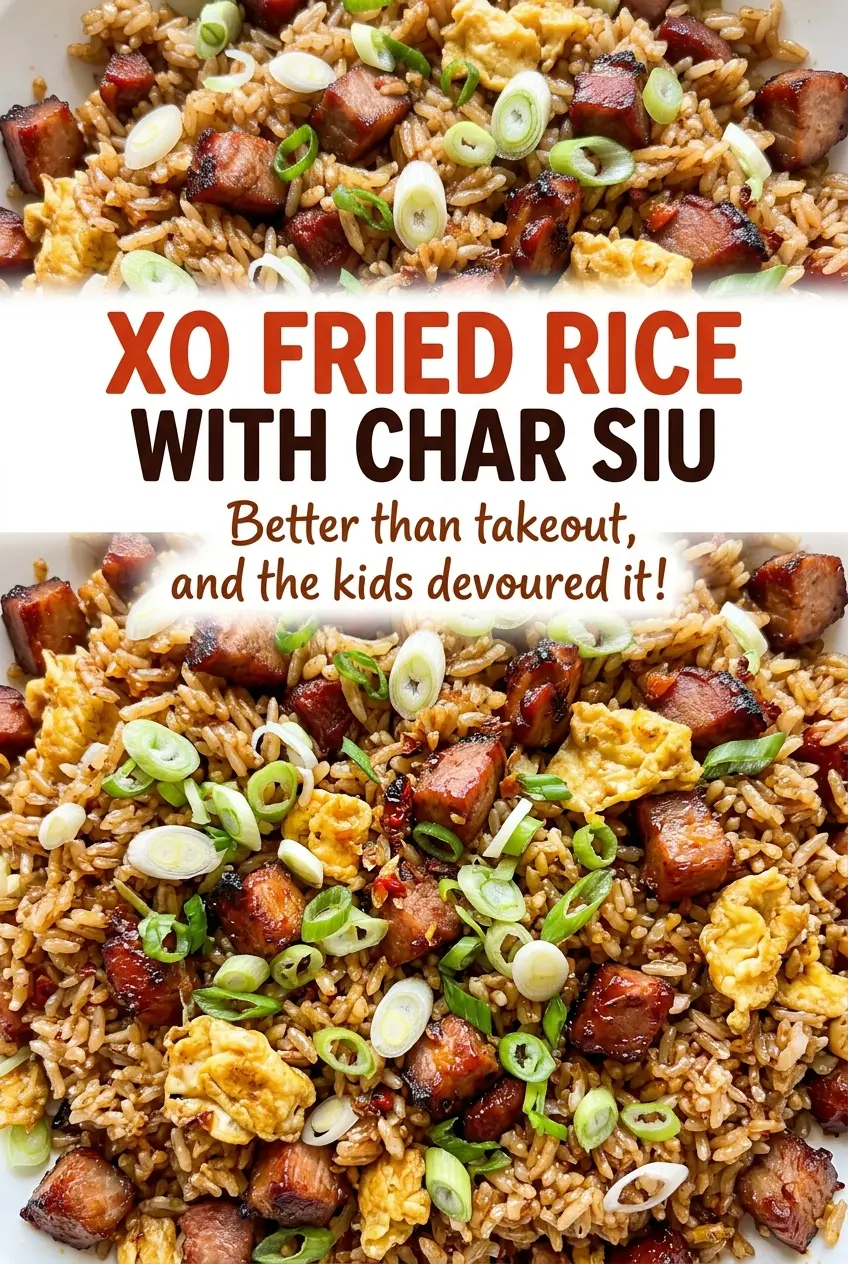
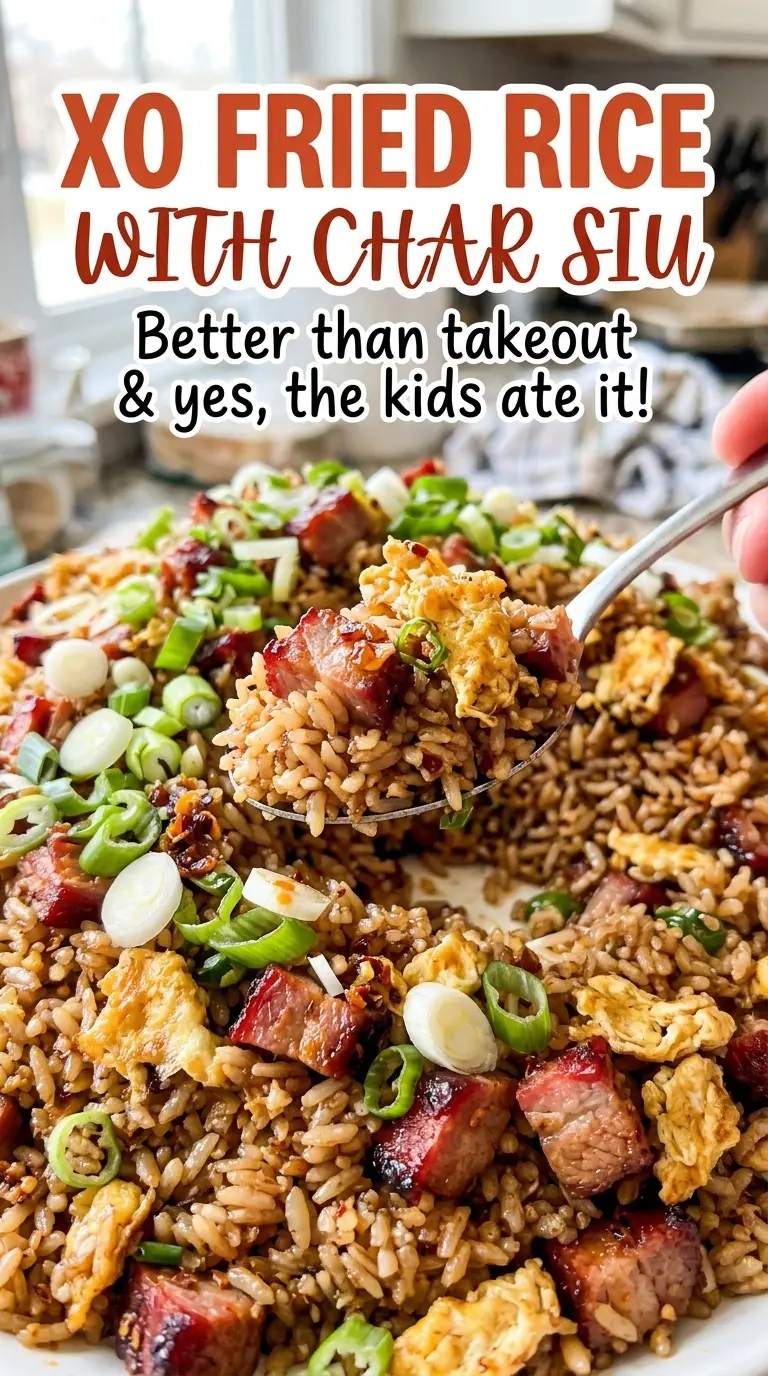
When the rice goes into the wok, cold grains can look stubborn and clumpy for a moment. Give them a few tosses and they loosen, picking up the savory coating without turning soft or sticky. That’s the texture I want in XO Fried Rice with Char Siu: distinct jasmine rice, tender egg, and pieces of sweet-savory pork in every scoop.
Using cooked char siu keeps this a quick stir-fry, while XO sauce gives the rice its deep, savory backbone. The sauce is concentrated, so it doesn’t need to be stirred in early or spread across every ingredient before the rice has warmed. I keep the eggs on a plate until the end, too, so they stay in soft pieces instead of disappearing into the pan.
Once the scallion greens and sesame oil go in, the wok smells toasted and savory. Serve it while the rice is steaming, with the pork and vegetables scattered through every bite.
Kitchen Note
Drain the thawed peas and carrots well before they go into the wok. Extra water cools the pan and makes it harder to keep the rice hot and separate.
Save XO Fried Rice with Char Siu for a fast, savory meal with separate rice grains, tender egg, and bites of glazed pork.
Why the XO Sauce Goes In After the Rice Is Hot
XO sauce is concentrated, and its savory flavor can take over if it’s poured into a cold pan or left sitting in one spot. I wait until the rice has been stir-fried long enough to feel hot and the grains are mostly separated. Then I add the XO sauce and soy sauce together, returning the eggs at the same time. That order gives me a chance to toss the sauce through the rice rather than letting it collect in a puddle at the bottom.
It also keeps the finishing ingredients from spending too long over the heat. The rice gets its own few minutes in the wok first; the sauce, eggs, scallion greens, and sesame oil only need a short finish. Keep tossing as the rice steams, especially around the sides of the pan where sauce can cling. XO sauces vary in saltiness and intensity by brand, so use the listed amount and taste the finished rice before deciding whether you’d choose a different brand next time.
If the seasoning looks uneven at first, keep tossing rather than adding more sauce immediately. A few turns distribute the coating, and the scallion greens and sesame oil bring their aroma through right at the end.
What the Rice, Char Siu, and XO Sauce Each Bring
- Cold jasmine rice — The rice needs to be cooked, refrigerated, and cold before it hits the wok; that firm texture helps the grains separate during stir-frying. Jasmine brings a lightly fragrant quality that plain long-grain white rice won’t quite match. If jasmine isn’t available, cold cooked long-grain white rice is the closest practical swap; break up its clumps before cooking, just as you would with jasmine.
- Cooked char siu — Its sweet-savory glaze gives the rice much of its character, so choose pork with a noticeable glaze rather than plain, unseasoned roast pork. Dice it evenly so the pieces heat through alongside the vegetables. Cooked roast pork can stand in if needed, but the result won’t have the same char siu sweetness.
- XO sauce — This is the defining seasoning, with a concentrated, savory quality that soy sauce alone can’t replace. Brands differ in intensity, so the quality and taste of the sauce matter more here than in the supporting seasonings. There isn’t a direct one-for-one substitute; leaving it out makes a milder, less layered fried rice.
- Eggs — Lightly beaten eggs cook into tender curds that soften the savory edges of the pork and sauce. They’re scrambled separately so they remain distinct in the finished rice. Leaving them out makes the dish egg-free, though you’ll lose those soft bites and some richness.
- Scallions and toasted sesame oil — Keeping the scallion whites and greens separate gives the whites time to heat with the pork and vegetables, while the greens stay bright in the finish. Toasted sesame oil is an aromatic finishing touch, not a neutral frying oil; if you omit it, the rice will taste less nutty.
- Neutral oil and soy sauce — A basic neutral oil is fine; it lets the other ingredients lead without adding a strong flavor of its own. For a gluten-free adaptation, replace the soy sauce with the same amount of gluten-free tamari and use char siu and XO sauce labeled gluten-free as well.
How to Stir-Fry the Rice Without Losing Its Texture
Separate the Cold Rice Before Heating the Wok
Break up the refrigerated rice with your fingers or a fork, working through the clumps before you start cooking. This small bit of prep makes it easier to toss the grains quickly once they reach the pan. If a clump stays intact, it can warm unevenly and leave you with a cold center while the loose grains are already hot. Keep the rice nearby so it can go straight into the wok after the pork and vegetables.
Scramble the Eggs Until Fully Set
Heat a 14-inch wok or 12-inch skillet over medium-high heat, then add 1 tablespoon of the neutral oil. Pour in the lightly beaten eggs and scramble for 1–2 minutes, until they’re fully set rather than glossy or runny. Transfer them to a plate before moving on. They’ll return near the end, so there’s no need to keep cooking them in the pan while the rice heats.
Heat the Char Siu and Vegetables First
Add the remaining 1 tablespoon of oil, then stir-fry the diced cooked char siu, thawed and drained peas and carrots, and scallion whites for 2–3 minutes. Toss often so the pork and vegetables warm through without sitting in one place. The scallion whites should smell fragrant, and the char siu should be hot. If the vegetables carry excess water, the pan will feel less lively and the rice may turn damp.
Warm the Rice, Then Finish With the Seasonings
Add the separated rice and stir-fry for 3–4 minutes, tossing often until the grains are hot and separated. Stir in the XO sauce and soy sauce, return the eggs, then add the scallion greens and toasted sesame oil. Continue stir-frying for 1–2 minutes, until the rice is steaming hot and the seasonings are distributed. Take the wok off the heat once that finish is complete; extra cooking isn’t needed.
Three Practical Ways to Adapt This Fried Rice
Make It Gluten-Free With Tamari
Use gluten-free tamari in place of the soy sauce, keeping the same amount. The char siu and XO sauce also need to be labeled gluten-free for the finished dish to suit a gluten-free diet. Tamari keeps the salty, savory seasoning close to the original.
Leave Out the Peas and Carrots
Skip the vegetables for a more pork-and-egg-focused version. The rice will have fewer sweet, tender bites, but the char siu and scallions still give it plenty of savory character. Keep the rest of the cooking order the same.
Make a Milder, XO-Free Batch
Omit the XO sauce if you want a gentler fried rice or don’t have it on hand. The soy sauce and sesame oil still season the rice, but you’ll miss XO’s deeper, concentrated savoriness. This is a change in character, not a like-for-like swap.
Storage and Reheating
- Refrigerator: Refrigerate leftovers in a shallow, airtight container within 2 hours and use within 3–4 days. The rice firms up as it chills, so the texture won’t be quite as loose as it is fresh from the wok.
- Freezer: Freeze in airtight portions for up to 1–2 months for best quality. Thaw overnight in the refrigerator; the rice and vegetables may soften slightly after freezing.
- Reheating: Reheat in a skillet, breaking up the rice and stirring until it reaches 165°F. Avoid warming a large compacted portion without stirring, which can leave cold spots.
Questions That Come Up When Making XO Fried Rice
XO Fried Rice with Char Siu
Ingredients
Equipment
Method
- Break up the cold rice with your fingers or a fork, separating any clumps.
- Heat a 14-inch wok or 12-inch skillet over medium-high heat, add 1 tablespoon of the oil, and scramble the eggs for 1–2 minutes until fully set; transfer them to a plate.
- Add the remaining 1 tablespoon oil to the wok, then add the char siu, peas and carrots, and scallion whites; stir-fry for 2–3 minutes until hot.
- Add the rice and stir-fry for 3–4 minutes, tossing often, until the grains are hot and separated.
- Stir in the XO sauce and soy sauce, return the eggs to the wok, and add the scallion greens and sesame oil; stir-fry for 1–2 minutes until the rice is steaming hot.