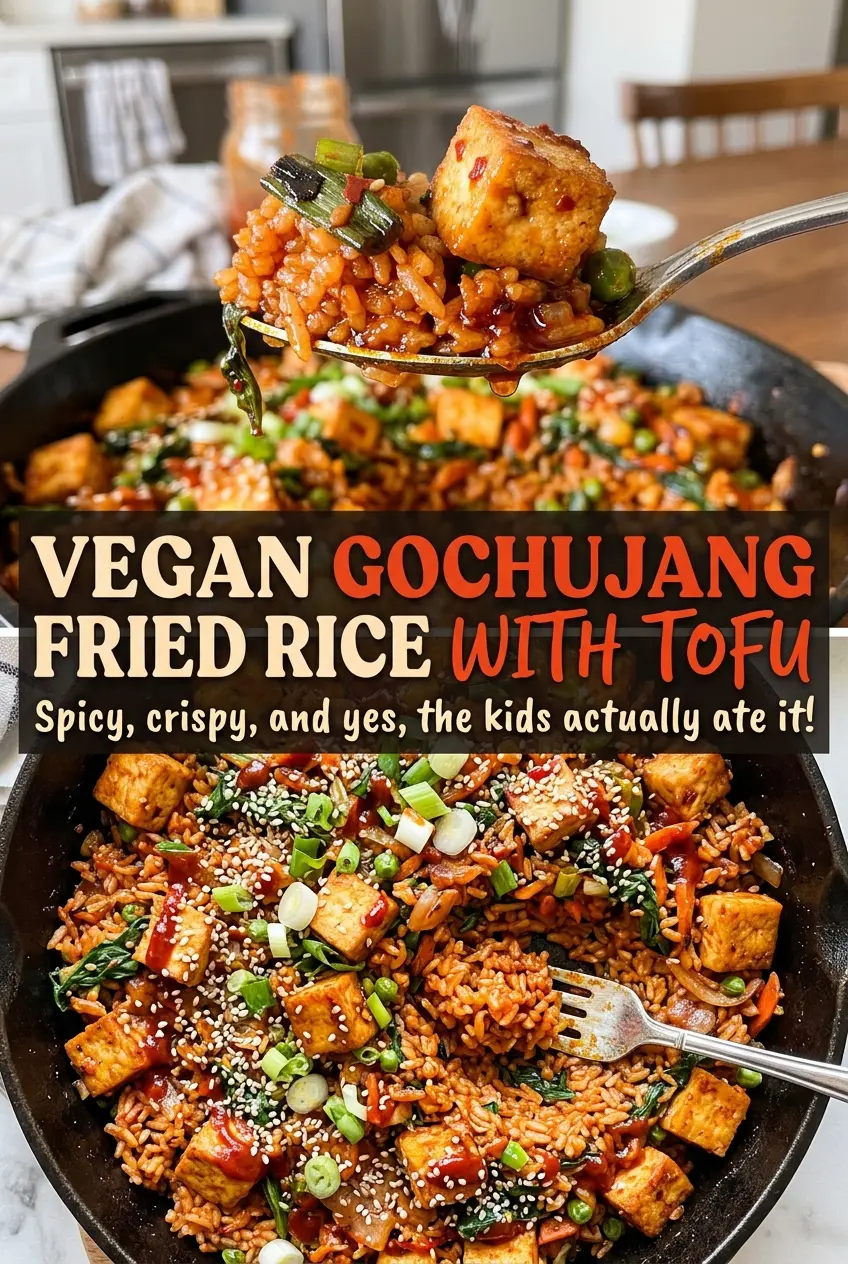
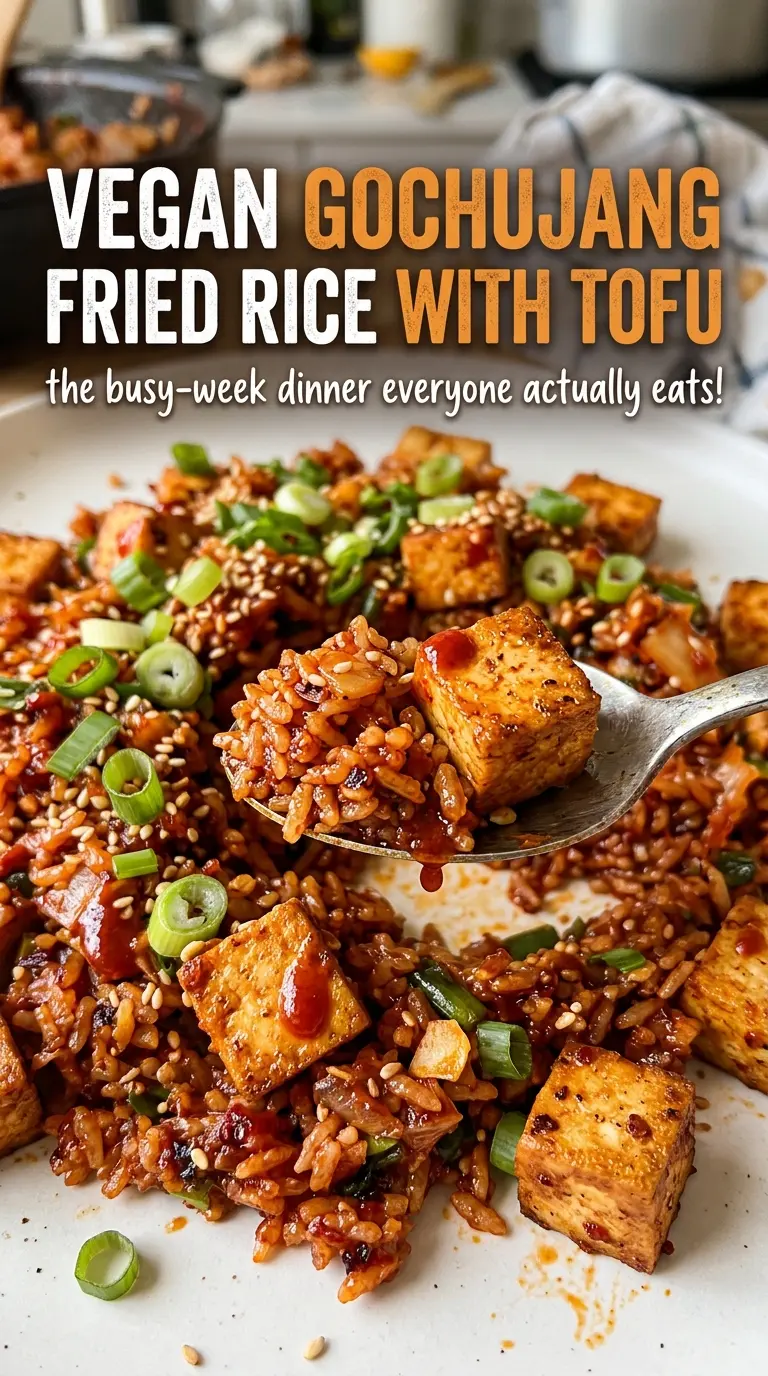
The tofu starts giving off little wisps of steam before it turns golden, and that’s the point where I used to get impatient and keep flipping it. Letting each side sit against the hot skillet gives the cubes color without breaking them up. Once the rice and sauce join in, that browned tofu makes this vegan gochujang fried rice taste like more than a quick clean-out-the-fridge dinner.
The sauce is a quick whisk of gochujang, soy sauce, rice vinegar, maple syrup, and toasted sesame oil. It coats the rice in a glossy, savory-spicy layer, while the vinegar keeps the chile paste from tasting heavy. Cold refrigerated rice helps the grains stay distinct in the skillet instead of turning soft and sticky.
I cook the tofu first, then use the same skillet for the scallions, garlic, ginger, and vegetables. By the time the rice goes in, those aromatics have left their fragrance in the oil, and the final toss brings everything together in just a few minutes. Expect warm, separate grains, crisp-edged tofu, and a little heat in every bite.
Kitchen Note
Pat the tofu dry before it goes into the skillet, then give it room in a single layer. I turn the cubes only occasionally; constant stirring keeps them pale instead of giving several sides a golden crust.
Save this vegan gochujang fried rice for a weeknight when you want crisp tofu, glossy chile-coated rice, and dinner from one skillet.
Why cold rice stays separate while fresh rice turns sticky
Fried rice cooks fast, so the rice needs to be ready for the skillet before it hits the oil. Freshly cooked rice carries more surface moisture and warmth; once it meets a hot pan, that moisture steams the grains against one another. The result is often soft, clumpy rice rather than distinct grains with a little chew.
Refrigerated rice has had time to cool and firm up, which makes it easier to break apart and toss with the sauce. That matters especially here because the gochujang mixture goes in near the end. The rice gets a short stretch of direct heat first, so it warms through before the sauce coats it. If you start with large cold clumps, they won’t heat evenly; separate them as you add the rice rather than smashing them against the pan. You want each grain warmed and lightly coated, not crushed into a paste.
Why the rice and gochujang set the whole balance
- Vegan gochujang — This thick fermented chile paste supplies most of the heat, salt, and depth in the sauce. Its heat varies by brand, so taste the paste you have before deciding how assertive you want the finished rice. Use a version labeled vegan; conventional gochujang isn’t always plant-based.
- Cold cooked rice — Chilled rice is easier to separate and less likely to steam into clumps. The recipe works with different rice varieties, but the grains’ shape and chew will affect the finished texture. Whatever variety you choose, cook it ahead and refrigerate it.
- Extra-firm tofu — Its compact texture holds up to browning and tossing. Softer tofu is much more likely to crumble in the skillet. Patting the cubes dry helps their surfaces brown instead of releasing moisture right away.
- Soy sauce, rice vinegar, and maple syrup — Together, these balance the fermented chile paste: soy sauce adds savory depth, vinegar brings a clean tang, and maple syrup rounds the sharper edges. Rice vinegar keeps the sauce’s acidity mild; a different vinegar would shift that balance.
- Toasted sesame oil — A small amount brings a nutty aroma that regular neutral oil won’t provide. Keep the neutral oil for cooking the tofu and vegetables, and use toasted sesame oil in the whisked sauce so its aroma stays noticeable.
- Scallions, garlic, and fresh ginger — The scallion whites cook with the garlic and ginger to flavor the oil, while the greens stay fresh for the finish. Fresh ginger gives the sauce and vegetables a brighter, more aromatic bite than dried ginger.
- Frozen peas and carrots — Thaw them before they go into the skillet so they warm quickly without cooling the pan. They add a mild sweetness and tender texture alongside the chile and browned tofu.
Building the skillet in the right order
Whisk the gochujang sauce smooth
Whisk the vegan gochujang, soy sauce, rice vinegar, maple syrup, and toasted sesame oil in a small bowl until the mixture looks even. Work out any dense streaks of chile paste before the sauce goes near the rice. The finished sauce should be thick but pourable, with no dry pockets of gochujang. Set it beside the stove so it’s ready for the final toss.
Brown the tofu before adding anything else
Heat one tablespoon of neutral oil in a 12-inch skillet over medium-high heat, then arrange the tofu in a single layer. Cook for 8–10 minutes, turning occasionally, until several sides are golden. The cubes should release from the pan more easily once they’ve browned; if they’re sticking, give them a little more time before turning. Transfer the tofu to a plate so it doesn’t crowd the vegetables or rice.
Let the aromatics soften in the tofu pan
Add the remaining neutral oil to the skillet, followed by the scallion whites, minced garlic, and grated ginger. Stir constantly for 30 seconds; the garlic should smell fragrant but shouldn’t darken. Add the thawed peas and carrots, then cook for 2 minutes, stirring occasionally. If the garlic starts coloring before the vegetables are in, keep stirring and move quickly to the next addition.
Warm the rice, then coat everything with sauce
Add the cold rice and break up any clumps as you stir. Cook over medium-high heat for 3–4 minutes, stirring often, until the rice is hot throughout. Return the tofu and pour in the sauce, then toss for 1–2 minutes, until the grains and tofu are coated and everything is steaming hot. Take the skillet off the heat and scatter the scallion greens over the top.
Two smart ways to change the flavor or fit
Make it gluten-free with tamari
Replace the soy sauce with tamari and use gochujang specifically made without gluten. The sauce stays savory and balanced, though tamari can taste a little rounder than soy sauce; the gochujang matters too, so swapping only the soy sauce isn’t enough for a gluten-free version.
Use brown rice for a chewier bowl
Swap in the same amount of cold cooked brown rice. It brings a nuttier taste and a firmer bite, so the finished dish feels heartier; break up any compacted grains carefully before they go into the skillet.
Make the sauce less sweet and sharper
Leave out the maple syrup if you prefer a more chile-forward sauce. You’ll lose some sweetness and rounding, so the gochujang and vinegar will stand out more clearly against the rice.
Storage and Reheating
- Refrigerator: Refrigerate leftovers within 2 hours in a shallow, airtight container and eat within 3–4 days. The tofu softens and the rice loses some of its separate-grain texture.
- Freezer: Freeze in an airtight container for up to 2 months for the best quality. The rice and tofu may be softer after thawing.
- Reheating: Reheat a portion in a skillet over medium heat, stirring until it reaches 165°F, or microwave it covered, stirring partway through. Don’t heat it for too long in an uncovered pan, which dries out the rice.
Questions that come up with gochujang fried rice
Vegan Gochujang Fried Rice with Tofu
Ingredients
Equipment
Method
- In a small bowl, whisk together the gochujang, soy sauce, rice vinegar, maple syrup, and sesame oil until smooth.
- Heat 1 tablespoon of the neutral oil in a 12-inch skillet over medium-high heat. Add the tofu in a single layer and cook for 8–10 minutes, turning occasionally, until golden on several sides; transfer to a plate.
- Add the remaining 1 tablespoon neutral oil to the skillet, then add the scallion whites, garlic, and ginger; cook for 30 seconds, stirring constantly. Add the peas and carrots and cook for 2 minutes, stirring occasionally.
- Add the rice, breaking up any clumps, and cook over medium-high heat for 3–4 minutes, stirring often, until hot.
- Return the tofu to the skillet and pour in the sauce; toss for 1–2 minutes, until everything is coated and steaming hot. Remove from the heat and garnish with the scallion greens.