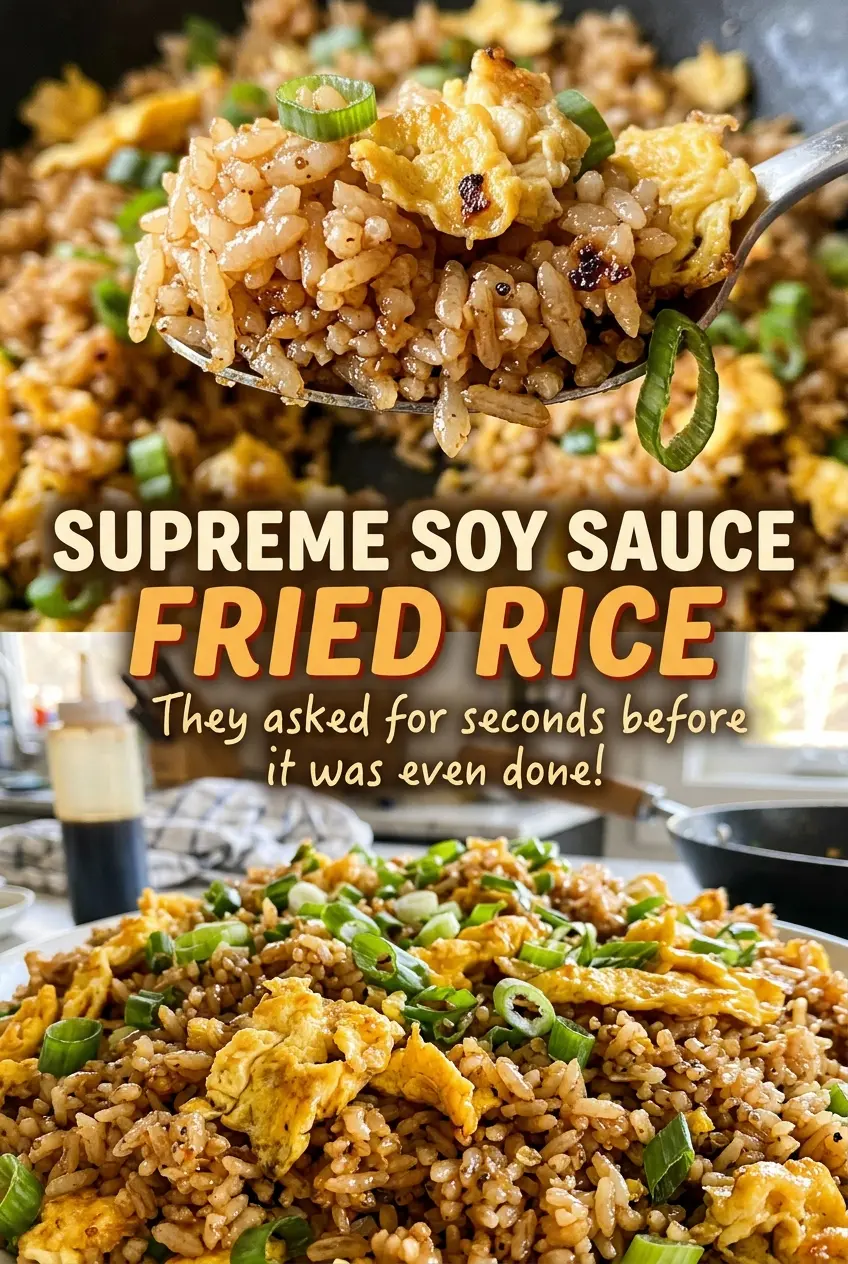
The rice should hiss as soon as it hits the hot pan, then loosen into separate grains as you toss it. That quick, lively stir-fry is what makes Supreme Soy Sauce Fried Rice taste savory without turning heavy or clumpy. I like having the seasoning mixed and the eggs ready before the wok heats; once cooking starts, each stage moves fast.
Cold, refrigerated long-grain rice gives you a head start: the grains are firm enough to separate in the pan instead of smearing together. Regular and dark soy sauce do different jobs, too, so the seasoning lands with both a deep color and a balanced savory taste. The finished rice is steaming hot, with soft egg curds and scallion greens still bright.
Kitchen Note
Set out the soy mixture and the plate for the eggs before you heat the pan. The eggs take about a minute, and after that the rice moves quickly; having everything within reach keeps the wok hot between stages.
Save Supreme Soy Sauce Fried Rice for a fast, savory meal with separate grains, soft eggs, and a deep soy finish.
Why the Soy Sauce Goes Around the Wok, Not Over the Rice
Pouring the seasoning around the sides of the hot wok gives it room to spread before it meets the rice. If you dump the mixture in one spot, those grains can take on an extra-dark, salty patch while the rest stay pale. A quick toss after the sauce hits the pan helps distribute the regular soy sauce, dark soy sauce, sugar, and white pepper across the rice.
This is a small move, but it matters because the seasoning goes in near the end, after the rice is already hot and separated. Keep the soy mixture close by, pour it around the wok’s sides, and toss steadily for about a minute. The rice should take on an even brown color without sitting in a puddle of sauce at the bottom.
If you’re using a skillet rather than a wok, the same order still works. Pour around the inner edge of the pan, then lift and turn the rice so the seasoning catches every part of it. High heat and a quick toss do the work; you don’t need to add more sauce to make the color deeper.
Why Two Soy Sauces Matter More Than More Soy Sauce
- Regular and dark soy sauce — They’re paired for a reason: regular soy sauce brings the familiar salty savoriness, while dark soy sauce gives the rice a deeper color and rounded soy flavor. Keep the two types distinct; replacing dark soy with extra regular soy makes the seasoning saltier without recreating its color. A standard bottle of each works well.
- Cold long-grain white rice — The long grains stay distinct instead of turning soft and sticky during the quick stir-fry. The rice needs to be cooked and refrigerated, with clumps broken up before it goes in the pan. Ordinary long-grain white rice is fine; a specialty brand won’t make a noticeable difference here.
- Eggs and scallions — Eggs make the rice more substantial, while scallions bring a fresh onion note. Use scallions with firm white ends and green tops, then keep those parts separate because they go into the pan at different times. The eggs don’t need to be anything fancy; their texture depends more on how far they’re cooked than on the brand.
- Neutral oil and toasted sesame oil — Neutral oil handles the high-heat cooking without competing with the soy. Toasted sesame oil is a finishing oil, not the oil for frying; its aroma stays noticeable when it’s tossed in after the heat is off. A basic neutral cooking oil is suitable, while fresh, fragrant toasted sesame oil makes the finish more pronounced.
- Sugar and white pepper — A little sugar softens the sharp edge of the soy sauces, and ground white pepper adds a gentle warmth without peppery black flecks. Keep the sugar in the mixture so it distributes evenly. There isn’t a direct swap between white pepper and black pepper in this seasoning; black pepper gives a more assertive flavor.
The Fast Sequence That Keeps the Rice Separate
Mix the Seasoning Before the Pan Heats
Stir the regular soy sauce, dark soy sauce, sugar, and ground white pepper together in a small bowl. The sugar should be dispersed through the liquid rather than sitting in a mound at the bottom. Set the bowl beside the stove, along with a plate for the cooked eggs. That prep makes it easy to keep the pan moving once the rice goes in.
Scramble the Eggs Until Just Set
Heat a 14-inch wok or 12-inch skillet over high heat until hot, about 1 minute. Add 1 teaspoon of the neutral oil, then pour in the beaten eggs and scramble until just set, about 1 minute. Look for soft, formed curds with no loose liquid egg. Transfer them to a plate so they don’t overcook while the rice fries.
Stir-Fry the Rice with the Scallion Whites
Add the remaining neutral oil and scallion whites to the wok, then add the cold rice. Stir-fry for 3 to 4 minutes, breaking up any remaining clumps as you go. The rice should be hot and separated, with the scallion whites softened into the grains. If you leave a clump intact, its center will stay cool while the outside gets coated.
Coat the Grains with Soy Seasoning
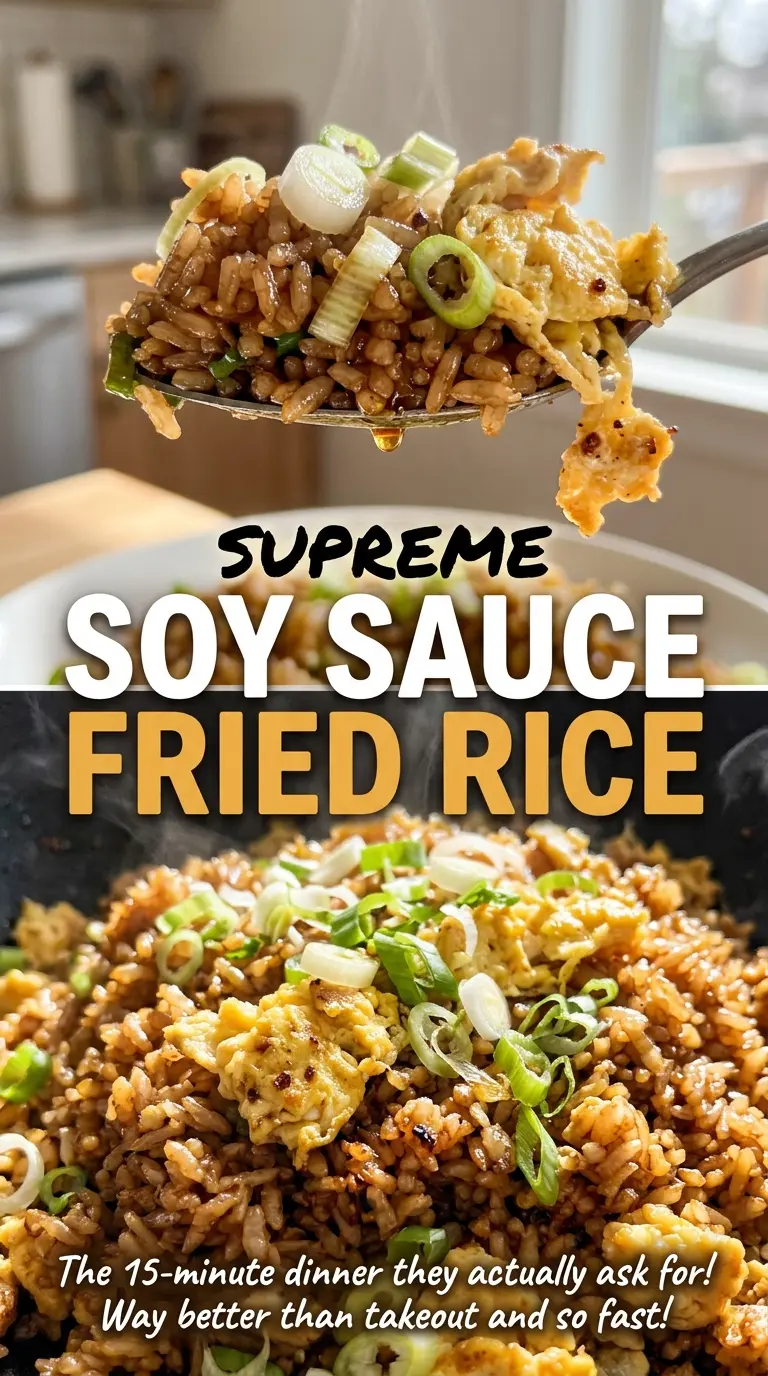
Pour the soy sauce mixture around the sides of the wok rather than dropping it in a single pool. Toss the rice for about 1 minute, turning it through the seasoning until the color looks even. Keep the rice moving so the sauce doesn’t collect at the bottom. At this point the grains should look glossy and evenly seasoned.
Return the Eggs and Finish Off the Heat
Add the eggs back to the wok along with the scallion greens. Stir-fry for 1 to 2 minutes, until the rice is steaming hot throughout and the greens have just softened. Turn off the heat, then toss in the toasted sesame oil. Adding it after cooking keeps its toasted aroma clear instead of cooking it away.
Two Simple Changes for a Different Finish
Make It Egg-Free
Leave out the eggs and use the full amount of neutral oil with the rice instead of reserving a portion for scrambling. Skip the egg-cooking and egg-returning stages, then follow the rest of the sequence. The finished rice is a little less rich, with the soy and scallions taking the lead.
Leave Off the Sesame Finish
Omit the toasted sesame oil after turning off the heat for a sesame-free version with a cleaner soy-and-scallion finish. If you’re cooking for someone with a sesame allergy, check that the other ingredients and cooking equipment are safe for that person, too.
Storage and Reheating
- Refrigerator: Cool leftovers promptly in a shallow container and refrigerate within 2 hours. Eat within 3 to 4 days; the grains will firm up as they chill.
- Freezer: Fried rice freezes well. Pack portions in an airtight container and freeze for up to 2 months for the best texture; thaw overnight in the refrigerator.
- Reheating: Reheat a portion in a skillet or microwave, stirring once, until it reaches 165°F. Warm only what you plan to eat rather than reheating the whole batch repeatedly.
Questions That Come Up While the Wok Is Hot
Supreme Soy Sauce Fried Rice
Ingredients
Equipment
Method
- In a small bowl, stir together the regular soy sauce, dark soy sauce, sugar, and white pepper.
- Heat a 14-inch wok or 12-inch skillet over high heat until hot, about 1 minute.
- Add 1 teaspoon neutral oil and the eggs; scramble until just set, about 1 minute.
- Transfer the eggs to a plate.
- Add the remaining neutral oil and scallion whites to the wok.
- Add the rice and stir-fry, breaking up any remaining clumps, until hot and separated, 3 to 4 minutes.
- Pour the soy sauce mixture around the sides of the wok and toss the rice until evenly coated, about 1 minute.
- Return the eggs to the wok, add the scallion greens, and stir-fry until the rice is steaming hot throughout, 1 to 2 minutes.
- Turn off the heat and toss with the sesame oil.