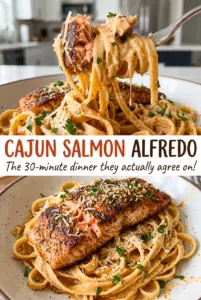
The first time I made seafood linguine, I let all the seafood cook together, and the shrimp were tough before the mussels had even opened. Cooking each kind in its own turn fixes that: the mussels open in the tomato sauce first, then the shrimp and scallops get just a few minutes. The pasta finishes in the same Dutch oven, where it picks up the garlicky sauce and the juices from the seafood.
I use two pots for a reason. The sauce can simmer while the linguine cooks, and there’s enough room in the Dutch oven to toss everything together without crushing the mussels or breaking up the scallops. A little pasta water helps the sauce cling, while parsley and lemon bring a fresh finish to the rich tomatoes. You’ll have a generous seafood dinner for four, with tender pasta and a sauce made for catching every last strand.
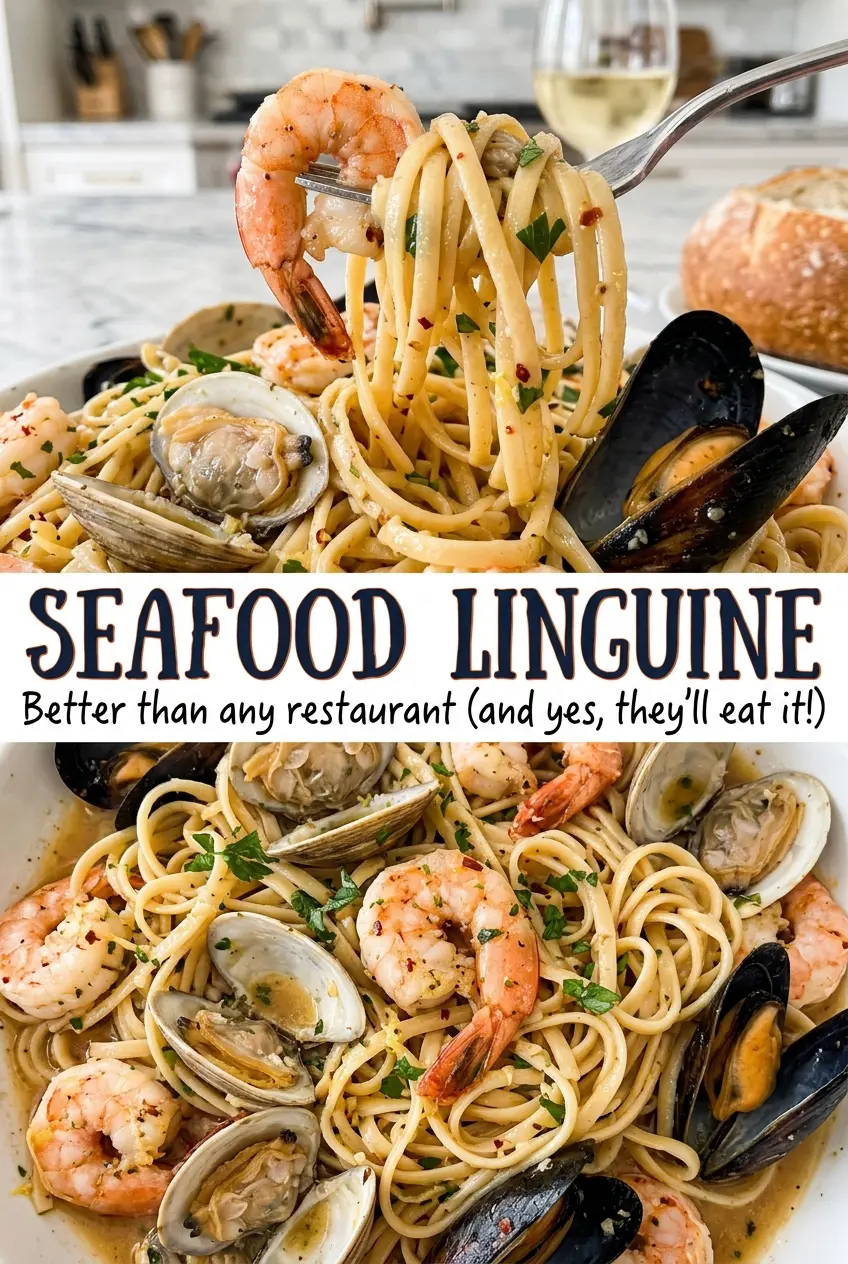
Kitchen Note
Check the scallops as you prep them and pull off any side muscles. They’re small, but they stay chewy even when the scallop itself is cooked just right.
Save this Seafood Linguine for a night when you want tender mussels, shrimp, and scallops tossed through a garlicky tomato sauce.
Why the Seafood Goes Into the Tomato Sauce in Stages
A pot of tomato sauce and a mix of seafood don’t all cook on the same clock. Mussels need time to open, while shrimp and scallops turn firm much faster. Adding everything at once leaves you waiting on the mussels while the quicker seafood overcooks. In this dish, the mussels go into the gently simmering sauce first, and the shrimp and scallops wait until the shells have opened.
That order also keeps the sauce from becoming watery. Mussels release liquid as they cook, so I let them open before adding the more delicate seafood. The shrimp and scallops then cook uncovered in the tomato sauce, where you can keep an eye on their texture. It’s a small change in sequence, but it gives each kind of seafood the cooking time it needs without asking the pasta to wait around.
The two-pot setup helps, too. The sauce and seafood stay in a 6-quart Dutch oven, while the linguine cooks in a separate 8-quart pot. You can bring the two together at the end rather than crowding the seafood into a small pan or trying to boil pasta in the sauce.
What the Tomatoes, Wine, and Seafood Bring to the Sauce
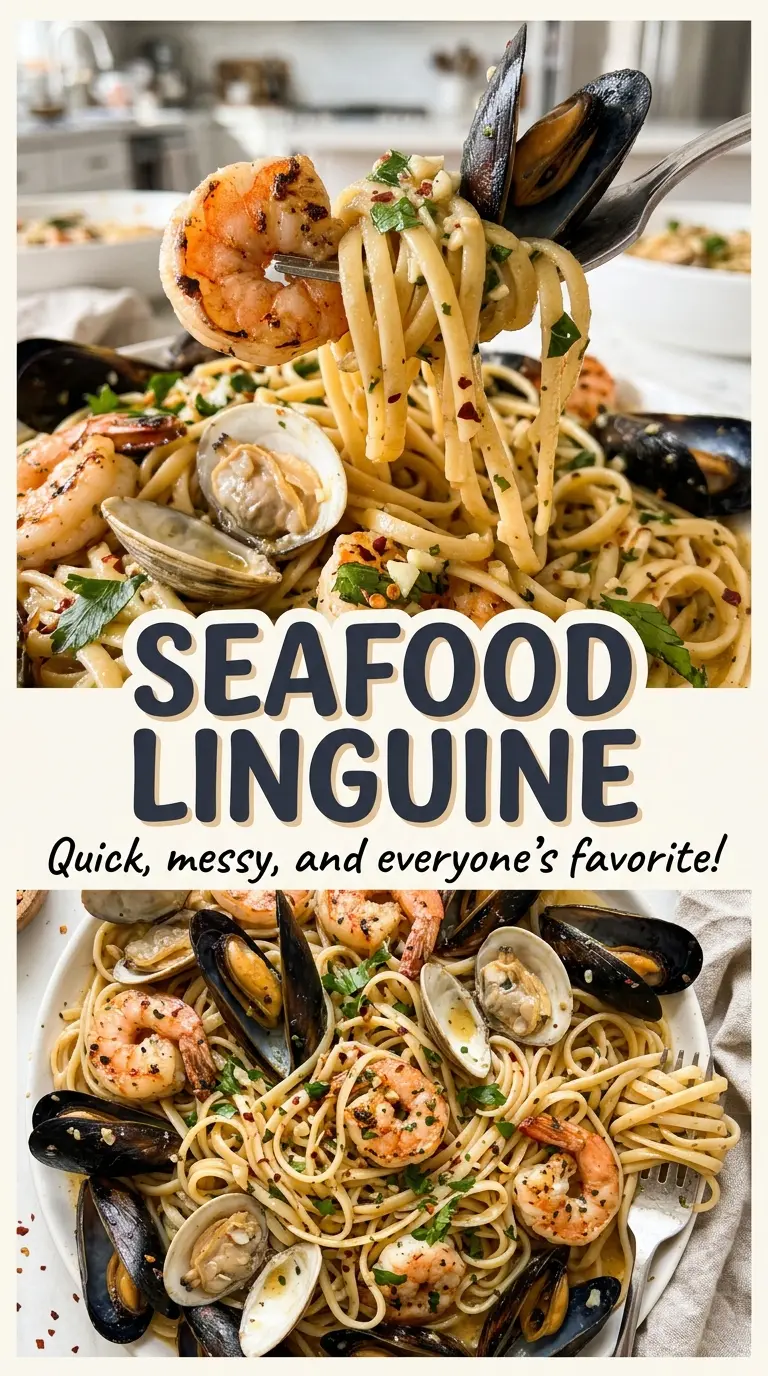
- Mussels — Choose mussels that are fresh and in good condition; scrubbing and debearding them before cooking keeps grit and loose fibers out of the finished dish. Their briny cooking liquid also becomes part of the tomato sauce, so they’re doing more than adding another seafood bite.
- Shrimp and sea scallops — These cook quickly and give the sauce a mix of textures: springy shrimp and tender, meaty scallops. Freshness matters with both, but there’s no need to seek out unusually large scallops; the important thing is using sea scallops with the side muscles removed.
- Crushed tomatoes — Canned crushed tomatoes give the sauce body without needing to break down whole tomatoes. A standard can works well here; the gentle simmer thickens it before the seafood goes in.
- Dry white wine — The wine adds acidity and depth alongside the tomatoes. Use a dry wine you’d be happy to drink; a sweet wine would pull the sauce in a different direction.
- Linguine — Its long, flat strands catch the tomato sauce and seafood juices. Cook it to al dente according to the package so it stays pleasantly firm after being tossed with the hot sauce.
- Parsley and lemon — Fresh parsley gives the finished pasta a clean herbal note, and lemon juice brightens the tomatoes and seafood. Fresh lemon juice is worth using here because it tastes lively when added at the end.
Building the Sauce and Timing the Seafood
Start with fragrant garlic and a simmering tomato base
Warm the olive oil in a 6-quart Dutch oven over medium heat, then stir in the minced garlic and crushed red pepper flakes for 30 seconds, just until fragrant. Keep the garlic moving; it should smell aromatic, not turn dark. Pour in the dry white wine and let it simmer for 2 minutes. Stir in the crushed tomatoes and 1 teaspoon of the kosher salt, then simmer gently for 10 to 12 minutes while you bring the water to a boil in an 8-quart pot.
Cook the linguine while the mussels open
Add the remaining 2 teaspoons of kosher salt and the linguine to the boiling water. Cook it according to the package directions until al dente. While it cooks, add the mussels to the tomato sauce, cover the Dutch oven, and cook for 5 to 7 minutes, until the shells open. Transfer the opened mussels to a bowl and discard any that remain closed.
Give the shrimp and scallops their own short cook
Add the peeled, deveined shrimp and sea scallops to the sauce, leaving the pot uncovered. Cook for 3 to 5 minutes, watching for the shrimp to turn opaque and the scallops to become opaque and firm. Check that the scallops reach 145°F. If they’re still translucent or soft in the center, give them a little more time rather than rushing to add the pasta.
Toss the pasta until the sauce clings
Before draining the linguine, reserve 1 cup of its cooking water. Add the drained pasta and the mussels to the Dutch oven with 1/2 cup of the reserved water, the chopped parsley, and lemon juice. Toss gently so the mussels stay intact and the sauce coats the strands. Add more reserved water only as needed to coat the pasta; the finished sauce should cling rather than pool at the bottom.
Two Easy Ways to Adapt This Seafood Linguine
Make it a lower-carb seafood bowl
Leave out the linguine and the pasta water, then serve the mussels, shrimp, and scallops in bowls with the tomato sauce. You’ll have a lighter, more brothy meal rather than pasta, and you won’t get the starchy coating that helps the sauce cling to linguine.
Keep the sauce mild
Omit the crushed red pepper flakes if you prefer a gentler tomato sauce. The garlic, wine, and seafood still give the dish plenty of savory character, but you’ll lose the little warmth that builds in the original.
Storage and Reheating
- Refrigerator: Store leftovers in a covered container and eat within 3 to 4 days. The linguine will absorb some sauce as it sits, so it won’t be quite as loose as when freshly tossed.
- Freezer: I don’t recommend freezing the assembled dish. The pasta softens after thawing, and the seafood can lose its tender texture.
- Reheating: Warm leftovers gently in a covered skillet with a small splash of water, stirring carefully, until they reach 165°F. High heat can toughen the seafood before the center is hot.
Questions That Come Up When Making Seafood Linguine
Seafood Linguine
Ingredients
Equipment
Method
- Heat the olive oil in a 6-quart Dutch oven over medium heat.
- Add the garlic and red pepper flakes and cook for 30 seconds, stirring, until fragrant.
- Add the wine and simmer for 2 minutes.
- Stir in the tomatoes and 1 teaspoon of the salt, then simmer gently for 10 to 12 minutes.
- Meanwhile, bring the water to a boil in an 8-quart pot.
- Add the remaining 2 teaspoons of salt and the linguine to the boiling water and cook according to package directions until al dente.
- While the pasta cooks, add the mussels to the sauce, cover, and cook for 5 to 7 minutes, until the shells open.
- Transfer the opened mussels to a bowl and discard any that remain closed.
- Add the shrimp and scallops to the sauce and cook uncovered for 3 to 5 minutes, until the shrimp are opaque and the scallops are opaque and firm, reaching 145°F.
- Reserve 1 cup of pasta water, then drain the linguine.
- Add the linguine and mussels to the Dutch oven with 1/2 cup of the pasta water, the parsley, and lemon juice; toss gently, adding more reserved pasta water as needed to coat the pasta.