The pork starts in a cold wok, and for a few minutes it looks like nothing much is happening. Then the fat begins to render, the cubes brown, and the kitchen smells rich and savory. That slow start is what makes Pork Belly Fried Rice taste full-bodied without leaving a slick of grease on every grain.
I keep the rice cold and break up the clumps before they go into the wok. Day-old rice is especially handy because it’s drier and easier to toss with the vegetables, eggs, and pork. Once everything is ready, the high-heat part moves quickly, so I like to have the ingredients measured and close by.
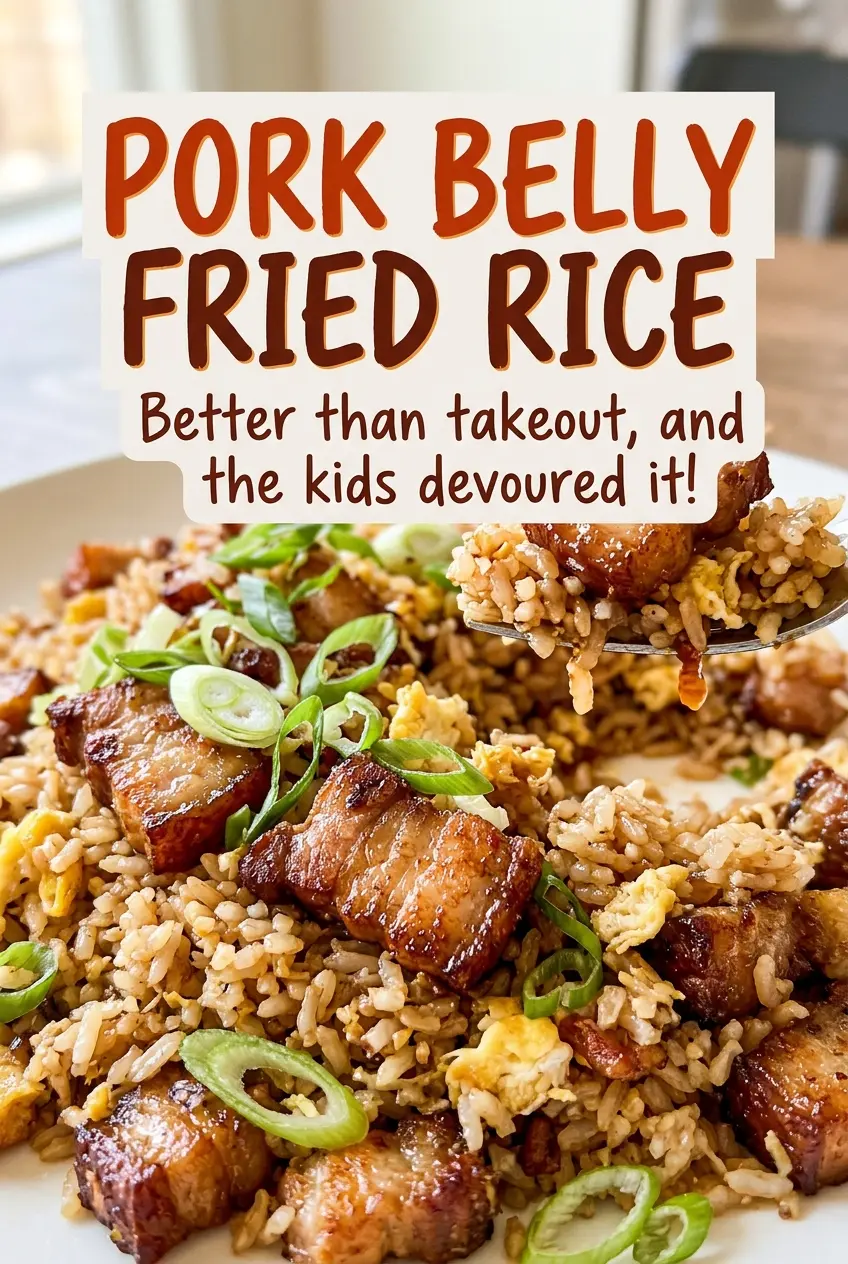
The finished rice has tender egg, little pockets of sweet peas and carrots, and browned pork belly tucked through every scoop. A last scatter of scallion greens keeps each bite bright.
Kitchen Note
Break up the cold rice clumps before they hit the wok. That small bit of prep keeps you from pressing and mashing the grains while the pan is hot.
Save Pork Belly Fried Rice for a fast, savory dinner with browned pork, tender egg, and scallions in every bite.
Why This Fried Rice Needs Just Two Tablespoons of Pork Fat
Pork belly gives you both browned meat and the cooking fat that carries its savory flavor into the rest of the pan. Keeping a measured amount of that rendered fat means the garlic, ginger, vegetables, and rice get coated without turning heavy. Pouring off the excess isn’t about losing flavor; it’s what keeps the grains distinct instead of oily.
That balance matters more here than adding extra soy sauce. Soy sauce seasons the rice, but it can’t fix a greasy texture, and too much will make the finished dish taste salty before the pork’s richness has a chance to come through. The pork should be browned, the rice hot and separate, and the seasoning distributed in a light coating. You’ll get a satisfying bite without a puddle collecting at the bottom of the bowl.
What Pork Belly, Cold Rice, and Toasted Sesame Oil Each Bring

- Skinless pork belly — Its fat renders into the cooking base while the meat browns, giving this fried rice a richer finish than a lean cut. Look for skinless pieces so you can cube the meat evenly. Cured bacon brings smoke and extra salt, so it won’t taste like the original; if pork belly isn’t available, leaving it out is better than letting a strongly seasoned substitute take over.
- Cold long-grain rice — The separate, sturdy grains are what let the rice fry rather than turn soft and clumpy. Day-old rice is a good use for leftovers, but any cold cooked long-grain white rice works. Cold cooked long-grain brown rice is a practical swap; it makes the finished dish chewier and more nutty.
- Soy sauce — It supplies the main salty, savory seasoning, so a decent everyday bottle is fine; there’s no need for a premium variety. For a gluten-free version, use certified gluten-free tamari in its place, keeping the same amount.
- Toasted sesame oil — A little goes a long way because its toasted aroma is more noticeable than its role as cooking fat. Use it for the finish, not to render the pork. If you need to leave it out, the rice will still work but won’t have that distinct sesame fragrance.
- Eggs and scallions — The eggs add soft curds, while separating the scallion whites and greens gives you cooked onion flavor and a fresh finish. Ordinary large eggs are right for the texture here; the scallions don’t need special handling beyond slicing and keeping the parts apart.
Build the Wok in Stages So the Rice Stays Separate
Render and Brown the Pork Belly
Add 12 ounces of uncured, skinless pork belly cut into 1/4-inch cubes to a cold 14-inch wok. Set it over medium heat and cook for 8 to 10 minutes, stirring often, until the fat has rendered and the pieces are browned. Check that the thickest pieces reach 145°F, then transfer them to a plate to rest for 3 minutes. Starting with a cold wok gives the fat time to render as the pan heats, rather than browning the outside before enough fat has melted.
Scramble the Eggs in the Rendered Fat
Pour off the excess pork fat, leaving 2 tablespoons in the wok, and raise the heat to high. Add 3 large beaten eggs and scramble for about 1 minute, just until they’re set. Transfer them to the plate with the pork before they become dry or browned. They’ll go back into the wok at the end, so a tender, just-set texture is what you’re after.
Soften the Aromatics and Vegetables
Add 2 minced garlic cloves and 1 teaspoon grated fresh ginger to the hot wok, then stir-fry for 15 seconds. Keep them moving; garlic can brown quickly at high heat and turn bitter. Add 1 cup frozen peas and carrots and cook for 2 minutes. The vegetables should be hot and bright, with the garlic and ginger fragrant but not dark.
Fry the Rice, Then Bring Everything Together
Add 4 cups cold cooked long-grain white rice and stir-fry for 3 to 4 minutes, breaking up any clumps that remain. Keep tossing until the rice is hot throughout, rather than stopping when only the surface grains feel warm. Stir in 3 tablespoons soy sauce, 1 teaspoon toasted sesame oil, and the white parts of 3 thinly sliced scallions. Return the pork and eggs to the wok, toss until evenly combined and hot, then take the wok off the heat and scatter the scallion greens over the top.
Easy Changes for a Different Pantry or a Brighter Finish
Make It Gluten-Free with Tamari
Replace the soy sauce with the same amount of certified gluten-free tamari. It keeps the salty, savory seasoning close to the original, though the taste may be a little rounder and less sharp.
Use Brown Rice for a Chewier Bowl
Swap in cold cooked long-grain brown rice for the white rice. Its firmer grains hold their shape well, but the result is heartier and less tender, with a more pronounced whole-grain taste.
Give the Scallions a Milder Finish
For a softer onion flavor, stir the scallion greens into the wok with the pork and eggs instead of scattering them on top. They’ll lose some of their fresh bite but blend more gently into the hot rice.
Storage and Reheating
- Refrigerator: Transfer leftovers to a shallow airtight container and refrigerate within 2 hours; use within 3 to 4 days. The rice will soften a little as it sits.
- Freezer: Freeze cooled portions in airtight freezer containers for up to 2 months for best quality. Thaw overnight in the refrigerator; the rice may be less springy after freezing.
- Reheating: Reheat a portion in a skillet over medium heat, stirring until it’s steaming throughout and reaches 165°F. Avoid leaving it over high heat for too long, which can dry out the rice and toughen the pork.
Questions That Come Up When Making Pork Belly Fried Rice
Pork Belly Fried Rice
Ingredients
Equipment
Method
- Add the pork belly to a cold 14-inch wok and cook over medium heat for 8 to 10 minutes, stirring often, until the fat has rendered and the pieces are browned.
- Check that the thickest pieces reach 145°F, then transfer them to a plate to rest for 3 minutes.
- Pour off the excess fat, leaving 2 tablespoons in the wok.
- Raise the heat to high and add the eggs; scramble for about 1 minute until just set.
- Transfer the eggs to the plate with the pork.
- Add the garlic and ginger to the wok and stir-fry for 15 seconds.
- Add the peas and carrots and cook for 2 minutes.
- Add the rice and stir-fry for 3 to 4 minutes, breaking up any remaining clumps, until hot throughout.
- Stir in the soy sauce, sesame oil, and scallion whites.
- Return the pork and eggs to the wok and toss until evenly combined and hot.
- Remove from the heat and scatter the scallion greens over the top.