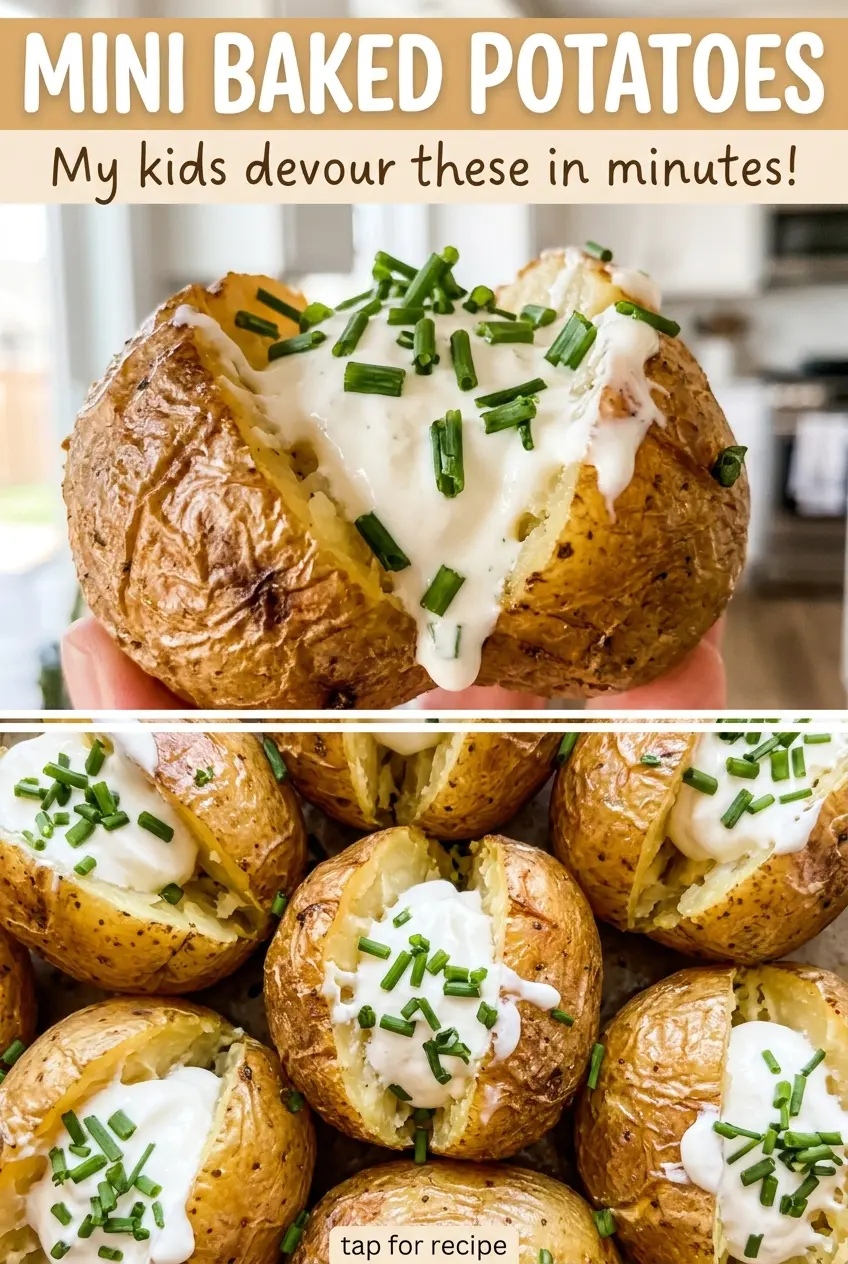
The potatoes hiss softly as the oil hits the hot pan, and the skins start to wrinkle before the centers are tender. I used to pull them out when they looked ready on the outside; the fork test taught me to wait for the middle, too. These mini baked potatoes are simple enough for a weeknight side, but that small pause makes the difference between a crisp skin and a firm center.
I keep the potatoes whole and spread them in one layer, so their skins roast instead of steaming against one another. Olive oil helps the salt and pepper cling while the potatoes bake, and turning them halfway gives each side time against the hot pan. The finished potatoes have tender centers and savory skins, with no peeling or complicated prep. This batch serves six, and each potato is easy to pick up straight from the baking sheet.
Kitchen Note
Turn the potatoes halfway through the bake, not just at the end. That gives the side that was resting on the pan time to roast, too, and helps the potatoes cook more evenly.
Save these mini baked potatoes for an easy side with tender centers, crisp skins, and a short list of pantry basics.
Why a Single Layer Matters More Than a Darker Skin
When potatoes sit crowded together, the moisture they release gets trapped around them. The oven can still heat the potatoes, but their surfaces are more likely to soften than roast. Spreading them out in one layer gives hot air room to move around the skins and keeps the cut-free surfaces in contact with the baking sheet.
Drying the potatoes after scrubbing matters for the same reason. Water clinging to the skins adds moisture right where you want the oil and seasoning to coat evenly. Pat them dry before tossing, then check that each potato has a light sheen of oil rather than a puddle collecting on the pan. If your baking sheet is crowded, use a larger rimmed sheet rather than piling the potatoes up; they need room to roast. The goal isn’t a deeply browned crust at any cost. It’s a potato that’s tender all the way through, with a skin that tastes roasted instead of damp.
What the Potatoes, Oil, and Seasoning Each Bring

- Baby potatoes — Their small size lets them roast whole, so you get a tender center under a skin that has had time in the oven. Pick firm potatoes without soft or damaged spots, and scrub away any dirt. Dry them well before adding the oil; that quick prep has a bigger effect on the surface than choosing a more expensive bag.
- Olive oil — Oil coats the skins and helps the salt and pepper stick instead of falling to the baking sheet. A standard olive oil works well here; save a more expensive finishing oil for a dish where its flavor won’t be baked away. Keep the potatoes lightly coated rather than leaving excess oil in the pan.
- Kosher salt — Its larger crystals are easy to toss around the potatoes and season the skins. I use kosher salt for these proportions; finer table salt doesn’t measure the same by volume and can make a direct swap too salty.
- Ground black pepper — Pepper adds a mild, savory bite that balances the potatoes. Ordinary ground black pepper is a good fit, so there’s no need to buy a specialty pepper for this side.
The Three Moments That Make These Potatoes Reliable
Heat the Oven Before the Potatoes Go In
Set the oven to 425°F before you start roasting. A fully heated oven gives the potatoes a consistent start and lets the oil-coated skins roast rather than sit in gradually warming air. Scrub and dry the potatoes while the oven heats. If they’re still wet when you toss them, take another moment to dry the skins before seasoning.
Coat and Spread Without Crowding
Put the potatoes on a rimmed baking sheet with the olive oil, kosher salt, and ground black pepper, then toss until the seasoning is distributed. Spread them into a single layer, leaving space between them rather than letting them pile together. Look for a light, even coating on the skins; a pool of oil on the pan means it hasn’t been distributed well. Keep the potatoes whole for this method.
Turn Once, Then Check the Centers
Bake for 30 to 40 minutes, turning the potatoes halfway through. The exact point depends on the potatoes, so use a fork rather than judging by skin color alone. When a fork easily pierces the center, they’re ready; if it catches on a firm middle, they need more time within the baking window. Don’t pull them just because the outside looks roasted.
Two Small Changes That Suit Different Tables
A Milder, Pepper-Free Batch
Leave out the ground black pepper for a gentler, simpler seasoning. The olive oil and kosher salt still coat the potatoes, so the roasting method stays the same; the result just has less bite. This is an easy adjustment if pepper isn’t welcome at the table.
A Naturally Vegan, Gluten-Free Side
The potatoes, olive oil, salt, and pepper already make a plant-based side without gluten or dairy, so no replacement ingredients are needed. Keep the same seasoning and roasting method for a dish that fits those meals without changing its crisp-skinned, tender-centered character.
Storage and Reheating
- Refrigerator: Cool and refrigerate in a covered container within 2 hours. They’ll keep for 3 to 4 days; the skins soften in storage.
- Freezer: They can be frozen in an airtight container, though the potatoes may turn softer or a little mealy after thawing. For the best skin texture, make only what you’ll use within a few days.
- Reheating: Spread them on a baking sheet and warm in a 425°F oven until heated through. The microwave is quicker, but it softens the skins further.
Questions That Come Up While Roasting Mini Potatoes
Mini Baked Potatoes
Ingredients
Equipment
Method
- Preheat the oven to 425°F.
- Toss the potatoes with the olive oil, kosher salt, and black pepper on a rimmed baking sheet.
- Spread the potatoes in a single layer.
- Bake for 30 to 40 minutes, turning the potatoes halfway through, until a fork easily pierces the centers.