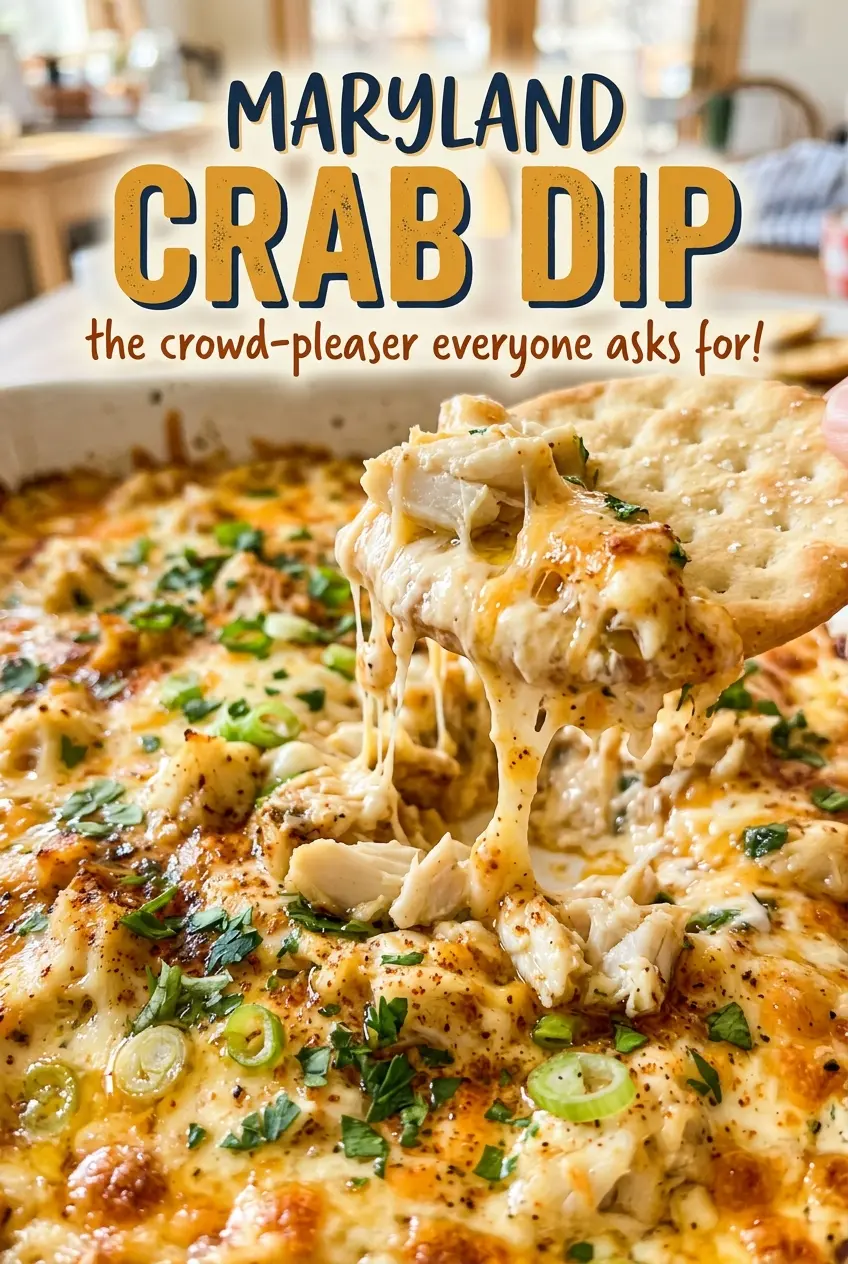
At 350°F, the first bubbles show up around the edges of the dish before the center catches up. That’s the cue I watch for with Maryland Crab Dip: the cream cheese base turns warm and creamy, the cheddar melts across the top, and the crab stays in tender pieces instead of disappearing into the mixture.
I stir the base until it’s smooth before the crab goes anywhere near the bowl. Then I fold gently, spread it into a 1 1/2-quart baking dish, and let the oven do the rest. Lemon juice, Dijon, Worcestershire, and Old Bay give the rich dairy a savory, bright edge, while sharp cheddar adds a browned, cheesy top. It’s a warm dip with plenty of real crab in every scoop.
Kitchen Note
Fold the crab in with a light hand so the larger pieces stay intact. A few visible lumps in the bowl mean you’ll get distinct bites of crab in the finished dip.
Save this Maryland Crab Dip for its creamy Old Bay-seasoned base, generous crab pieces, and bubbling cheddar top.
Why the Cream Cheese Needs to Be Smooth Before the Crab Goes In
Softened cream cheese blends easily with the mayonnaise and sour cream, giving the dip a cohesive base before it goes into the oven. If the cream cheese is still firm, it tends to leave little lumps in the mixture. Those won’t magically disappear during baking; you’re more likely to end up with uneven patches of cream cheese next to thinner, looser areas.
Take a moment to stir the base smooth before adding the crab. The lemon juice, Worcestershire, Dijon, and Old Bay disperse more evenly through that creamy mixture, so each scoop tastes balanced rather than sharply seasoned in one spot. This order also lets you work the base without pressing on the crab, which is what keeps the finished dip from turning into a dense seafood spread.
What Gives This Maryland Crab Dip Its Savory, Tangy Balance

- Cream cheese — This gives the dip its thick, scoopable body. Let it soften before mixing; the smooth texture matters more here than choosing a particular brand.
- Mayonnaise and sour cream — Together they loosen the cream cheese and keep the base creamy rather than stiff. Use plain versions so their tang and richness stay in balance with the crab and seasonings.
- Lemon juice, Worcestershire, Dijon, and Old Bay — Each brings a different kind of lift: lemon is bright, Worcestershire savory, Dijon tangy, and Old Bay gives the dip its familiar Maryland-style seasoning. Measure carefully rather than adding more of one seasoning to compensate for another.
- Lump crabmeat — The large pieces are what make this dip feel like crab dip instead of a smooth cheese spread. Pick through it for shell fragments, and drain it if there’s excess liquid; extra moisture can loosen the baked mixture.
- Sharp cheddar — Its assertive, savory flavor stands up to the cream cheese and crab. Dividing it between the mixture and the top gives the center some cheese while leaving a melted layer across the surface.
Mixing and Baking the Dip Without Losing the Crab
Prepare the Dish and Smooth the Base
Heat the oven to 350°F and lightly grease a 1 1/2-quart baking dish. In a medium bowl, stir together the softened cream cheese, mayonnaise, sour cream, lemon juice, Worcestershire sauce, Dijon mustard, and Old Bay. Keep stirring until no firm cream cheese pockets remain. A smooth, evenly seasoned base is much easier to fold with than a mixture that still has lumps.
Fold in the Crab and Half the Cheddar
Add the crabmeat and half of the shredded cheddar to the bowl. Fold them through the base gently, turning the mixture just enough to distribute the cheese and crab. If you stir briskly, the lump crab breaks into smaller flakes and the dip loses its generous texture. Stop when the ingredients are combined, even if a few pieces of crab remain visible.
Top and Bake Until Bubbling
Spread the mixture into the prepared baking dish, then scatter the remaining cheddar over the surface. Bake for 25–30 minutes, watching for bubbles around the edges and a hot center. The edges usually show the first sign that the dip is ready, but the center should reach 165°F. If the top looks melted before the center is hot, use the center temperature—not the cheese alone—as your cue.
Let the Dip Set Before Serving
Take the dish from the oven and let it rest for 5 minutes before serving. The brief rest gives the creamy base a chance to settle, so it clings to the crab instead of running across the plate. The top will still be warm and soft, with the edges bubbling less vigorously than they did in the oven.
Two Small Changes That Give the Dip a Different Texture
A More Even Crab Texture
For smaller, more evenly distributed bites, gently break some of the larger crab lumps as you fold them into the base. The flavor stays the same, but the dip becomes easier to scoop onto smaller crackers and less focused on big pieces of crab.
A Cheddar-Forward Top
For a more pronounced cheesy layer, fold the crab into the base without adding cheddar, then sprinkle all the cheddar over the top. The center will have less cheddar running through it, while the surface gets a more continuous melted cap.
Storage and Reheating
- Refrigerator: Keep leftovers covered for 3–4 days. The dip firms up when cold, then softens as it warms.
- Freezer: Freezing isn’t recommended. The dairy base can separate after thawing, and the crab may lose its tender texture.
- Reheating: Warm leftovers in an oven-safe dish at 350°F until heated through. Avoid prolonged reheating, which can dry the crab and make the creamy base oily.
Questions That Come Up When Making Maryland Crab Dip
Maryland Crab Dip
Ingredients
Equipment
Method
- Preheat the oven to 350°F and lightly grease a 1 1/2-quart baking dish.
- In a medium bowl, stir the cream cheese, mayonnaise, sour cream, lemon juice, Worcestershire sauce, Dijon mustard, and Old Bay until smooth.
- Gently fold in the crabmeat and 1/2 cup of the cheddar, taking care to keep the crab in lumps.
- Spread the mixture in the prepared dish and sprinkle the remaining 1/2 cup cheddar over the top.
- Bake for 25–30 minutes, until bubbling around the edges and the center reaches 165°F.
- Rest for 5 minutes before serving.