The water goes quiet for a moment when the calamari hits the pot, then returns to a gentle boil as the rings turn opaque. Shrimp and scallops need their own turns, too; giving each seafood its own short cooking window keeps this Marinated Seafood Salad from tasting like one texture repeated three times. I spread the cooked pieces out to cool, then bring them together with lemon, red wine vinegar, garlic, parsley, crisp celery, red onion, and briny olives. The finished salad is chilled and bright, with each kind of seafood still distinct.
The dressing is simple, but its balance matters. Lemon juice brings a fresh, clean tang while red wine vinegar adds a deeper bite, and olive oil rounds both out without hiding the seafood. After an hour or two in the refrigerator, the garlic and pepper have time to mingle with the dressing, and the celery and onion pick up those savory, citrusy notes. Each forkful is cool, tender, and pleasantly briny.
Kitchen Note
Use the roomy 5-quart bowl for tossing, not just mixing the dressing. It gives the seafood space to turn gently, so the scallops stay in pieces instead of getting knocked apart against the sides.
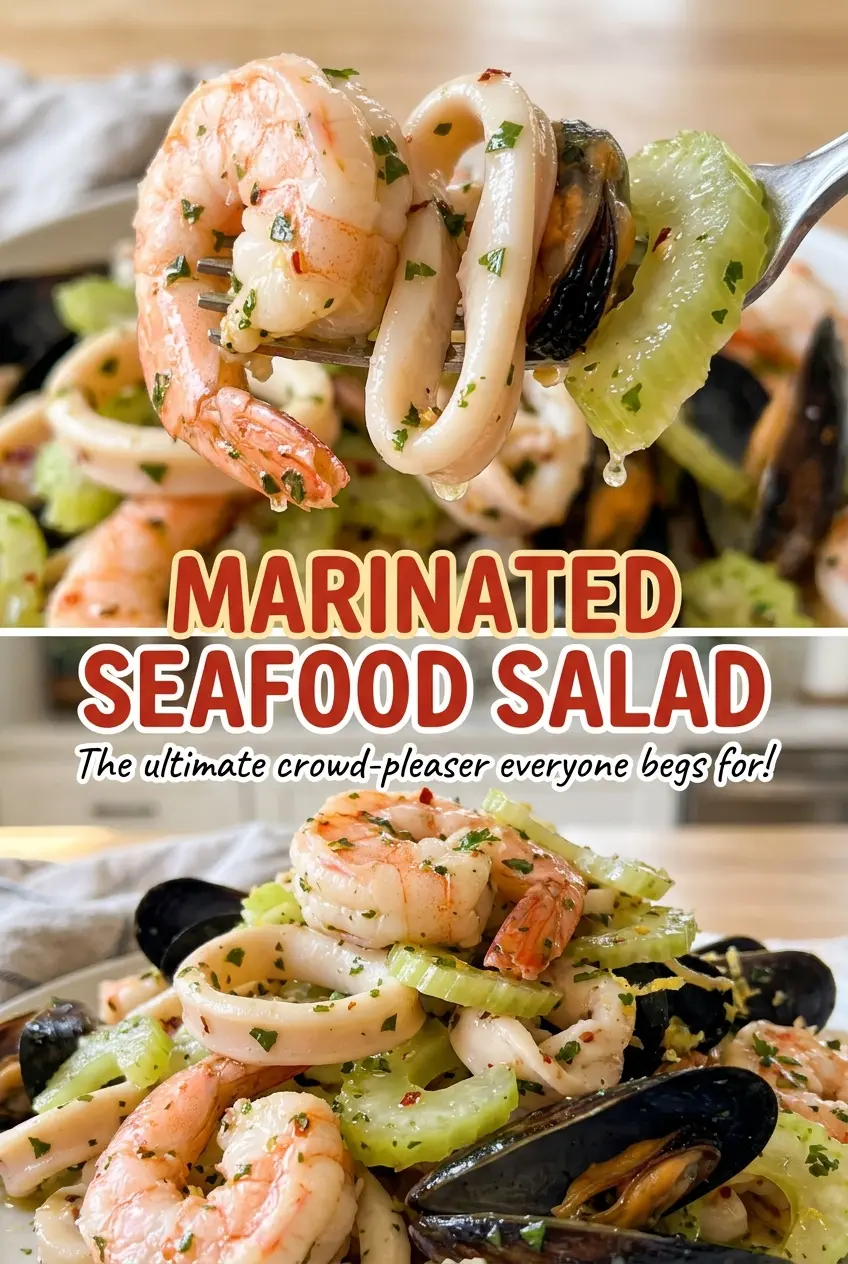
Save this chilled Marinated Seafood Salad for its tender calamari, shrimp, scallops, and bright lemon-and-olive-oil dressing.
Why Calamari, Shrimp, and Scallops Need Three Separate Turns in the Pot
It’s easy to think of seafood as one group with one cooking time, but these three pieces don’t reach their best texture together. Calamari rings are thin and cook quickly; shrimp turn opaque in just a little longer, while thick sea scallops need the longest turn. If everything goes in at once, the calamari and shrimp keep cooking while the scallops catch up. That’s how a salad meant to be tender ends up with rubbery rings and firm, dry shrimp.
Cooking each type on its own also lets you watch for the cue that matters instead of guessing from the color of the whole pot. Lift each batch out as soon as it’s opaque and the thickest pieces reach the right temperature. Then let the water come back to a boil before the next seafood goes in, so each batch gets a consistent cooking environment. The extra minute between batches is worth it: you get tender calamari, springy shrimp, and scallops that stay soft enough to absorb the dressing.
The Seafood and Bright, Briny Ingredients That Shape Every Bite
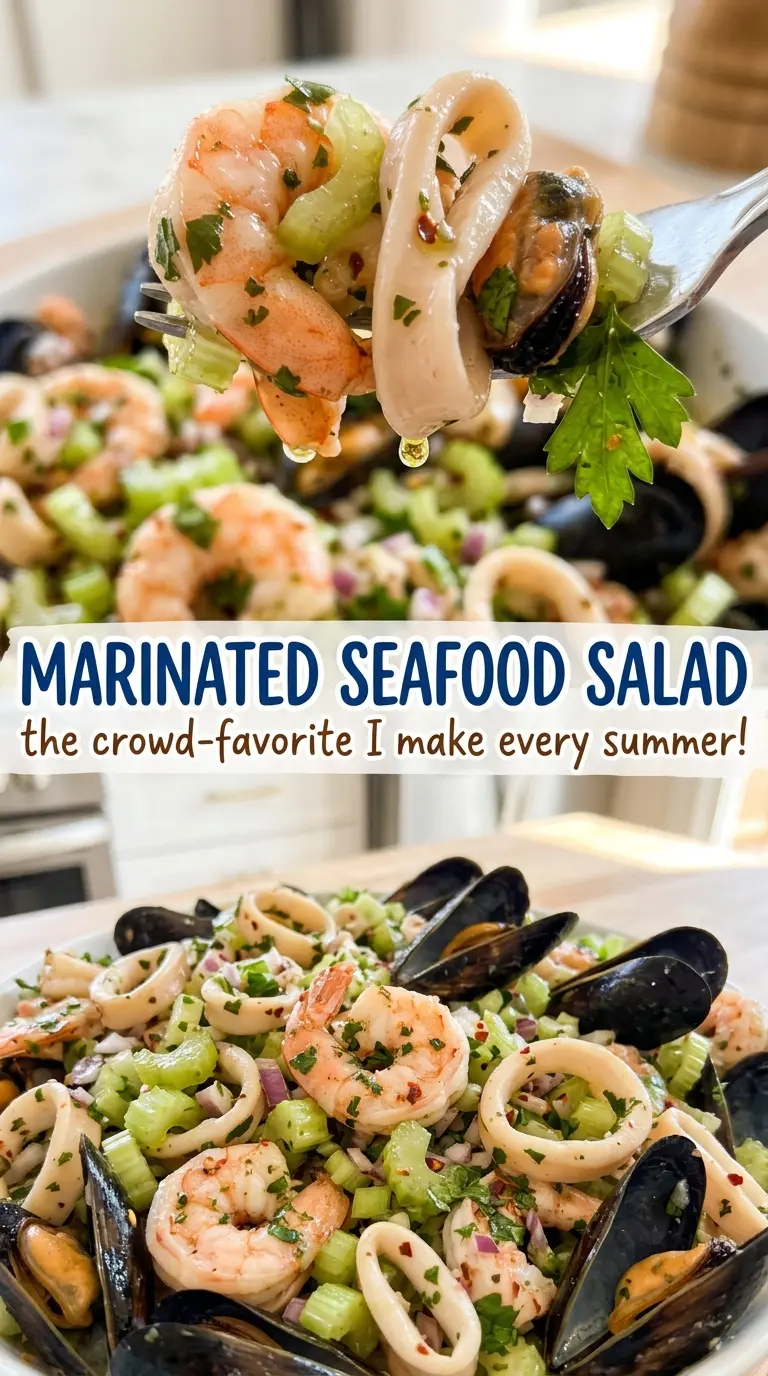
- Calamari, shrimp, and sea scallops — The mix gives the salad three distinct textures, so using cleaned calamari tubes cut into rings and large shrimp helps the pieces cook predictably. Removing the scallop side muscles keeps their texture more pleasant. Freshness matters most with seafood; use seafood that smells clean and mild, not strongly fishy.
- Extra-virgin olive oil, lemon juice, and red wine vinegar — Olive oil carries the garlic and pepper while softening the sharpness of the acids. Fresh lemon juice gives the dressing a brighter citrus note than bottled juice, and the red wine vinegar adds a rounder tang. Keep both acids in the mix; using only one changes the balance and leaves the dressing either flatter or sharper.
- Garlic and red pepper flakes — Minced garlic spreads its savory flavor through the oil-and-acid dressing, while the flakes leave a gentle warmth rather than making the salad fiery. Mince the garlic finely so no bite gets a large, harsh piece. The black pepper adds a quieter, earthy kind of heat.
- Parsley, celery, red onion, and Kalamata olives — Parsley gives the chilled salad a fresh herbal lift, and thin celery slices bring a crisp contrast to the seafood. Thinly sliced red onion contributes a little bite without taking over each forkful. Halved Kalamata olives are worth keeping for their salty, briny flavor; their richness makes the lemony dressing taste more rounded.
Poaching Each Seafood Type Without Losing Its Tender Bite
Cook the Seafood in Separate Batches
Bring the water and part of the kosher salt to a boil in an 8-quart pot. Add the calamari and keep the water at a gentle boil for 1 to 2 minutes, until the rings are opaque and the thickest pieces register 145°F; transfer them with a slotted spoon to an 18×13-inch rimmed baking sheet. Bring the water back to a boil for each new batch, cooking the shrimp for 2 to 3 minutes and the scallops for 3 to 4 minutes, until opaque and their thickest pieces register 145°F. If the water hasn’t returned to a boil, wait before adding the next batch.
Cool the Seafood Before It Meets the Dressing
Spread the calamari, shrimp, and scallops into a single layer on the baking sheet, rather than leaving them in a heap. Refrigerate for 15 to 20 minutes, until the seafood is cooled. This pause keeps the pieces from carrying extra heat into the dressing and gives you a clean start for the marinating stage. The seafood should feel cool, not warm, when you add it to the bowl.
Whisk, Toss, and Give the Flavors Time
In a 5-quart bowl, whisk together the olive oil, lemon juice, red wine vinegar, minced garlic, red pepper flakes, black pepper, and the remaining kosher salt. Add the cooled seafood, parsley, celery, red onion, and halved olives, then toss until everything is coated. Cover and refrigerate for 1 to 2 hours, tossing once halfway through so the dressing reaches all the pieces. Serve the salad chilled.
Three Small Changes That Shift the Salad’s Balance
A Milder, No-Heat Salad
Leave out the red pepper flakes if you want the lemon, garlic, and briny olives to lead without a warm finish. The dressing will still have plenty of savory character from the garlic and black pepper.
An Allium-Free Version
For a salad without garlic or onion, omit both and let the parsley and lemon juice carry the fresh, aromatic notes. You’ll lose some savory sharpness, but the olives and vinegar keep the chilled salad lively.
Less Briny, No-Olive Salad
Leave out the Kalamata olives for a cleaner, more citrus-forward finish. The salad will lose some salty depth, while the seafood, celery, and parsley come through more plainly.
Storage and Reheating
- Refrigerator: Keep the salad covered and eat it within 2 days; the celery and onion soften as they sit.
- Freezer: Freezing isn’t recommended. The seafood and crisp vegetables lose their texture as they thaw, and the dressing can separate.
- Reheating: Serve it chilled; warming the salad will soften the seafood and vegetables, so don’t heat the leftovers.
Questions That Come Up With Chilled Seafood Salad
Marinated Seafood Salad
Ingredients
Equipment
Method
- Bring the water and 2 teaspoons of the kosher salt to a boil in an 8-quart pot.
- Add the calamari and cook at a gentle boil for 1 to 2 minutes, until opaque and the thickest pieces register 145°F.
- Transfer the calamari with a slotted spoon to an 18x13-inch rimmed baking sheet.
- Return the water to a boil, add the shrimp, and cook for 2 to 3 minutes, until opaque and the thickest shrimp register 145°F.
- Transfer the shrimp to the baking sheet.
- Return the water to a boil, add the scallops, and cook for 3 to 4 minutes, until opaque and the thickest scallops register 145°F.
- Transfer the scallops to the baking sheet.
- Spread the seafood in a single layer and refrigerate for 15 to 20 minutes, until cooled.
- Whisk the olive oil, lemon juice, red wine vinegar, garlic, red pepper flakes, black pepper, and remaining 1 teaspoon kosher salt in a 5-quart bowl.
- Add the cooled seafood, parsley, celery, red onion, and olives, then toss to coat.
- Cover and refrigerate for 1 to 2 hours, tossing once halfway through.
- Serve chilled.