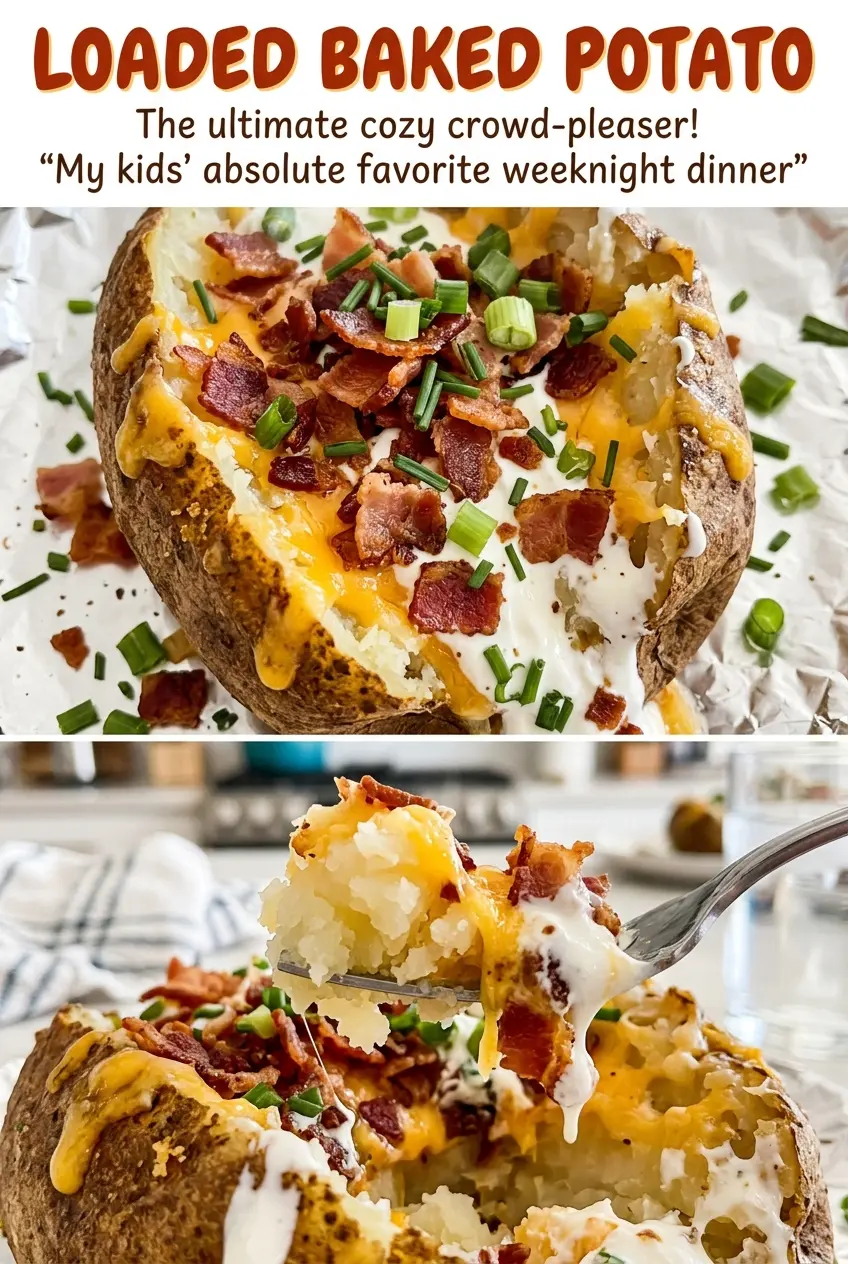
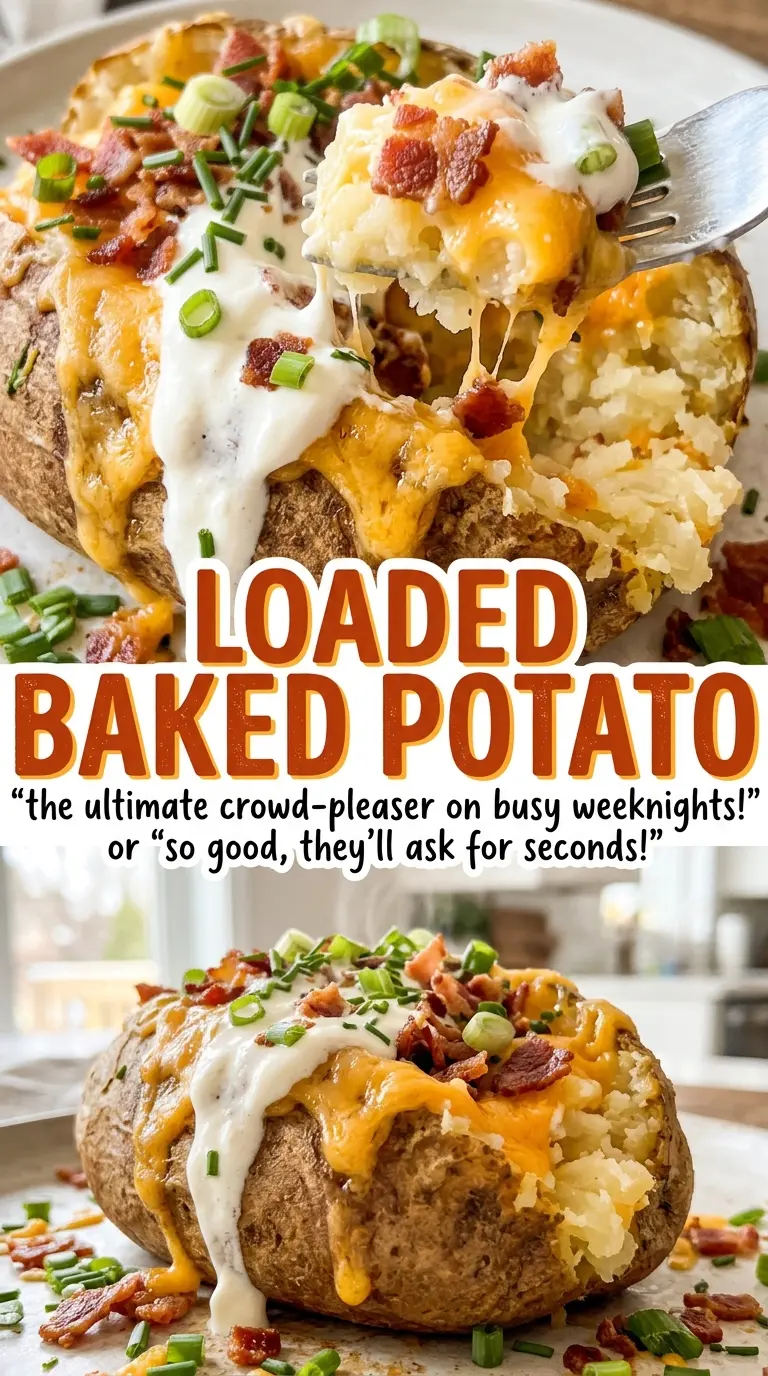
When a knife slides into the center of a potato with almost no resistance, it’s ready for the best part: opening it while it’s still hot. The skin should feel crisp, and the middle should be soft enough to fluff with a fork. That’s the difference between a loaded baked potato that eats like dinner and one that feels like a potato with toppings piled on.
I bake these russets uncovered on a rimmed baking sheet, with a little olive oil and kosher salt on the skin. The oven has time to crisp the outside while the inside turns tender, and the toppings go on only after the potato is open and fluffed. Butter and cheddar melt into the steaming center; cool sour cream, crisp bacon, and scallions finish each bite with a little contrast.
Kitchen Note
Prick each potato several times with a fork before you rub on the oil. Those little openings give steam a way out as the centers heat, so the skins are less likely to split before you’re ready to open them.
Save these loaded baked potatoes for a dinner with crisp-skinned russets, melted cheddar, and bacon in every bite.
Why These Russets Need an Unwrapped Bake Before the Toppings Go On
A potato’s skin and center need slightly different things. The center needs time in the oven to soften all the way through, while the outside needs a dry surface to turn crisp. Leaving the potatoes uncovered lets moisture escape from the skin instead of trapping it around the potato. Wrapping them in foil would hold in steam and leave you with a softer exterior.
Russets suit this job because their starchy interiors turn fluffy when baked, and their sturdy skins hold the toppings once you split them. The olive oil helps the outside brown, while the salt seasons the skin itself rather than only the center. Keep the potatoes on a rimmed baking sheet so they’re easy to move in and out of the oven. The result is a crisp shell that gives way to a soft middle, ready to take in butter and cheddar.
Why Russets, Cheddar, and Sour Cream Belong in These Layers
- Russet potatoes — Their fluffy texture is what makes the fork-fluffed center work so well. Choose firm potatoes that are close in size so they bake at a similar pace; a waxier potato won’t give you the same light interior.
- Olive oil — A thin coating helps the skins brown and crisp. There’s no need for an expensive bottle here; use an everyday olive oil you’re happy to cook with.
- Butter — Softened butter is easy to divide over the hot, fluffed centers, where it melts into the potato instead of sitting in one cold lump. If you only have salted butter, it works, but the finished potato will be saltier.
- Cheddar — Its sharp, familiar flavor stands up to the potato and bacon. A block of cheddar that you shred yourself melts smoothly; pre-shredded cheddar is convenient and still works, though its coating can make the melt a little less silky.
- Sour cream — The cool tang cuts through the rich butter and cheese. Plain Greek yogurt can stand in for sour cream; it’s thicker and has a slightly sharper taste.
- Bacon and scallions — Bacon brings a crisp, smoky bite, and thinly sliced scallions add freshness. Cook bacon until crisp enough to crumble cleanly, and slice the scallions just before topping so they stay bright.
The 50-to-65-Minute Bake, Then the Hot-Potato Finish
Get the russets ready for the oven
Heat the oven to 425°F while you scrub and dry the potatoes. Prick each one several times with a fork, rub the skins with olive oil, and sprinkle them with kosher salt. Set them on a rimmed baking sheet with space around each potato so the hot air can reach the skins. Start checking in the 50-to-65-minute baking window; the skin should be crisp, and a knife should slide easily into the center.
Cook the bacon until it crumbles
While the potatoes bake, cook the bacon in a skillet over medium heat for 8 to 10 minutes, turning it as needed. Watch for evenly browned strips and crisp edges rather than relying on one side alone. If the bacon still bends limply when you lift it, give it more time in the skillet. Drain it on paper towels, then crumble it once it’s cool enough to handle.
Open the potatoes while they’re hot
Cut a lengthwise slit in each hot potato, then gently squeeze the ends to open it. Fluff the center with a fork without breaking through the skin; that gives the toppings room to settle in while the potato still holds its shape. Divide the softened butter and cheddar among the potatoes first, so the heat softens both into the middle. Finish with sour cream, crumbled bacon, and sliced scallions, and serve right away.
How to Change the Toppings Without Losing the Baked-Potato Texture
Pepper Jack for a little heat
Replace the cheddar with shredded pepper Jack for a gentle chile kick and a softer, creamier melt. Keep the sour cream and scallions; they balance the extra heat without changing the way you assemble the potatoes.
A dairy-free loaded potato
Use plant-based butter, dairy-free cheddar-style shreds, and dairy-free sour cream in place of the dairy toppings. The potato will still have the same crisp skin and fluffy center, though the cheese-style shreds may melt differently from cheddar. Check the package directions for the best melt.
A meat-free topping with browned mushrooms
Skip the bacon and top each potato with sliced mushrooms browned in a skillet with a little olive oil. Let the mushrooms take on color before you use them, so they add savory depth instead of releasing extra moisture over the fluffy center. Keep the cheddar, sour cream, and scallions for a familiar finish.
Storage and Reheating
- Refrigerator: Refrigerate leftovers within 2 hours and keep the potatoes and toppings in separate airtight containers for 3 to 4 days. The skins soften once the potato is chilled and topped.
- Freezer: I don’t recommend freezing these loaded potatoes. Sour cream can separate, and the potato’s texture is less pleasant after thawing.
- Reheating: Warm the potato separately in the microwave or oven until it reaches 165°F, then add the cold toppings. Reheating the sour cream with the potato can make it watery.
Questions That Come Up Before the Potatoes Hit the Table
Loaded Baked Potato
Ingredients
Equipment
Method
- Preheat the oven to 425°F.
- Prick each potato several times with a fork, rub with the olive oil, and sprinkle with the salt.
- Place the potatoes on a rimmed baking sheet and bake for 50 to 65 minutes, until the skins are crisp and a knife slides easily into the centers.
- While the potatoes bake, cook the bacon in a skillet over medium heat for 8 to 10 minutes, turning as needed, until crisp.
- Drain the bacon on paper towels and crumble.
- Cut a lengthwise slit in each hot potato and gently squeeze the ends to open.
- Fluff the insides with a fork, then divide the butter and cheddar among the potatoes.
- Top each potato with sour cream, crumbled bacon, and scallions, and serve immediately.