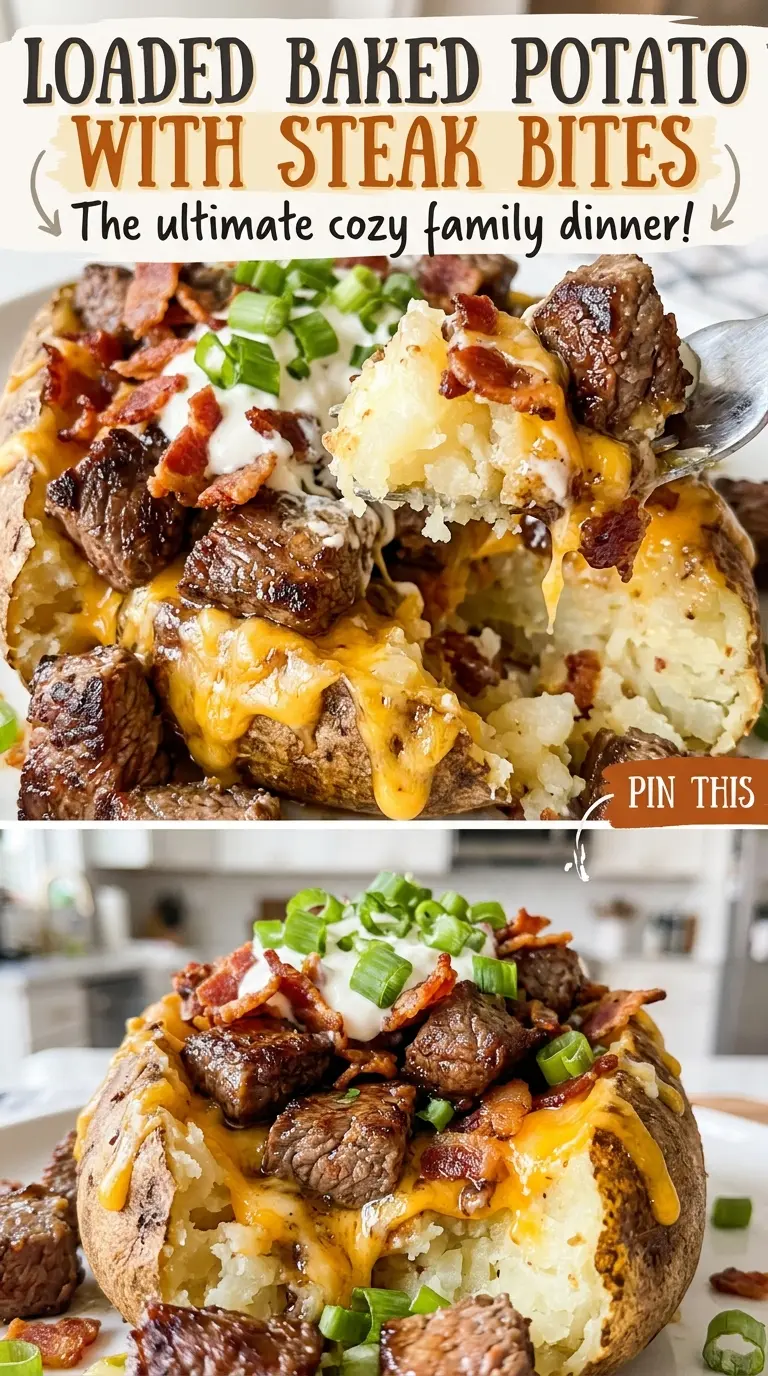
The paring knife tells you when a russet is ready: it should slide through the center without a firm spot resisting it. That’s the difference between a fluffy middle and a potato that’s still dense under all those toppings. For these loaded baked potatoes with steak bites, I bake the potatoes until their skins turn crisp, then finish them with cheddar, bacon, sour cream, green onions, and buttery bites of sirloin.
I cook the steak after the bacon, but I don’t use the bacon skillet as-is. Pouring off the fat and wiping the pan gives the steak a clean surface to brown in canola oil, while the bacon still brings its smoky crunch to the finished potato. The steak goes into the pan in two batches, so the pieces have room to brown instead of steaming.
Split the potatoes lengthwise and fluff the centers with a fork before piling on the toppings. Each bite gets a little crisp skin, soft potato, sharp cheddar, and tender steak.

Kitchen Note
Let the steak rest on its plate for 3 minutes after each batch, and keep the juices. They go back into the skillet with the steak, so none of that savory goodness gets left behind.
Save these loaded baked potatoes with steak bites for a hearty dinner built around crisp russet skins, sharp cheddar, bacon, and garlicky butter steak.
Why a Dry, Crisp Russet Makes the Loaded Toppings Work
A loaded potato can turn heavy when the center is dense and the skin is limp. Russets are a good fit here because their fluffy interior gives the toppings somewhere to settle, while the skin adds a firmer, savory edge. Baking them directly on a rimmed sheet lets the outside dry and crisp as the center cooks. Oil and kosher salt season the skin, but the potato still needs enough time for a paring knife to slide easily into the center.
Scrub and dry the potatoes before you prick them and rub on the oil. Wet skins don’t have the same chance to crisp in the oven. Poking each potato several times gives steam a way to escape as it bakes. Don’t rush the test at the end: a potato may look browned outside while the middle still feels firm. Once the knife moves through easily, split it lengthwise and fluff the inside with a fork so the toppings meet the potato rather than sitting on a packed surface.
What the Russets, Sirloin, and Sharp Cheddar Bring to the Plate
- Russet potatoes — Their starchy, fluffy centers contrast with the crisp skins and hold up under the toppings. Choose potatoes of similar size so they finish at about the same time. Sweet potatoes work as a variation, but they bring a sweeter flavor and can take a different amount of time to soften.
- Sirloin steak — Trimmed sirloin cut into 1-inch pieces browns quickly and stays easy to eat over a baked potato. Patting it dry matters: excess moisture makes it harder to brown the outside. For the best sear, cut the pieces evenly and cook them in two batches.
- Thick-cut bacon — The thicker slices give you crisp, substantial crumbles that don’t disappear among the potato and steak. Cook until crisp, drain on paper towels, and crumble once cool enough to handle.
- Sharp cheddar — Its assertive, tangy flavor stands up to the steak, bacon, and sour cream. Shredding a block yourself gives you control over the shred size; pre-shredded cheddar is convenient and works, though its coating can make it melt a little less smoothly over the hot potato.
- Butter and garlic — They make a quick, savory coating for the steak after it browns. Mince the garlic before you start cooking; it needs only about 30 seconds in the skillet, and having it ready helps keep it from sitting in the hot pan too long.
- Sour cream and green onions — Sour cream brings cool tang, and thinly sliced green onions add a fresh, mild bite. Slice the onions shortly before serving so they stay neat and bright on top.
The Order That Gives You Browned Steak and Crisp Bacon
Bake the potatoes until the centers give easily
Heat the oven to 425°F, then scrub and dry the potatoes. Prick each one several times with a fork, rub with olive oil and kosher salt, and set them on a rimmed baking sheet. Bake for 50 to 65 minutes, looking for crisp skins and a paring knife that slides easily into the centers. If the knife meets resistance, keep baking and check again rather than trying to fluff a firm middle.
Cook the bacon, then clear the skillet
Set a 12-inch skillet over medium heat and cook the bacon for 8 to 10 minutes, turning as needed, until crisp. Transfer it to paper towels to drain, then crumble it once cool. Discard the bacon fat and wipe the skillet clean before the steak goes in. The bacon still tops the potatoes, while the clean skillet gives the steak a better chance to brown in canola oil.
Sear the steak in two batches
Pat the steak dry, then season it with kosher salt and black pepper. Heat the canola oil over medium-high until shimmering, and add only half the steak pieces at a time. Turn the pieces so they brown on all sides; crowded meat releases moisture and can steam instead of searing. Cook until the largest pieces reach 145°F, transfer that batch to a clean plate, and let it rest for 3 minutes before repeating with the second batch.
Coat the steak and load the potatoes
Reduce the heat to medium, then add the butter and minced garlic to the skillet. Stir for about 30 seconds, just until the garlic smells fragrant, then return the steak and its juices and toss to coat. Split each baked potato lengthwise and fluff the centers with a fork. Finish with cheddar, sour cream, crumbled bacon, green onions, and the steak bites.
Two Easy Ways to Adapt These Loaded Potatoes
Swap in sweet potatoes for a sweeter base
Use sweet potatoes in place of the russets for a softer, naturally sweeter contrast to the salty bacon and sharp cheddar. Keep an eye on tenderness rather than assuming the russet timing will fit; bake until a paring knife slides easily into the center. The result is less fluffy and more tender, with a sweeter bite under the same savory toppings.
Make a vegetarian loaded potato
Leave off both the steak and bacon, then top the baked potatoes with cheddar, sour cream, and green onions. You’ll keep the creamy, sharp, fresh-tasting topping combination, but lose the meat’s browned richness and bacon’s salty crunch. This is an easy way to make a meatless serving without changing how you bake the potatoes.
Storage and Reheating
- Refrigerator: Store leftovers in airtight containers for 3 to 4 days. Keep the steak, potatoes, and cold toppings separate where possible; assembled potatoes soften as the toppings sit.
- Freezer: Baked potatoes and cooked steak freeze best separately, without sour cream or green onions. Wrap the potatoes individually and pack the steak airtight; use within 2 months for the best texture. The potatoes may be a little softer after thawing.
- Reheating: Warm the potatoes in a 350°F oven until hot through, and reheat the steak gently in a skillet with a small splash of water if it looks dry. Add sour cream and green onions after reheating. High heat can toughen the steak and make the sour cream watery.
Questions About Loaded Baked Potatoes with Steak Bites
Loaded Baked Potato with Steak Bites
Ingredients
Equipment
Method
- Heat the oven to 425°F.
- Scrub and dry the potatoes.
- Prick each potato several times with a fork, then rub with the olive oil and kosher salt.
- Place the potatoes on a rimmed baking sheet and bake for 50 to 65 minutes, until the skins are crisp and a paring knife slides easily into the centers.
- Cook the bacon in a 12-inch skillet over medium heat for 8 to 10 minutes, turning as needed, until crisp.
- Transfer the bacon to paper towels to drain, then crumble when cool.
- Discard the bacon fat and wipe the skillet clean.
- Pat the steak dry and season it with the kosher salt and black pepper.
- Heat the canola oil in the skillet over medium-high heat until shimmering.
- Cook the steak in 2 batches, turning the pieces so they brown on all sides, until the largest pieces reach 145°F.
- Transfer each batch to a clean plate and rest for 3 minutes.
- Reduce the heat to medium, add the butter and garlic to the skillet, and cook for about 30 seconds, stirring, until fragrant.
- Return the steak and any juices to the skillet and toss to coat.
- Split each potato lengthwise and fluff the insides with a fork.
- Top with the cheddar, sour cream, crumbled bacon, green onions, and steak bites.