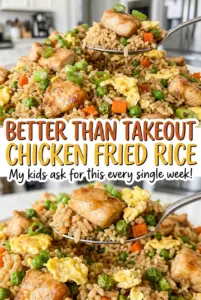
The eggs set quickly in the hot skillet, and getting them out of the way before the rice goes in makes the whole cook feel much more manageable. I used to leave them in the pan while everything else cooked, then end up with tiny, overworked bits. For this Hibachi Fried Rice, I scramble the eggs first and bring them back for the final toss, so they stay in soft, distinct pieces.
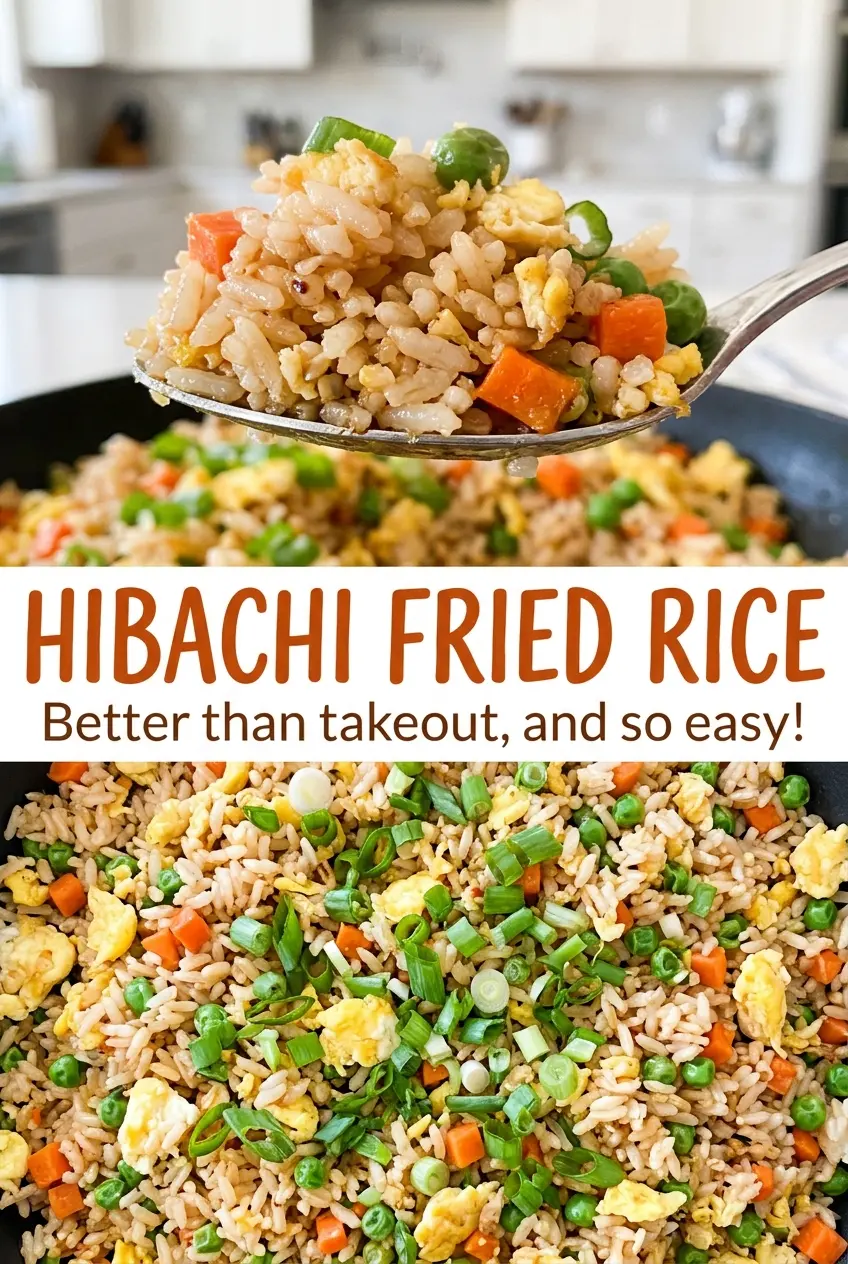
It’s a fast skillet dinner built around cold cooked rice, frozen peas and carrots, and a little butter for a rounded finish. The order matters, but none of the steps are fussy: onion and vegetables cook first, rice gets a few minutes to heat through, and soy sauce and scallions go in at the end. You’ll have four generous servings with tender egg, separate grains, and scallions threaded through the pan.
Kitchen Note
Dice the onion finely, not into chunky pieces. It only gets two minutes in the pan before the vegetables go in, so small, even pieces soften on time instead of staying crisp and distracting.
Save this Hibachi Fried Rice for a quick skillet meal with tender egg, savory rice, and colorful vegetables.
Why the Egg Leaves the Skillet Before the Rice Goes In
Egg cooks faster than the other parts of this dish. If it stays in the skillet while the onion softens and the rice warms, it keeps cooking through every stage and gets broken up as you toss. Scrambling it first and setting it aside gives you control over its texture; it goes back into the pan only for the final minute.
That pause also makes the skillet easier to manage. The vegetables get their own time in the butter and oil, and the rice has room to move around the pan instead of competing with a layer of egg. When everything comes together at the end, the eggs stay recognizable and the scallions distribute through the rice. It’s a small change in sequence, but it makes the finished skillet feel balanced rather than crowded.
Why Chilled Long-Grain Rice Gives This Skillet Its Best Texture
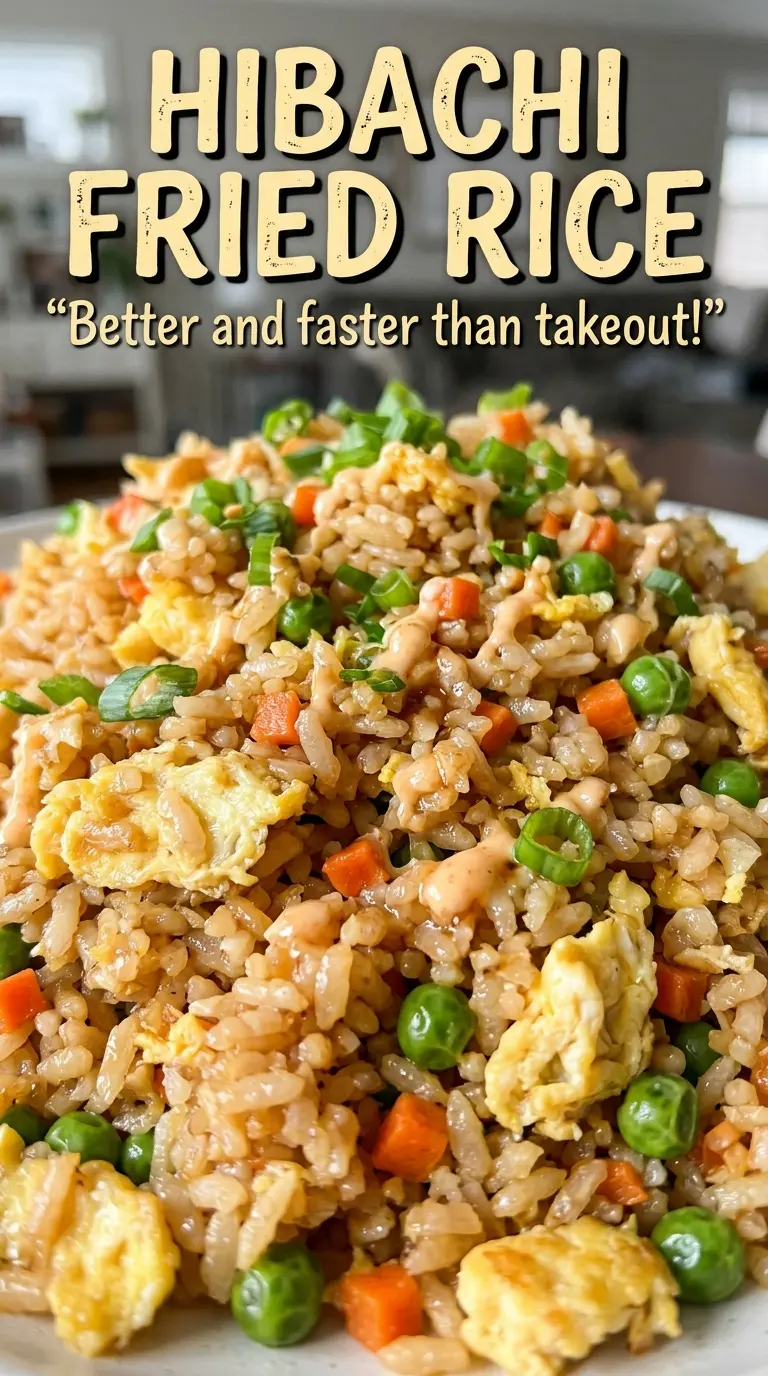
- Cold cooked long-grain rice — Chilling helps the grains stay separate in the skillet, and long-grain rice gives the finished dish a lighter, less sticky texture. Use rice that’s already cooked and chilled; freshly cooked, warm rice tends to clump more easily during a quick stir-fry.
- Neutral oil and unsalted butter — The neutral oil handles the hot skillet without bringing a strong flavor, while butter gives the rice a rounder, richer taste. Unsalted butter lets the soy sauce provide the main seasoning without adding extra saltiness.
- Yellow onion — Its mellow sweetness builds a savory base without taking over the rice. Finely diced pieces blend neatly with the peas and carrots.
- Frozen peas and carrots — A frozen blend is convenient and consistent, and the store-brand bag works just as well here. The small pieces fit naturally into each forkful.
- Soy sauce — It seasons the rice and gives it its familiar savory depth. Since brands vary in saltiness, choose one you enjoy tasting on its own; a lower-sodium soy sauce is a useful swap if you prefer a gentler seasoning.
- Scallions — Their fresh, mild onion flavor lifts the cooked rice at the end. Choose firm stalks with crisp green tops, then slice them thinly so they toss through evenly.
The Skillet Sequence That Keeps the Rice Moving
Set the eggs, then clear the pan
Heat a 12-inch skillet over medium-high heat for 2 minutes before adding 1 tablespoon of the neutral oil. Pour in the lightly beaten eggs and scramble until fully set, about 1 minute; then transfer them to a plate. The eggs should be in soft, cooked pieces, not browned or dry. Leaving them on the plate while the vegetables and rice cook keeps them from getting worked over in the skillet.
Soften the onion and warm the vegetables
Add the remaining 1 tablespoon of oil, the butter, and the onion to the skillet. Cook for 2 minutes, stirring often, until the onion begins to soften and the butter coats the bottom of the pan. Add the frozen peas and carrots and cook for another 2 minutes. Keep stirring so the vegetables heat evenly and nothing catches on the skillet’s hot surface.
Break up the rice as it goes in
Add the chilled rice and separate any clumps as you stir it into the vegetables. Stir-fry for 3–4 minutes, moving the rice around the pan so it heats throughout rather than warming only at the bottom. The grains should loosen and look hot, with no cold centers in a clump. If a piece of rice is packed together, press and separate it with your spatula as you work.
Toss in the egg and finish with scallions
Return the cooked eggs to the skillet, then add the soy sauce and sliced scallions. Toss everything for 1 minute, until the sauce is evenly distributed and the rice is steaming hot. Fold rather than mash, so the egg pieces stay intact. Take the skillet off the heat once the ingredients are combined and hot throughout.
Simple Swaps That Keep the Skillet Working
Make it gluten-free with tamari
Replace the soy sauce with the same amount of gluten-free tamari. It brings a similar savory, salty note, though its flavor can be a little rounder; the rice and vegetables stay unchanged.
Use neutral oil instead of butter
For a dairy-free skillet, replace the butter with an equal amount of neutral oil. You’ll lose the buttery richness, but the onion and vegetables will still cook well and the rice will stay savory.
Try chilled long-grain brown rice
Use an equal amount of cooked, chilled long-grain brown rice in place of the white rice. The grains will have a chewier bite and a nuttier taste, while keeping the same skillet method.
Storage and Reheating
- Refrigerator: Refrigerate leftovers within 2 hours and keep them in an airtight container for 3–4 days. The rice will firm up as it chills.
- Freezer: Freeze in airtight, portion-size containers for up to 2 months for the best texture. Thaw overnight in the refrigerator before reheating.
- Reheating: Warm in a skillet over medium heat, stirring until evenly hot, or microwave in a covered dish and stir halfway through. Reheat leftovers to 165°F; avoid stopping when only the edges feel hot.
Questions That Come Up When Making Hibachi Fried Rice
Hibachi Fried Rice
Ingredients
Equipment
Method
- Heat a 12-inch skillet over medium-high heat for 2 minutes.
- Add 1 tablespoon oil to the skillet.
- Pour in the eggs and scramble until fully set, about 1 minute.
- Transfer the eggs to a plate.
- Add the remaining 1 tablespoon oil, butter, and onion.
- Cook for 2 minutes, stirring often.
- Add the peas and carrots.
- Cook for 2 minutes.
- Add the rice, breaking up any clumps.
- Stir-fry for 3–4 minutes until hot throughout.
- Return the eggs to the skillet and add the soy sauce and scallions.
- Toss for 1 minute, until evenly combined and steaming hot.