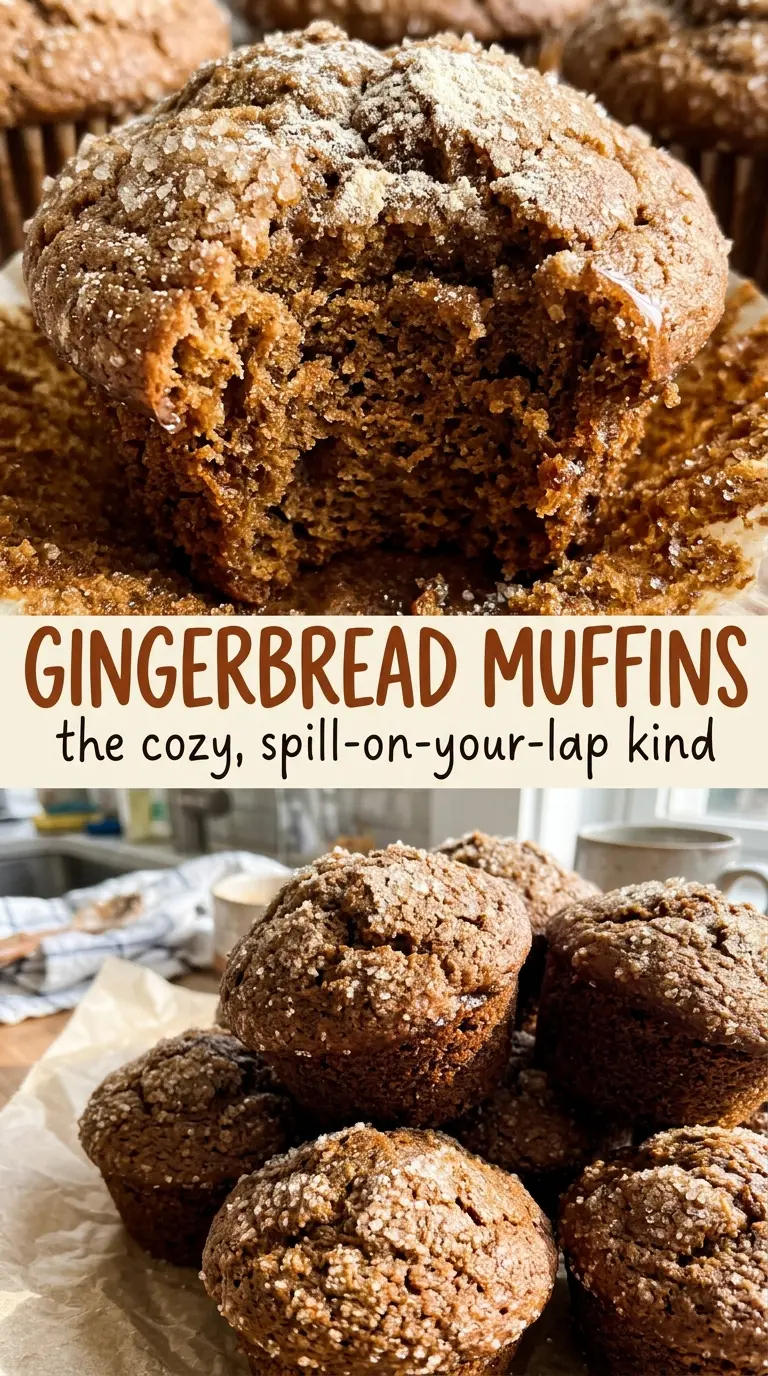
When the muffin tops spring back under a light touch, the ginger and molasses have made their way through the whole kitchen. That’s the cue I watch for with these gingerbread muffins, because the dark batter can make it hard to judge doneness by color alone. They bake up tender, with a warm ginger flavor and a deep sweetness that feels familiar without being heavy.
I whisk the dry ingredients separately from the wet ones, then bring them together with as little stirring as possible. That keeps the crumb soft instead of chewy, and it means there’s no need to chase every small lump out of the batter. Unsulphured molasses gives the muffins their rounded, bittersweet gingerbread character, while buttermilk keeps that richness from tasting flat. The result is a dozen warmly spiced muffins with springy tops and tender centers.

Kitchen Note
Let the melted butter cool before it goes into the eggs. Warm butter blends in smoothly; butter that’s still hot can start cooking the eggs before the batter ever reaches the oven.
Save these gingerbread muffins for a soft, warmly spiced bake with the deep sweetness of molasses.
Why This Batter Uses Both Baking Soda and Baking Powder
Using two leaveners here isn’t a mistake or a backup plan. Baking soda works with the acidity in the buttermilk and molasses, while baking powder brings additional lift. Together, they help a batter that’s rich with molasses rise into muffins instead of baking up dense and squat.
That balance is one reason I wouldn’t leave either leavener out or swap one for the other. Baking soda alone won’t provide the same lift, and baking powder alone won’t do the same job with the acidic ingredients. Whisking both evenly through the flour also matters: a pocket of baking soda can leave a bitter spot, while uneven baking powder can give you muffins that rise inconsistently. The spices go into the dry bowl at the same time, so they’re distributed through the batter rather than clumping in one bite.
Why Unsulphured Molasses Gives These Muffins Their Gingerbread Depth
- Unsulphured molasses — This is the defining flavor, bringing a mellow bittersweet taste that plain sugar can’t recreate. A standard grocery-store unsulphured molasses is a good choice; there’s no need to seek out a specialty brand.
- Buttermilk — Its gentle tang keeps the sweetness from feeling one-note, and it works with the baking soda to support the rise. A dairy-free version is possible with a suitable replacement, but ordinary milk won’t provide the same acidity.
- Ground ginger, cinnamon, and cloves — Ground spices make the flavor consistent throughout the muffins. Fresh, fragrant jars make the biggest difference with ginger; if your spices have been sitting open for years, the result will taste muted.
- Light brown sugar — Its soft, moist texture blends readily into the wet mixture and supports the molasses without overpowering it. Packed brown sugar from an everyday bag works well here.
- Eggs and butter — The eggs help hold the muffin crumb together, while butter brings richness. Unsalted butter lets the measured salt stay in control, and ordinary large eggs are all you need.
The Mixing-to-Oven Window That Keeps the Crumb Tender
Prepare the pan and distribute the spices
Heat the oven to 375°F and grease the cups of a standard 12-cup muffin pan. In a large bowl, whisk the flour with the baking soda, baking powder, salt, ginger, cinnamon, and cloves. Take a moment to break up any visible clumps of spice or leavener. An even dry mixture gives every muffin the same seasoning and lift.
Whisk the molasses mixture until smooth
In a medium bowl, whisk together the buttermilk, molasses, brown sugar, eggs, melted butter, and vanilla. Keep whisking until the molasses is blended through and the mixture looks smooth, rather than streaky. Brown sugar can leave a few soft grains, but there shouldn’t be thick ribbons of molasses sitting at the bottom. A smooth wet mixture is much easier to distribute without excessive stirring later.
Bring the wet and dry mixtures together gently
Pour the wet mixture into the bowl of dry ingredients. Stir just until no dry flour remains, then stop; the batter doesn’t need to look perfectly smooth. If you keep stirring to remove every small lump, you’ll develop more gluten and the muffins can turn tough. Divide the batter evenly among the muffin cups so they bake at a similar pace.
Bake for springy tops, then let the crumb settle
Bake for 18 to 22 minutes, until the tops spring back when lightly pressed and a toothpick inserted in the center comes out clean or with a few moist crumbs. A toothpick coated in wet batter means the centers need more time, so check again near the end of the baking window. Cool the muffins in the pan for 5 minutes, then transfer them to a wire rack. Leaving them in the hot pan longer can make the bottoms damp as steam collects.
Three Small Changes That Shift the Flavor or Fit a Different Diet
A dairy-free batch
Replace the buttermilk with the same amount of dairy-free buttermilk and use an equal amount of dairy-free baking sticks in place of the butter. Choose a product intended for baking, not a soft tub spread. The muffins keep their gingerbread character, though the buttery taste will be less pronounced.
A deeper brown-sugar note
Swap the packed light brown sugar for the same amount of packed dark brown sugar. The extra molasses in dark brown sugar makes the flavor rounder and more pronounced, with no change to the mixing method.
A sharper ginger finish
For a more ginger-forward muffin, increase the ground ginger slightly and reduce the cloves. You’ll get a brighter, warmer spice character and less of the clove’s lingering sweetness; keep the flour and leaveners unchanged so the structure stays balanced.
Storage and Reheating
- Refrigerator: Keep the muffins in an airtight container for up to 5 days. The refrigerator can firm and dry the crumb, so bring them to room temperature or warm them before eating.
- Freezer: Freeze completely cooled muffins in a freezer-safe airtight container for up to 3 months. Thaw at room temperature, or warm one straight from frozen.
- Reheating: Microwave an individual muffin for about 10 seconds, then add a few seconds if needed. Long heating can make the edges tough before the center warms through.
Questions I Get Asked About Gingerbread Muffins
Gingerbread Muffins
Ingredients
Equipment
Method
- Heat the oven to 375°F and grease the cups of a standard 12-cup muffin pan.
- In a large bowl, whisk together the flour, baking soda, baking powder, salt, ginger, cinnamon, and cloves.
- In a medium bowl, whisk together the buttermilk, molasses, brown sugar, eggs, melted butter, and vanilla until smooth.
- Pour the wet mixture into the dry ingredients and stir just until no dry flour remains; do not overmix.
- Divide the batter evenly among the muffin cups.
- Bake for 18 to 22 minutes, until the tops spring back when lightly pressed and a toothpick inserted in the center comes out clean or with a few moist crumbs.
- Cool the muffins in the pan for 5 minutes.
- Transfer the muffins to a wire rack to cool.