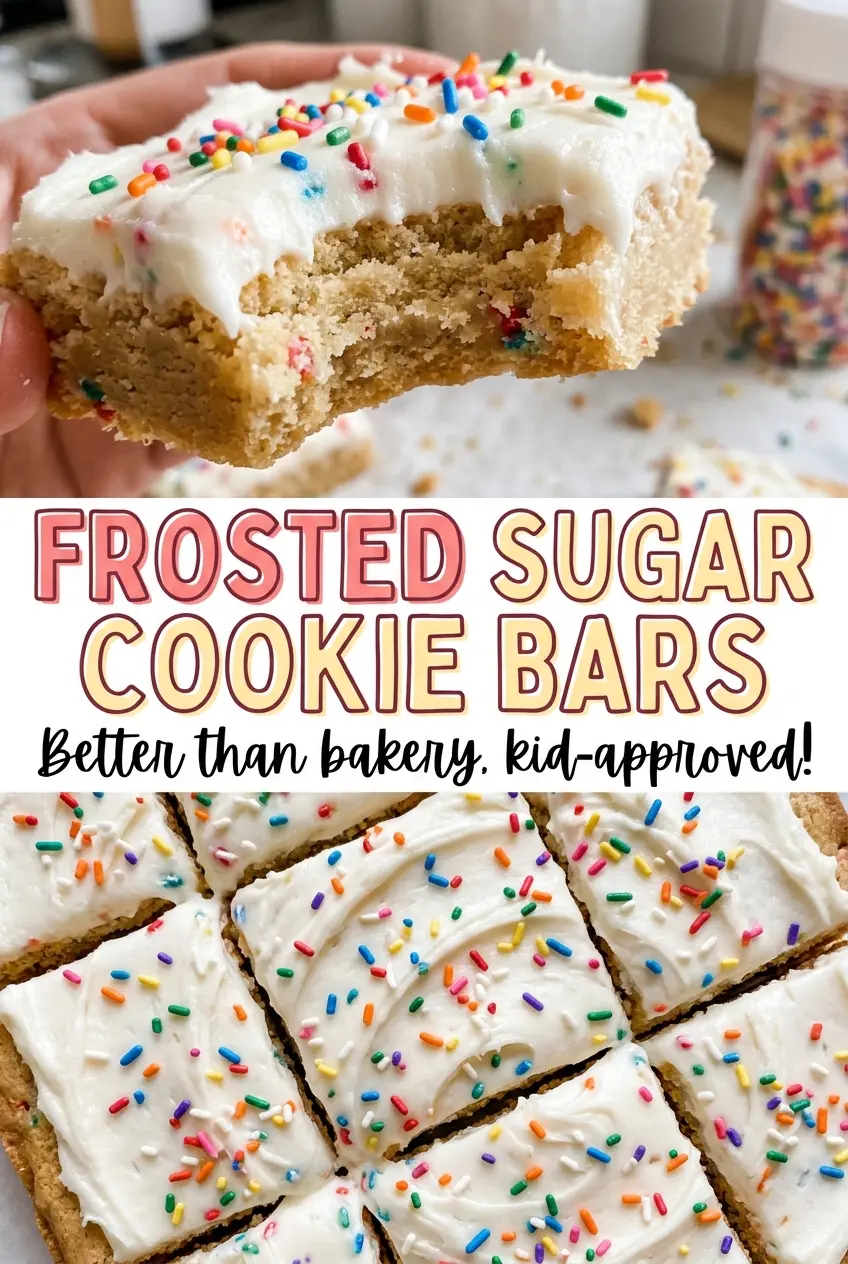
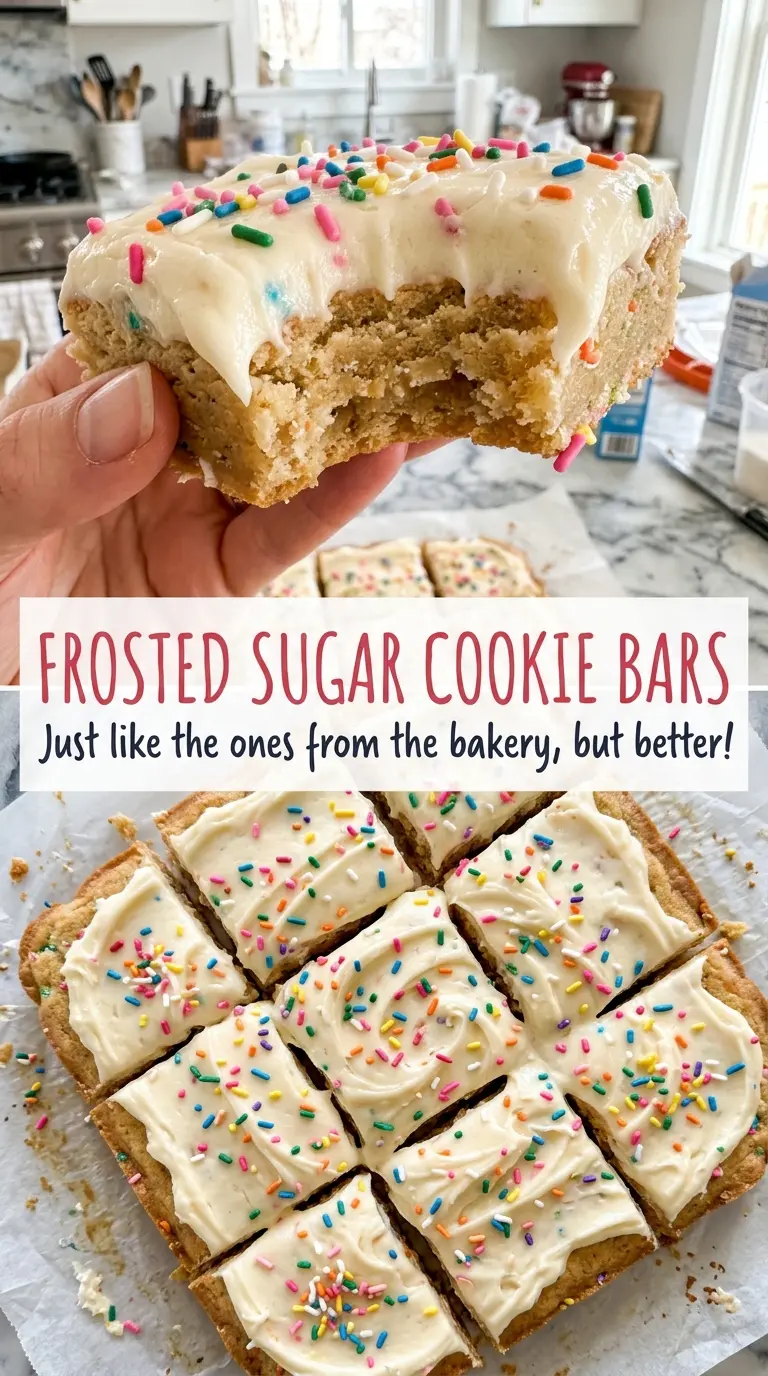
The edges start turning pale gold before the middle of a pan of sugar cookie dough looks quite as settled, and that’s the moment I watch most closely. These frosted sugar cookie bars bake as one even layer in a 9×13-inch pan, so there’s no batch of individual cookies to scoop or rotate. The result is a soft, tender bar with a smooth layer of frosting on top, cut into 24 pieces.
I mix the dry ingredients separately, cream softened butter and sugar until fluffy, then add the flour mixture just until it comes together. Pressing the dough evenly into the pan matters more than fussing over it: an even layer bakes at a steady pace, so the edges don’t get too dark while the center catches up. Once the bars are cool, the frosting spreads easily across the top, ready for neat squares.
Kitchen Note
Let the bars cool completely in the pan before frosting. Even a little warmth softens the butter frosting and makes it harder to spread into a smooth layer.
Save these frosted sugar cookie bars for an easy-to-share bake: soft cookie centers, a creamy frosting layer, and 24 tidy squares from one pan.
Why the Center Should Set Before the Edges Turn Deep Gold
Bars bake differently from individual sugar cookies because the dough sits in one continuous layer. The pan’s edges are thinner and meet the hot sides first, so they’ll color ahead of the center. Waiting for a deep golden top all the way across risks drying the outer pieces before the middle is ready.
Look for lightly golden edges and a center that has set. That’s a better cue than judging the whole surface by color. The bars will be tender rather than crisp, and the center won’t have the loose, shiny look of raw dough. If the edges are already dark while the middle still looks unset, the dough may have been pressed unevenly; a level layer helps the whole pan bake more consistently next time.
The mixing also has a useful stopping point. Once the flour goes in, stir only until no dry streaks remain. That keeps you from working the dough longer than necessary, which can make a soft cookie bar feel tougher. You want an even layer that holds together, not a springy dough that’s been beaten smooth.
What the Flour, Butter, and Sugar Each Bring to These Bars
- All-purpose flour — It gives the bars their structure while keeping the crumb tender. A standard bag is fine here; use the same flour you bake with regularly. If you need a gluten-free option, a measure-for-measure baking blend made to replace all-purpose flour is the most practical swap, though the texture can be a little different.
- Butter — Softened unsalted butter creams with the sugar and makes the cookie layer rich without adding extra salt. The brand matters less than the texture: it should give when pressed but shouldn’t look oily or melted. For a dairy-free version, use plant-based butter sticks in the same amount and plant-based milk in the frosting.
- Granulated sugar — This sweetens the bars and helps create the light, fluffy base when beaten with the butter. Keep it in place rather than swapping in a liquid sweetener, which would change the dough’s moisture and structure.
- Eggs and vanilla — The eggs bind the dough and give it a soft, cohesive bite; large eggs are the right size for the balance here. Vanilla gives the bars their familiar sugar-cookie aroma, so use an extract you like, but there’s no need for an expensive bottle.
- Powdered sugar and milk — Powdered sugar makes the frosting smooth, while milk loosens it to a spreadable consistency. Sift the sugar if it has packed into lumps; that small bit of prep makes it easier to beat into the butter evenly.
- Baking powder — This gives the bars a little lift so they aren’t dense. Check that your baking powder is fresh if it has been open for a long time; there isn’t a direct swap with baking soda in this dough.
From Fluffy Butter to an Even Layer of Frosting
Whisk the Dry Ingredients First
Heat the oven to 350°F and grease a 9×13-inch baking pan. Whisk the flour, baking powder, and salt together in a medium bowl until the leavener is evenly dispersed. This prevents a concentrated patch of baking powder or salt in one part of the pan. Set the bowl aside while you make the butter mixture.
Cream the Butter and Sugar
Beat the softened butter and granulated sugar in a large bowl for about 2 minutes, until the mixture looks light and fluffy. Scrape the bowl if butter is clinging to the sides so it gets incorporated. Beat in the eggs one at a time, then mix in the vanilla. Adding the eggs individually helps them blend into the creamed butter instead of leaving the mixture streaky.
Press the Dough and Bake to the Right Cue
Add the flour mixture to the butter mixture and mix just until no dry streaks remain. The dough will be thick, so transfer it to the prepared pan and press it out evenly into the corners. Bake for 18–22 minutes, until the edges are lightly golden and the center is set. Cool the bars completely in the pan before moving on to the frosting.
Beat and Spread the Frosting
Beat the softened butter in a bowl until smooth. Gradually beat in the powdered sugar and milk, stopping when the frosting looks creamy and spreadable. If you add the sugar all at once, it can puff out of the bowl, so work it in gradually. Spread the frosting over the cooled bars, then cut the pan into 24 pieces.
Three Simple Ways to Adapt These Cookie Bars
Make the bars gluten-free
Replace the all-purpose flour with the same amount of a measure-for-measure gluten-free baking blend designed for cookies. The dough should still press into the pan, though the finished bars may have a slightly different crumb depending on the blend.
Make a dairy-free batch
Use plant-based butter sticks in place of both portions of butter, keeping the listed amounts, and use unsweetened plant-based milk in the frosting. The bars and frosting will have a slightly different flavor, and a firm stick-style butter substitute gives a better texture than a soft tub spread.
Leave off the frosting
Bake the cookie layer on its own and skip the frosting ingredients and spreading step. The plain bars taste less sweet and let the buttery vanilla cookie flavor come through more clearly.
Storage and Reheating
- Refrigerator: Store the frosted bars in an airtight container for up to 5 days. The cookie layer firms up when chilled, so let a piece sit at room temperature briefly before eating.
- Freezer: Freeze cut bars in a single layer until firm, then wrap or pack them airtight for up to 2 months. Thaw them in the refrigerator before serving.
- Reheating: These bars don’t need reheating; let chilled pieces lose their refrigerator chill at room temperature. Microwaving can soften the frosting before the cookie layer warms evenly.
Questions About Frosted Sugar Cookie Bars
Frosted Sugar Cookie Bars
Ingredients
Equipment
Method
- Heat the oven to 350°F.
- Grease a 9x13-inch baking pan.
- Whisk the flour, baking powder, and salt together in a medium bowl.
- Beat the butter and granulated sugar in a large bowl until light and fluffy, about 2 minutes.
- Beat in the eggs one at a time, then the vanilla.
- Mix the flour mixture into the butter mixture just until no dry streaks remain.
- Press the dough evenly into the prepared pan.
- Bake for 18–22 minutes, until the edges are lightly golden and the center is set.
- Cool completely in the pan.
- Beat the butter in a bowl until smooth.
- Gradually beat in the powdered sugar and milk until creamy and spreadable.
- Spread the frosting over the cooled bars.
- Cut into 24 pieces.