A potato can look ready on the outside and still feel stubborn when you press a knife into the center. That’s the difference between a crisp jacket and a properly fluffy middle, and it’s why I give these potatoes enough time in a hot oven instead of rushing them. Each one gets a thin coating of oil and salt before going straight onto the rack.
Russets are the right choice here: their interiors turn light and fluffy, while their skins have enough substance to crisp. I dry them thoroughly before oiling, then use the knife test rather than relying on the clock alone. The oven time gives you a useful window, but the potato itself tells you when it’s ready.
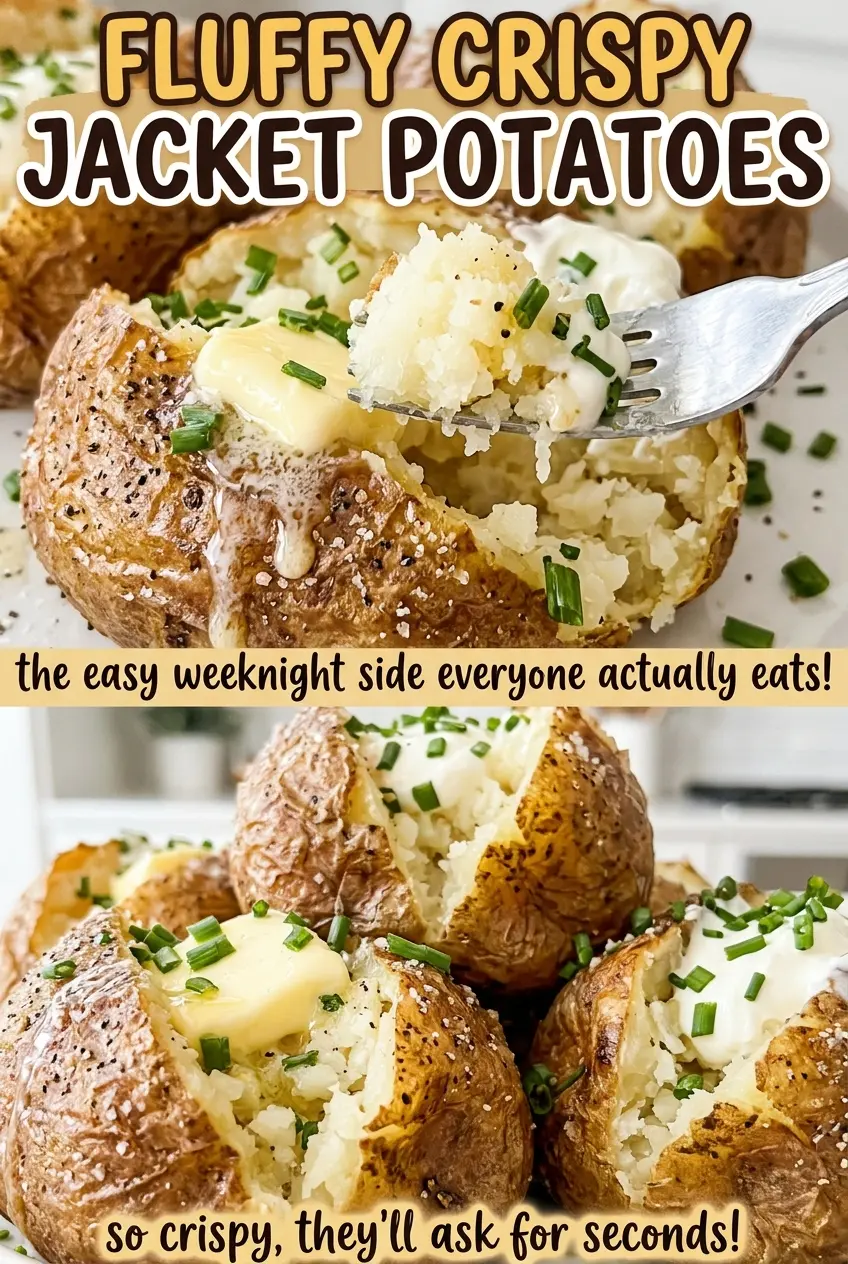
After a short rest, a deep cross and a gentle squeeze open the potato without crushing the middle. A quick fluff with a fork releases the steam and leaves a soft, airy center tucked inside a crisp skin. That contrast is what makes a jacket potato worth the wait.
Kitchen Note
Dry each potato thoroughly before you add the oil. Water left on the skin turns to steam in the oven, and that works against the crisp finish you want.
Save these Fluffy Crispy Jacket Potatoes for a hands-off oven side with crisp skins and a light, fluffy center.
Why the Oven Rack Matters for Crisp Jacket Potatoes
Putting the potatoes directly on the oven rack lets hot air move around each one, including underneath. A baking sheet blocks that airflow at the base, so the bottom skin is more likely to stay soft while the exposed sides crisp. The rack also means you don’t have to turn the potatoes halfway through; the heat can reach all sides as they bake.
That open airflow works alongside the russet’s naturally dry, starchy interior. As the center cooks, it becomes tender and fluffy rather than dense, while the skin loses moisture and turns crisp. Keep the potatoes whole while they bake, and use the doneness cues together: the skin should feel crisp and a knife should slide easily into the center. If the knife meets resistance, the center needs more time even if the outside already looks browned.
The potatoes are listed at the same size, but small differences in shape and oven conditions can still affect when each one is ready. Check them individually instead of pulling the whole batch as soon as the first potato passes the knife test. That little bit of patience helps all four arrive at the same tender, fluffy finish.
Russets, Oil, and Salt: What Builds a Proper Jacket

- Russet potatoes — Their starchy, relatively dry flesh is what gives the center its light, fluffy texture. Choose firm potatoes that are close in size so they cook at a similar pace. Yukon Golds work as a substitute, but their centers are creamier and denser, and their skins won’t make quite the same crisp jacket.
- Neutral oil — A light coating helps the skin brown and crisp without adding a strong flavor. Canola, vegetable, or avocado oil are suitable neutral choices; there’s no need to buy a specialty oil for this. Olive oil works too, but its more noticeable flavor changes the taste of the finished skin.
- Kosher salt — Its larger crystals are easy to scatter over the oiled skins and give the outside a clean, savory bite. If fine salt is what you have, use less than an equal-volume swap because its smaller crystals pack more tightly and can make the skin too salty.
From Dry Skin to Fluffy Center: Three Cues to Watch
Prepare the Potatoes for the Oven
Heat the oven to 425°F, then scrub the potatoes and dry them thoroughly. Prick each potato several times with a fork so steam has a way to escape as the centers cook. Check around the whole surface for damp patches before you move on to the oil. Keeping the potatoes whole gives you the classic jacket and a fluffy center.
Coat the Skins Evenly
Rub the oil over every part of each potato, including the ends, then sprinkle the salt over the surface. The coating should be thin and even rather than pooled in one spot. If salt collects on a bare patch, it won’t stick as well, so work the oil around the skin first. This gives the exterior a better chance of crisping all over.
Bake, Rest, and Fluff
Place the potatoes directly on the oven rack and bake for 55 to 70 minutes. Look for crisp skins, then slide a knife into the center of each one; it should pass through easily, without a firm spot in the middle. Let them rest for 5 minutes before cutting a deep cross in each top. Gently squeeze the ends to open the potato, then fluff the interior with a fork.
Two Easy Changes for a Different Jacket Potato
Sharp Cheddar and Scallion
After you fluff the hot potato, stir in grated sharp cheddar and thinly sliced scallions. The cheese softens into the center, bringing a richer, saltier finish, while the scallions add a fresh bite. Add the cheese after baking so it doesn’t interfere with crisping the skin.
Dairy-Free Olive Oil and Chives
The basic potatoes are already dairy-free; for a more distinct finish, use olive oil in place of the neutral oil and add chopped chives after fluffing. The oil brings a fruitier note to the skin, and the chives add a mild onion flavor without weighing down the light interior. This version also stays vegan.
Storage and Reheating
- Refrigerator: Refrigerate leftovers within 2 hours and keep them in an airtight container for 3 to 4 days. The skins soften in the refrigerator.
- Freezer: Freeze cooled, unfilled potatoes individually in airtight wrapping for up to 1 month for best texture. The centers may be a little softer after thawing.
- Reheating: Reheat in the oven until hot throughout, or use a microwave for a quicker option; the microwave softens the skin. Reheat leftovers to 165°F, and don’t leave cooked potatoes sitting at room temperature for an extended stretch.
Questions That Come Up With Jacket Potatoes
Fluffy Crispy Jacket Potatoes
Ingredients
Method
- Heat the oven to 425°F.
- Scrub the potatoes and dry them thoroughly.
- Prick each potato several times with a fork.
- Rub the potatoes all over with the oil.
- Sprinkle the potatoes with the salt.
- Place the potatoes directly on the oven rack and bake for 55 to 70 minutes, until the skins are crisp and a knife slides easily into the centers.
- Let the potatoes rest for 5 minutes.
- Cut a deep cross in the top of each potato.
- Gently squeeze the ends to open the potatoes.
- Fluff the insides with a fork before serving.