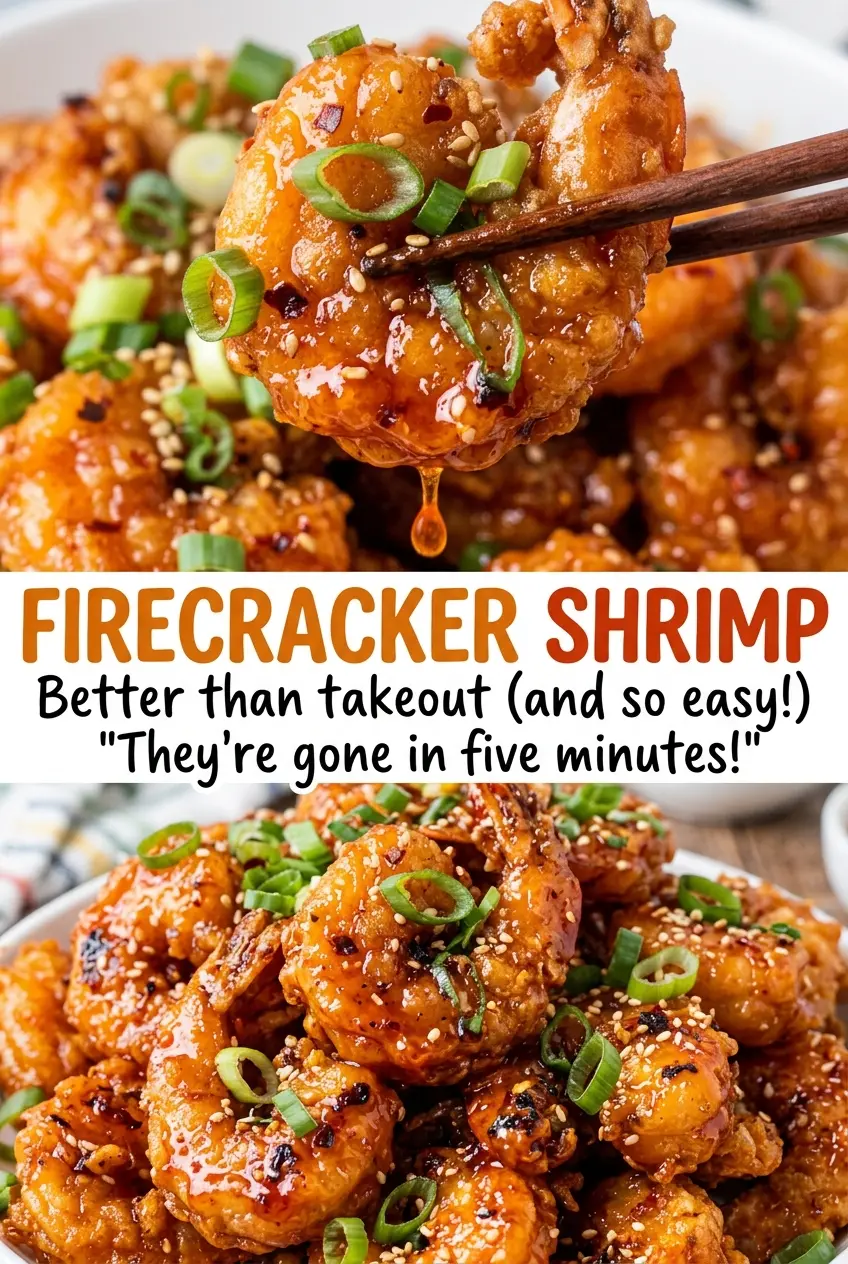
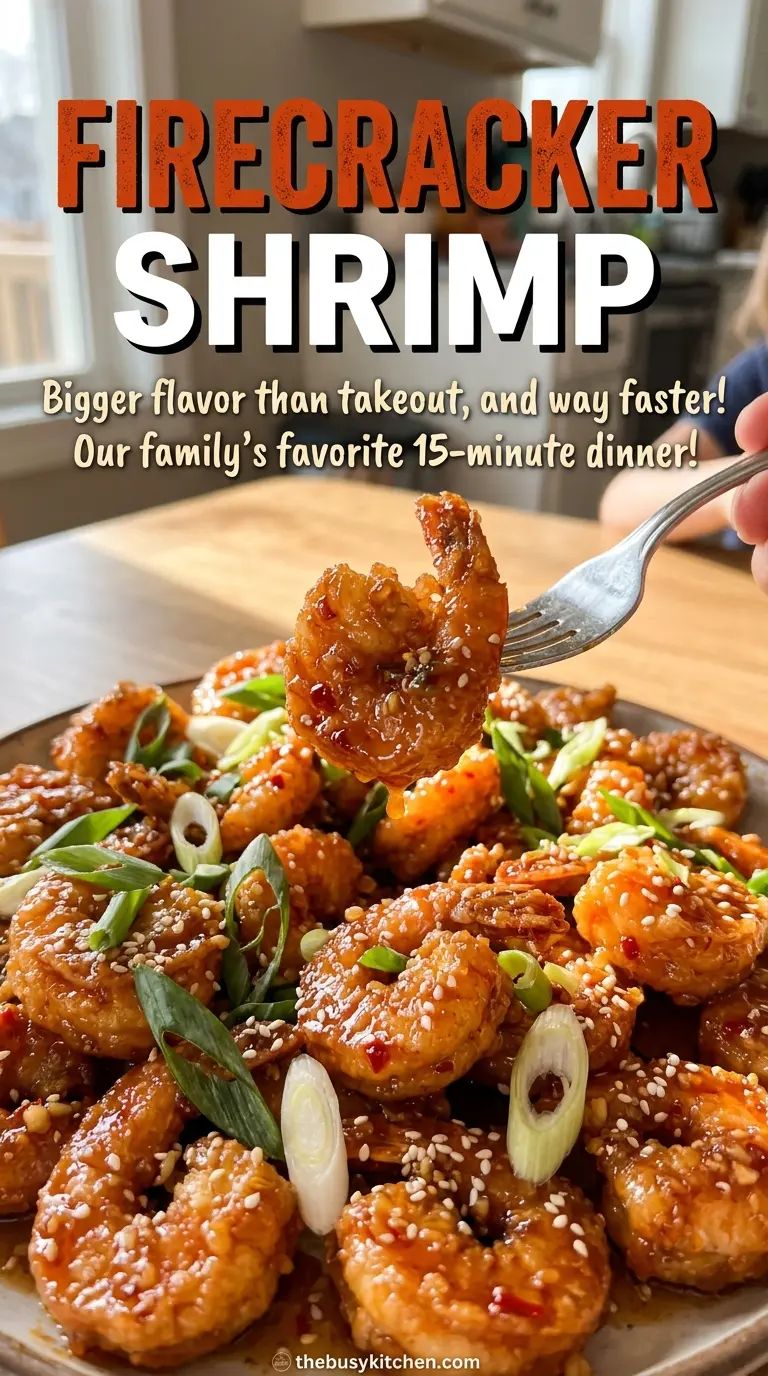
The first shrimp hit the skillet with a quick hiss, and the cornstarch started forming a delicate crust before I’d even finished the first batch. The part that takes a little restraint is leaving the shrimp alone long enough to cook through without letting them turn firm and rubbery. These Firecracker Shrimp get their sweet heat from a quick sauce of sweet chili sauce, sriracha, honey, and lime juice.
I cook the shrimp in two batches so each piece has room in the skillet, then toss them with the sauce after they’re cooked. That timing lets the coating brown instead of sitting in a sugary sauce over high heat. The sauce clings to the shrimp, and the lime keeps the sweet-and-spicy combination lively. Serve them as soon as they’re coated, while the shrimp are tender and the outside still has a little crispness.
Kitchen Note
Pat the shrimp dry until there’s no visible moisture on the surface before adding the cornstarch. Wet shrimp can turn the coating pasty instead of giving it an even layer.
Save these Firecracker Shrimp for their crisp coating and sweet, spicy sauce, tossed together right before serving.
Why the Sauce Goes on After the Shrimp, Not in the Skillet
Sweet chili sauce and honey bring sweetness to the coating, and those sugars can catch quickly in a hot skillet. If the sauce goes in while the shrimp are still cooking, it has time to scorch before the shrimp finish. Tossing the shrimp in the bowl after cooking keeps the sauce glossy and lets the cornstarch-coated surface stay more distinct instead of softening in the pan.
The cornstarch matters here, too. It creates a thin coating around the shrimp rather than a thick batter, so you get a little crispness without hiding the shrimp’s tender texture. A single layer in the skillet gives that coating direct contact with the hot surface. Crowding the pan would trap moisture between the pieces and work against browning. Cooking in two batches takes a few extra minutes, but each batch gets a better chance to sear evenly.
How the Sauce Ingredients Balance Sweet Heat and Lime
- Large shrimp — Shrimp in the 21-to-25-per-pound size range cook quickly but are substantial enough to handle the cornstarch coating. Peeled and deveined shrimp save prep time; fresh or frozen raw shrimp both work once fully thawed and dried.
- Cornstarch — This is what gives the shrimp their light, crisp-edged coating. It’s inexpensive and works well straight from the pantry; swapping in flour makes a heavier coating that won’t have quite the same delicate texture.
- Sweet chili sauce — This supplies sweetness and a mild chile flavor in one ingredient. The sauce’s consistency varies a little by brand, but a pourable sauce is easy to stir together and coat the shrimp with.
- Sriracha — It brings concentrated chile heat and a tangy edge. Adjusting how much you use is the simplest way to soften the heat, though the sauce will taste less fiery.
- Honey — A small amount rounds out the chile and lime. It blends smoothly into the sauce, so there’s no need to heat it separately.
- Lime juice — Fresh lime juice gives the sauce a bright, sharp finish that balances its sweetness. Bottled juice works in a pinch, but fresh lime has a cleaner citrus aroma.
- Vegetable oil — Its neutral taste lets the shrimp and sauce stand out, and it handles the skillet’s medium-high heat. Use an oil with a neutral flavor rather than one that would compete with the sauce.
Getting the Cornstarch Crust Right in Two Skillet Batches
Stir the Sauce Before the Skillet Gets Hot
In a medium bowl, stir together the sweet chili sauce, sriracha, honey, and lime juice. The sauce should look evenly combined, with no streaks of honey at the bottom. Set the bowl near the stove so it’s ready when the shrimp finish. The shrimp go into this bowl only after cooking.
Coat the Shrimp in a Thin, Even Layer
Pat the peeled and deveined shrimp dry with paper towels, then toss them with the cornstarch, kosher salt, and black pepper. Turn them until the coating is distributed across the shrimp rather than sitting in clumps. If the cornstarch gathers in damp patches, separate those shrimp and toss again. A light, even coating is what you want; the shrimp shouldn’t look buried in a thick layer.
Sear the Shrimp Without Crowding the Skillet
Heat 2 tablespoons of vegetable oil in a 12-inch skillet over medium-high heat until shimmering. Add half the shrimp in a single layer and cook for 1 to 2 minutes per side, until opaque and 145°F, then transfer them to a plate. Keep the skillet at medium-high so the coating can brown; if the oil isn’t shimmering yet, give it more time before adding the shrimp. Add the remaining 1 tablespoon of vegetable oil and cook the rest in the same way.
Toss Once, Then Serve Right Away
Return all the cooked shrimp to the bowl of sauce and toss until coated. Use a wide spoon or tongs to turn the shrimp gently so the coating stays on each piece. The sauce should cling in a glossy layer rather than pool heavily at the bottom of the bowl. Serve immediately, while the shrimp are tender and the coating hasn’t had time to soften.
Three Ways to Adjust the Heat, Tang, and Ingredients
Dial Back the Heat
Use less sriracha in the sauce while leaving the other ingredients in place. The sweet chili, honey, and lime still make a balanced coating, but the chile heat won’t be as pronounced.
Make the Sauce Brighter and Less Sweet
Use a little less honey and a little more lime juice in the sauce. You’ll get a sharper citrus finish with less rounded sweetness; keep the change modest so the sauce still clings to the shrimp.
Choose a Gluten-Free Sauce
Cornstarch is naturally gluten-free, so the coating already suits a gluten-free version. If either prepared sauce contains gluten, replace it with a gluten-free sweet chili sauce or sriracha; the finished shrimp should keep the same sweet-heat character.
Storage and Reheating
- Refrigerator: Store leftovers in an airtight container and eat within 3 to 4 days. The cornstarch coating softens once it sits in the sauce.
- Freezer: Freeze in an airtight container for up to 2 months. The shrimp remain safe when frozen properly, but the coating will lose its crispness as it thaws.
- Reheating: Warm gently in a skillet over medium-low heat or in short bursts in the microwave, just until hot; reheat leftovers to 165°F. Long, high-heat reheating makes shrimp tough.
Questions That Come Up When Making Firecracker Shrimp
Firecracker Shrimp
Ingredients
Equipment
Method
- In a medium bowl, stir together the sweet chili sauce, sriracha, honey, and lime juice.
- Pat the shrimp dry with paper towels.
- Toss the shrimp with the cornstarch, salt, and black pepper until evenly coated.
- Heat 2 tablespoons of the vegetable oil in a 12-inch skillet over medium-high heat until shimmering.
- Cook half the shrimp in a single layer for 1 to 2 minutes per side, until opaque and 145°F.
- Transfer the cooked shrimp to a plate.
- Add the remaining 1 tablespoon vegetable oil to the skillet.
- Cook the remaining shrimp for 1 to 2 minutes per side, until opaque and 145°F.
- Add all the cooked shrimp to the bowl of sauce.
- Toss the shrimp to coat and serve immediately.