The warm cake is much easier to roll than it looks. Once it comes out of the oven, I turn it onto fresh parchment and roll it while it’s still flexible; waiting until it cools flat is when cracks start. That simple timing makes this Easy Yule Log feel far less fussy than a rolled cake usually sounds.
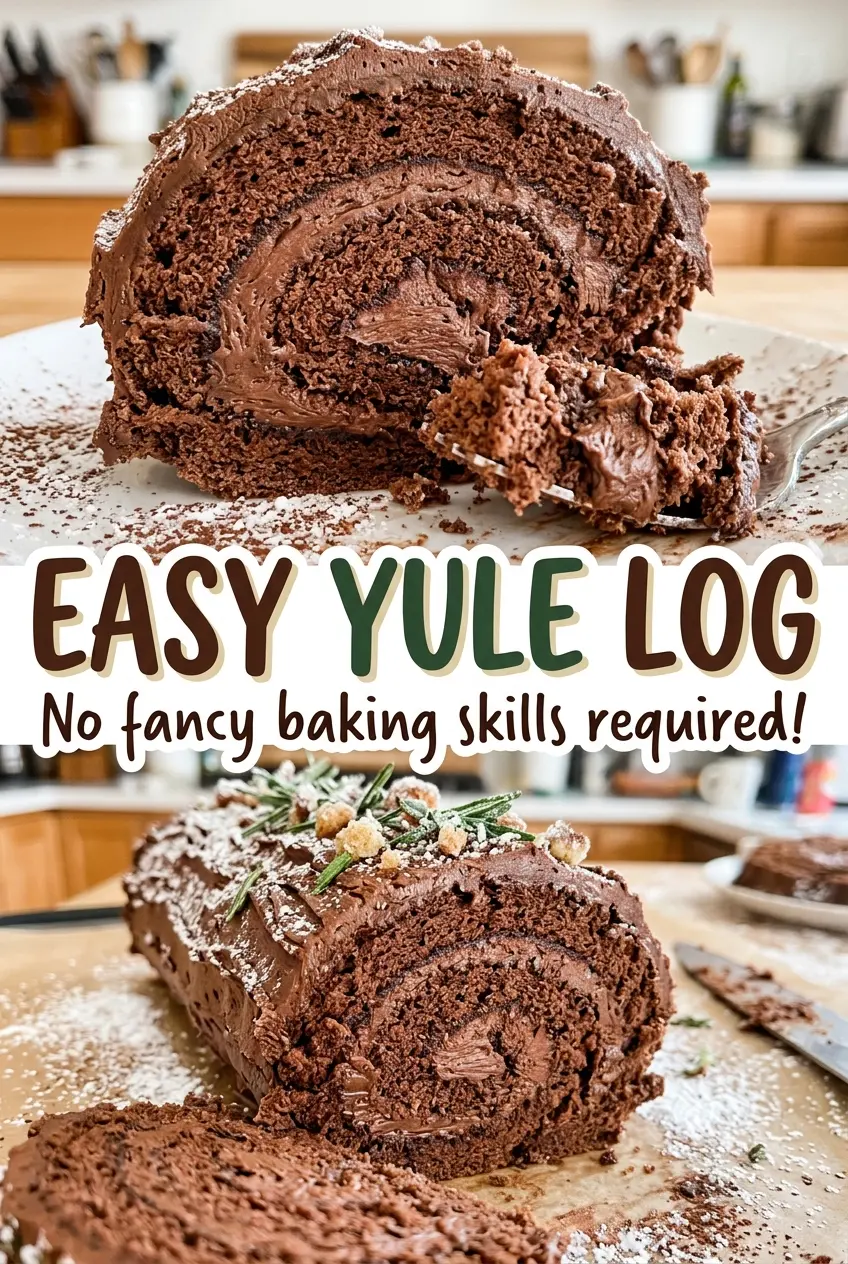
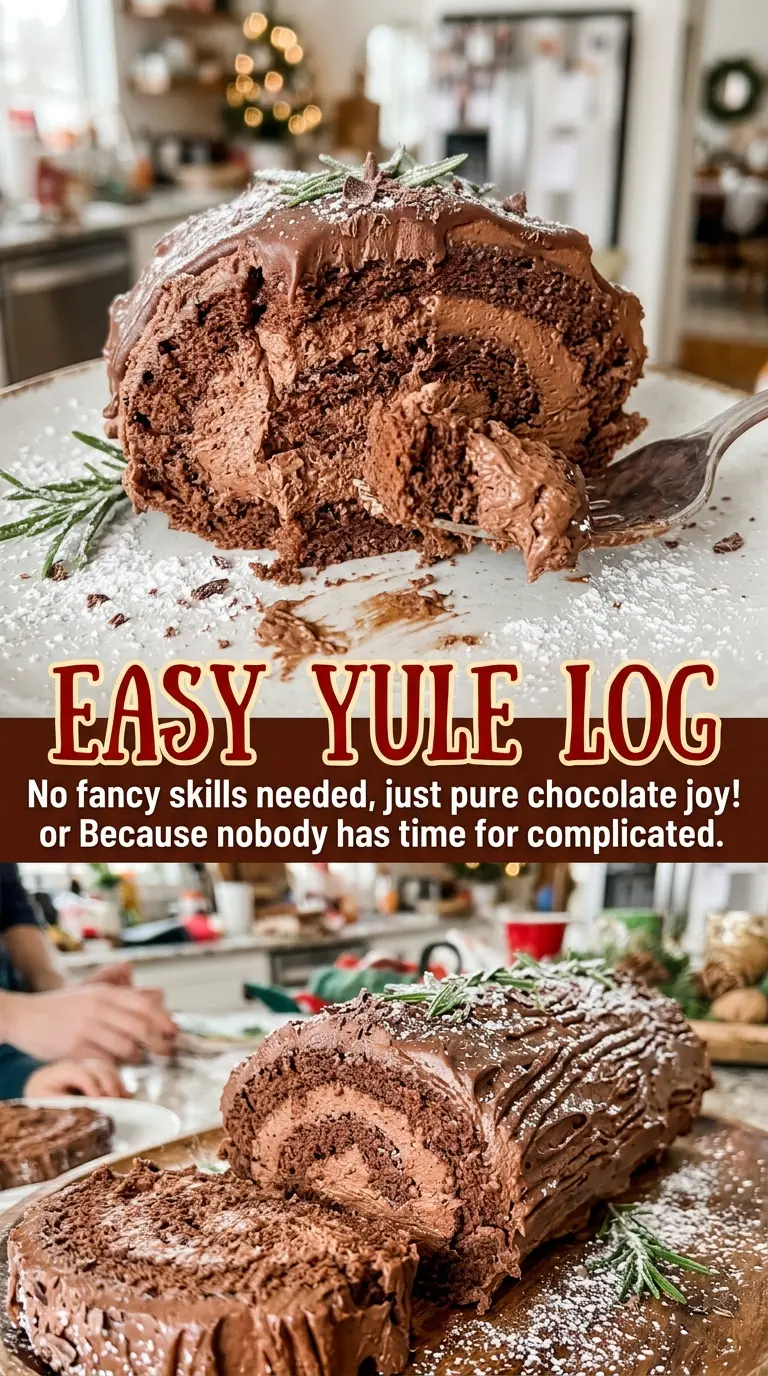
The sponge gets its lift from eggs beaten until thick and ribbon-like, so folding in the dry ingredients gently matters more than stirring quickly. A cloud of whipped cream goes inside, and a smooth chocolate ganache covers the outside. Add a short diagonal piece as a branch and rake a fork through the ganache, and you have a chocolate Yule log with a soft, light center and a bark-like finish.
Kitchen Note
For the filling, stop beating as soon as the cream holds stiff peaks. If you keep going, it can turn grainy, and smooth whipped cream is much easier to spread into an even layer.
Save this Easy Yule Log for its tender chocolate sponge, whipped cream center, and forked ganache bark.
Why the Egg Foam Has to Hold Before the Flour Goes In
This sponge doesn’t start with butter or oil. Beating the eggs, sugar, and vanilla for 5 to 7 minutes builds the airy structure that lets the cake stay thin and flexible enough to roll. Watch the beaters: the mixture should turn pale and thick, and fall back in ribbons rather than disappearing into the bowl at once.
Once that foam is ready, the flour mixture needs a light hand. Sifting it over the eggs helps distribute the cocoa and baking powder without leaving dense pockets, while gentle folding keeps as much air in the batter as possible. If you stir hard to chase every last lump, the batter loses volume and the baked sponge can come out heavier and more prone to cracking. Stop as soon as no dry streaks remain, then spread it evenly in the pan so the thin layer bakes at a consistent rate.
The baking powder helps the cake rise, but it can’t replace the air in a properly beaten egg mixture. That’s why the ribbon cue is worth watching instead of relying only on the clock.
The Sponge Depends on Eggs; the Ganache Depends on Chocolate
- Eggs — Room-temperature eggs beat more readily into a voluminous foam than cold eggs straight from the refrigerator. Use large eggs so the sponge keeps the intended balance of moisture and structure.
- Unsweetened cocoa powder — Cocoa brings the chocolate flavor without adding the fat and moisture that melted chocolate would bring to this delicate batter. A fresh, unsweetened cocoa powder gives the clearest flavor; Dutch-process cocoa works too, with a darker, less sharp taste.
- All-purpose flour — It gives the egg foam enough structure to hold together as a thin sheet. Spoon it lightly into the measuring cup and level it rather than packing it down; too much flour can make the cake dry and harder to roll.
- Semisweet chocolate — This is the main flavor and body of the ganache, so use chocolate you like eating. Finely chopping it helps the hot cream melt it evenly; large pieces are more likely to leave stubborn lumps.
- Heavy cream — The portion used with chocolate creates a rich, spreadable coating, while the rest whips into the soft filling. Heavy cream is important for both jobs; milk won’t whip into a stable center or give the ganache the same body.
- Powdered sugar — It sweetens the whipped cream and dissolves smoothly, unlike granulated sugar, which can leave a slight grit in the filling.
From Flexible Sponge to Bark-Covered Log
Build the egg foam without knocking it down
Heat the oven to 375°F and line a 10×15-inch jelly-roll pan with parchment paper. Whisk the flour, cocoa powder, baking powder, and salt in a bowl, then beat the eggs, granulated sugar, and vanilla with an electric mixer on medium-high for 5 to 7 minutes. Look for a thick, pale mixture that falls from the beaters in ribbons. Sift the dry mixture over the top and fold gently until the last dry streaks disappear.
Bake just until the sponge springs back
Spread the batter evenly in the prepared pan and bake for 10 to 12 minutes. Press the center lightly with a fingertip; it should spring back rather than hold a dent. A thin cake can overbake quickly, so don’t wait for the edges to become dark or crisp. Lay a clean sheet of parchment on the counter before the pan comes out.
Roll the cake while it’s still warm
Invert the warm cake onto the clean parchment and peel away the liner from the pan. Starting at a short end, roll the cake up with the clean parchment inside, then set it seam-side down to cool for about 45 minutes. The warm sponge bends around the parchment as it cools, which gives it a rolled shape before the filling goes in. Handle it gently; pulling or pressing hard can tear the thin cake.
Make the ganache, fill, and finish the bark
Put the finely chopped chocolate in a heatproof bowl. Warm 1/2 cup of the cream in a small saucepan over medium heat until steaming, pour it over the chocolate, and let it stand for 5 minutes before stirring until smooth. Cool the ganache at room temperature for 30 to 45 minutes, stirring occasionally, until thick but spreadable. Beat the remaining cream with the powdered sugar to stiff peaks, unroll the cooled cake, and spread the filling over it, leaving a 1/2-inch border; reroll without the parchment and chill seam-side down for 30 minutes. Cut a 2-inch diagonal piece from one end, set it against the side as a branch, coat the log and branch with ganache, and drag a fork lengthwise through the coating for bark lines. Refrigerate for at least 30 minutes before slicing.
Two Smart Ways to Adapt This Chocolate Yule Log
Use bittersweet chocolate for a darker bark
Swap the semisweet chocolate for the same amount of bittersweet chocolate. The ganache will taste less sweet and more intensely chocolatey, which contrasts nicely with the sweetened cream; let it cool until it’s spreadable before coating the log.
Make a dairy-free version with whipping alternatives
Use dairy-free semisweet chocolate, full-fat canned coconut milk in place of the cream for ganache, and a dairy-free whipping cream made to whip for the filling. The coconut milk gives the coating a gentle coconut note, while the filling may be a little less rich than one made with heavy cream.
Storage and Reheating
- Refrigerator: Keep the finished log covered and refrigerated for up to 3 days. The whipped cream filling gradually loses some of its airy texture.
- Freezer: Freeze the log until firm, then wrap it tightly and freeze for up to 1 month. Thaw it overnight in the refrigerator; the filling may be a little less fluffy afterward.
- Reheating: Don’t reheat this cake. Serve it chilled; warming it will soften the cream and smear the ganache.
Questions That Come Up When Rolling a Yule Log
Easy Yule Log
Ingredients
Equipment
Method
- Heat the oven to 375°F.
- Line a 10x15-inch jelly-roll pan with parchment paper.
- Whisk the all-purpose flour, unsweetened cocoa powder, baking powder, and salt in a medium bowl.
- Beat the eggs, granulated sugar, and vanilla extract with an electric mixer on medium-high speed for 5 to 7 minutes, until thick, pale, and falling from the beaters in ribbons.
- Sift the flour mixture over the egg mixture.
- Gently fold until no dry streaks remain.
- Spread the batter evenly in the prepared pan.
- Bake for 10 to 12 minutes, until the cake springs back when lightly pressed.
- Lay a clean sheet of parchment on the counter.
- Invert the warm cake onto the clean parchment.
- Peel away the pan liner.
- Starting at a short end, roll the cake up with the clean parchment inside.
- Cool seam-side down for about 45 minutes.
- Put the semisweet chocolate in a heatproof bowl.
- Warm 1/2 cup of the heavy cream in a small saucepan over medium heat until steaming.
- Pour the warm cream over the chocolate.
- Let stand for 5 minutes.
- Stir the ganache until smooth.
- Let it cool at room temperature for 30 to 45 minutes, stirring occasionally, until thick but spreadable.
- Beat the remaining 1 cup heavy cream with the powdered sugar until stiff peaks form.
- Carefully unroll the cooled cake.
- Spread the whipped cream over the cake, leaving a 1/2-inch border.
- Reroll the cake without the parchment.
- Place it seam-side down on a serving platter.
- Refrigerate for 30 minutes.
- Cut a 2-inch diagonal piece from one end of the cake.
- Place the cut piece against the side to form a branch.
- Spread the ganache over the cake and branch.
- Drag a fork through the ganache lengthwise to make bark-like lines.
- Refrigerate for at least 30 minutes before slicing.