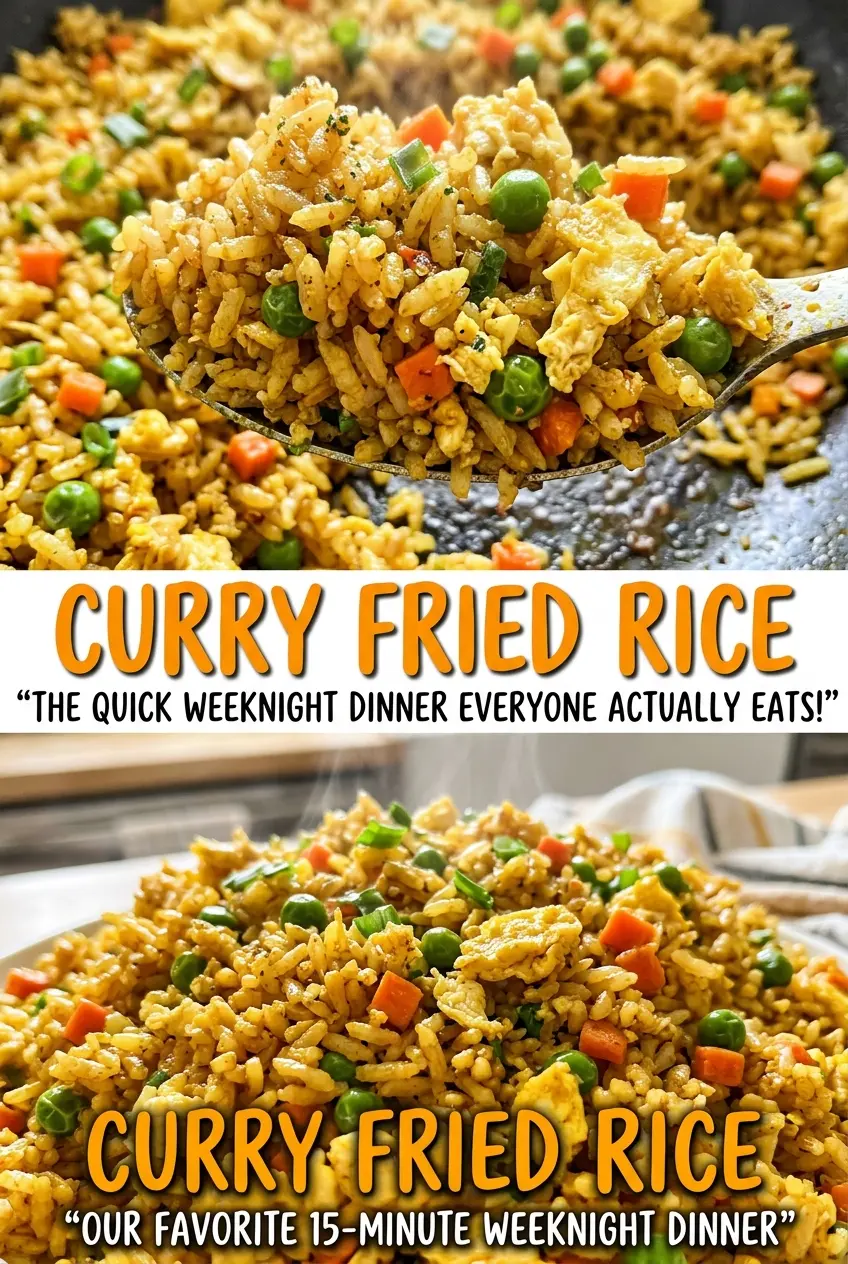
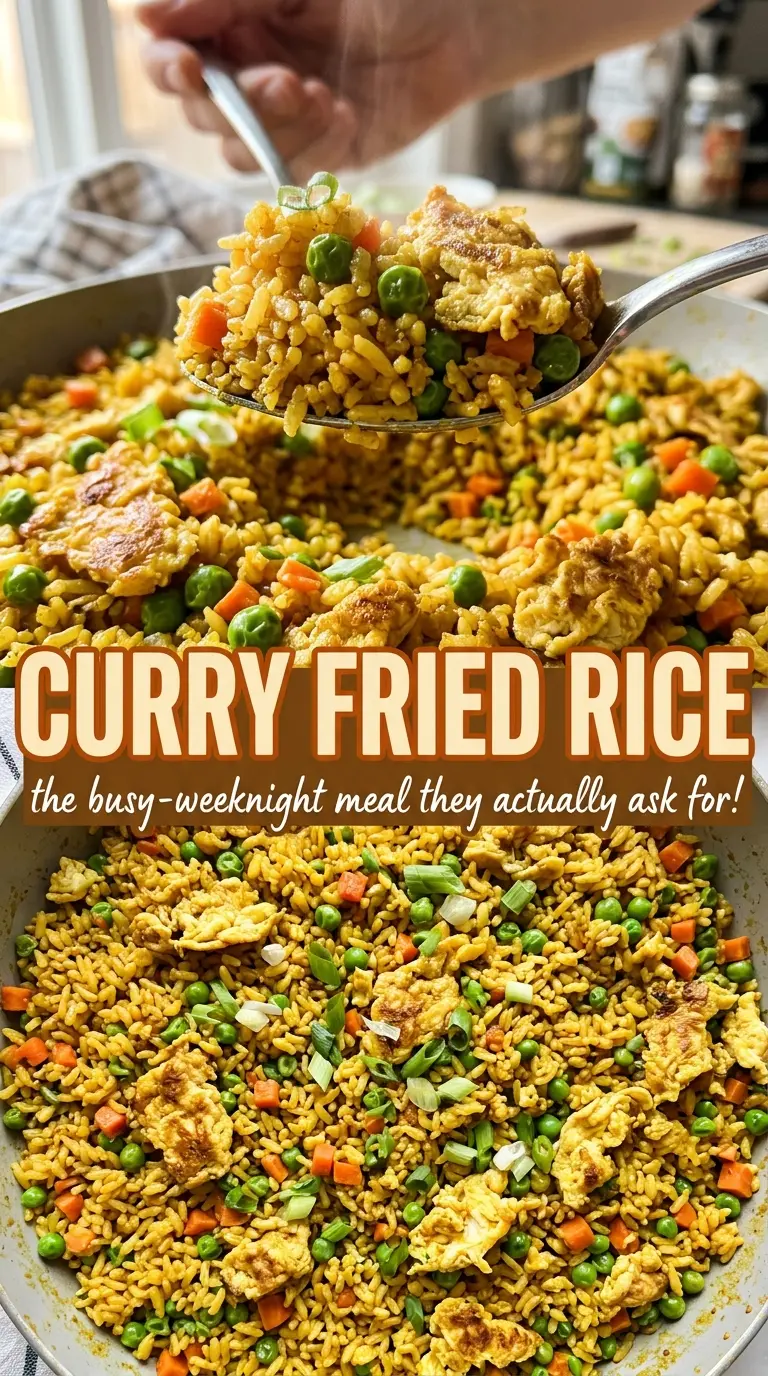
The eggs set quickly in the hot skillet, and the curry powder turns fragrant almost as soon as it hits the pan. That quick pace is what makes curry fried rice such a good way to turn cold cooked rice into a full meal without a long list of steps. I keep the ingredients close, because once the onion softens, everything moves fast.
Cold long-grain rice is the part that makes the texture work. Warm rice tends to steam and clump when it goes into the skillet, while cold rice can fry until the grains separate and heat through. The curry powder gets a short turn in the pan before the rice goes in, so its aroma spreads through the vegetables instead of tasting dusty. You end up with savory rice, soft egg, and little pops of peas and carrots in every forkful.
Kitchen Note
I set the beaten eggs and the rest of the ingredients beside the stove before turning on the heat. Once the onion softens, the garlic and vegetables need only a minute, so there’s no comfortable pause to slice scallions or hunt for the soy sauce.
Save this Curry Fried Rice for a quick skillet dinner with curry-scented rice, soft eggs, and sweet peas and carrots.
Why Cold Rice Stays Separate in the Skillet
Fried rice needs the grains to warm up without turning soft and sticky. Cold cooked rice has had time to firm up, so when it meets the hot skillet, the grains are easier to move around and separate. That’s the difference between a skillet of distinct, lightly coated rice and a dense mound that feels more steamed than fried.
Long-grain rice is a good fit because its grains hold their shape through the stir-frying. Break up any clumps before cooking, then give the rice room to make contact with the skillet as you stir. If you rush in with a solid block of rice, the outside heats before the center does and it takes longer to loosen. The aim isn’t to crisp every grain; it’s to get the rice hot while keeping it loose enough for the curry, vegetables, and egg to spread evenly.
How Each Ingredient Shapes the Curry and Texture
- Long-grain rice — Use cooked rice that’s cold, with the clumps broken apart before it reaches the skillet. Plain rice is all you need; heavily seasoned rice would compete with the curry and soy sauce. Cold leftover rice works well here, and a different neutral-flavored long-grain variety can stand in, though the grain size and chew may shift slightly.
- Curry powder — This is the dish’s main source of warm spice, so its freshness matters more than whether it’s a premium brand. Older curry powder can taste muted; a fresh jar gives the vegetables and rice a more distinct curry aroma. A milder curry blend is an easy swap if you prefer less heat, while a hotter blend makes the finished skillet more pungent.
- Eggs — The eggs add soft, savory curds and make the rice more substantial. Lightly beaten eggs cook evenly; don’t replace them with extra soy sauce or the balance will turn saltier rather than richer. For an egg-free version, leave them out and keep the rest of the ingredients and method the same.
- Frozen peas and carrots — The frozen mix saves prep and brings sweetness and color. Add it straight from the freezer, as thawed vegetables can release extra water before they have a chance to heat through. If the bag has larger carrot pieces, they’ll remain firmer after the quick cook, so smaller pieces give the most even bite.
- Yellow onion and garlic — The onion softens into a gentle savory base, and fresh minced garlic gives that base its sharper aroma. White onion can replace yellow onion with a slightly firmer, more direct bite. Fresh garlic is worth using when you have it; garlic that’s minced finely disperses better than large pieces.
- Soy sauce and neutral oil — Soy sauce seasons the rice and adds a deep savory note, so low-sodium soy sauce works if you want a less salty finish, though it will taste a little lighter. Canola or vegetable oil can replace another neutral oil; skip strongly flavored oils that would distract from the curry.
- Scallions — Their fresh, mild onion flavor gives the finished rice a lift. Slice them thinly so they distribute through the skillet during the brief final cook. The green tops and pale parts both work well here.
From Set Eggs to Rice With Separate Grains
Cook the Eggs Just Until Set
Heat one tablespoon of the oil in a 12-inch skillet over medium-high heat. Add the lightly beaten eggs and stir as they cook, about 1 to 2 minutes, until they’re just set rather than browned. Transfer them to a plate before starting the vegetables. They’ll go back into the skillet at the end, so there’s no need to cook them further now.
Soften the Onion Before Adding the Vegetables
Add the remaining tablespoon of oil and the diced onion to the same skillet. Stir for about 2 minutes, until the onion has softened; it shouldn’t need to brown. Add the minced garlic and frozen peas and carrots, then stir for 1 minute. Keep the mixture moving so the garlic doesn’t sit against the hot pan long enough to scorch.
Give the Curry Powder a Brief Toast
Stir the curry powder into the vegetables and let it cook for 30 seconds. It should smell fragrant, not burnt; if the skillet is left still, the powder can catch on the bottom. Add the rice and stir-fry over medium-high heat for about 3 to 5 minutes. Keep turning and separating the grains until the rice is hot throughout.
Finish With Soy Sauce, Egg, and Scallions
Stir in the soy sauce and kosher salt, then return the cooked eggs to the skillet with the sliced scallions. Fold everything together so the egg breaks into bite-size pieces instead of disappearing into the rice. Cook for about 1 minute, just until all the ingredients are hot. Take the skillet off the heat once the scallions are mixed through and still look fresh.
Small Changes for a Different Curry Fried Rice
Make It Egg-Free
Leave out the eggs and cook the onion, vegetables, curry, and rice as usual. The result has a lighter texture and lets the curry and vegetables come forward; you’ll miss the soft egg curds, but the skillet still holds together as a rice dish.
Choose a Milder or Hotter Curry Powder
Swap the curry powder for a mild blend for a softer, less assertive spice, or choose a hotter curry blend for more heat. The rest of the ingredient balance stays the same, but the curry’s character will change from gentle and rounded to sharper and more forward.
Leave Out the Onion for a Cleaner Curry Flavor
Skip the yellow onion if you want the curry and garlic to read more clearly. The rice will have less sweetness and a less rounded base, but the remaining vegetables still add a little sweetness and texture.
Storage and Reheating
- Refrigerator: Refrigerate leftovers promptly in a covered, shallow container and eat within 3 to 4 days. The rice will firm up as it chills, then loosen as it reheats.
- Freezer: This fried rice freezes well. Cool it, portion it into airtight freezer containers, and freeze for up to 1 month for the best texture.
- Reheating: Reheat in a skillet over medium heat, stirring until steaming hot, or microwave in a covered microwave-safe dish, stirring partway through. Don’t leave it warming slowly at room temperature; reheat only the portion you plan to eat.
Questions That Come Up When Frying Curry Rice
Curry Fried Rice
Ingredients
Equipment
Method
- Heat 1 tablespoon of the oil in a 12-inch skillet over medium-high heat.
- Add the eggs and cook, stirring, until just set, about 1 to 2 minutes.
- Transfer the eggs to a plate.
- Add the remaining 1 tablespoon oil and the onion to the skillet and cook, stirring, until softened, about 2 minutes.
- Add the garlic and frozen peas and carrots and cook, stirring, for 1 minute.
- Stir in the curry powder and cook for 30 seconds.
- Add the rice and stir-fry over medium-high heat until hot and the grains separate, about 3 to 5 minutes.
- Stir in the soy sauce, salt, cooked eggs, and scallions, and cook until everything is hot, about 1 minute.