The first thing I watch when tilapia hits the skillet is the space around the fillet. If water pools there, the fish steams instead of taking on a light golden edge. Patting it dry and cooking just two fillets at a time keeps the pan from getting crowded, and it gives this creamy tilapia in roasted pepper sauce the clean, tender texture I want.
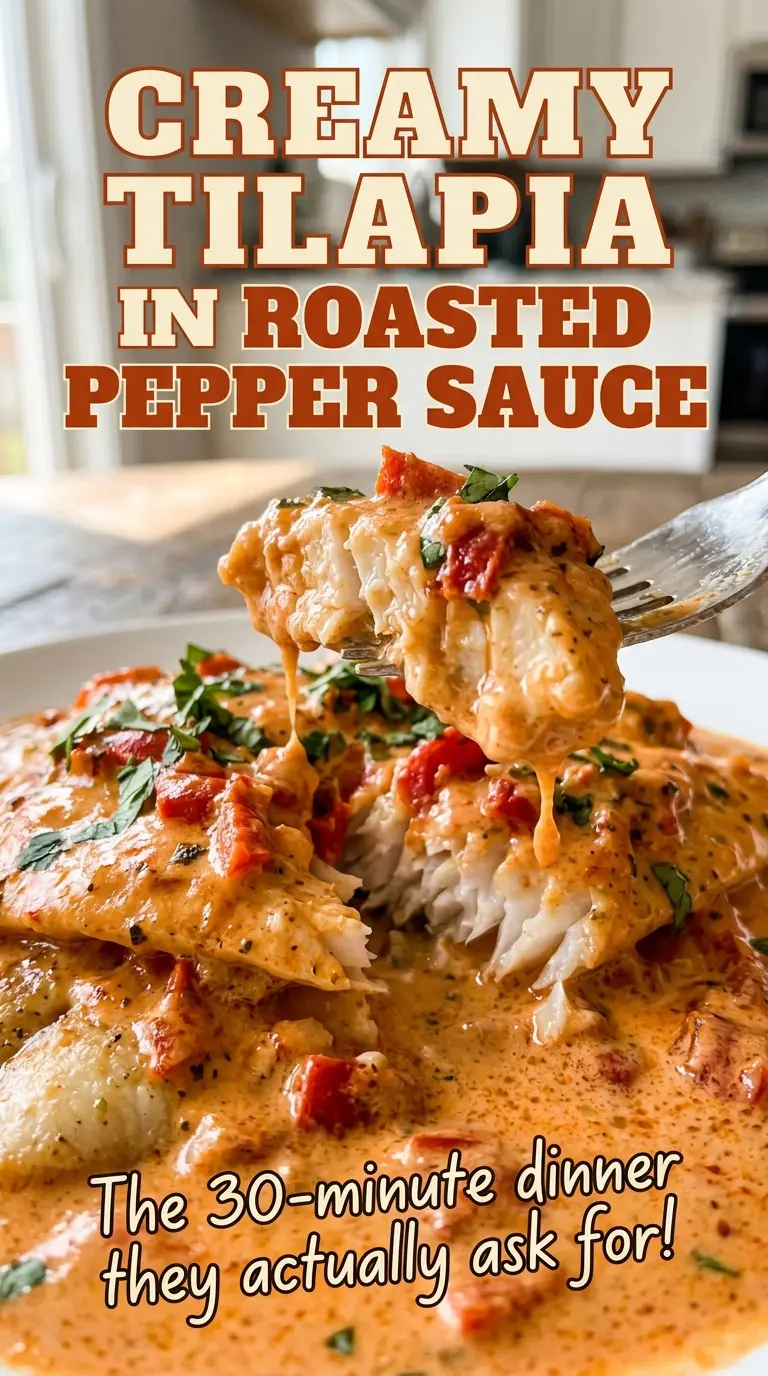
The sauce comes together before the fish does: roasted red peppers, broth, garlic, cream, Parmesan, and Italian seasoning all go into the blender together. That means there’s no scrambling to stir cheese into a hot pan while delicate fillets wait nearby. Once the fish is cooked, the smooth pepper sauce warms in the same skillet and picks up the juices left behind. Each fillet ends up coated in a silky, savory sauce that’s rich without burying the mild flavor of the fish.

Kitchen Note
Pat the tilapia dry before seasoning, including along the edges. A damp surface releases water into the oil, and that makes it harder to get the clean skillet-cooked finish you want.
Save this creamy tilapia in roasted pepper sauce for a weeknight dinner with tender fish and a smooth, Parmesan-rich sauce.
Why the Parmesan Goes Into the Blender, Not the Hot Skillet
Parmesan can turn grainy when it’s stirred into a hot sauce in a hurry. Here, it gets blended with the peppers, broth, cream, garlic, and Italian seasoning before anything is heated. The blender breaks the pepper pieces down and spreads the finely grated cheese through the creamy base, so you start with a uniform sauce instead of trying to smooth out clumps in the skillet.
That order also gives you more control over the finish. The sauce warms on its own after the fish is cooked, so you can stir it as it simmers and stop when it’s hot and slightly thickened. Keep the heat moderate rather than letting it boil hard; a gentle simmer is a better fit for a cream-and-cheese sauce. The result should coat a spoon and settle over the tilapia in a smooth layer, not sit in thick blobs or run off like broth.
What Each Ingredient Brings to This Roasted Pepper Sauce
- Roasted red peppers — These give the sauce its mellow sweetness and color. Drain them well before blending; excess liquid can leave the sauce thinner than you want. A standard jar works well, so there’s no need to seek out a specialty brand.
- Low-sodium chicken broth — It loosens the peppers enough to blend and adds savory depth without making the sauce heavy. Low-sodium broth is useful here because Parmesan brings its own saltiness. For a gluten-free version, use the same amount of low-sodium gluten-free chicken broth.
- Heavy cream — Cream gives the sauce its rounded, velvety texture. I wouldn’t replace it with milk, which makes a thinner sauce and is less forgiving as the mixture warms.
- Finely grated Parmesan — Fine shreds blend more evenly into the sauce than large curls. A basic Parmesan is fine; the useful detail is grating it finely so it disperses smoothly.
- Garlic and Italian seasoning — The garlic adds a savory backbone, while the dried herbs give the pepper sauce its familiar Italian-style aroma. Blend them right into the base so neither one lands in a concentrated bite.
- Tilapia — Its mild flavor lets the roasted pepper sauce come through, and fillets of similar thickness cook within a predictable window. Choose fillets that are close in size so they finish at about the same time.
How to Cook the Tilapia Before the Sauce Goes Back In
Blend the sauce until completely smooth
Add the drained roasted peppers, chicken broth, garlic, heavy cream, finely grated Parmesan, and Italian seasoning to a blender. Blend until the sauce looks uniform, with no visible pieces of pepper or garlic. Set it aside while you cook the fish. Blending everything together now means you won’t need to handle the blender or add cheese while the skillet is hot.
Season the fillets on a dry surface
Pat the tilapia fillets dry, then season both sides with kosher salt and black pepper. Keep the fillets close at hand before you heat the oil; tilapia is delicate, and you’ll want to place it in the skillet without delay. Even seasoning on both sides gives each bite a little lift without competing with the pepper sauce.
Sear in two batches
Heat 1 tablespoon of olive oil in a 12-inch nonstick skillet over medium heat. Cook two fillets for 3 to 4 minutes on the first side, then turn and cook for 2 to 3 minutes on the second, until opaque and 145°F in the thickest part. Transfer them to a plate, add the remaining 1 tablespoon of olive oil, and cook the remaining two fillets the same way. If you crowd all four into the skillet, they won’t have as much room to cook evenly.
Warm the sauce, then return the fish
Pour the blended sauce into the same skillet and simmer over medium-low heat for 3 to 5 minutes, stirring occasionally, until hot and slightly thickened. Scrape up any juices left in the pan as you stir; they add a little of the fish’s savory flavor to the sauce. Return the fillets and any juices from the plate, then spoon sauce over the top. Let everything simmer gently for 1 to 2 minutes, just until the fish is warmed through.
Two Practical Ways to Adapt the Recipe
Make a half batch for two
Use two tilapia fillets and halve each of the other ingredients, including the sauce ingredients and olive oil. The same 12-inch skillet works well for the two fillets, and the sauce keeps the same creamy, pepper-forward balance in a smaller amount.
Keep it gluten-free
Replace the low-sodium chicken broth with the same amount of low-sodium gluten-free chicken broth. The pepper, cream, and Parmesan still make the sauce taste rich and savory, with no change to the cooking method.
Storage and Reheating
- Refrigerator: Store the fish and sauce in an airtight container for up to 3 days. The sauce thickens as it chills, and the fish will be softer after storage.
- Freezer: This dish is best fresh because the cream sauce may separate and the tilapia can turn soft after thawing. If you freeze leftovers, seal them airtight for up to 2 months and thaw in the refrigerator.
- Reheating: Warm portions gently in a covered skillet over low heat, spooning sauce over the fish as it heats. Bring leftovers to 165°F, and avoid a hard boil, which can break the sauce and dry out the tilapia.
Questions That Come Up When Cooking Tilapia in Pepper Sauce
Creamy Tilapia in Roasted Pepper Sauce
Ingredients
Equipment
Method
- Blend the roasted peppers, chicken broth, garlic, heavy cream, Parmesan, and Italian seasoning until smooth, then set aside.
- Pat the fillets dry and season both sides with the salt and black pepper.
- Heat 1 tablespoon of the olive oil in a 12-inch nonstick skillet over medium heat; cook 2 fillets for 3 to 4 minutes on the first side and 2 to 3 minutes on the second, until opaque and 145°F in the thickest part, then transfer to a plate.
- Add the remaining 1 tablespoon olive oil and repeat with the remaining fillets, transferring them to the plate when cooked.
- Pour the pepper sauce into the skillet and simmer over medium-low heat for 3 to 5 minutes, stirring occasionally, until hot and slightly thickened.
- Return the tilapia and any plate juices to the skillet and spoon sauce over the fillets; simmer gently for 1 to 2 minutes, until the fish is warmed through.