The first few spoonfuls tell you whether an au gratin has the right balance: a crisp bite from the top, then creamy sauce and pieces of crab, not a mouthful of breadcrumbs. I developed Crab Meat au Gratin to keep that contrast clear. It’s rich, but the crab remains the point of it, and the sharp, savory notes keep each bite from feeling flat.
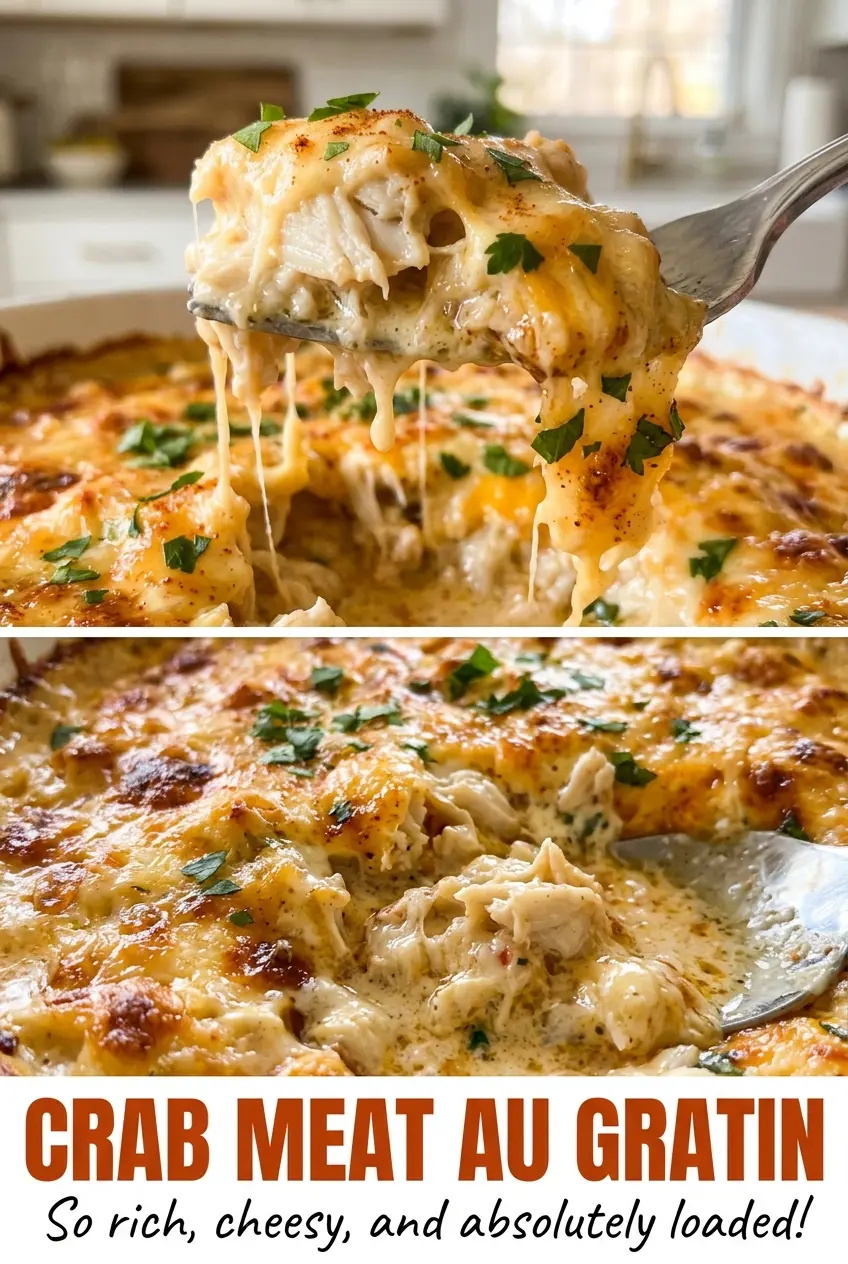
This isn’t a casserole meant to be stirred after it comes out of the oven. The crab sits in a smooth cheese sauce beneath a buttery crumb topping, and a short rest helps the filling settle before serving. The finished dish is soft and spoonable underneath, with a golden top that breaks cleanly under a serving spoon.
Kitchen Note
Pat the crab gently dry before folding it into the sauce. Moisture clinging to the meat can loosen the filling, so take a moment with this step without pressing hard on the lumps.
Save this Crab Meat au Gratin for its tender crab, creamy cheddar sauce, and golden Parmesan breadcrumb top.
Why the Cheese Sauce Needs to Thicken Before the Cheddar Goes In
A smooth gratin sauce starts with a flour-thickened base, not with the cheese. The flour needs time to cook with the softened onion, then the warmed milk and cream need to be whisked in gradually. That gives the sauce a chance to thicken evenly instead of leaving little floury pockets behind.
Watch for the sauce to coat the back of a spoon before stirring in the cheddar. At that point, the base is thick enough to cling to the crab rather than pooling around it. The cheddar then melts into a sauce that holds together through baking. If you add it while the base is still thin, the cheese can melt without fixing the loose texture underneath.
Warming the milk and cream first also keeps the temperature change gentler as they meet the hot onion-and-flour mixture. Whisk steadily as you pour, especially around the corners of the saucepan where flour can cling. You’re aiming for a satiny sauce with no visible lumps before you season it or add the cheese.
What the Crab, Cheddar, and Topping Each Bring to This Gratin

- Lump crabmeat — Lump meat gives you distinct, generous pieces rather than a uniformly flaky filling. Pick through it carefully for shells; good-quality crab matters here because its sweetness is the focus. Claw meat works as a less expensive alternative, though the finished dish will have smaller pieces and a more pronounced crab flavor.
- Whole milk and heavy cream — Together they make a sauce rich enough to surround the crab without turning it into a heavy paste. Store-brand dairy works well; warming it before whisking helps the sauce come together smoothly.
- Sharp cheddar — Its tang keeps the cream sauce from tasting one-note, and it melts right into the thickened base. A familiar, everyday sharp cheddar is fine; choose one you like eating, since its flavor carries through the whole dish.
- Yellow onion and all-purpose flour — Finely chopped onion softens into the sauce base without leaving large, crunchy pieces. The flour thickens the dairy so it can coat the crab; cooking it briefly with the onion takes away its raw taste.
- Dry sherry, Worcestershire sauce, and cayenne — These small additions deepen the savory flavor without taking over the crab. Use dry sherry rather than a sweet style, and keep the cayenne measured if you want its gentle warmth to stay in the background.
- Plain dry breadcrumbs and Parmesan — Plain crumbs give the top a crisp, familiar crunch, while finely grated Parmesan adds a salty, browned finish. Seasoned breadcrumbs would bring extra herbs and salt that aren’t part of this balanced topping.
- Unsalted butter — Butter softens the onion, enriches the sauce, and coats the crumb topping. Unsalted butter lets the salt level stay controlled from the sauce through the top.
Build the Sauce Smoothly Before the Crab Goes Into the Oven
Butter the Dish and Soften the Onion
Heat the oven to 375°F and grease an 8×8-inch baking dish with 1 teaspoon of butter. Melt 3 tablespoons of butter in a medium saucepan over medium heat, then add the finely chopped onion. Cook it for 3 to 4 minutes, until softened; keep the heat at medium so the onion softens without browning.
Whisk the Dairy Into the Flour
Stir the flour into the softened onion and cook for 1 minute. Gradually whisk in the warmed milk and cream, keeping the whisk moving as the mixture thickens. Cook for 4 to 6 minutes, until the sauce coats the back of a spoon. If it still runs off like milk, give it more time while whisking.
Melt in the Seasoning and Cheddar
Stir in the kosher salt, black pepper, cayenne, dry sherry, and Worcestershire sauce. Add the shredded sharp cheddar and stir until it has melted and the sauce looks smooth. Check the texture before moving on: a glossy sauce will coat the crab evenly instead of sliding to the bottom of the dish.
Top the Crab and Bake Until Bubbly
Gently fold the crab into the sauce, then spread the mixture in the prepared baking dish. Melt the remaining tablespoon of butter and toss it with the breadcrumbs and Parmesan; scatter the mixture evenly over the top. Bake for 20 to 25 minutes, until the topping is golden, the sauce bubbles around the edges, and the center reaches 165°F. Rest the dish for 5 minutes before serving so the filling can settle.
How to Adapt Crab au Gratin Without Losing Its Creamy Center
Make It Gluten-Free
Replace the all-purpose flour with a cup-for-cup gluten-free flour blend and use gluten-free plain dry breadcrumbs. The sauce still thickens and the topping still browns, though the crumb texture may vary a little by brand.
Trade the Cheddar for Gruyère
Use the same volume of shredded Gruyère in place of the sharp cheddar. It melts smoothly and gives the sauce a nuttier, less tangy character, so the crab comes through against a softer cheese flavor.
Keep the Flavor Mild
Reduce the cayenne or leave it out for a gentler sauce. You’ll lose its faint warmth, but the cheddar, sherry, and Worcestershire still give the gratin a savory backbone.
Storage and Reheating
- Refrigerator: Keep leftovers covered in the refrigerator for up to 3 days. The crumb topping softens as it sits against the sauce.
- Freezer: Freezing isn’t ideal; the cheese sauce may separate as it thaws, and the topping loses its crisp texture.
- Reheating: Reheat covered loosely with foil in a 325°F oven until hot throughout, then uncover briefly to crisp the top. The microwave warms it quickly but leaves the crumbs soft.
Questions That Come Up Before Crab au Gratin Goes in the Oven
Crab Meat au Gratin
Ingredients
Equipment
Method
- Preheat the oven to 375°F.
- Grease an 8x8-inch baking dish with 1 teaspoon of the butter.
- Melt 3 tablespoons of the butter in a medium saucepan over medium heat, add the onion, and cook for 3 to 4 minutes until softened.
- Stir in the flour and cook for 1 minute.
- Gradually whisk in the milk and cream; cook, whisking, for 4 to 6 minutes until thick enough to coat the back of a spoon.
- Stir in the salt, black pepper, cayenne, sherry, and Worcestershire sauce, then stir in the cheddar until melted and smooth.
- Gently fold the crabmeat into the sauce and spread the mixture in the prepared baking dish.
- Melt the remaining 1 tablespoon of butter, toss it with the breadcrumbs and Parmesan, and sprinkle the mixture evenly over the crab.
- Bake for 20 to 25 minutes until the topping is golden, the sauce bubbles around the edges, and the center reaches 165°F.
- Rest for 5 minutes before serving.