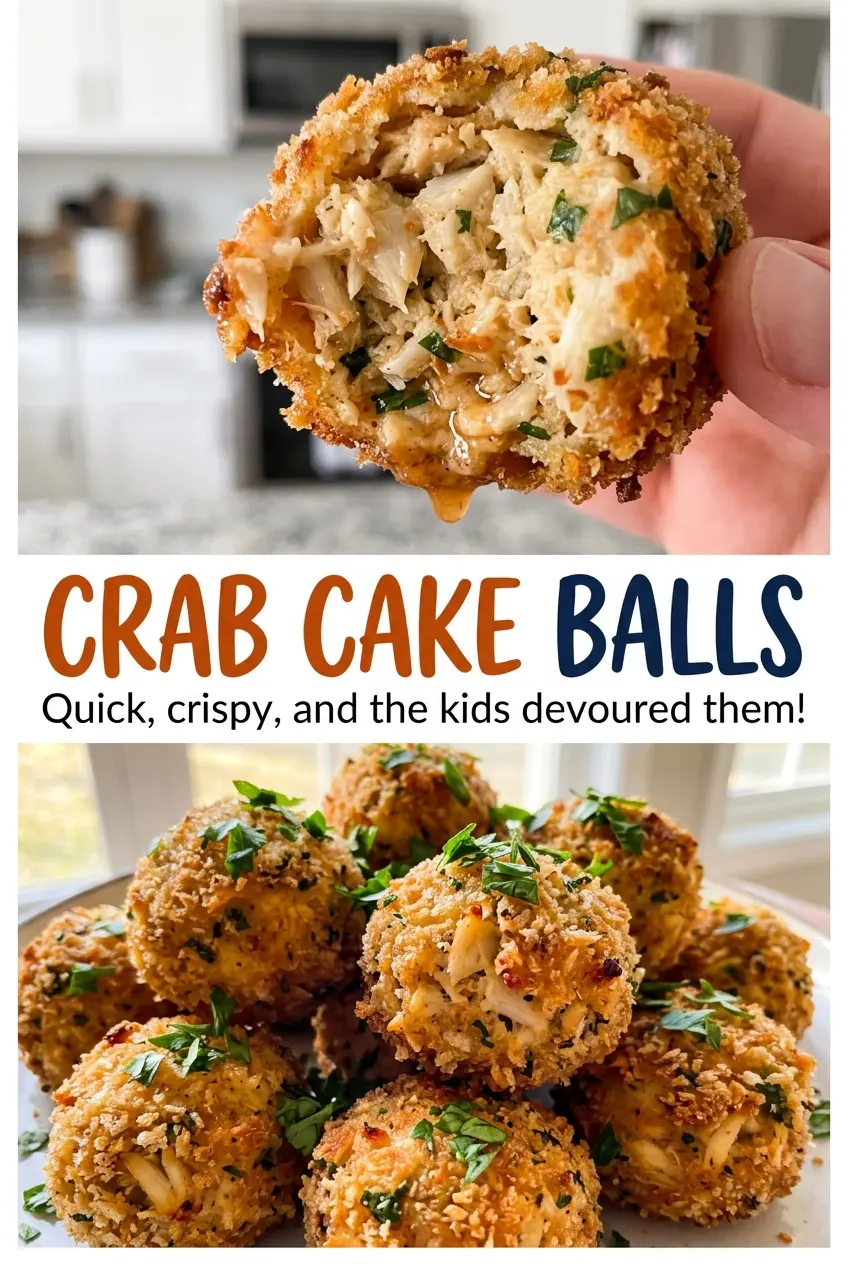
When these crab cake balls turn in the oil, their panko coating goes golden while the crab stays in generous, tender pieces. I like them as a bite-size take on a classic crab cake: each one gets a crisp outside without losing that sweet lump-crab texture inside.
The mixture is gently folded rather than stirred smooth, then chilled before shaping. That keeps the crab from breaking down and gives the balls time to firm up before they meet the hot oil. A second chill after coating helps the panko stay in place as they fry, so you get a crunchy shell around every bite.
Fresh lemon, Dijon, Worcestershire, parsley, and Old Bay season the crab without covering it up. Set out a wire rack for draining, and serve the crab cake balls while the coating is still crisp.
Kitchen Note
Fold the crab in with a light hand and stop as soon as it’s coated. A few large pieces are exactly what you want; stirring until the mixture looks uniform takes away the distinct crab texture.
Save these Crab Cake Balls for a crisp, golden party bite packed with sweet lump crab and Old Bay.
Why the Panko Goes Inside and Outside the Crab Balls
The panko has two separate jobs here, and keeping those portions apart makes a difference. The smaller amount folded into the crab mixture helps bring the mayonnaise and egg together with the meat, giving each ball enough structure to shape. The rest stays dry for the outside, where it forms the crisp coating in the hot oil.
If you mix all the panko into the crab, there’s none left to coat the outside. If you use the whole amount only on the outside, the mixture has less help holding its shape. Dividing it also lets the crab stay the star: the interior is seasoned and bound, not packed with crumbs.
The two refrigerator rests support that balance. The first gives the mixed crab time to firm before shaping; the second gives the coated balls a chance to settle on the tray. Keep the coating even as you roll each ball, but don’t press it into a dense shell. A light, complete layer is what turns crisp and golden.
The Crab and Panko Choices That Shape Every Bite
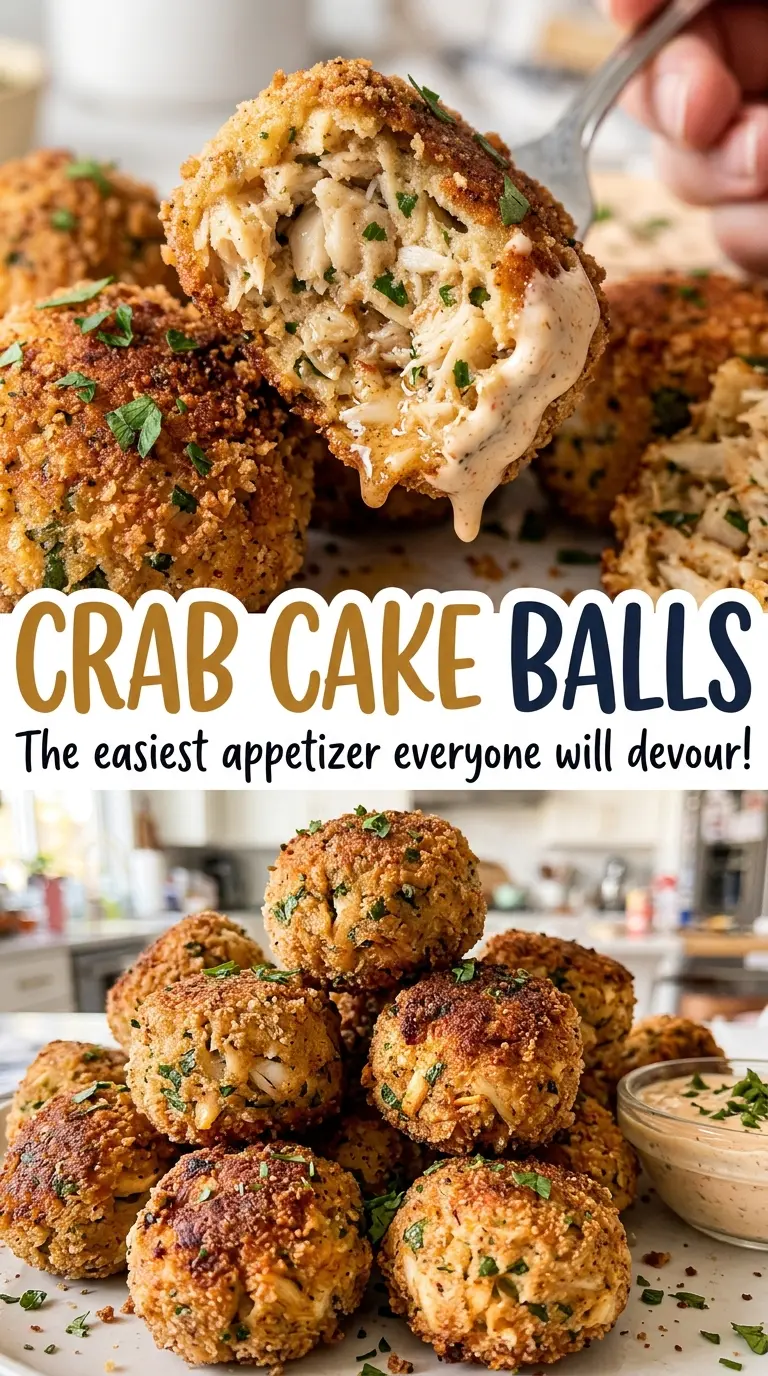
- Lump crabmeat — Its large pieces give the finished balls their meaty, sweet texture. Pick through it carefully for shell fragments before folding it into the base; take care not to break the lumps apart. Claw meat has a stronger flavor and smaller flakes, so the result won’t have quite the same distinct chunks.
- Panko breadcrumbs — Panko stays light and crisp on the outside and helps bind the mixture inside. Keep the portions separate: one goes into the crab mixture and the remaining crumbs coat the shaped balls. For a gluten-free version, use gluten-free panko in both portions, measuring each portion the same way; the exact crunch depends on the brand.
- Mayonnaise and egg — Together they give the crab mixture moisture and help it hold together. Use a mayonnaise you enjoy, since its mild tang is part of the base; the egg is doing more than adding richness, so leaving it out changes how well the balls hold their shape.
- Dijon, Worcestershire, and Old Bay — These bring mustard tang, savory depth, and the familiar seasoning that makes the crab taste like a crab cake. Dijon and Worcestershire are more than interchangeable background seasonings here, so keep them in the mixture for the intended balance.
- Lemon juice and fresh parsley — Lemon brightens the rich crab mixture, while fresh parsley brings a clean herbal note. Finely chop the parsley so it distributes through the mixture instead of clumping in one spot.
From Loose Crab Mixture to Crisp, Golden Centers
Whisk the Seasoned Base
In a medium bowl, whisk the mayonnaise, egg, Dijon mustard, Worcestershire sauce, Old Bay, lemon juice, and finely chopped parsley until the mixture looks even. Whisking before adding the crab spreads the seasoning through the binder, so you won’t need to stir hard later. Scrape around the bowl if streaks of mayonnaise or mustard cling to the sides. The base should look smooth, not foamy.
Fold in the Crab and Let It Chill
Add the lump crabmeat and the first portion of panko to the bowl. Fold gently until the crumbs are distributed and the crab is coated, leaving the larger pieces intact. Cover the bowl and refrigerate for 30 minutes; don’t skip this pause, since a cold mixture is easier to portion and shape than a loose one.
Shape and Coat Evenly
Put the remaining panko in a shallow bowl and line a tray with parchment paper. Shape the mixture into 24 equal balls, then roll each one in the panko and set it on the tray. If the coating looks patchy, turn the ball gently in the crumbs rather than pressing hard. Refrigerate the shaped balls for 15 minutes before frying.
Fry in Batches and Check the Centers
Heat the vegetable oil in a 5-quart Dutch oven to 350°F, monitoring it with a deep-fry thermometer. Fry 5 or 6 balls at a time for 3 to 4 minutes, turning as needed, until the coating is golden brown and the centers reach 160°F. Crowding the pot makes it harder to keep the oil at temperature, so let it return to 350°F between batches. Transfer each batch to a wire rack and let the balls rest for 2 minutes before serving.
Two Practical Ways to Adapt These Crab Cake Balls
Make Them Gluten-Free with Gluten-Free Panko
Use gluten-free panko for both the portion mixed into the crab and the portion used for coating, keeping the amounts the same. The balls keep their crab-cake shape, though the exterior may be a little more or less crisp depending on the crumbs you buy.
Swap in Claw Crabmeat for a Bolder Crab Flavor
Use the same amount of picked-over claw crabmeat in place of lump. The flavor is more pronounced and the pieces are smaller, so the balls won’t have the same large, sweet crab chunks as the lump version.
Storage and Reheating
- Refrigerator: Refrigerate cooked leftovers within 2 hours and keep them in a covered container for 3 to 4 days. The panko coating softens as it sits.
- Freezer: Freeze cooled, cooked crab cake balls in a single layer until firm, then transfer them to an airtight freezer container for up to 2 months. The crust may lose some crispness after freezing.
- Reheating: Warm them in a 350°F oven until the centers reach 165°F. Avoid the microwave if you want to preserve the coating; it tends to turn the panko soft.
Questions That Come Up When Frying Crab Cake Balls
Crab Cake Balls
Ingredients
Equipment
Method
- In a medium bowl, whisk together the mayonnaise, egg, Dijon mustard, Worcestershire sauce, Old Bay, lemon juice, and parsley.
- Gently fold in the crabmeat and 1/2 cup panko, taking care to keep the crab in large pieces.
- Cover and refrigerate for 30 minutes.
- Put the remaining 1 cup panko in a shallow bowl and line a tray with parchment paper.
- Shape the crab mixture into 24 equal balls, roll each in the panko, and set on the tray.
- Refrigerate for 15 minutes.
- Heat the vegetable oil in a 5-quart Dutch oven to 350°F, using a deep-fry thermometer to monitor the temperature.
- Fry the balls in batches of 5 or 6 for 3 to 4 minutes, turning as needed, until golden brown and the centers reach 160°F.
- Let the oil return to 350°F between batches.
- Transfer the crab cake balls to a wire rack to drain and rest for 2 minutes before serving.