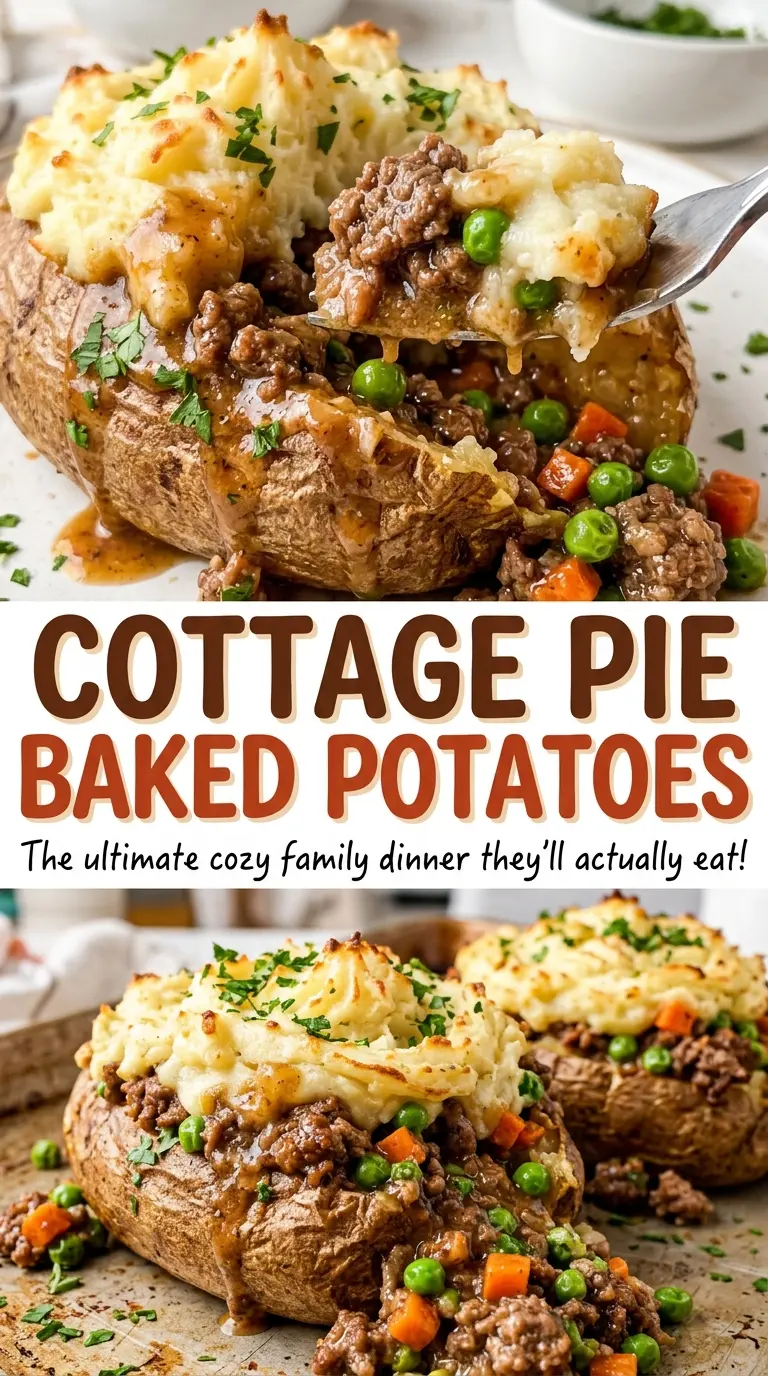
A knife can slide through one russet while the potato beside it still feels firm, so I check each one rather than pulling the whole pan at the first sign of tenderness. These cottage pie baked potatoes solve the usual cottage pie problem of needing a baking dish: each potato becomes its own sturdy serving, filled with beef, carrot, and peas.
I cook the filling while the potatoes bake, then mash the hot potato flesh with butter and warmed milk. That gives the topping a smooth texture without making it feel heavy, and sharp cheddar melts into a golden finish in the oven. When the filling is thick and the potato centers are tender, every layer stays where it belongs: a crisp-edged russet, savory beef, soft mash, and bubbling cheese.

Kitchen Note
I leave about 1/4 inch of potato against the skin when I scoop out the centers. That cushion keeps each shell sturdy enough to hold the filling without tearing when you lift it.
Save these cottage pie baked potatoes for a cozy dinner, with a bubbling beef filling tucked under cheesy mashed potatoes.
Why the Beef Layer Needs to Be Thicker Than Cottage Pie Gravy
A cottage pie baked in a dish can hold a looser filling; a potato shell can’t. If the beef mixture is watery, that liquid settles into the bottom of the potato and makes the skin soft before the cheese has time to brown. The filling should sit in a spoonful, not run across the plate when you tilt the skillet.
Tomato paste and flour give the broth enough body to stay put, but the simmer matters just as much. Let the sauce reduce until it clings to the beef and the carrot has softened. Add the peas after that thickening happens, so they warm through without giving the filling extra time to loosen. This little bit of patience is what makes the finished potato easy to serve, rather than a shell with gravy escaping from every side.
What Gives Each Layer Its Cottage Pie Character
- Russet potatoes — Their starchy centers mash up fluffy, while the skins make useful little boats for the filling. Large potatoes close to the same size are helpful because they finish baking at a similar pace; there’s no need to buy a premium brand.
- Ground beef — The 85% lean beef gives the filling enough fat for browning without making the finished potatoes feel greasy. Choose a package that looks fresh; the less expensive option works just as well here.
- Yellow onion and carrot — Finely chopping both lets them soften alongside the beef rather than leaving big, crunchy pieces in the filling. If you don’t have the onion, leave it out instead of adding another ingredient; the beef mixture will be less sweet and aromatic.
- Tomato paste and all-purpose flour — Tomato paste brings concentrated savory depth, and flour helps the beef broth turn into a cohesive sauce. Standard pantry versions are all you need; the paste doesn’t need to be a specialty brand.
- Frozen peas — Frozen peas are convenient and hold their shape in the hot filling. There’s no need to thaw them first, and their mild sweetness gives the beef layer a familiar cottage pie note.
- Sharp cheddar — Sharp cheddar gives the potato topping a more pronounced savory finish than a mild cheese. A regular block or bag of shredded sharp cheddar works; pick the one that’s easiest for you to use.
From Tender Russets to a Bubbling Cheddar Top
Bake the Potatoes Until a Knife Slides Through
Heat the oven to 425°F. Scrub and dry the potatoes, pierce each one several times with a fork, and set them on an 18×13-inch rimmed baking sheet. Bake for 50-65 minutes, checking each potato with a knife; it should slide easily into the center. A firm spot means that potato needs more time, even if the others are ready.
Brown the Beef and Soften the Vegetables
While the potatoes bake, heat the olive oil in a 12-inch skillet over medium-high heat. Add the ground beef, onion, and carrot, breaking up the beef as it cooks for 7-9 minutes. Look for browned beef and softened vegetables, and cook until the beef reaches 160°F. Keep breaking up larger clumps so the filling divides neatly among the potato shells.
Simmer the Filling Until It Holds Together
Stir in the garlic, tomato paste, and flour, then cook for 1 minute. Add the beef broth, Worcestershire sauce, thyme, salt, and pepper, and bring the mixture to a simmer. Cook over medium-low heat for 6-8 minutes, until the sauce thickens and the carrot is tender. Stir in the peas and cook for 2 minutes; the finished filling should look saucy, not soupy.
Mash, Fill, and Bake Until the Cheese Browns
When the potatoes are tender, reduce the oven to 400°F. Cut each one in half lengthwise and scoop the flesh into a bowl, leaving about 1/4 inch in each skin. Mash the potato with the butter and warmed milk until smooth, then divide the beef filling among the shells and top with the mash and cheddar. Bake for 15-20 minutes, until the cheese is melted and lightly browned and the filling bubbles; rest for 5 minutes before serving.
Easy Changes for the Filling and Topping
A Pea-Free Beef Filling
Leave the peas out for a simpler beef-and-carrot filling. The result is less sweet and a little less colorful, but the thick gravy and tender carrot still give the potatoes a complete cottage pie feel.
Carrot-Free Filling
Skip the carrot if you prefer a more straightforward beef filling. The sauce will have less natural sweetness and fewer tender vegetable pieces, so keep an eye on it as it simmers and stop when it has thickened.
Leave Off the Cheddar
For a potato-forward finish, omit the cheddar and bake the filled shells with the mashed potato topping. You’ll miss the browned, savory cheese layer, but the potato top stays soft and creamy.
Storage and Reheating
- Refrigerator: Store leftovers in a covered container for 3-4 days. The potato topping and skin soften as they sit.
- Freezer: These freeze well. Wrap cooled potatoes individually or place them in a freezer-safe container for up to 2-3 months; the potato texture may be a little softer after thawing.
- Reheating: Thaw overnight in the refrigerator, then warm in a 350°F oven until the centers reach 165°F. Avoid reheating for too long, which can dry the potato topping.
Questions That Come Up While Making Cottage Pie Baked Potatoes
Cottage Pie Baked Potatoes
Ingredients
Equipment
Method
- Heat the oven to 425°F. Scrub and dry the potatoes, pierce each several times with a fork, and place them on an 18x13-inch rimmed baking sheet.
- Bake for 50-65 minutes, until a knife slides easily into the center of each potato.
- While the potatoes bake, heat the olive oil in a 12-inch skillet over medium-high heat. Add the ground beef, onion, and carrot and cook for 7-9 minutes, breaking up the beef, until browned and the beef reaches 160°F.
- Stir in the garlic, tomato paste, and flour and cook for 1 minute. Stir in the broth, Worcestershire sauce, thyme, salt, and pepper; bring to a simmer and cook over medium-low heat for 6-8 minutes, until the sauce thickens and the carrot is tender, then stir in the peas and cook for 2 minutes.
- When the potatoes are tender, reduce the oven to 400°F. Cut each potato in half lengthwise and scoop the flesh into a bowl, leaving about 1/4 inch of potato in each skin.
- Mash the potato flesh with the butter and warmed milk until smooth.
- Divide the beef filling among the potato shells, top with the mashed potatoes, and sprinkle with the cheddar.
- Bake for 15-20 minutes, until the cheese is melted and lightly browned and the filling is bubbling.
- Rest for 5 minutes before serving.