The little rings are ready to come out when they spring back under a light touch, not when they’ve taken on a deep golden color. That short bake is what keeps these Christmas mini donuts tender instead of dry, and it’s easy to miss if you’re expecting a full-size donut’s cues.
I pipe the batter into a 12-cavity mini donut pan, filling each space about two-thirds full so the centers stay open. The pan makes 24 donuts, which means two batches; letting it cool before the second one goes in is part of getting an even bake.
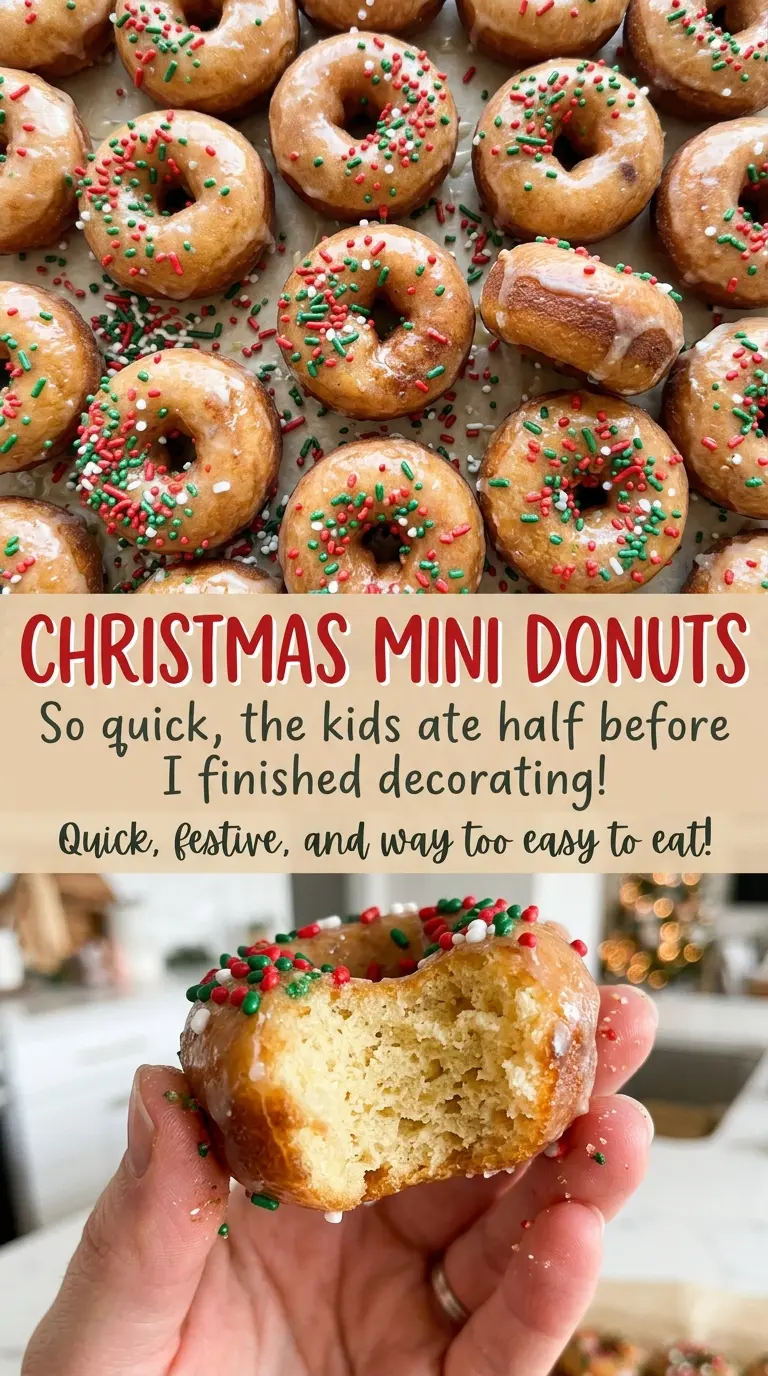
A simple vanilla glaze and red and green sprinkles give these little baked donuts their holiday finish. Once the glaze sets, each one has a soft crumb, a sweet top, and just a hint of nutmeg.

Kitchen Note
Set the sprinkles beside the glaze before you start dipping. They need to go on while the glaze is still wet, so I finish each donut’s topping before moving on to the next one.
Save these Christmas mini donuts for a festive bake: tender baked rings, a smooth vanilla glaze, and red and green sprinkles.
Why the Second Batch Needs a Cool Mini Donut Pan
A mini donut pan holds only 12 at a time, so the second half of the batter waits while the first batch bakes. It’s tempting to refill the pan as soon as the first donuts come out, but a hot pan starts changing the next batch before it has had the same chance to bake. The bottoms can set sooner, and the donuts may not bake as evenly from one cavity to the next.
Give the pan time to cool, then coat it again with nonstick cooking spray before piping the remaining batter. This pause is useful, not fussy: the pan returns to the same starting point for both batches. It also gives the first donuts a few minutes to cool in their cavities before you move them to a wire rack.
The short bake window matters, too. These are small cakes, not fried donuts, so a few extra minutes can take them from springy to dry. Use the light-touch cue rather than waiting for a dark color, and you’ll keep the crumb soft enough to pair with the glaze.
What Each Ingredient Brings to These Mini Donuts
- All-purpose flour — It gives the donuts their structure without making the crumb as sturdy as bread. A standard store brand works well here; I wouldn’t swap in a different flour because the texture and amount of liquid would need adjusting.
- Baking powder — This is the lift that makes the baked rings light rather than compact. Use baking powder, not a different leavener; there isn’t a like-for-like swap in this ingredient list.
- Granulated sugar — It sweetens the batter and blends with the dry ingredients before the wet mixture goes in. Keep it distinct from the confectioners’ sugar, which dissolves into the glaze rather than working the same way in the batter.
- Egg — The egg helps bind the batter and gives the donuts a tender, cake-like structure. I wouldn’t leave it out or try to replace it with another listed ingredient; the batter depends on it to hold together.
- Milk — Milk loosens the batter and is also what brings the glaze together. Use the same kind of milk for both parts; changing the liquid can affect the batter’s consistency as well as how the glaze coats the donuts.
- Unsalted butter — Melted butter adds richness and tenderness. Let it cool slightly before whisking it with the egg and milk so it’s ready to mix into the dry ingredients without being piping hot.
- Nutmeg and vanilla — Nutmeg gives the crumb a gentle warm note, while vanilla rounds out both the batter and glaze. For a milder, vanilla-forward donut, leave out the nutmeg; the vanilla is best kept in both parts for its full aroma.
- Confectioners’ sugar — Its fine texture makes a smooth glaze. Granulated sugar won’t dissolve into the same finish, so use confectioners’ sugar here rather than swapping in the batter’s sugar.
- Red and green sprinkles — These give the tops their festive color and a little crunch. An inexpensive container is fine; the sprinkles go on after dipping, while the glaze is wet.
Mixing, Piping, and Baking Without Losing the Donut Shape
Whisk the Dry Ingredients, Then Stop Mixing Early
Whisk the flour, granulated sugar, baking powder, salt, and nutmeg together in a medium bowl so the leavener and spice are spread through the flour. In a separate bowl, whisk the egg, milk, melted butter, and vanilla. Stir the wet mixture into the dry ingredients only until combined; a few small irregularities are better than continuing to stir once the flour disappears.
Pipe the Cavities About Two-Thirds Full
Transfer the batter to a piping bag, or use a resealable plastic bag with one corner snipped off. Pipe into the prepared mini donut pan, aiming for an even fill of about two-thirds in each cavity. Filling the spaces too full can crowd the centers as the batter bakes, while a very uneven fill gives you donuts that finish at different times.
Watch for a Springy Surface, Not Deep Color
Bake at 350°F for 8–10 minutes. Check by lightly touching a donut; it should spring back rather than leave a dent. Cool the donuts in the pan for 5 minutes, then transfer them to a wire rack. Let the pan cool, coat it again with cooking spray, and bake the remaining batter at 350°F for another 8–10 minutes, followed by the same 5-minute pan rest.
Dip Only After the Donuts Are Cool
Let the donuts cool completely, about 15 minutes, before glazing. Stir the confectioners’ sugar, milk, and vanilla in a small bowl until smooth, then dip the tops of the donuts into the glaze. Add the red and green sprinkles immediately, and leave the donuts undisturbed for about 20 minutes so the glaze can set.
Two Simple Ways to Change the Finish
Make the Donuts Without Nutmeg
Leave the nutmeg out of the dry mixture for a gentler, more vanilla-forward flavor. The donuts still bake the same way, and you don’t need to replace the spice with anything else.
Keep Some Donuts Plain
Leave some of the cooled donuts undipped for a less-sweet option alongside the glazed ones. The plain tops won’t have the glaze’s sweetness or the sprinkles’ crunch, but the baked donut underneath is the same soft, nutmeg-scented cake.
Storage and Reheating
- Refrigerator: Store in an airtight container for up to 3 days. The chilled donuts will be firmer, and the glaze may turn a little tacky as it sits.
- Freezer: Freeze cooled, unglazed donuts in an airtight container for up to 2 months. Thaw at room temperature, then glaze and add sprinkles for the freshest finish.
- Reheating: Let refrigerated donuts come to room temperature before serving. Skip the microwave for glazed donuts; the glaze can melt and the small crumb can turn rubbery.
Questions About Baking Christmas Mini Donuts
Christmas Mini Donuts
Ingredients
Equipment
Method
- Heat the oven to 350°F.
- Coat a 12-cavity mini donut pan with nonstick cooking spray.
- Whisk the flour, granulated sugar, baking powder, salt, and nutmeg in a medium bowl.
- In a separate bowl, whisk the egg, milk, melted butter, and vanilla.
- Stir the wet mixture into the dry mixture just until combined.
- Transfer the batter to a piping bag or a resealable plastic bag with one corner snipped off.
- Pipe the batter into the pan cavities about 2/3 full.
- Bake for 8–10 minutes, until the donuts spring back when lightly touched.
- Cool in the pan for 5 minutes, then transfer to a wire rack.
- Let the pan cool and coat it again with cooking spray.
- Pipe the remaining batter into the cavities.
- Bake at 350°F for 8–10 minutes.
- Cool in the pan for 5 minutes, then transfer to the rack.
- Let the donuts cool completely, about 15 minutes.
- Stir the confectioners’ sugar, milk, and vanilla in a small bowl until smooth.
- Dip the tops of the cooled donuts into the glaze.
- Immediately add the red and green sprinkles.
- Let the glaze set for about 20 minutes.