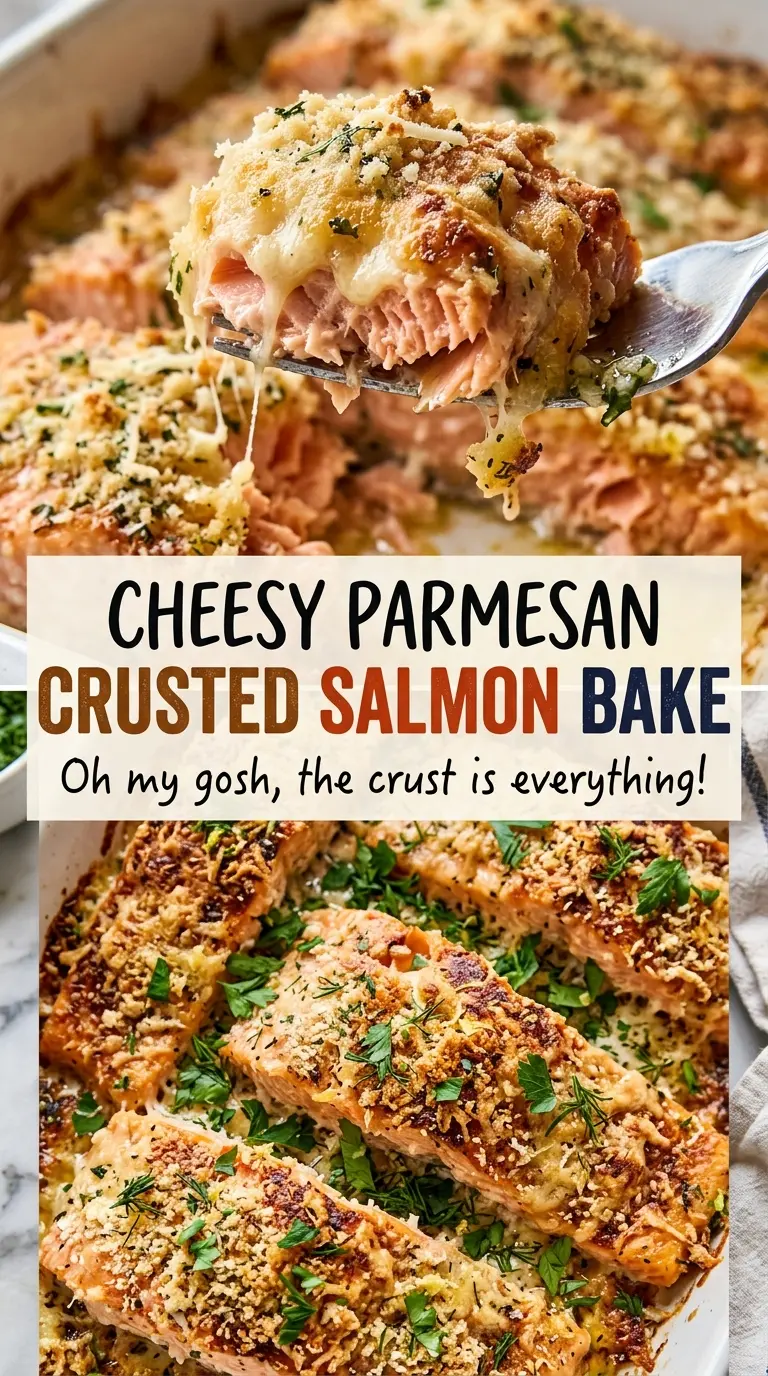
The first thing I watch for is whether the crumbs stay on the fish or slide off into the baking dish. A dry fillet and a thin coating of mayonnaise mixed with Dijon give the topping something to cling to, so the crust turns crisp instead of scattering across the pan. That’s the small detail that makes this Cheesy Parmesan Crusted Salmon Bake feel dependable on a busy night.
I brush a 9×13-inch baking dish with olive oil, set the salmon skin-side down, and spread the mustard mixture over the tops. Then I add panko, finely grated Parmesan, melted butter, garlic powder, and parsley. The crust browns in the oven while the fish stays tender underneath, and an instant-read thermometer takes the guesswork out of knowing when the thickest part is ready. The recipe serves four, with each fillet getting its own golden Parmesan topping.

Kitchen Note
Press the crumb mixture onto each fillet in an even layer rather than leaving it loose and piled in the middle. A gentle press helps the topping stay put while it bakes, so you get crunchy crust with each serving.
Save this Cheesy Parmesan Crusted Salmon Bake for a weeknight dinner when you want tender salmon under a crisp, buttery Parmesan topping.
Why the Parmesan Crust Needs a Moisture Barrier
A crumb topping needs a little help sticking to a smooth piece of fish. If panko goes straight onto bare salmon, the flakes have nothing to bind them, and turning or serving the fillets can leave most of the crust behind. The mayonnaise and Dijon mixture gives the crumbs a tacky surface to hold onto while the salmon bakes.
That coating also does more than act like glue. It sits between the fish and the crumb layer, helping the top stay moist as the panko browns. Spread it across the top of each fillet without making a thick mound; you want a thin, even layer, not a heavy blanket that hides the fish. Dijon brings a mild tang that cuts through the rich butter and Parmesan, while the mayonnaise blends smoothly with it. The result is a crust that tastes savory and crisp rather than greasy, with a tender layer of salmon underneath.
How Panko, Parmesan, and Butter Build the Crunch
- Salmon fillets — Choose evenly sized fillets when you can; similar thickness helps them finish at about the same time. Skin-on fillets have a sturdy base in the baking dish, and the skin helps keep the fish in one piece when you lift it out.
- Panko breadcrumbs — Their larger, airy flakes are what give this topping its crisp texture. Regular fine breadcrumbs work in a pinch, but the crust will be denser and less craggy. Keep the panko dry until you stir it with the melted butter.
- Finely grated Parmesan and unsalted butter — Fine cheese blends through the crumbs instead of leaving large shreds that can brown unevenly. A wedge grated at home has a fresh, savory flavor, but finely grated packaged Parmesan is convenient here. Melted butter coats the panko and helps it toast; don’t swap in cold butter, which won’t distribute through the crumbs the same way.
- Mayonnaise and Dijon mustard — Together, these make the spreadable layer that holds the topping in place and adds gentle tang. Dijon gives a more balanced flavor than using mayonnaise alone. A smooth mayonnaise works well; there’s no need to use a specialty brand.
- Garlic powder and fresh parsley — Garlic powder seasons the crumb mixture without adding moisture, and chopped parsley gives it a fresh, mild herbal note. Dried parsley won’t bring quite the same freshness, so use the fresh herb when you have it.
From Dry Fillets to a Golden Parmesan Top
Set Up the Fish in the Baking Dish
Heat the oven to 400°F and brush a 9×13-inch baking dish with the olive oil. Pat the salmon dry, then arrange the fillets skin-side down with a little space between them. Stir the mayonnaise and Dijon together and spread the mixture over the tops. Season with kosher salt and black pepper; if the fish is wet, the coating can slide instead of spreading evenly.
Mix and Add the Crumb Topping
Stir the panko, finely grated Parmesan, melted butter, garlic powder, and chopped fresh parsley until the crumbs look evenly coated. You shouldn’t see a pool of butter at the bottom of the bowl or large dry patches of panko. Divide the mixture over the fillets, then press it gently onto the mayonnaise layer. Keep the topping on the fish rather than sprinkling extra crumbs around the dish, where they can brown before the salmon is ready.
Bake Until the Fish and Crust Are Ready
Bake for 12–16 minutes, watching for a golden top and checking the thickest part of each fillet with an instant-read thermometer. The salmon is ready when that center reaches 145°F; color on the crust alone can’t tell you whether the middle is cooked through. Fillet thickness affects how quickly the centers heat, so use the thermometer rather than judging only by the clock. Let the salmon rest for 3 minutes before serving so it settles and is easier to lift from the dish.
Simple Ways to Adapt the Parmesan Salmon
Make the Crust Gluten-Free
Replace the panko with gluten-free panko in the same amount. The crumb topping stays crisp, though the flakes may be a little smaller or finer depending on the brand.
Use a Different Fresh Herb
Swap the chopped parsley for the same amount of chopped fresh dill. Dill gives the savory crust a brighter, more distinct herbal flavor while keeping the crumb mixture’s texture much the same.
Make a Dairy-Free Crust
Use plant-based butter in place of the unsalted butter and dairy-free Parmesan-style cheese instead of Parmesan, keeping each replacement equal to the amount it replaces. The topping will still toast, but its cheesy flavor and browning may differ from the original.
Storage and Reheating
- Refrigerator: Refrigerate leftovers within 2 hours and eat them within 3–4 days. The panko topping softens as it sits.
- Freezer: Freeze cooled portions in an airtight container for up to 2–3 months. The salmon freezes well, though the crust won’t be as crisp after thawing.
- Reheating: Warm covered in a 300°F oven until hot throughout; uncover near the end if you’d like to dry the topping a little. Reheat leftovers to 165°F. Avoid a long blast in the microwave, which can make the fish tough and leave the crust soft.
Questions That Come Up When Baking Parmesan-Crusted Salmon
Cheesy Parmesan Crusted Salmon Bake
Ingredients
Equipment
Method
- Heat the oven to 400°F.
- Brush a 9x13-inch baking dish with the olive oil.
- Pat the salmon dry.
- Arrange the fillets skin-side down in the dish.
- Stir together the mayonnaise and Dijon mustard.
- Spread the mayonnaise mixture over the fillets.
- Season the fillets with the kosher salt and black pepper.
- Stir together the panko breadcrumbs, Parmesan cheese, melted butter, garlic powder, and chopped fresh parsley.
- Press the mixture onto the tops of the salmon.
- Bake for 12–16 minutes, until the crust is golden and the thickest part of each fillet reaches 145°F on an instant-read thermometer.
- Rest the salmon for 3 minutes before serving.