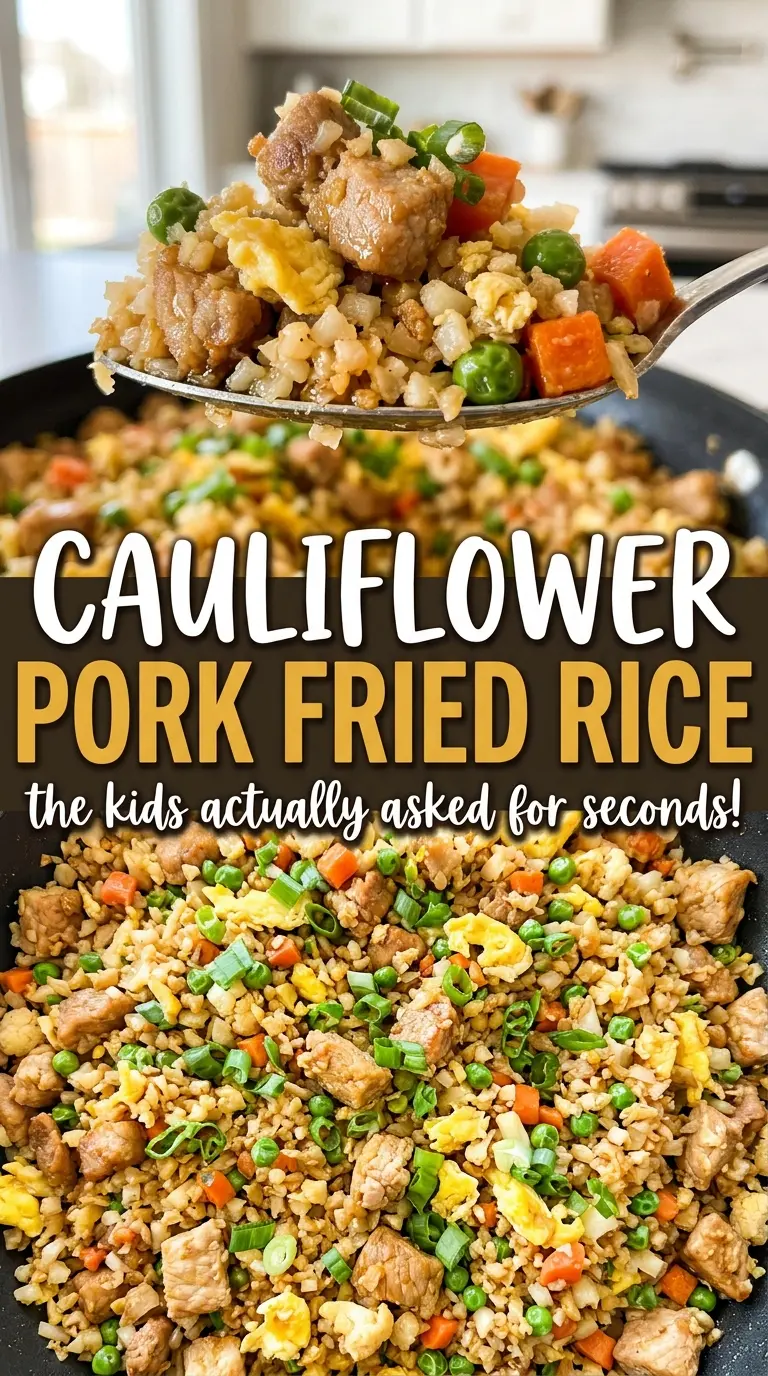
The pork starts to brown in the skillet, and the whole dish gets easier from there: cook the eggs, soften the vegetables, then bring everything back together at the end. Keeping the pork and eggs on a plate while the cauliflower rice cooks gives the vegetables room to heat through without overcooking the protein. That’s the order I use for this cauliflower pork fried rice, and it keeps the skillet moving without turning dinner into a pile of separate pans.
Cauliflower rice has a different job from regular rice here. It needs enough time in the skillet for its moisture to cook off, while the carrot and peas bring the familiar color and sweet bites of fried rice. I use a 12-inch skillet so the vegetables have space to cook instead of sitting in a deep, steamy mound. The finished skillet is savory from the soy sauce, fragrant with ginger and sesame oil, and full of tender cauliflower rice with browned pork and soft egg.

Kitchen Note
Give the pork time to brown instead of stirring it constantly. Break it into small pieces as it cooks, then let those pieces sit against the hot skillet long enough to develop color before transferring them to the plate.
Save this cauliflower pork fried rice for a quick skillet dinner with browned pork, tender cauliflower rice, and a sesame-soy finish.
Why Cauliflower Rice Needs More Skillet Time Than You Think
Cauliflower rice looks ready as soon as it’s hot, but heat alone doesn’t tell you whether the texture is right. The small pieces release moisture as they cook, and that liquid can collect under the pork, eggs, and vegetables if the cauliflower rice goes back into the skillet too soon. You want the cauliflower rice itself hot and tender, with the extra moisture evaporated before the pork and eggs return.
That’s also why the size of the skillet matters. A 12-inch skillet gives the cauliflower rice and peas room to move as you stir, helping moisture escape rather than trapping it in a crowded pile. If the pan looks wet at first, keep stirring often and give the mixture the full cooking window; the visual cue you’re after is tender cauliflower rice without liquid pooling at the bottom. The pork and eggs wait on the plate during this stage, so they don’t spend those minutes getting tougher while the vegetables finish.
What Each Ingredient Brings to This Cauliflower Pork Fried Rice
- Ground pork — It browns into savory, substantial little pieces, and its fat stays in the skillet to help flavor the vegetables. A regular grocery-store pack is all you need; the main thing is to break it into small pieces as it cooks.
- Eggs — Beaten eggs add soft curds and make the skillet feel like fried rice rather than a bowl of seasoned vegetables. They cook separately so they stay in distinct pieces instead of disappearing into the cauliflower rice.
- Cauliflower rice — This is the base, so freshness and moisture affect the final texture more than appearance. Fresh or frozen both work; thaw frozen cauliflower rice and squeeze it dry before it goes into the skillet.
- Carrot and scallions — Finely diced carrot softens quickly and adds a little sweetness. Keeping the scallion whites separate from the greens gives the whites time to cook with the carrot and leaves the greens fresh for the finish.
- Garlic and fresh ginger — Minced garlic and grated ginger bring the sharp, aromatic notes that make the skillet taste lively. Have them ready before they hit the pan; they cook briefly and can scorch if left unattended.
- Frozen peas — They add sweet pops of color and go into the skillet with the cauliflower rice. There’s no need to thaw them first.
- Soy sauce and toasted sesame oil — Soy sauce seasons the whole pan, while toasted sesame oil brings a distinct nutty aroma. Sesame oil is best treated as a finishing flavor here, so add it with the soy sauce near the end rather than using it to brown the pork.
- Neutral oil — Canola is one listed option; its mild flavor lets the pork, aromatics, and sesame oil stand out. Keep the oil divided so there’s fresh oil for cooking the vegetables after the pork and eggs come out.
The Skillet Order That Keeps the Pork, Eggs, and Vegetables in Balance
Brown the pork before anything else
Heat a 12-inch skillet over medium-high heat and add 1 tablespoon of the neutral oil. Add the ground pork and break it into small pieces as it cooks for 7 to 9 minutes, until browned and it reaches 160°F. Let it brown rather than stirring without pause. Transfer it to a plate, leaving any fat in the skillet.
Set the eggs and get them out of the pan
Pour the beaten eggs into the same skillet and stir until they’re set. They should hold as soft pieces rather than remain glossy and liquid. Move them to the plate with the pork once they’re set. This clears the skillet for the vegetables and keeps the eggs from cooking through while the cauliflower rice finishes.
Soften the vegetables, then wake up the aromatics
Add the remaining 1 tablespoon of neutral oil to the skillet, followed by the finely diced carrot and scallion whites. Cook for 2 to 3 minutes, stirring, until the carrot begins to soften. Stir in the minced garlic and grated ginger and cook for 30 seconds. Keep the aromatics moving during that short cook so they turn fragrant without darkening.
Cook off moisture and finish the skillet
Add the cauliflower rice and frozen peas, then cook for 5 to 7 minutes, stirring often, until hot and tender and any excess moisture has evaporated. If liquid is still visible, keep the mixture moving until it’s gone rather than rushing to add the pork and eggs. Return the pork and eggs to the skillet, then add the soy sauce, toasted sesame oil, and scallion greens. Toss for 1 to 2 minutes, until everything is hot.
Two Useful Ways to Adapt This Cauliflower Pork Fried Rice
Choose fresh or frozen cauliflower rice
Fresh cauliflower rice is convenient when you’re already prepping vegetables, while frozen cauliflower rice is easy to keep on hand. Both work in this skillet; frozen needs to be thawed and squeezed dry first. The finished dish is the same, but starting with drier cauliflower rice makes it easier to reach a tender, non-watery texture.
Make a vegetarian egg-and-vegetable skillet
Leave out the ground pork and let the eggs carry the protein, keeping the carrot, scallions, garlic, ginger, cauliflower rice, peas, soy sauce, and sesame oil. Cook the eggs first and set them aside, then start the vegetables in the skillet with the oil. You’ll lose the pork’s browned richness, but the ginger, scallions, and sesame oil still give the cauliflower rice a savory finish.
Storage and Reheating
- Refrigerator: Store leftovers in an airtight container for 3 to 4 days. The cauliflower rice will soften a little as it sits.
- Freezer: Freeze in an airtight freezer-safe container for up to 2 months. Thaw overnight in the refrigerator; expect a softer texture after thawing.
- Reheating: Warm in a skillet over medium heat, stirring often, until hot throughout; leftover pork and egg dishes should reach 165°F. Avoid leaving it in the pan longer than needed, which can make the cauliflower rice mushy.
Questions That Come Up When Making Cauliflower Pork Fried Rice
Cauliflower Pork Fried Rice
Ingredients
Equipment
Method
- Heat a 12-inch skillet over medium-high heat and add 1 tablespoon of the neutral oil. Add the ground pork and cook, breaking it into small pieces, for 7 to 9 minutes, until browned and it reaches 160°F.
- Transfer the pork to a plate, leaving any fat in the skillet. Add the eggs and cook, stirring, until set, then transfer them to the plate with the pork.
- Add the remaining 1 tablespoon oil to the skillet. Add the carrot and scallion whites and cook for 2 to 3 minutes, then stir in the garlic and ginger and cook for 30 seconds.
- Add the cauliflower rice and peas and cook, stirring often, for 5 to 7 minutes, until hot and tender and any excess moisture has evaporated.
- Return the pork and eggs to the skillet. Add the soy sauce, sesame oil, and scallion greens and toss for 1 to 2 minutes, until everything is hot.