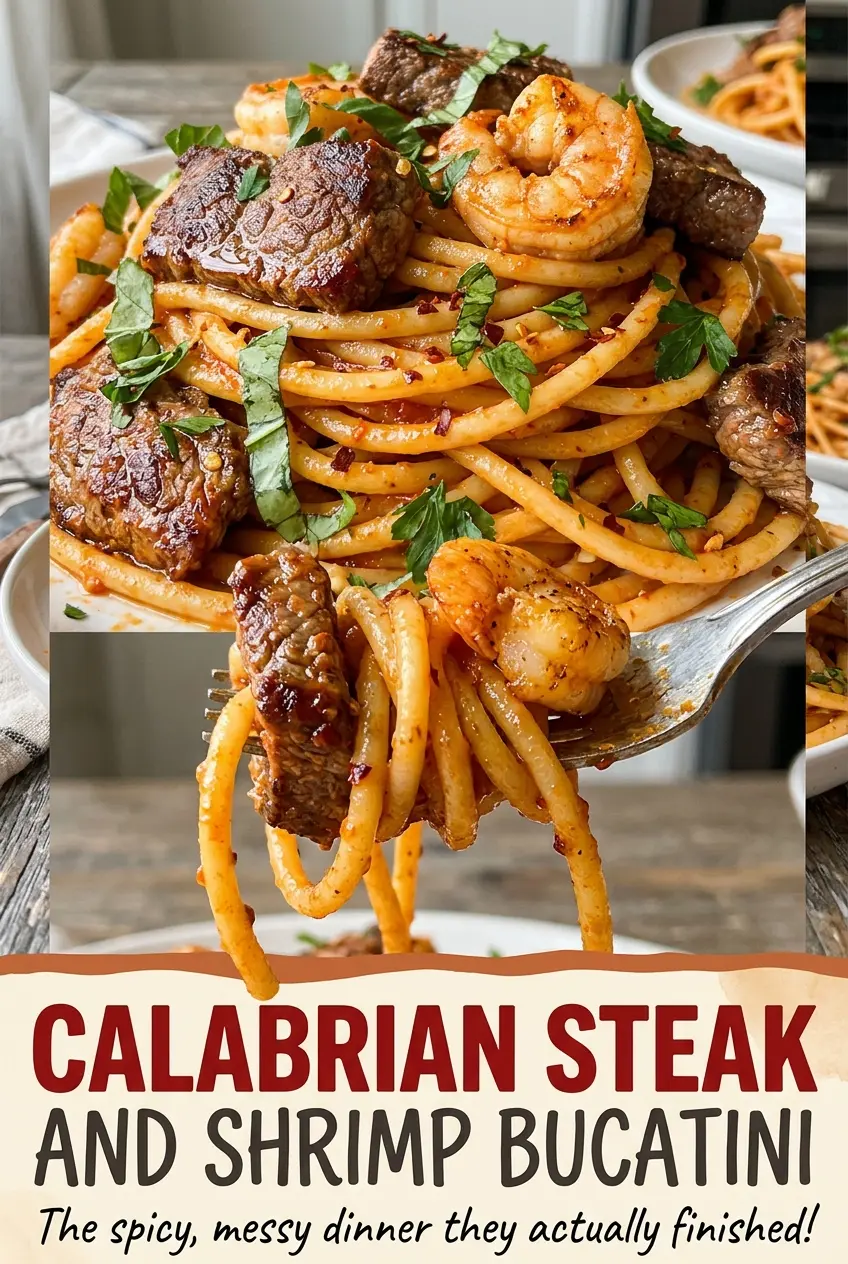
When the steak leaves the skillet, the shrimp go into that same pan while the water for the bucatini is already coming to a boil. I like this order because both proteins cook quickly, and the skillet stays in play for the tomato sauce instead of leaving you with another pan to wash. Calabrian Steak and Shrimp Bucatini brings seared sirloin and tender shrimp together over thick pasta, with chile warmth to keep the creamy sauce from tasting heavy.
Garlic, oregano, and Calabrian chili paste hit the warm oil first, then crushed tomatoes simmer into a lively base. Cream and Parmesan round it out at the finish, coating the bucatini without hiding the tomato or chile. The sliced steak goes over the top, so every serving gets a little of everything and the seared edges stay distinct.
Kitchen Note
Let the sirloin rest whole for at least 3 minutes before you slice it. I wait until the bucatini is ready, because a whole steak holds its juices better than slices sitting on a plate.
Save this Calabrian Steak and Shrimp Bucatini for a spicy, creamy pasta dinner with a seared steak finish.
Why pasta water matters more than another splash of cream
The reserved pasta water has a job beyond stretching the sauce. Bucatini releases starch as it cooks, and that starchy water helps the tomato, cream, and Parmesan settle into a coating instead of separating into a thin liquid around the noodles. Heavy cream adds body, but extra cream makes a tight sauce richer without helping it cling as well.
The texture changes quickly once pasta meets sauce. Before tossing, the sauce can look slightly looser than you want on the plate; the strands keep pulling it in as everything gets coated. Keeping the reserved water with the other finishing ingredients gives you a sauce that clings to the bucatini instead of collecting at the bottom of the skillet. Look for a glossy coating, not a watery puddle or a thick layer of cream.
The ingredients that give this spicy cream sauce its character
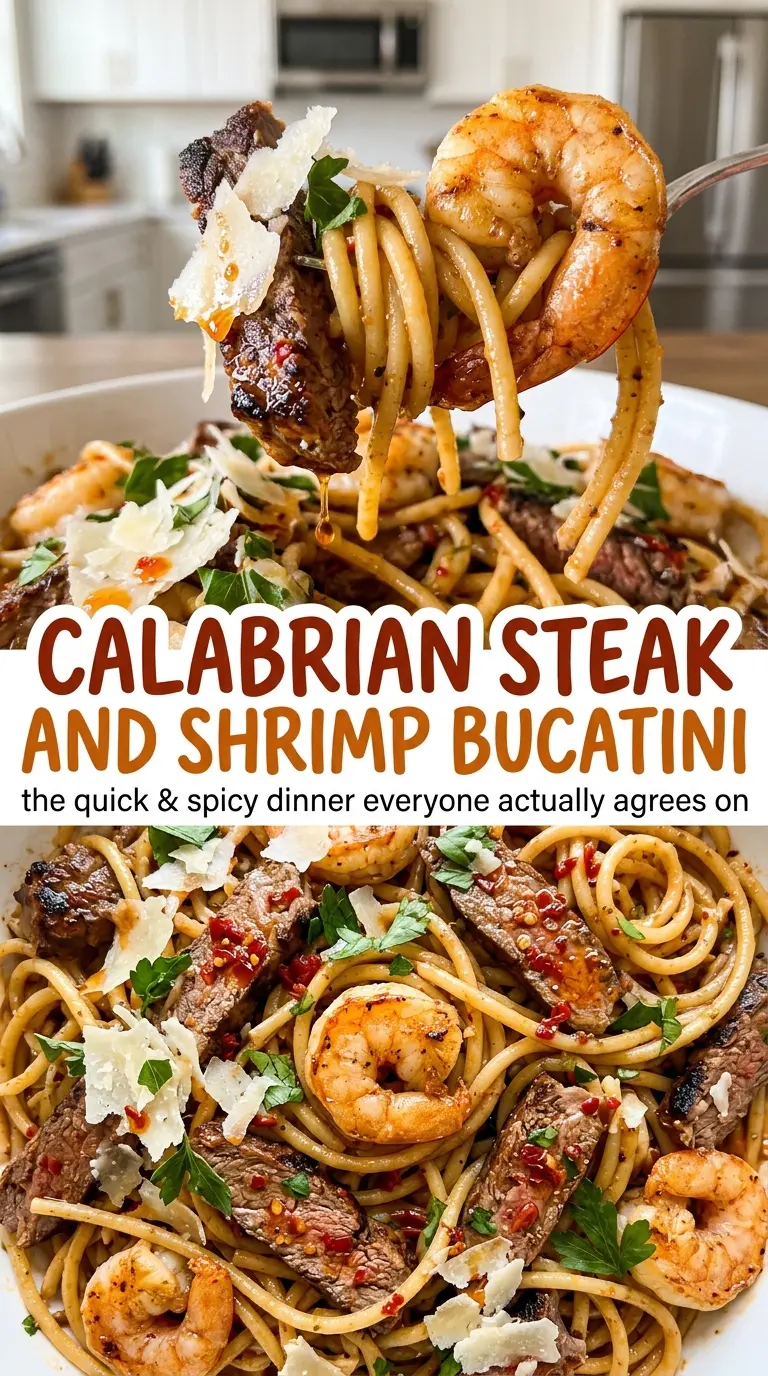
- Boneless sirloin — A steak that’s evenly 1 inch thick gives you a good sear and keeps the skillet timing dependable. An evenly shaped piece matters more here than choosing a premium grade.
- Large shrimp — The 26–30 count size is substantial enough to stay tender through a quick sear and the final toss. Buying them peeled and deveined saves prep and lets you focus on watching their color.
- Calabrian chili paste — This is where the sauce gets its distinctive chile flavor and heat. Choose a paste that tastes savory and bright rather than overwhelmingly salty; the quality of the paste matters more than using a fancy brand of tomatoes.
- Crushed tomatoes — A standard can works well because the tomatoes make a smooth base without extra chopping. You don’t need a specialty brand for this sauce.
- Heavy cream — It gives the tomato sauce its rounded, creamy texture. Milk won’t make an equivalent swap; the sauce will be thinner and less rich.
- Parmesan — Finely grated cheese blends into the sauce more evenly than large shreds. A modest wedge is fine; fresh grating and a fine texture matter more than buying an expensive one.
- Bucatini — Its thick strands and hollow centers catch the sauce both outside and inside. Dry pasta from an everyday grocery brand works well here.
Sear, simmer, and finish everything in the same skillet
Get a good sear on the sirloin
Bring the water to a boil in a large pot while you pat the steak dry and season it with kosher salt and black pepper. Heat olive oil in a 12-inch skillet over medium-high heat, then cook the steak for 4–6 minutes per side. The center should reach 145°F; transfer the steak to a plate to rest. Keep it whole until the bucatini is ready to serve.
Cook the shrimp just until opaque
Season the peeled, deveined shrimp with kosher salt. Add olive oil to the same skillet and cook them for 1–2 minutes per side. Their flesh should turn opaque, and they should reach 145°F. Transfer them to a plate so they’re ready for the final toss.
Bloom the garlic and chili before adding tomatoes
Heat olive oil in the same skillet over medium heat, then add the minced garlic, Calabrian chili paste, and dried oregano. Stir and cook for 30 seconds; the garlic should smell fragrant without browning. Stir in the crushed tomatoes and kosher salt, bring the mixture to a simmer, then reduce the heat to low. If the garlic starts to darken, move straight to the tomatoes rather than letting it scorch.
Toss the bucatini through the finished sauce
Add kosher salt and bucatini to the boiling water, then cook according to the package directions until al dente. Reserve 1/2 cup of pasta water before draining. Stir the cream and reserved water into the tomato sauce, then add the bucatini, shrimp, and finely grated Parmesan and toss until coated. Slice the steak and serve it over the pasta.
Ways to change the heat, pasta, or protein
Make the sauce milder
Leave out the Calabrian chili paste for a gentler tomato cream sauce. You’ll lose its chile heat and distinctive flavor, but the garlic and oregano still give the sauce plenty of character.
Use gluten-free bucatini
Swap in gluten-free bucatini and cook it according to its package directions, still reserving some cooking water for the sauce. The strands may be more delicate and less chewy, so toss them gently with the shrimp and Parmesan.
Make it shrimp-forward
Skip the sirloin and keep the shrimp as the only protein. The pasta and sauce stay the same, making a lighter bowl that still has the Calabrian chile and Parmesan richness.
Storage and Reheating
- Refrigerator: Store leftovers in an airtight container and eat within 3–4 days. The bucatini softens and the sauce thickens as it sits.
- Freezer: Freeze airtight portions for up to 2 months. The pasta will soften and the cream sauce may separate after thawing, so the texture is best when freshly made.
- Reheating: Warm gently in a skillet with a splash of water, stirring until evenly hot; heat leftovers to 165°F. Avoid a hard boil, which can toughen the shrimp and make the sauce less smooth.
Questions that come up with steak and shrimp bucatini
Calabrian Steak and Shrimp Bucatini
Ingredients
Equipment
Method
- Bring the water to a boil in a large pot.
- Pat the steak dry.
- Season the steak with 1/2 teaspoon kosher salt and 1/4 teaspoon black pepper.
- Heat 1 tablespoon olive oil in a 12-inch skillet over medium-high heat.
- Cook the steak for 4–6 minutes per side, until it reaches 145°F.
- Transfer the steak to a plate.
- Rest the steak for at least 3 minutes.
- Season the shrimp with 1/4 teaspoon kosher salt.
- Add 1 teaspoon olive oil to the skillet.
- Cook the shrimp for 1–2 minutes per side, until opaque and 145°F.
- Transfer the shrimp to a plate.
- Heat 1 tablespoon olive oil in the same skillet over medium heat.
- Add the garlic, chili paste, and oregano, and cook for 30 seconds.
- Stir in the tomatoes and 1/2 teaspoon kosher salt.
- Bring the sauce to a simmer.
- Reduce the heat to low.
- Add 1 tablespoon salt and the bucatini to the boiling water, and cook according to the package directions until al dente.
- Reserve 1/2 cup pasta water.
- Drain the bucatini.
- Stir the cream and reserved pasta water into the sauce.
- Add the bucatini, shrimp, and Parmesan, and toss until coated.
- Slice the steak.
- Serve the steak over the pasta.