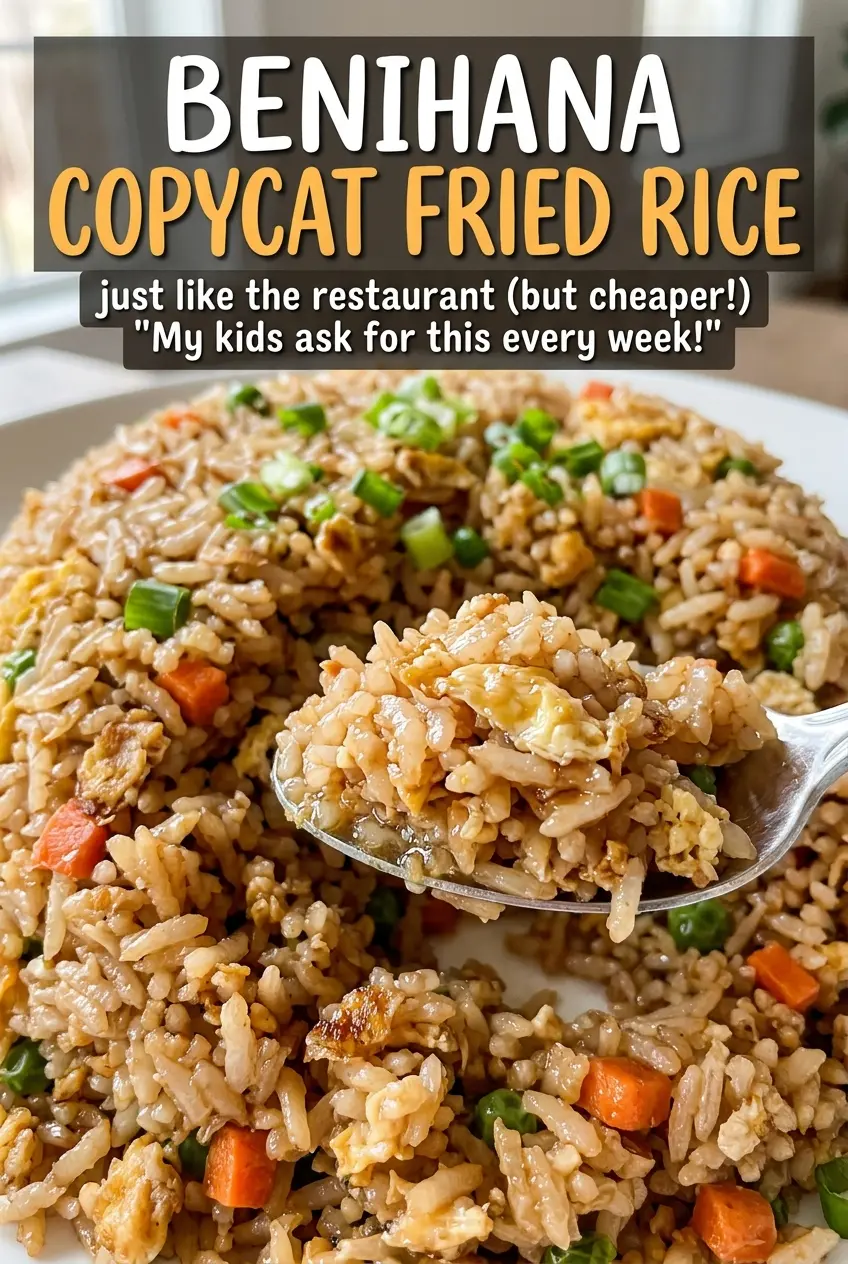
The sound changes when cold rice hits the butter: first a soft hiss, then little pops as the grains heat through. That’s when I know this Benihana copycat fried rice is on its way to the texture I want—separate grains with a few lightly toasted edges, not a soft, clumpy pile.
I cook the eggs and vegetables first, then move them out of the skillet while the rice gets its turn. It keeps the eggs tender instead of letting them sit in the pan while the rice fries. The vegetables come back at the end, along with garlic, soy sauce, and scallions, so each part keeps its own texture.
Cold cooked long-grain white rice is the starting point, and a hot 12-inch skillet gives it room to toast. The result is buttery, savory fried rice with tender egg and crisp-tender vegetables in every scoop.
Kitchen Note
Take the eggs out when they’re just set, not browned or firm all the way through. They’ll heat again when they return to the skillet, and that short pause keeps them soft.
Save this Benihana copycat fried rice for the next time you want buttery, savory grains with tender egg and crisp-tender vegetables.
Why Chilled Rice Stays Separate Instead of Turning Gummy
Rice that has been cooked and chilled behaves differently in the skillet from rice that’s still warm. As the rice cools, its surface firms up and dries, so the grains are easier to separate and less likely to mash together when you toss them. That gives the butter room to coat the grains and the hot pan a chance to toast a few edges.
Warm, freshly cooked rice carries more moisture on its surface. Pile it into a skillet and the moisture turns to steam before the grains can toast; stirring then breaks the softened rice into a sticky mass. Chilling the cooked rice first is what makes this a fried-rice texture rather than a buttered rice texture.
- Start with chilled rice: It should be cold when it goes into the skillet, not warm from the rice cooker.
- Break up clumps as you add it: Separate them gently so the rice can spread across the pan without crushing the grains.
- Give the pan a moment between tosses: Spreading the rice against the hot skillet helps create lightly toasted grains.
Why Long-Grain Rice and Butter Shape This Hibachi-Style Skillet

- Long-grain white rice: Its grains stay distinct when tossed, which suits this skillet method. Use plain cooked rice that’s been chilled; a strongly seasoned or flavored rice would compete with the soy sauce and butter.
- Unsalted butter: Butter gives the rice its rich, familiar taste and carries the soy sauce across the grains. An everyday butter works well here; unsalted lets the soy sauce and measured salt stay in balance.
- Eggs: Large eggs make soft, savory pieces throughout the rice. No special brand is needed; lightly beat them so the whites and yolks cook evenly.
- Yellow onion and carrot: Fine, even pieces soften quickly while keeping some bite. A sharp knife and consistent cuts matter more than choosing premium produce.
- Garlic: Minced garlic gives the rice a warm, savory note. Keep it ready before it goes into the skillet, since it cooks for only a short time before the soy sauce is added.
- Soy sauce and scallions: Soy sauce seasons and colors the rice, while scallions bring a fresher onion note at the finish. For a gluten-free version, use gluten-free tamari in place of the soy sauce; the flavor will be a little rounder and less sharp.
The Order That Keeps the Eggs Tender and the Rice Toasted
Set the Eggs Before They Firm Up
Heat a 12-inch skillet over medium-high heat and melt 1 teaspoon of the butter. Add the lightly beaten eggs and stir until they’re just set, with no liquid egg left in the pan. Transfer them to a plate rather than leaving them in the skillet. They’ll return for a brief final toss, so cooking them until browned now makes them tough later.
Soften the Vegetables Without Losing Their Bite
Melt 2 teaspoons of the butter in the same skillet, then add the finely diced onion and carrot. Stir often for 3 to 4 minutes, until the onion has softened and the carrot is tender-crisp. If the vegetables start to color before the carrot is tender, keep them moving across the pan. Transfer them to the plate with the eggs.
Let the Rice Toast in the Butter
Melt the remaining 1 tablespoon of butter in the skillet and add the cold rice, breaking up any clumps. Cook for 4 to 5 minutes, tossing and spreading the rice in the pan between stirs. You’re looking for rice that’s hot, with a few lightly toasted grains, not an even layer of browned or crunchy rice. If it stays piled in the center, spread it out again so more grains touch the skillet.
Add the Seasoning, Then Bring It All Together
Stir in the minced garlic and cook for 30 seconds, then add the soy sauce and toss until the rice is coated. Return the egg and vegetables to the skillet, add the sliced scallions, salt, and pepper, and toss for 1 to 2 minutes. The finished pan should be hot throughout, with the egg and vegetables distributed rather than sitting in separate patches. Take it off the heat once everything is hot.
Three Small Changes for Different Needs and Textures
Make the Rice Gluten-Free
Replace the soy sauce with gluten-free tamari, choosing a product labeled gluten-free. It seasons the rice in the same way, though its taste is usually a little rounder and less salty-sharp than regular soy sauce.
Keep the Egg in Bigger Curds
For more noticeable pieces of egg, stir gently and less often as it cooks, lifting the set portions instead of breaking them up repeatedly. The skillet still needs to cook the egg through before you move it to the plate; the finished rice will have larger, softer bites of egg.
Leave Out the Scallions
Skip the scallions if you prefer a gentler onion flavor. The rice will still have the softened yellow onion, but it won’t have that fresh, bright finish from the last toss.
Storage and Reheating
- Refrigerator: Refrigerate leftovers within 2 hours and use them within 3 to 4 days. The rice will firm up as it chills.
- Freezer: Freeze cooled portions in an airtight container for up to 1 month for the best texture. Thaw them in the refrigerator before reheating.
- Reheating: Reheat in a skillet over medium heat, tossing until hot, or microwave in a covered dish, stirring partway through. Heat leftovers to 165°F; don’t leave them warming slowly at room temperature.
Questions That Come Up at the Skillet
Benihana Copycat Fried Rice
Ingredients
Equipment
Method
- Heat a 12-inch skillet over medium-high heat.
- Melt 1 teaspoon of the butter in the skillet.
- Add the eggs and cook, stirring, until just set.
- Transfer the eggs to a plate.
- Melt 2 teaspoons of the butter in the skillet.
- Add the onion and carrot and cook for 3 to 4 minutes, stirring often, until the onion is softened and the carrot is tender-crisp.
- Transfer the onion and carrot to the plate with the eggs.
- Melt the remaining 1 tablespoon butter in the skillet.
- Add the rice, breaking up any clumps.
- Cook for 4 to 5 minutes, tossing and spreading the rice in the pan between stirs, until hot with some lightly toasted grains.
- Stir in the garlic and cook for 30 seconds.
- Add the soy sauce and toss to coat the rice.
- Return the egg and vegetables to the skillet.
- Add the scallions, salt, and pepper.
- Toss for 1 to 2 minutes, until everything is hot.