The potatoes should sizzle steadily in the oil, soften without browning, then turn golden on their second trip through. That change from pale and tender to crisp is what makes fish and chips worth frying at home, and it’s easier to manage when the thermometer stays close by.
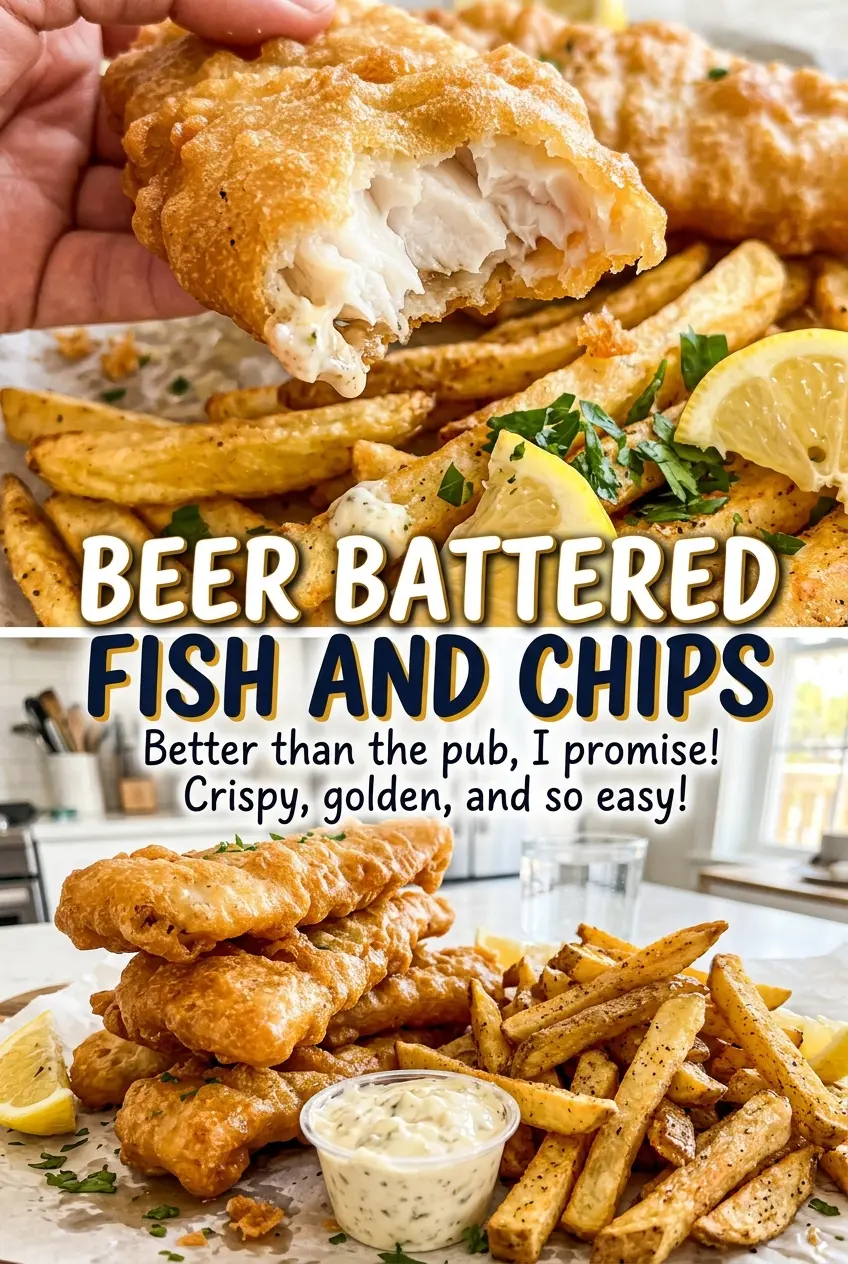
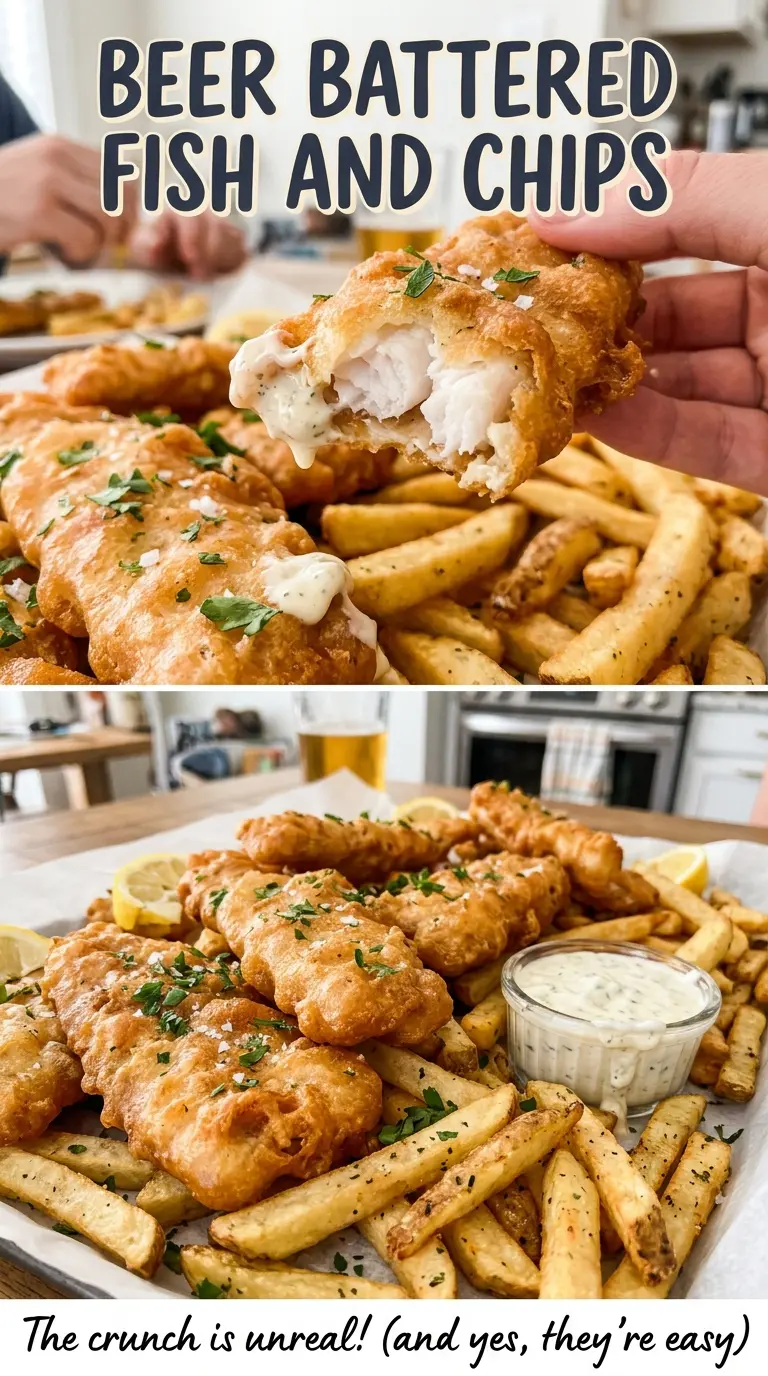
I make the chips first, then let the oil settle back to the right temperature before the cod goes in. The batter uses cold lager, cornstarch, and baking powder for a light, crisp shell, while a quick flour dredge gives it something to cling to. These beer battered fish and chips come out with flaky cod under a crackly coating and russet potatoes that are crisp outside and tender inside.
Kitchen Note
Pat the cod dry before it goes into the shallow flour; a damp surface makes the coating harder to keep in place. After dipping, let the excess batter drip back into the bowl so each piece goes into the oil with a light, even coat.
Save these beer battered fish and chips for a night when you want crisp, twice-fried potatoes and lager-battered cod.
Why the Chips Need Two Trips Through the Oil
A single fry has to do two jobs at once: cook the potato through and crisp its outside. That’s a tough balance, especially with thick sticks of russet potato. The two-fry method separates those jobs. The first pass softens the centers while keeping the outside pale; the hotter second pass creates the golden crust.
That sequence also gives you a useful temperature hand-off. The chips finish before the fish, so you can bring the oil down to the fish-frying temperature instead of trying to make one temperature work for both. Frying in batches helps the oil stay near its target rather than dropping sharply when too much food goes in at once. You get tender chips without dark spots, and the fish has its own steady stretch in the oil to brown evenly. It’s a small bit of sequencing that makes the whole meal easier to control.
What the Lager, Cornstarch, and Russets Bring to the Fry
- Russet potatoes — Their starchy texture is a good fit for crisp outsides and tender centers. Choose firm potatoes without soft spots, and keep the sticks close to the same thickness so they cook at a similar pace.
- Skinless cod — Cod’s mild flavor and flaky texture suit the crisp batter without competing with it. Ask for skinless fillets, then cut them into eight pieces as evenly as you can; similar pieces are easier to fry together.
- All-purpose flour — The divided flour has two jobs: a light coating on the cod helps the batter cling, while the rest forms the batter. Keep the shallow-dish portion separate so you can dredge each piece before dipping.
- Cornstarch and baking powder — Cornstarch keeps the coating from relying on wheat flour alone for its structure, while baking powder gives the batter a little lift. They work alongside the flour rather than replacing it, so I wouldn’t leave either out.
- Cold lager — The cold beer loosens the dry ingredients into a pourable coating and brings a mild malt note. A straightforward lager lets the cod stay in the foreground; an especially assertive beer will make its flavor more noticeable.
- Vegetable oil — A neutral frying oil lets the potatoes and fish taste like themselves. Use a deep-fry thermometer to track the oil rather than guessing from the surface.
The Temperature Hand-Off That Keeps Fish and Chips Crisp
Soak, rinse, and dry the potato sticks
Cut the scrubbed russets into 1/2-inch-thick sticks and soak them in cold water for 30 minutes. Drain and rinse them, then dry them thoroughly with a clean towel; wet potatoes can cause the hot oil to spit. Drying also helps keep excess surface water out of the pot. Take the time to dry the whole batch, not just the pieces that look wet.
Cook the centers before browning
Heat the vegetable oil in a 6-quart Dutch oven to 325°F, checking it with a deep-fry thermometer. Fry the potatoes in batches for 5–7 minutes, keeping the oil near 325°F. They should feel tender but still look pale, not golden. Move each batch to a wire rack set over a rimmed baking sheet so it can drain without sitting in a pool of oil.
Give the chips their crisp finish
Raise the oil to 375°F and fry the potatoes in batches for 2–4 minutes. Watch for an even golden color and crisp edges, and keep an eye on the thermometer as each batch goes in. Return the chips to the rack and season them with half the salt while they’re hot. Let the oil temperature climb back toward its target between batches if it drops.
Cool the oil and mix the batter
Turn off the heat and let the oil cool to 350°F, about 5–10 minutes, checking with the thermometer as it changes. Pat the cod dry, then put some of the flour in a shallow dish for dredging. In a medium bowl, whisk the remaining flour with the cornstarch, baking powder, and the rest of the salt. Whisk in the cold lager just until smooth; stop once there are no dry pockets rather than continuing to beat the batter.
Coat and fry the cod
Dredge each piece of cod in the shallow flour, then dip it into the batter and let the extra coating drip back into the bowl. Fry the fish in batches at 350°F for 4–6 minutes, turning each piece once. The coating should be deep golden, and the thickest part of the fish should reach 145°F. Transfer the pieces to the wire rack to drain briefly, then serve with the chips.
How Different Lagers Change the Batter
A cleaner note with pilsner-style lager
Choose a cold pilsner-style lager for a lighter, crisper beer note in the coating. Keep the listed quantity and mix it with the dry ingredients just until smooth; the fish stays the main flavor.
A maltier coating with amber lager
An amber lager brings a rounder, more toasted malt character while keeping the batter within the lager family. Use it cold and keep the other ingredients and frying temperatures unchanged; the beer flavor will come through more clearly.
A gluten-free version
Use a cup-for-cup gluten-free flour blend in place of the all-purpose flour for both the dredge and the batter, and use gluten-free lager. Keep the cornstarch and baking powder; the coating may be a little different depending on the blend, but the same dredging and frying method works.
Storage and Reheating
- Refrigerator: Refrigerate leftovers promptly in a covered container and use within 3–4 days. The batter and chips will soften as they sit.
- Freezer: Freezing is safe, but not my pick for quality; thawed chips lose their crisp edges and the fish coating softens.
- Reheating: Reheat in a single layer in a hot oven or air fryer until hot throughout. Skip the microwave if you want the coating to stay as crisp as possible.
Questions That Come Up While Frying Fish and Chips
Beer Battered Fish and Chips
Ingredients
Equipment
Method
- Soak the potato sticks in the cold water for 30 minutes.
- Drain and rinse the potatoes, then dry them thoroughly with a clean towel.
- Pour the oil into a 6-quart Dutch oven and heat it to 325°F, using a deep-fry thermometer to monitor the temperature.
- Fry the potatoes in batches for 5–7 minutes, keeping the oil near 325°F, until tender but not browned.
- Transfer each batch to a wire rack set over a rimmed baking sheet.
- Raise the oil temperature to 375°F and fry the potatoes in batches for 2–4 minutes, until golden and crisp.
- Return the potatoes to the rack and season with 1/2 teaspoon of the salt.
- Turn off the heat and let the oil cool to 350°F, about 5–10 minutes, monitoring it with the thermometer.
- Pat the cod dry.
- Place 1/4 cup of the flour in a shallow dish.
- Whisk the remaining 1 cup flour with the cornstarch, baking powder, and remaining 1/2 teaspoon salt in a medium bowl.
- Whisk in the cold beer just until smooth.
- Dredge each piece of cod in the flour.
- Dip each piece in the batter, letting excess batter drip back into the bowl.
- Fry the fish in batches at 350°F for 4–6 minutes, turning once, until deep golden and the thickest part reaches 145°F.
- Transfer the fish to the wire rack to drain briefly.
- Serve the fish with the chips.