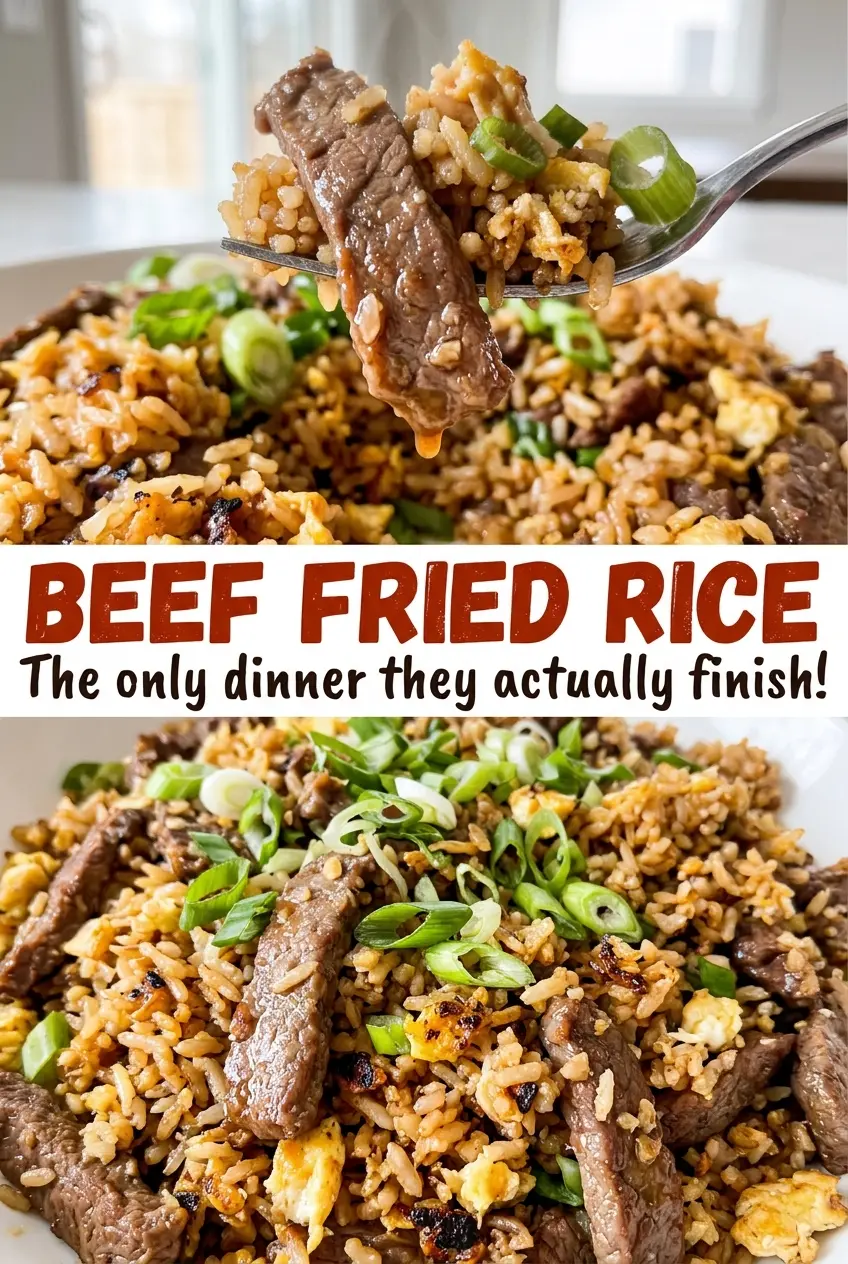
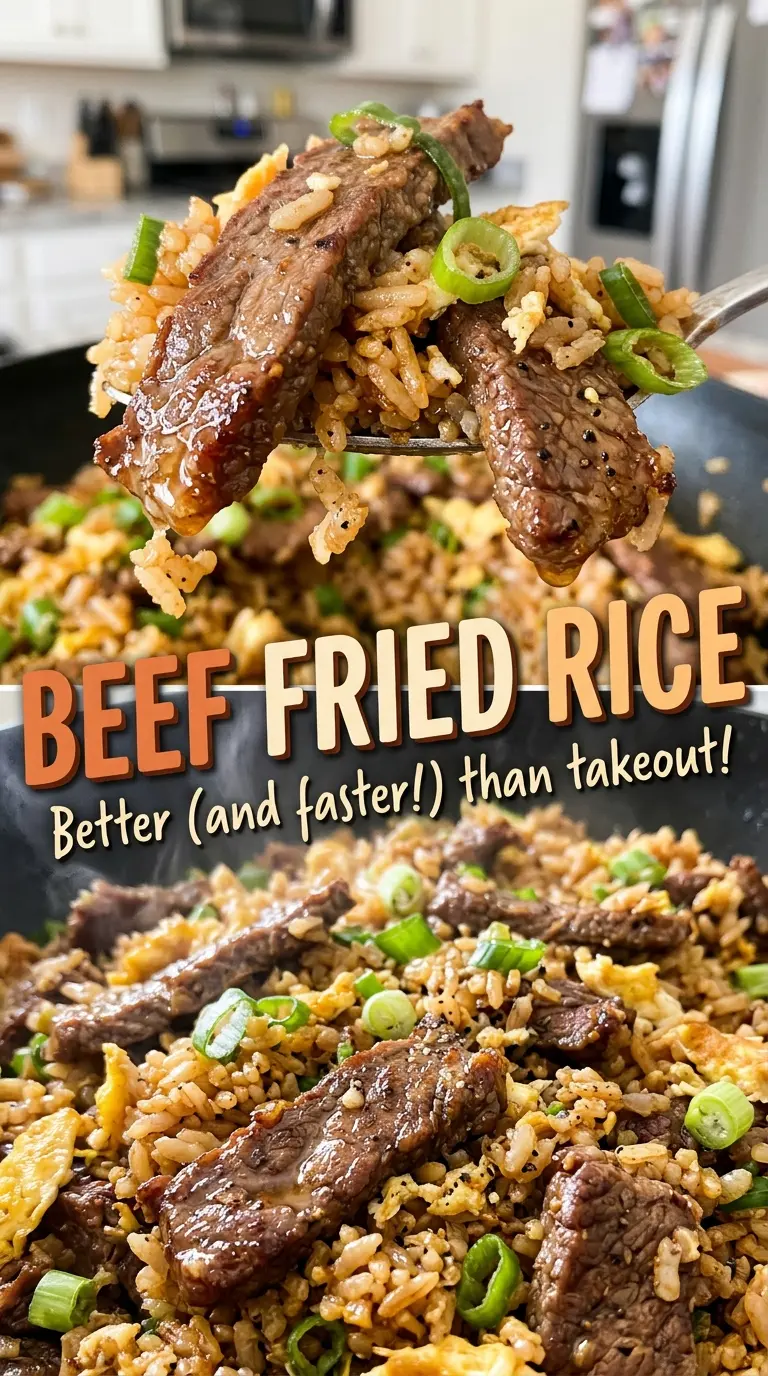
The beef should sizzle the second it hits the skillet, not sit there quietly in a puddle. I keep the slices in one layer and let the pan do its work before they go onto a plate. That quick sear gives beef fried rice browned edges without leaving the thin pieces in the pan through the whole rice cook. Once the rice goes in, you want the grains moving and warming, not sitting in a heap turning soft.
Cold cooked long-grain rice gives the skillet a head start, and the two sauces go in only after the rice has begun to toast. Soy sauce brings the familiar salty note; oyster sauce adds a deeper, rounded savoriness. Sesame oil and green onions go in after the pan comes off the heat, so their aroma stays fresh. The finished skillet has distinct grains, tender beef and a savory finish.
Kitchen Note
Let the seared steak rest on a clean plate for three minutes before it goes back in. Those juices are worth keeping: toss them into the skillet with the beef so they join the sauce instead of staying behind on the plate.
Save this beef fried rice for a night when you want browned steak, separate rice grains, and a quick savory finish.
Why the Beef Gets a Head Start Instead of Frying with the Rice
Fried rice needs a hot surface and a little room for its ingredients to brown. If the thin steak slices stay in the skillet while the rice fries, they keep cooking long after they’ve browned. Their juices can also collect in the pan before the rice has had its chance to toast. Cooking the beef first gives it direct contact with the skillet, then gets it out of the way.
The rice and vegetables get their own stretch in the pan, and the beef returns only at the end. That short finish warms everything together without asking the steak to sit through several more minutes of cooking. A 12-inch skillet helps the ingredients spread out; a crowded pan traps moisture and makes it harder for the rice to toast. Keep the order, and the beef stays distinct from the rice instead of getting lost in a soft, steamy mix.
Why Cold Rice and Oyster Sauce Matter More Than a Fancy Cut
- Cold cooked long-grain white rice — Chilled grains are firm enough to separate in the skillet instead of turning soft as they fry. Long-grain rice stays distinct; a freshly cooked, warm batch carries more surface moisture and is more prone to clumping. Use plain cooked rice rather than rice seasoned with other flavors.
- Flank steak — It’s a good-value cut for a quick sear, and slicing thinly across the grain shortens its chewy fibers. Even slices matter more here than choosing an especially marbled piece. Thinly sliced top sirloin is a useful alternative if flank steak isn’t available.
- Soy sauce and oyster sauce — Soy sauce seasons the beef and later coats the rice, while oyster sauce brings a rounder, savory taste and body. Regular soy sauce works well; low-sodium soy sauce makes the finish milder. Oyster sauce doesn’t have a perfect one-for-one flavor substitute, so use a vegetarian mushroom oyster-style sauce when you need a meat-free option.
- Toasted sesame oil — This is a finishing oil, not the oil for searing. Its toasted aroma is what makes a small amount noticeable at the end, so choose one that smells nutty and fresh. Keep it with the other finishing ingredients rather than using it in place of the neutral oil.
- Onion, peas and carrots, garlic, egg and green onions — The onion and thawed vegetables bring sweetness and texture, while garlic cooks quickly and needs only a short turn in the pan. A fresh egg scrambles into soft pieces; fresh green onions give the finished rice a sharper, brighter note. Frozen peas and carrots are a practical choice, and thawing them before cooking helps them stir-fry rather than chill the skillet.
- Neutral oil — Canola or vegetable oil works well because neither competes with the sauces or sesame finish. Save toasted sesame oil for the end; it isn’t a substitute for the neutral oil used to sear and stir-fry.
The Fast Skillet Sequence That Keeps Every Bite Distinct
Coat the steak and let it stand
Toss the thinly sliced flank steak with one tablespoon of soy sauce and the cornstarch. Let it stand for 10 minutes while you get the other ingredients ready. The light coating helps the sauce cling to the beef, so toss until the slices are evenly covered rather than leaving dry patches. Keep the slices separate enough that they’re ready to spread into one layer in the skillet.
Sear the beef, then take it out
Heat a 12-inch skillet over high heat, then add one tablespoon of neutral oil. Spread the beef in a single layer and sear, turning as needed, until browned; check that a thicker piece reaches 145°F. Transfer the steak to a clean plate and let it rest for three minutes. If the slices overlap, they won’t brown as evenly, so give them room across the skillet.
Set the egg before stir-frying the vegetables
Add one teaspoon of neutral oil to the hot skillet and pour in the beaten egg. Scramble until just set, about 30 seconds, then push it to one side. Add the remaining two teaspoons of neutral oil along with the diced onion and thawed peas and carrots; stir-fry for two minutes. Add the garlic and cook for 30 seconds, just until fragrant.
Toast the rice before adding the sauces
Add the cold rice and break up any clumps as you stir-fry it for three to four minutes. Look for hot grains that are beginning to toast lightly, not a browned crust or a wet layer collecting at the bottom. Stir in the remaining tablespoon of soy sauce and the oyster sauce. Adding the sauces after the rice has had time in the pan lets them coat the grains rather than taking over the whole stir-fry.
Return the beef and finish off the heat
Add the steak and any juices that have gathered on the plate, then toss for one to two minutes until everything is hot. Take the skillet off the heat before stirring in the toasted sesame oil and sliced green onions. The green onions should stay bright, and the sesame should smell fragrant rather than scorched. Serve the rice while it’s hot.
Three Useful Ways to Adapt This Beef Fried Rice
Make it gluten-free with matching sauces
Replace the soy sauce with the same amount of gluten-free tamari, and use an equal amount of gluten-free oyster sauce. Keep the same timing and order. Tamari gives the rice a slightly deeper soy flavor, while the oyster sauce keeps the savory finish.
Swap in top sirloin
Thinly slice top sirloin across the grain in place of the flank steak. It sears well in the same skillet and gives you a similarly beefy result; keep the pieces thin so they cook quickly and are easy to toss through the rice.
Make a vegetarian version with tofu
Replace the steak with 8 ounces of pressed extra-firm tofu cut into cubes, and replace the oyster sauce with the same amount of vegetarian mushroom oyster-style sauce. Coat the tofu with the soy sauce and cornstarch, then sear it until browned before transferring it to a plate. Skip the beef temperature check; the tofu goes back in at the same point as the steak. Expect a softer bite and a less beef-forward flavor.
Storage and Reheating
- Refrigerator: Transfer leftovers to a shallow airtight container within 2 hours and refrigerate for 3 to 4 days. The rice will firm up as it chills.
- Freezer: Freeze cooled portions in airtight containers for up to 1 month for the best texture. Thaw in the refrigerator before reheating.
- Reheating: Warm in a skillet with a small splash of water, stirring until steaming hot throughout, or microwave covered and stir partway through. Don’t heat it slowly for a long time, which can dry out the rice.
Questions That Come Up While Making Beef Fried Rice
Beef Fried Rice
Ingredients
Equipment
Method
- Toss the steak with 1 tablespoon soy sauce and the cornstarch in a bowl.
- Let it stand for 10 minutes.
- Heat a 12-inch skillet over high heat, add 1 tablespoon neutral oil, and sear the steak in a single layer, turning as needed, until browned and a thicker piece reaches 145°F.
- Transfer the steak to a clean plate and let it rest for 3 minutes.
- Add 1 teaspoon neutral oil to the skillet, pour in the egg, and scramble until just set, about 30 seconds.
- Push the egg to one side of the skillet.
- Add the remaining 2 teaspoons neutral oil, onion, and peas and carrots, and stir-fry for 2 minutes.
- Add the garlic and cook for 30 seconds.
- Add the rice, breaking up any clumps, and stir-fry for 3 to 4 minutes, until hot and beginning to lightly toast.
- Stir in the remaining 1 tablespoon soy sauce and the oyster sauce, then add the steak and any accumulated juices and toss for 1 to 2 minutes, until everything is hot.
- Remove the skillet from the heat and stir in the sesame oil and green onions.
- Serve.