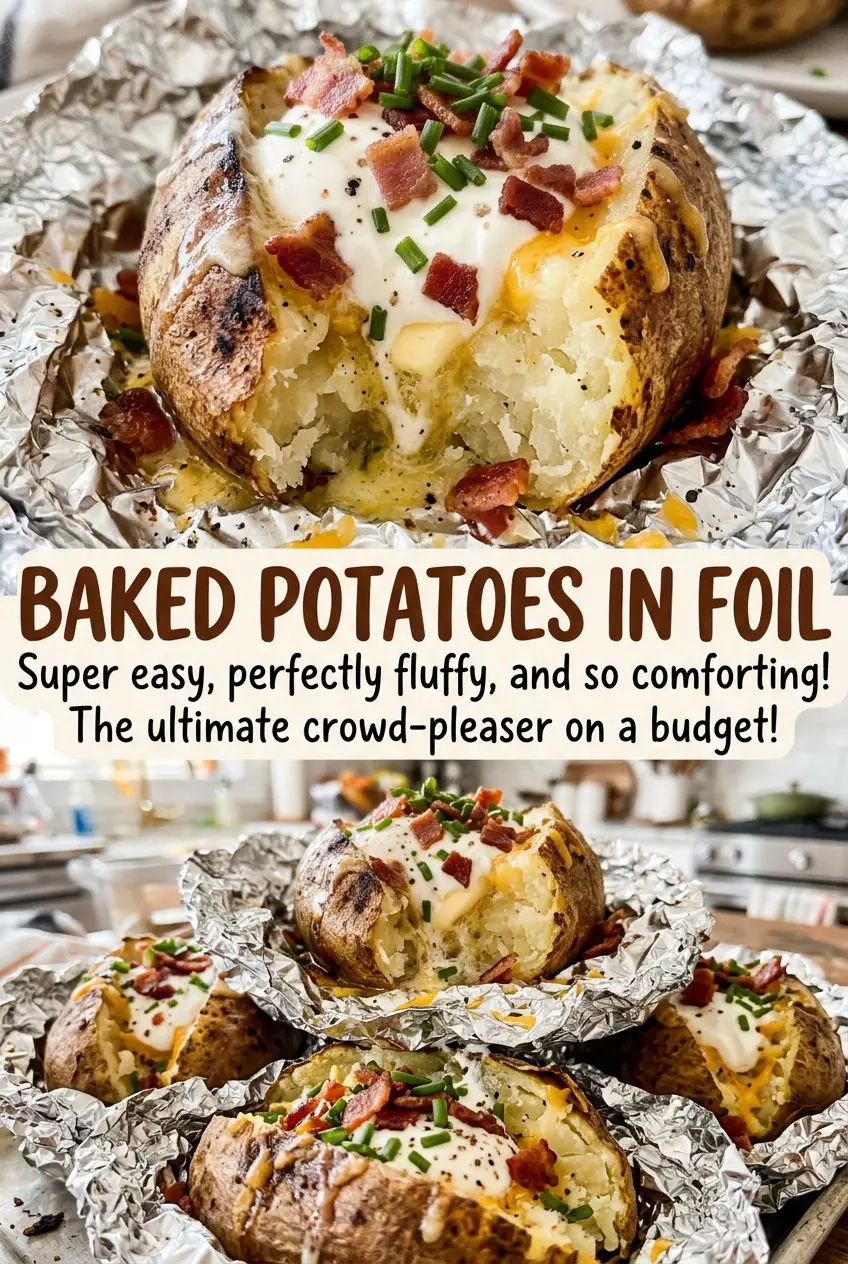
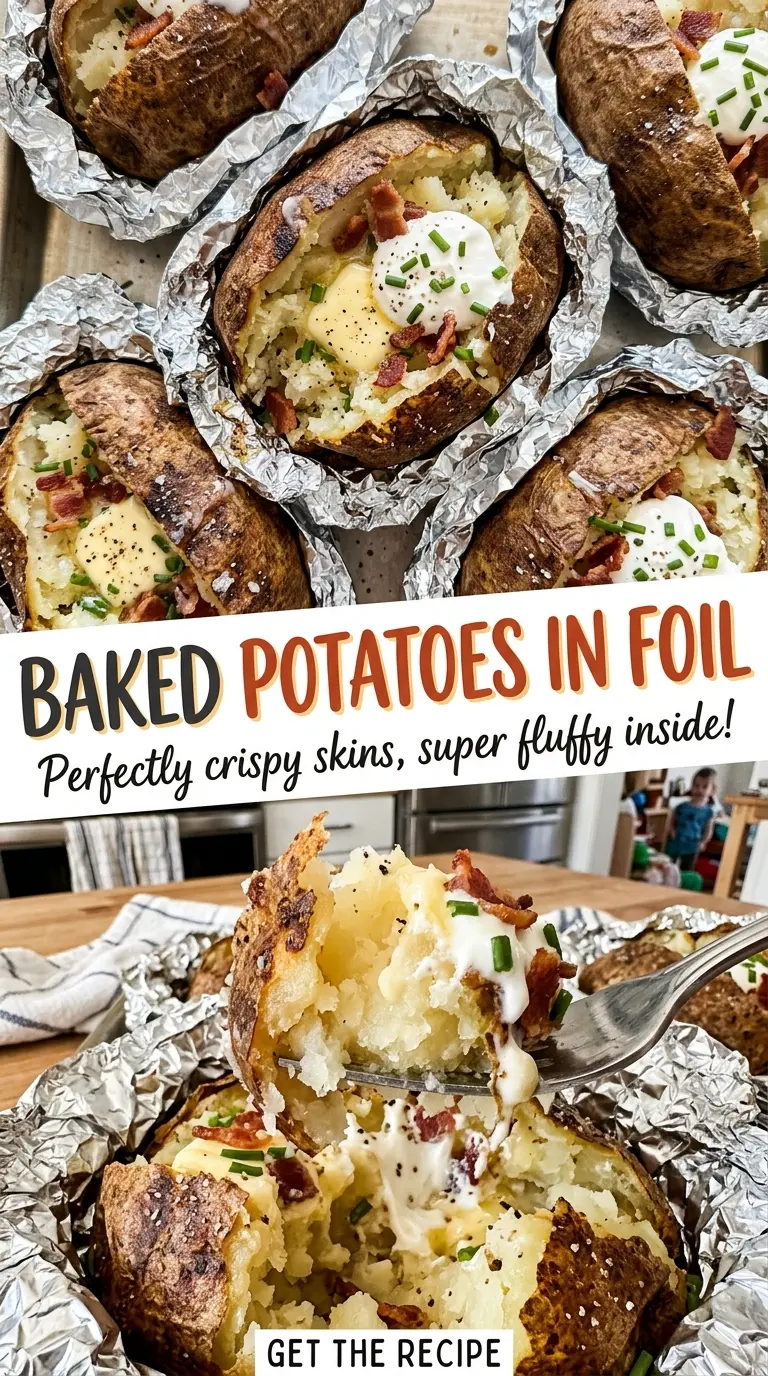
A crinkled foil packet comes off the oven rack looking plain, but open it and a cloud of steam rises from a tender russet. Baked Potatoes in Foil is the simple oven method I reach for when I want a satisfying potato without tending a pot or fussing with the stovetop. The centers turn soft and fluffy, and each potato is seasoned on the outside before it goes into the oven.
Using medium russets keeps the timing predictable, and wrapping each one separately makes the preparation straightforward. The potatoes need just a little oil and kosher salt; the oven takes care of the rest. I like that the finished potato is ready to serve as it is, with a soft skin that gives way easily to the warm center.
Kitchen Note
Dry the potatoes well after scrubbing, before you add the oil. If the skins are damp, the oil and salt won’t coat them as evenly, and you’ll have patchy seasoning after baking.
Save these foil-wrapped russet potatoes for a dependable side with soft centers and a simple olive oil and kosher salt finish.
Why Foil Makes the Skin Soft, Not Crisp
Foil changes the texture you should expect from a baked potato. A tightly wrapped potato bakes in its own trapped moisture, so the skin comes out tender rather than dry and crisp. That isn’t a flaw in this method; it’s the tradeoff that makes the potato easy to unwrap and gives you a soft skin alongside the fluffy interior.
If crisp skin is what you’re after, this foil-wrapped approach won’t deliver it. The payoff here is a forgiving, enclosed bake: the outside is seasoned, the inside stays moist, and there’s no need to oil a baking sheet or manage a pan of water. Knowing the texture ahead of time helps you decide whether this version suits dinner. It’s especially handy when you want the classic soft baked-potato feel from edge to center.
Why Russets and Foil Matter More Than Fancy Oil
- Russet potatoes — Their starchy flesh is what gives you the familiar fluffy baked-potato center. Pick firm potatoes without soft spots. Yukon Golds will bake, but their flesh is creamier and less fluffy, so they aren’t a direct stand-in when you want that classic russet texture.
- Olive oil — A thin coating helps the kosher salt cling to the skin and gives the outside a light sheen. There’s no need to reach for an expensive bottle here; a basic olive oil works well. If you don’t want the taste of olive oil, another neutral cooking oil can coat the potatoes in the same way.
- Kosher salt — Its larger crystals are easy to distribute over the potato’s curved surface. Crystal size varies by brand, so sprinkle evenly rather than piling salt in one spot. Fine table salt is more concentrated by volume; if you use it instead, apply a lighter hand rather than swapping spoon-for-spoon.
- Aluminum foil — The foil needs to wrap around each potato tightly to create the enclosed bake that gives the skin its soft texture. Use a separate square for each potato. There isn’t a direct substitute that gives the same foil-wrapped result.
The Four Stages That Keep These Potatoes Tender
Scrub, Dry, and Prick
Heat the oven to 400°F. Scrub the russets under running water and dry them thoroughly, then prick each potato several times with a fork. Keep the holes spread across the potato rather than clustered in one spot. Drying before seasoning helps the oil coat the skin instead of beading on leftover water.
Season Each Potato
Rub the potatoes with olive oil so the skins have a light, even coating. Sprinkle on the kosher salt, turning each potato as needed to season more than one side. If salt collects in a single patch, brush or rub it gently across the skin before wrapping. The aim is a thin, even finish rather than a thick crust.
Wrap Tightly and Bake
Wrap each potato tightly in one 12-inch square of aluminum foil, closing the seams around the potato. Set the foil-wrapped potatoes directly on the oven rack. Bake for 60 to 75 minutes, until a fork slides easily into the center of each potato. If the fork catches or meets a firm spot, the center needs more time.
Let the Packets Rest
Once tender, leave the potatoes wrapped for 5 minutes before opening them. The foil will be hot, so unwrap carefully and let the steam escape away from your hands. Serve once unwrapped; the fork should pass through the center without resistance, not stop at a firm core.
Small Changes for a Smaller Batch or Less Oil
Bake a Half Batch
For two servings, use two medium russets, half the olive oil and kosher salt, and two foil squares. Keep the potato size the same so the original baking window remains a useful guide; judge each one by how easily a fork enters the center.
Leave Out the Salt
For a salt-free version, omit the kosher salt and keep the rest of the ingredients and method the same. The potato will still bake tender, but its skin won’t have the seasoned finish this version is known for.
Skip the Oil
For an oil-free potato, leave out the olive oil and season the dry skins with kosher salt before wrapping. The salt won’t adhere as evenly, and the skins will lack the light sheen, but the foil still gives you a tender baked potato.
Storage and Reheating
- Refrigerator: Remove the foil and refrigerate the potatoes within 2 hours, in an airtight container. They keep for 3 to 4 days; the skin softens further in storage.
- Freezer: Whole baked potatoes can be frozen, but the thawed centers often turn grainy or watery. I don’t recommend freezing them if you want the best texture.
- Reheating: Reheat unwrapped in the microwave in short bursts until the center reaches 165°F. Don’t put foil in the microwave.
Questions That Come Up While Baking Potatoes in Foil
Baked Potatoes in Foil
Ingredients
Method
- Heat the oven to 400°F.
- Scrub and dry the potatoes.
- Prick each potato several times with a fork.
- Rub the potatoes with olive oil.
- Sprinkle the potatoes with kosher salt.
- Wrap each potato tightly in a square of foil.
- Place the foil-wrapped potatoes directly on the oven rack.
- Bake for 60 to 75 minutes, until a fork slides easily into the center of each potato.
- Let the potatoes rest, still wrapped, for 5 minutes.
- Unwrap and serve the potatoes.