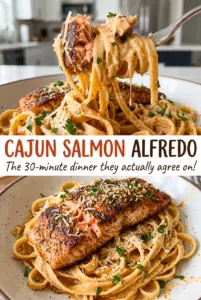
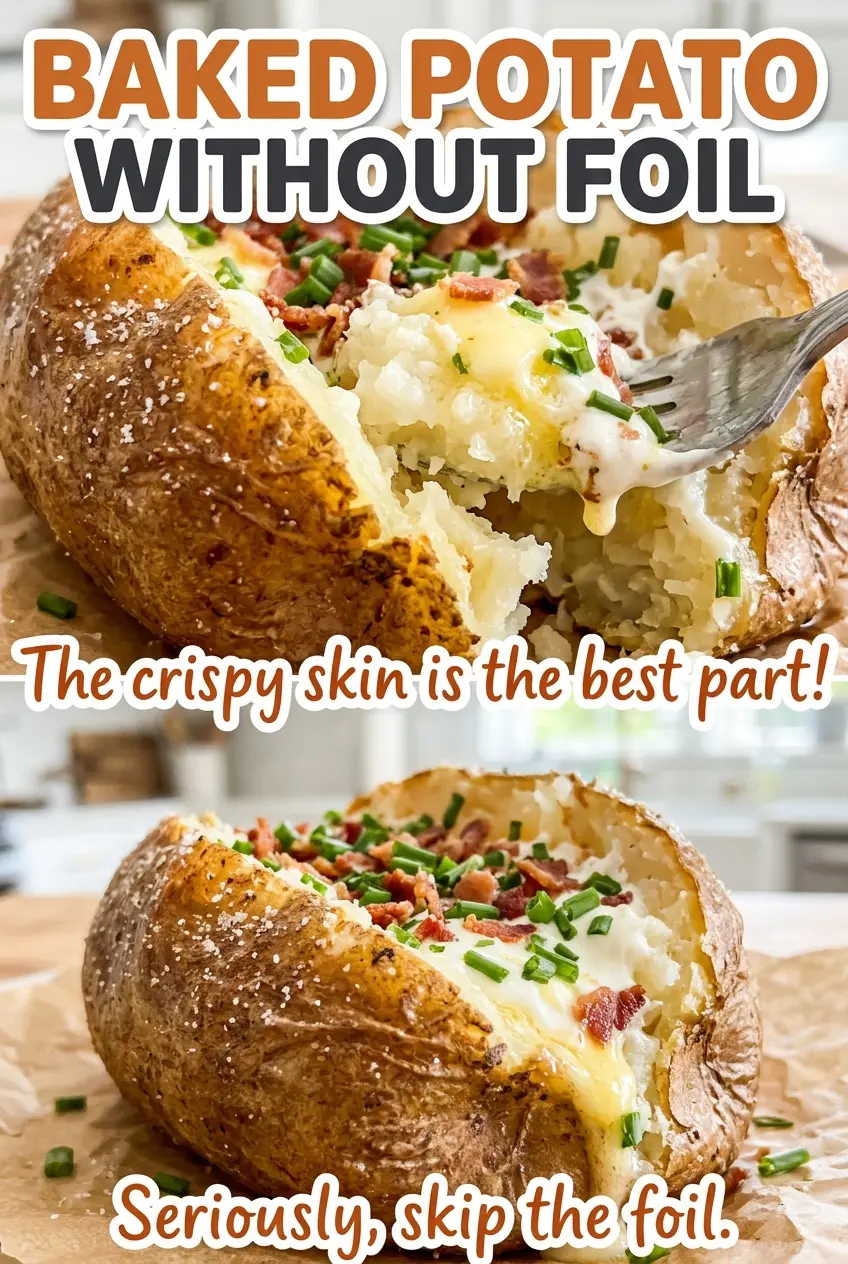
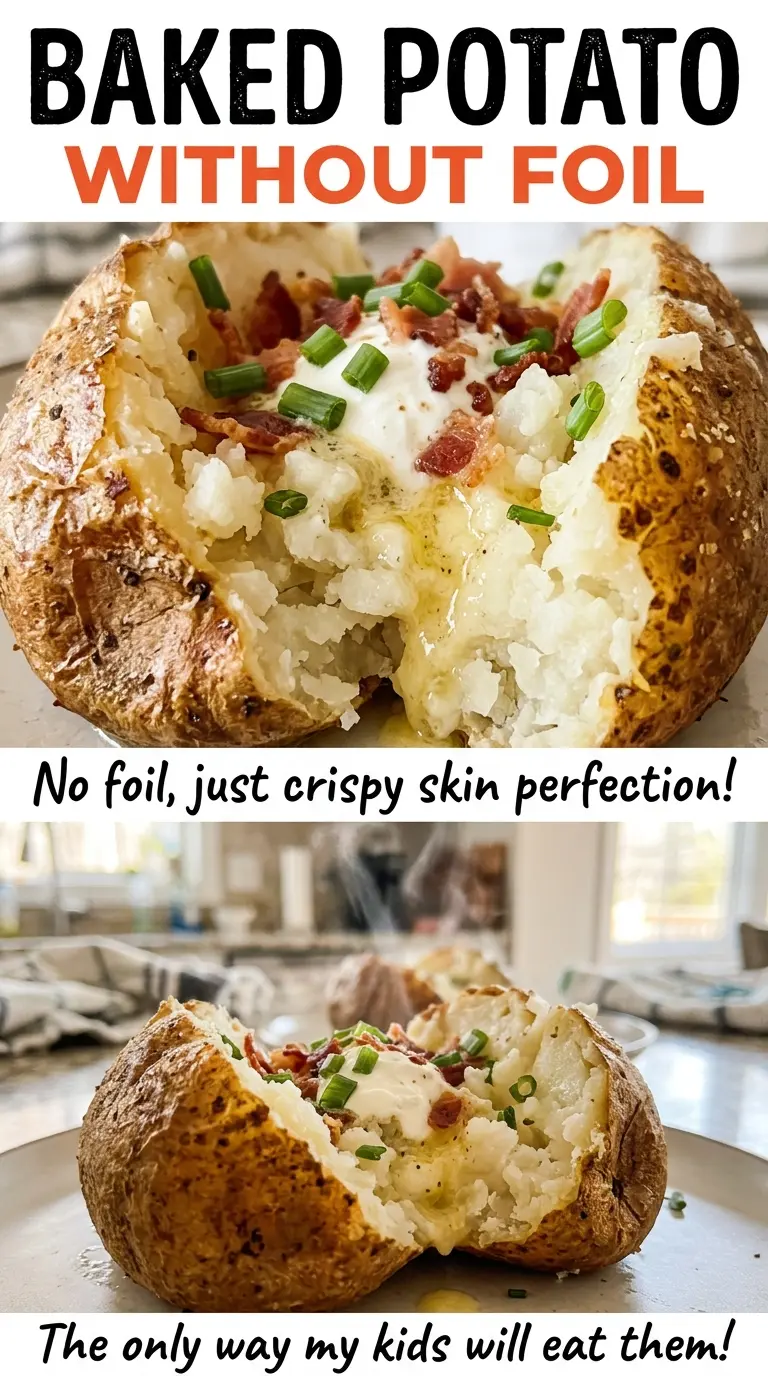
The timer can say 45 minutes while a potato still feels stubborn in the middle, and that’s the moment I used to pull it too early. These russets need enough time for the center to turn tender, not just a browned-looking skin. Baked Potato Without Foil is a simple side, but it rewards checking the potato itself instead of treating the clock as the only test. I like the way the bare skin gets a little crinkled and crisp while the inside stays soft enough to break open with a fork.
Potatoes from the same bag don’t always finish together, especially when their weights are at opposite ends of the medium range. I bake them until a knife meets no firm spot in the center, then give them a short rest before serving. That makes a better contrast: skin with some bite around a fluffy middle, rather than a pale outside or a center that needs more time.
Kitchen Note
Dry the potatoes thoroughly after scrubbing, before the oil goes on. Even damp patches can keep the oil from coating the skin evenly, so I towel-dry until the surface feels dry all over.
Save these baked potatoes without foil for crisp skins, tender centers, and a simple side that needs just three ingredients.
Foil Makes a Softer Skin; the Open Rack Gives It Room to Crisp
Wrapping a potato in foil holds moisture close to the skin. That’s useful when you want a soft exterior, but it works against the dry, crisp skin I want here. With no foil around it, the hot oven air reaches the whole potato, so the outside can dry as the center cooks.
The rack matters, too. A potato sitting flat on a baking sheet has one side pressed against the pan, where moisture can collect instead of escaping. Setting each potato directly on the oven rack lets air move around it. I put a rimmed baking sheet on the rack below—not under the potatoes on the same level—to catch any drips without blocking that airflow. The tray is there to protect the oven, not to roast the potatoes.
Why Russets, Olive Oil, and Kosher Salt Each Matter
- Russet potatoes — Their starchy flesh bakes up fluffy, while the skin has enough structure to turn crisp. Pick firm potatoes that feel similar in size so they finish at roughly the same time. A waxier potato can still be baked, but its center will be denser rather than as light and fluffy.
- Olive oil — A thin coating helps the skins brown and gives the salt something to cling to. There’s no need to use an expensive bottle here; the potatoes are in a hot oven, so a basic olive oil is fine. If you need an alternative, another cooking oil will coat the skin too, though the flavor won’t be exactly the same.
- Kosher salt — The larger grains season the skin without disappearing into the oil. If you substitute fine-grain salt, use a lighter hand because it packs more densely and can taste saltier by volume. For the best texture, season after the oil is rubbed on.
The Four Stages That Get the Skin Crisp and the Center Tender
Scrub, Dry, and Prick the Russets
Scrub the potatoes under cool water, then dry them thoroughly. Prick each one several times with a fork; those small holes give steam a way to escape as the centers heat. Rub the olive oil over the skins so they have a thin, even sheen rather than slick patches. If water is still beading on the surface, keep drying before you add the oil.
Salt and Set Up the Oven Rack
Sprinkle the oiled potatoes with kosher salt, turning them so the seasoning reaches the skins all around. Set them directly on the oven rack, leaving a little room between them for air to circulate. Put a rimmed baking sheet on the rack below to catch drips. The sheet should sit below the potatoes, not beneath them on the same rack.
Bake Until the Middle Gives Easily
Heat the oven to 425°F and bake the potatoes for 45 to 60 minutes. The skins should look crisp, and a knife should slide easily into the center without meeting a firm spot. For a precise check, the centers should reach 205°F to 210°F. Start checking at the earlier end of the time range, since potatoes can vary even when they’re close in size.
Let the Potatoes Rest Before Serving
Take the potatoes from the oven and let them rest for 5 minutes before serving. That brief pause gives the heat a chance to settle through the center instead of escaping all at once when you open the skin. Serve them while the skins still have their crisp texture. If you wait too long, steam softens the outside.
Three Practical Ways to Adapt This Baked Potato
Bake a Half Batch
For two servings, use two medium russets and halve the olive oil and kosher salt. Keep the oven temperature and doneness cues the same; a smaller batch may finish a little sooner, so check the potatoes rather than counting on the full time.
Skip the Oil for an Oil-Free Version
Leave off the olive oil and add the kosher salt directly to the dry skins. The potatoes will still bake through, but the skin won’t have the same rich coating and may come out drier. This keeps the recipe free of added oil without changing the potatoes themselves.
Leave Out the Salt
For a lower-sodium version, omit the kosher salt and keep the potatoes, oil, and baking method unchanged. The skin will taste less seasoned, but the russet’s fluffy interior and the crisp-skin texture still come through.
Storage and Reheating
- Refrigerator: Refrigerate leftovers within 2 hours and keep them in a covered container for 3 to 4 days. The skin softens in storage, while the centers stay useful for another meal.
- Freezer: I don’t recommend freezing whole baked potatoes. Thawing tends to make the cooked centers mealy or watery.
- Reheating: Reheat in a 350°F oven until the center reaches 165°F; the skin will crisp better this way than in a microwave. A microwave is quicker, but it softens the skin further.
Questions That Come Up When Baking Potatoes Without Foil
Baked Potato Without Foil
Ingredients
Equipment
Method
- Heat the oven to 425°F.
- Scrub the potatoes under cool water and dry them thoroughly.
- Prick each potato several times with a fork.
- Rub the potatoes with olive oil.
- Sprinkle the potatoes with kosher salt.
- Set the potatoes directly on the oven rack, with a rimmed baking sheet on the rack below to catch any drips.
- Bake for 45 to 60 minutes, until the skins are crisp and a knife slides easily into the centers; the centers should reach 205°F to 210°F.
- Let the potatoes rest for 5 minutes before serving.