When drained potatoes sit in a colander, the steam carries off more than heat: a little extra water can leave the finished mash loose. I let the potatoes dry briefly in the warm pot before adding anything, and that small pause makes these creamy mashed potatoes feel plush instead of soggy.
Yukon Golds do much of the work here. They mash into a naturally creamy texture, so there’s no need to push them through a food processor or beat them aggressively. I cut them into even pieces, start them in cold salted water, and let them cook until a fork slips easily into the largest one.
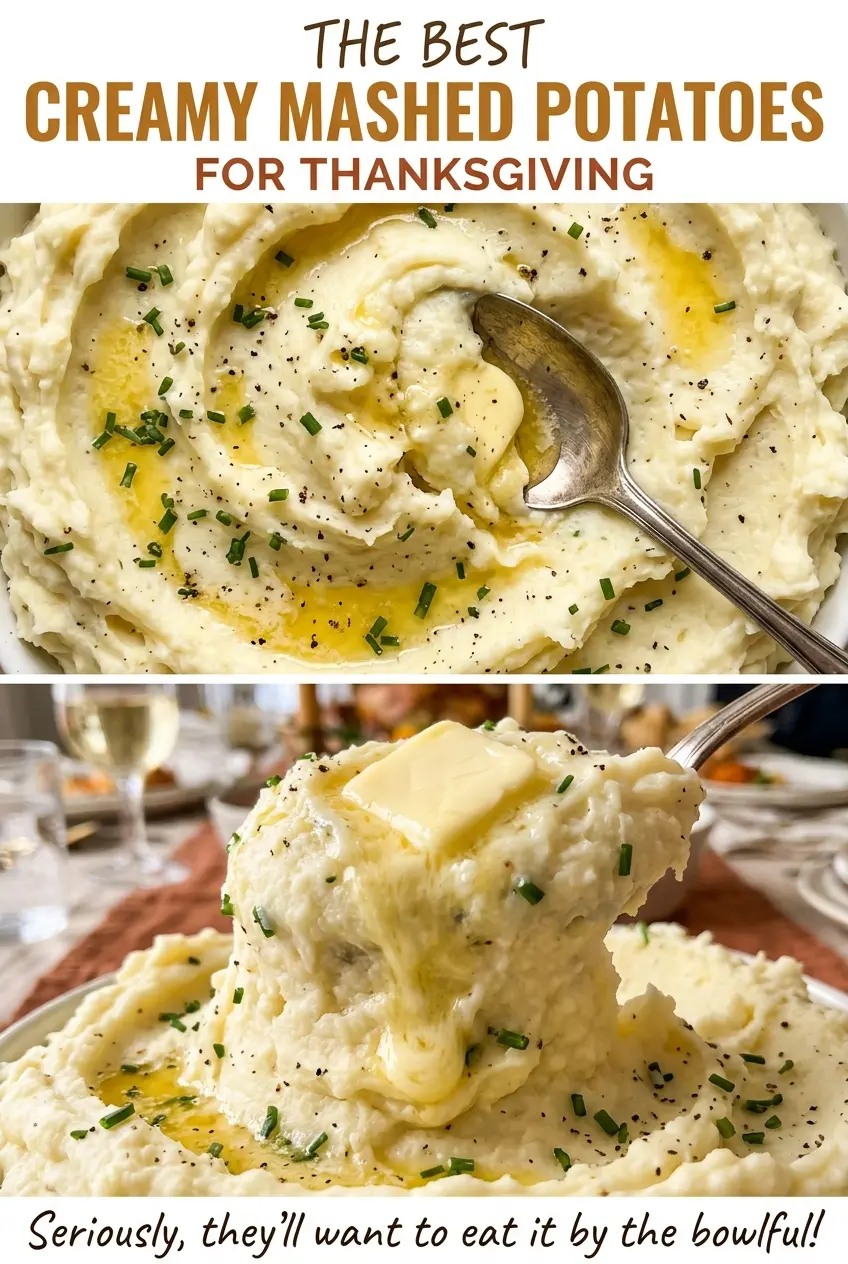
Warm butter and cream blend in more smoothly than cold dairy, and sour cream goes in at the end for a gentle tang. The result is a generous bowl for 10: creamy, buttery potatoes with enough body to hold their shape on the plate.
Kitchen Note
Warm the butter and cream slowly, just until the mixture is steaming and the butter has melted. Don’t let it boil; gentle heat keeps it ready to blend into the potatoes without making the finish feel heavy.
Save these creamy Thanksgiving mashed potatoes for a crowd-sized bowl of buttery, tangy comfort with a smooth, sturdy texture.
Why Yukon Golds Stay Creamy Without Turning Gluey
Mashed potatoes can go from creamy to gummy when they’re worked too hard. Yukon Golds have a naturally smooth, buttery character that gives you a soft mash without vigorous beating. That matters especially in a large batch: the more you process potatoes, the more their starch can turn the texture sticky.
Cutting the potatoes into pieces around the same size helps them finish cooking together. Starting them in cold water gives the centers time to cook as the water heats, rather than leaving you with tender edges and firm middles. The water should cover the pieces, and the simmer should stay steady rather than churning wildly.
- Use the largest pieces as your doneness test; a fork should slide in without meeting a firm center.
- Keep the mash in the pot rather than transferring it to a food processor or blender. A gentle hand with the mashing gives the potatoes room to stay tender.
- Salt the cooking water, then add the remaining salt with the sour cream at the finish. That spreads seasoning through the potatoes instead of leaving all of it on the surface.
What the Potatoes, Butter, Cream, and Sour Cream Each Bring

- Yukon Gold potatoes — Their creamy texture and mellow, buttery flavor are the foundation of this mash. Choose firm potatoes without soft spots, and peel them before cutting so the finished texture stays smooth. Keeping the pieces close to the same size helps them cook evenly.
- Unsalted butter — Butter brings richness and a rounded flavor without adding the salt found in salted butter. A fresh package is fine; there’s no need to seek out a specialty butter when it will be melted into the potatoes. Unsalted butter also lets the two measured additions of kosher salt do the seasoning.
- Heavy cream — Cream loosens the mash while adding body, which is why it works better here than a thin liquid. Warm it with the butter so it blends in instead of cooling the potatoes. Since cream is a major part of the texture, use heavy cream rather than swapping in a thinner milk.
- Sour cream — Stirred in last, sour cream adds a mild tang that keeps the butter and cream from tasting one-note. Its thickness also helps the potatoes stay creamy rather than watery. Stir it in gently once the butter-and-cream mixture has been incorporated.
From Even Potato Pieces to a Smooth, Creamy Mash
Cut the potatoes to cook evenly
Peel the Yukon Golds and cut them into pieces about 1 1/2 inches across. Put them in an 8-quart pot and add enough cold water to cover by 1 inch. Stir in 2 teaspoons of kosher salt before bringing the water to a boil over high heat; starting cold helps the centers cook alongside the outsides.
Simmer until the largest pieces give way
Once the water boils, reduce the heat to a steady simmer and cook for 15 to 20 minutes. A fork should slide easily into the largest pieces, not just the smaller ones around the edges. If the centers still feel firm, give the potatoes more time; mashing undercooked pieces leaves stubborn lumps.
Let the drained potatoes shed excess moisture
Drain the potatoes well, then return them to the pot over low heat. Shake the pot gently for 1 to 2 minutes, until the excess moisture has evaporated. Keep the heat low and the pot moving so the potatoes dry without catching on the bottom.
Blend in the warm dairy, then finish with sour cream
While the potatoes cook, warm the butter and heavy cream together in a 2-quart saucepan over low heat for 3 to 5 minutes, until the butter melts and the mixture steams. Mash the potatoes until smooth, then gradually mix in the warm butter and cream. Fold in the sour cream and remaining 1 teaspoon of kosher salt, taste for balance, and serve hot.
Small Changes for a Different Bowl of Mashed Potatoes
Lean into the sour cream
For a tangier finish, use a little more sour cream and a little less heavy cream while keeping the butter in the mix. The potatoes will taste brighter and feel a touch denser, so fold the sour cream in gradually and stop when the texture is creamy.
Leave a little more texture
For a more rustic bowl, stop mashing when the potatoes are mostly smooth instead of working out every small lump. The butter, cream, and sour cream still coat the pieces, but the final texture has more character than a completely uniform mash.
Make a smaller batch
Halve each ingredient when you don’t need a bowl for 10, and keep the same piece size and doneness cues. The potatoes may reach tenderness sooner in a smaller pot, so check the largest pieces with a fork rather than relying only on the clock.
Storage and Reheating
- Refrigerator: Keep leftovers covered and refrigerated for 3 to 4 days. They’ll firm up as they chill because the butter and cream set.
- Freezer: Freeze in an airtight container for up to 1 month for the best texture. Thaw overnight in the refrigerator; the potatoes may be a little less silky after freezing.
- Reheating: Warm gently in a covered saucepan over low heat, stirring now and then, or heat in the microwave in short intervals and stir between them. Heat leftovers to 165°F; high heat can scorch the bottom before the center is warm.
Questions That Come Up While Making These Mashed Potatoes
The Best Creamy Mashed Potatoes for Thanksgiving
Ingredients
Method
- Peel the potatoes and cut them into 1 1/2-inch pieces.
- Put the potatoes in an 8-quart pot with enough cold water to cover by 1 inch.
- Stir 2 teaspoons of the salt into the water.
- Bring the water to a boil over high heat.
- Reduce the heat to maintain a steady simmer and cook for 15 to 20 minutes, until a fork slides easily into the largest pieces.
- Drain the potatoes well and return them to the pot.
- Set the pot over low heat for 1 to 2 minutes, shaking it gently, until excess moisture has evaporated.
- While the potatoes cook, warm the butter and heavy cream in a 2-quart saucepan over low heat for 3 to 5 minutes, until the butter has melted and the mixture is steaming; do not let it boil.
- Mash the potatoes until smooth, gradually mixing in the warm butter and cream.
- Fold in the sour cream and remaining 1 teaspoon salt, then serve hot.