Rich garlic butter, a little honey, and bright lemon turn baked salmon into the kind of dinner that tastes like it came off a restaurant line, not a weeknight sheet pan. The glaze settles into the top of the fish and caramelizes just enough under the broiler to give you that glossy finish without overcooking the center. What you get is flaky salmon with a savory-sweet crust and a pan sauce worth spooning over rice, potatoes, or anything else on the plate.
The trick here is balance. Honey brings color and a little stickiness, but Dijon and lemon keep it from tasting flat or candy-sweet. A short bake at 400°F cooks the salmon through gently, and that final blast under the broiler does the heavy lifting on flavor and texture. Patting the fillets dry first matters more than people think; moisture on the surface keeps the glaze from clinging and can turn the top dull instead of lacquered.
Below, I’ve included the small details that keep the salmon tender, the glaze from burning, and the flavor strong enough to taste like more than just butter on fish.
The glaze turned out glossy and lightly caramelized, and the salmon stayed moist all the way through. I was worried the honey would burn, but the broil at the end was just enough to give it that restaurant look.
Save this Texas Roadhouse Style Baked Salmon for the nights when you want a glossy garlic butter glaze and tender salmon on the table fast.
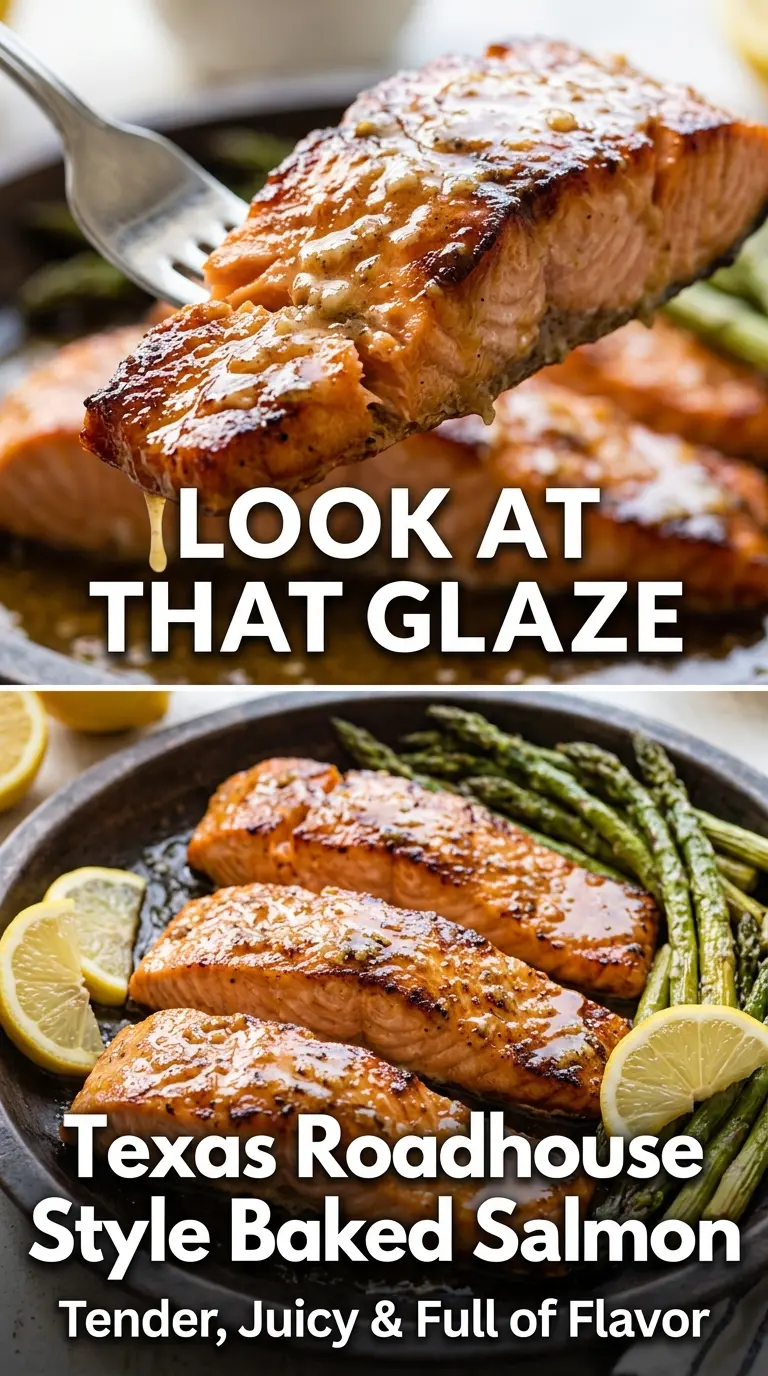
The Reason the Glaze Stays Glossy Instead of Burning
Honey and broiler heat can be a bad combination if the fish is left under direct heat too long. The glaze on this salmon works because it starts with enough butter to carry the honey and mustard, and the salmon finishes in the oven before the broiler only kisses the top for color. That means you get caramelization without that bitter edge that shows up when sugar cooks too long.
Salmon also has enough fat to stay tender through a short bake, which is why this method works better than a longer, lower roast for this specific glaze. If your fillets are thin, they need less time and barely any broiling. Thick fillets can handle the extra minute or two, but they still should come out when the center is just turning opaque and flakes with a fork.
- Salmon fillets — Fresh or properly thawed salmon works best because the glaze clings to dry surface flesh. Frozen salmon is fine if it’s fully thawed and patted dry before seasoning.
- Butter — Unsalted butter gives you control over the seasoning and carries the garlic and honey into a smooth glaze. Salted butter can work, but cut back on any extra salt elsewhere.
- Honey — This is what gives the glaze its shine and light sweetness. Maple syrup can stand in, but it tastes a little deeper and less like the original Texas Roadhouse-style balance.
- Dijon mustard — Dijon keeps the glaze from tasting one-note and helps it emulsify. Yellow mustard won’t give the same sharpness or body.
- Lemon juice and garlic — Lemon brightens the richness, and fresh garlic gives the glaze its backbone. Garlic powder won’t deliver the same aroma, so use fresh if you can.
Getting the Salmon to Flake Without Drying Out
Prep the Pan and Dry the Fish
Line the baking sheet with parchment and brush it lightly with oil so the glaze doesn’t glue itself to the pan. Pat the salmon dry on every side you can reach, then season it with salt and black pepper. If the fish is wet, the glaze slides off and the top steams instead of setting into a lacquered coating.
Whisk the Glaze Until It Looks Smooth
Combine the melted butter, honey, lemon juice, Dijon, garlic, paprika, onion powder, parsley, thyme, and black pepper until the mixture looks even and glossy. The mustard should disappear into the butter rather than sit in streaks. If the butter is too hot, the garlic can taste harsh, so let it cool for a minute after melting before whisking everything together.
Bake Until the Center Is Just Opaque
Brush the glaze generously over the salmon and bake at 400°F for 12 to 15 minutes, depending on thickness. Start checking early if your fillets are on the thin side; overbaked salmon turns chalky fast. The salmon is ready when it flakes at the edges but still has a little translucence in the very center.
Broil for Color, Not for Cooking
Turn on the broiler for 1 to 2 minutes only after the salmon is almost done. Watch it closely, because the honey can go from caramelized to burnt in a heartbeat. The top should deepen in color and look slightly blistered, while the fish underneath stays juicy.
Spoon the Juices Back Over the Top
Let the salmon rest for a minute, then spoon the pan juices over each fillet before serving. Those juices carry the garlic, lemon, and mustard that settle on the pan during baking, and they tighten up the flavor in a way plain melted butter never will. Finish with parsley and lemon wedges for a fresh edge that cuts through the richness.
Three Smart Ways to Adjust This Salmon
Dairy-Free Version
Swap the butter for a neutral dairy-free butter or a good olive oil. You’ll lose a little of the classic richness, but the garlic, honey, and lemon still carry the dish well, and the glaze will still brown nicely under the broiler.
Low-Carb Adjustment
Replace the honey with a sugar-free honey substitute if you want to cut the carbs. The glaze won’t caramelize quite the same way, so keep the broil time short and use the oven to cook the salmon through before adding a quick finish on top.
Using Frozen Salmon
Frozen salmon works as long as it’s fully thawed and dried well before glazing. If there’s still surface moisture, the sauce won’t cling and the fish can release too much liquid onto the pan, which softens the finish.
Storage and Reheating
- Refrigerator: Store leftovers in an airtight container for up to 2 days. The glaze stays tasty, but the salmon will lose a little of its just-baked texture.
- Freezer: It freezes, but the texture softens after thawing, so I prefer it fresh. If you do freeze it, wrap portions tightly and thaw in the fridge before reheating.
- Reheating: Warm gently in a 300°F oven, covered loosely with foil, just until heated through. High heat dries out salmon fast and can scorch the honey glaze before the center is warm.
Answers to the Questions Worth Asking
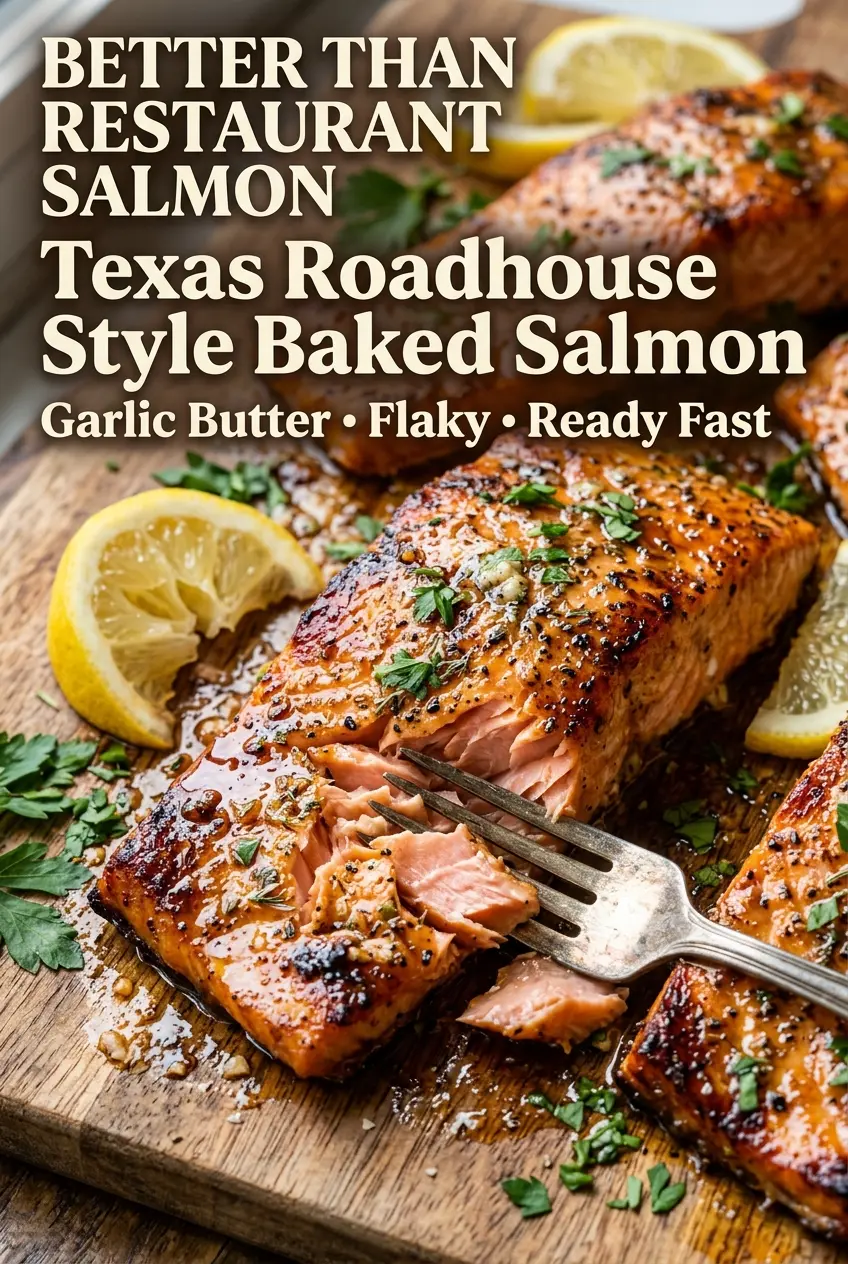
Texas Roadhouse Style Baked Salmon
Ingredients
Equipment
Method
- Preheat the oven to 400°F (205°C).
- Line a sheet pan with parchment paper and lightly brush with olive oil.
- Pat the salmon fillets dry and season with salt and pepper.
- In a small bowl, whisk together melted butter, honey, lemon juice, Dijon mustard, minced garlic, paprika, onion powder, dried parsley, dried thyme, and black pepper.
- Brush the glaze generously over each salmon fillet.
- Bake for 12–15 minutes depending on thickness, until the salmon looks opaque and flakes easily at the thickest part.
- Broil for 1–2 minutes until the glaze is lightly caramelized.
- Spoon the pan juices over the salmon to keep the tops glossy.
- Garnish with fresh chopped parsley and lemon wedges before serving.