The hardest part of roasting a whole turkey isn’t the carving; it’s getting the breast and thighs to finish at the same time. Spatchcocking changes the shape of the bird before it ever goes into the oven: the backbone comes out, the breastbone gets pressed flat, and the turkey sits open across the pan. The skin browns all over, and it’s easier to check the thickest parts with a thermometer.
I salt the turkey and leave it uncovered in the refrigerator overnight, then slide herb butter beneath the skin before roasting. That uncovered rest gives moisture on the skin time to dry, while the butter puts rosemary, thyme, and sage right against the meat. At 425°F, the flattened bird roasts in about an hour and a quarter to an hour and forty-five minutes. The finished skin should be golden, and the meat needs to reach 165°F in both the breast and thigh.
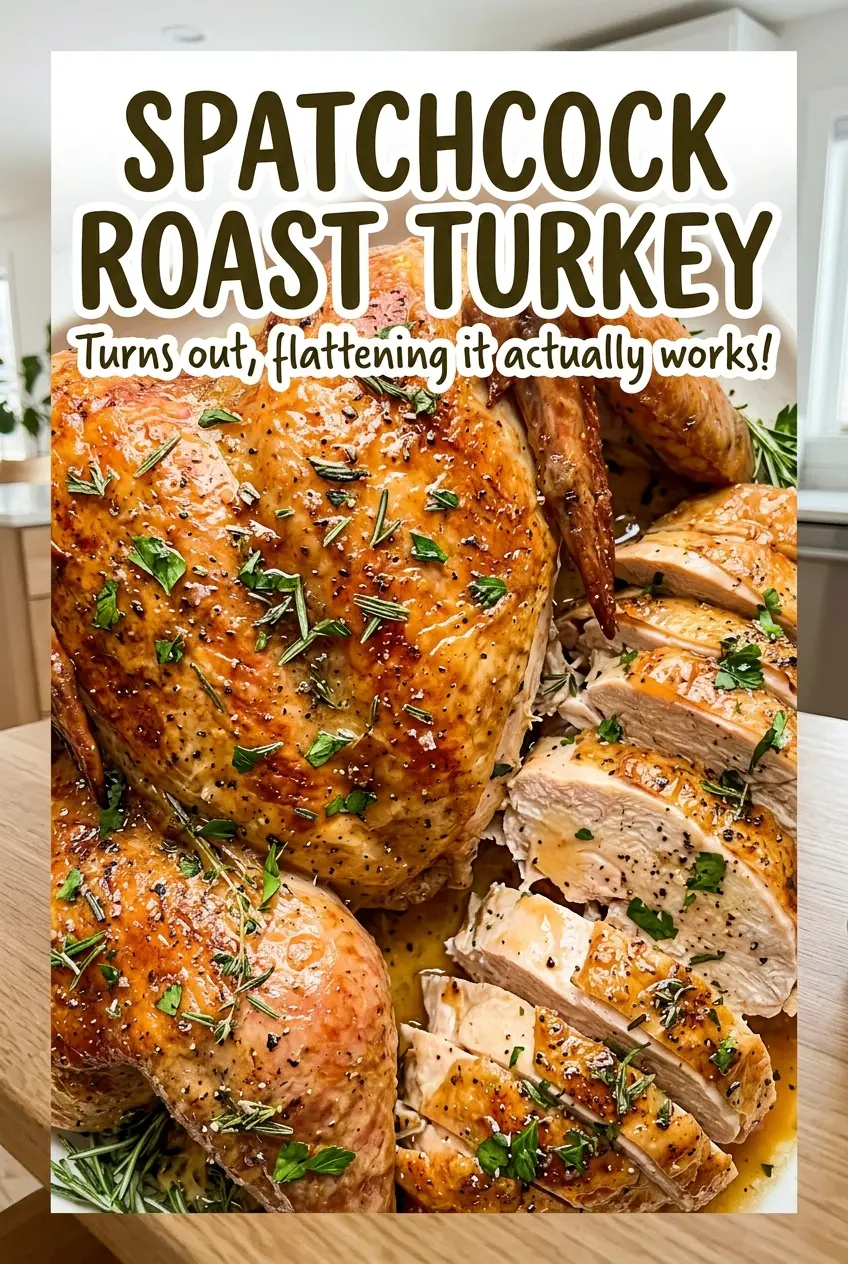
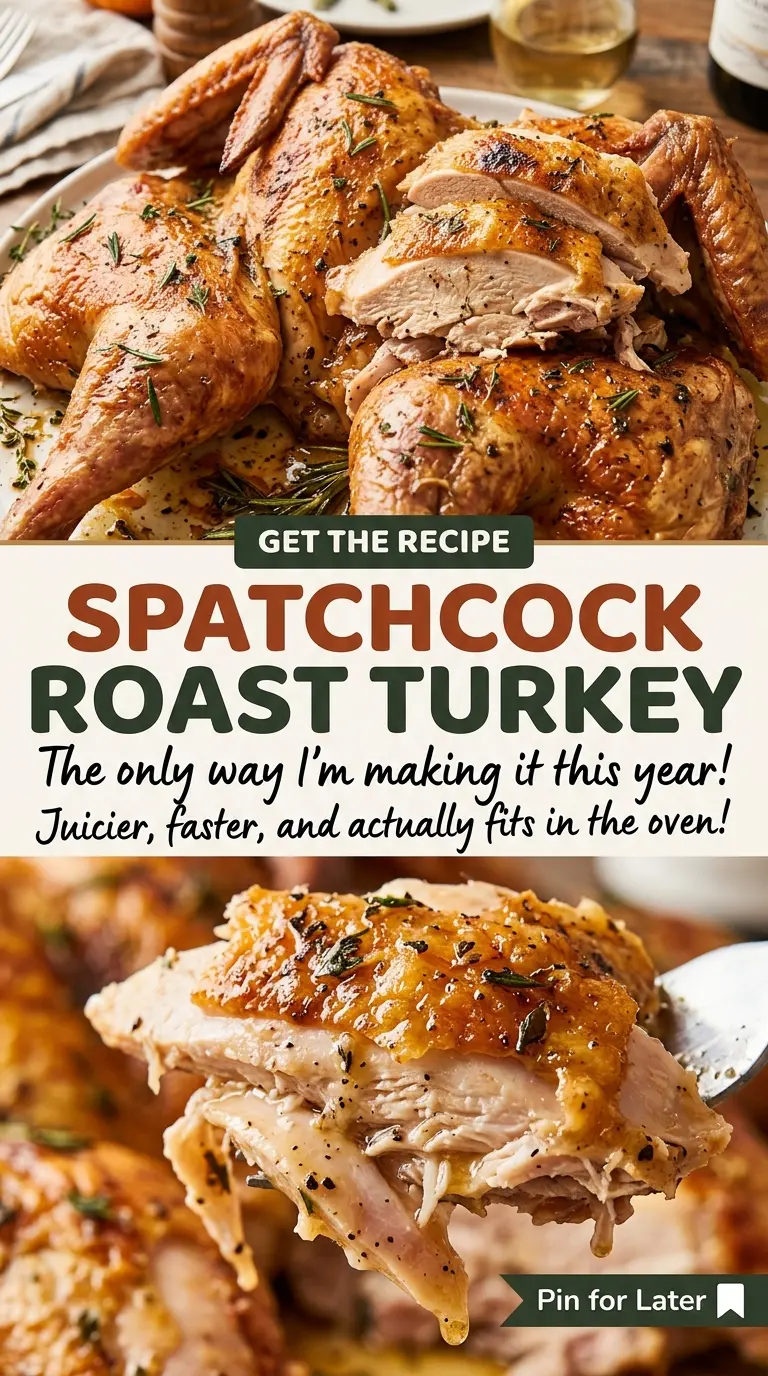
Once it’s rested, the turkey is easy to carve into neat portions, with browned skin across the breast and legs and the herbs tucked close to the meat.
Kitchen Note
Cut close along both sides of the backbone with sturdy kitchen shears. That leaves more of the bird intact and makes it easier to press the breastbone down until the turkey lies flat.
Save this spatchcock roast turkey for its golden herb-butter skin and easier carving.
Why Flattening the Turkey Changes the Breast-and-Thigh Timing
A whole turkey is thickest through the breast, while the legs sit lower and closer to the body. When the bird is left intact, those different shapes and positions make it harder for the breast and thighs to cook at a similar pace. Removing the backbone and pressing the breastbone flat spreads the turkey into a more even layer. More of the skin also faces upward, where it can brown in the oven.
That flatter shape is useful, but it doesn’t make every turkey finish at the same minute. A 10-pound bird and a 12-pound bird can take different amounts of time, and the thickest part of the breast may not match the innermost thigh exactly. I use the roasting time as a window, not the final test. Check both places with the thermometer, keeping the tip away from bone; the turkey is ready when each reads at least 165°F. If one section is already deeply browned, a loose foil tent slows further browning while the rest of the bird finishes.
Why Fresh Herbs and Soft Butter Matter Under the Skin
- The turkey — Start with a fully thawed bird with the giblets removed. A bird that’s still icy in the middle won’t flatten as readily, and the timing becomes harder to judge. The 10- to 12-pound size fits the method and pan dimensions here.
- Morton kosher salt — Salt goes over the skin and beneath loose skin before the uncovered refrigerator rest. Stick with the specified kosher salt rather than measuring table salt the same way; different crystals pack differently, and table salt can make the result too salty.
- Unsalted butter — Soft butter blends smoothly with the chopped herbs and is easy to spread under the skin without tearing it. Unsalted butter also lets the measured salt do the seasoning. It should be soft enough to stir, not melted.
- Rosemary, thyme, and sage — Fresh chopped herbs bring distinct aromas to the butter, and placing them beneath the skin keeps them close to the meat. Use herbs that smell fresh and look green; limp or dried-out leaves won’t give the same lively aroma.
- Olive oil — A thin rub over the outside helps the skin roast evenly. There’s no need for a premium bottle here; a standard olive oil works well for coating the skin.
- Black pepper — It gives the herb butter a gentle peppery edge. Use freshly ground or pre-ground pepper according to what you have; the larger impact here comes from the fresh herbs and butter.
The Spatchcock Roast: From Clean Cuts to Rested Slices
Remove the Backbone and Flatten the Bird
Set the fully thawed turkey breast-side down on a cutting board. Use sturdy kitchen shears to cut along both sides of the backbone, remove it, then turn the bird breast-side up. Press firmly on the breastbone until the turkey lies flat; if it rocks or arches, press again so it sits evenly. Take care as you work around the ribs, and keep the bird stable on the board.
Salt the Skin and Let It Dry
Pat the turkey dry, then rub the Morton kosher salt over the skin and beneath any loose skin. Set it skin-side up on a rack in an 18×13-inch rimmed baking sheet and refrigerate uncovered for 8 to 24 hours. The skin should feel drier after this rest, rather than damp to the touch. Keep the turkey on the rack so air can circulate around it while it chills.
Spread Herb Butter Beneath the Skin
Heat the oven to 425°F with a rack in the center. Stir the softened butter, chopped rosemary, thyme, sage, and black pepper together in a small bowl. Carefully loosen the skin over the breast and thighs, then spread the herb butter underneath; work gently so the skin stays in place. Rub the olive oil over the outside of the skin for an even coating.
Roast, Check Both Spots, and Rest
Roast for 1 hour 15 minutes to 1 hour 45 minutes, watching for golden-brown skin. Insert a thermometer into the thickest part of the breast and the innermost thigh without touching bone; both readings need to reach at least 165°F. If the skin browns too quickly before the turkey is ready, tent it loosely with foil. Transfer the turkey to a cutting board and rest for 20 to 30 minutes before carving so the juices settle instead of running across the board.
Two Flavor Adjustments That Keep the Same Spatchcock Method
Make the Herb Butter Rosemary-Led
For a simpler, woodsy herb flavor, leave out the thyme and sage and stir the rosemary with the butter and black pepper. The turkey keeps the same method and roast timing, but the herb aroma is more focused and less layered.
Leave Out the Black Pepper
For a milder herb butter, omit the black pepper and keep the rosemary, thyme, and sage. The turkey will still have the same savory herb coating, without pepper’s sharp finish.
Storage and Reheating
- Refrigerator: Store carved turkey in an airtight container for 3 to 4 days. The skin softens in storage, even though the meat stays tender.
- Freezer: Freeze carved portions in airtight freezer-safe packaging for up to 2 to 6 months for best quality. Thaw them in the refrigerator before reheating.
- Reheating: Warm covered portions in the oven or microwave until they reach 165°F. Reheat only what you plan to eat; prolonged heating dries the lean breast meat.
Questions That Come Up Before the Turkey Goes in the Oven
Spatchcock Roast Turkey
Ingredients
Equipment
Method
- Place the turkey breast-side down on a cutting board.
- With sturdy kitchen shears, cut along both sides of the backbone and remove it.
- Turn the turkey breast-side up and press firmly on the breastbone until the bird lies flat.
- Pat the turkey dry and rub the salt over the skin and beneath any loose skin.
- Set it skin-side up on a rack in an 18x13-inch rimmed baking sheet and refrigerate uncovered for 8 to 24 hours.
- Heat the oven to 425°F with a rack in the center.
- Stir the softened butter, rosemary, thyme, sage, and black pepper together in a small bowl.
- Carefully loosen the skin over the breast and thighs and spread the herb butter underneath.
- Rub the olive oil over the skin.
- Roast for 1 hour 15 minutes to 1 hour 45 minutes, until the skin is golden brown and a thermometer inserted into the thickest part of the breast and the innermost thigh, without touching bone, reads at least 165°F; tent loosely with foil if the skin browns too quickly.
- Transfer the turkey to a cutting board and rest for 20 to 30 minutes before carving.