The cornbread should be cool before it meets the bread cubes, and the bread should feel dry before the broth goes in. Those two little checks give you a dressing that holds together without turning into a heavy, wet bake. I make this Southern cornbread dressing with homemade cornbread, day-old white bread, and a skillet of softened onion and celery.
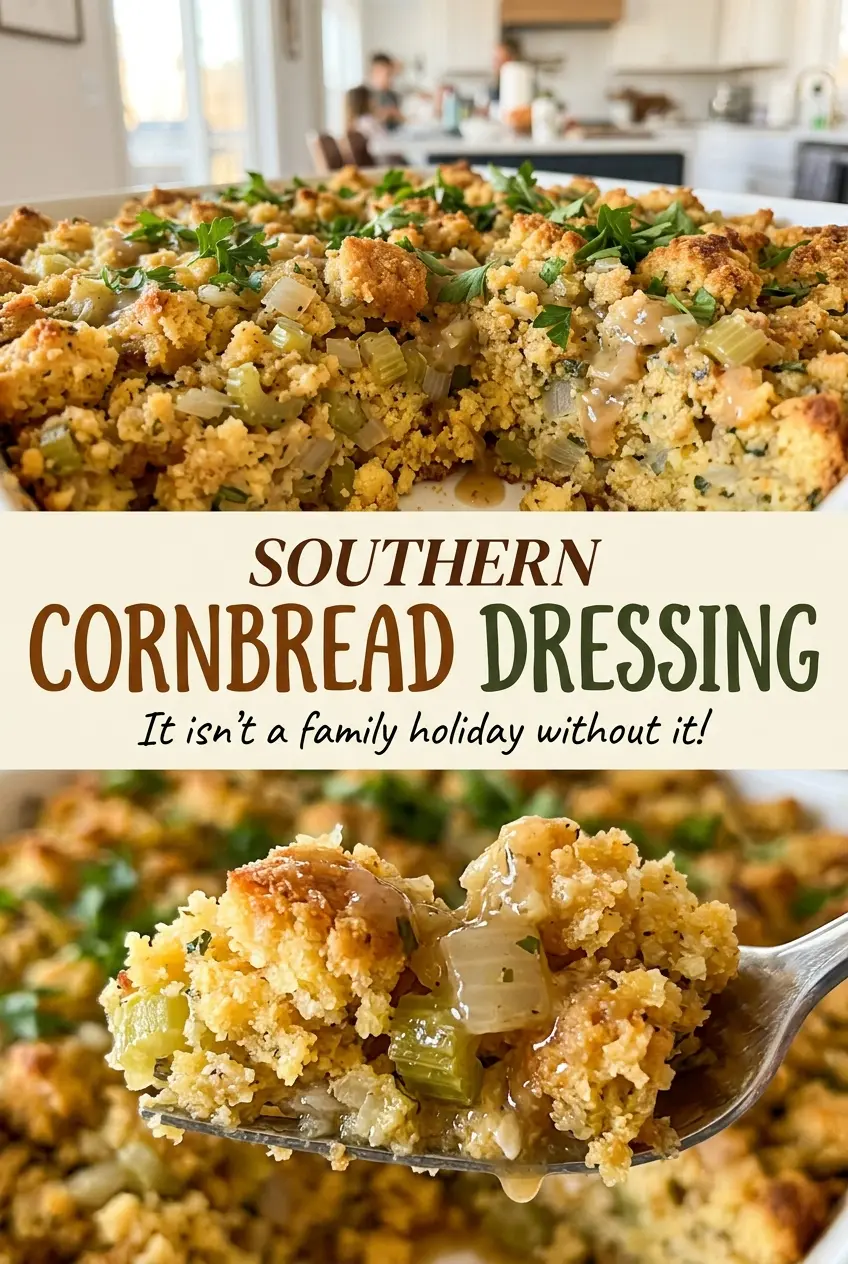
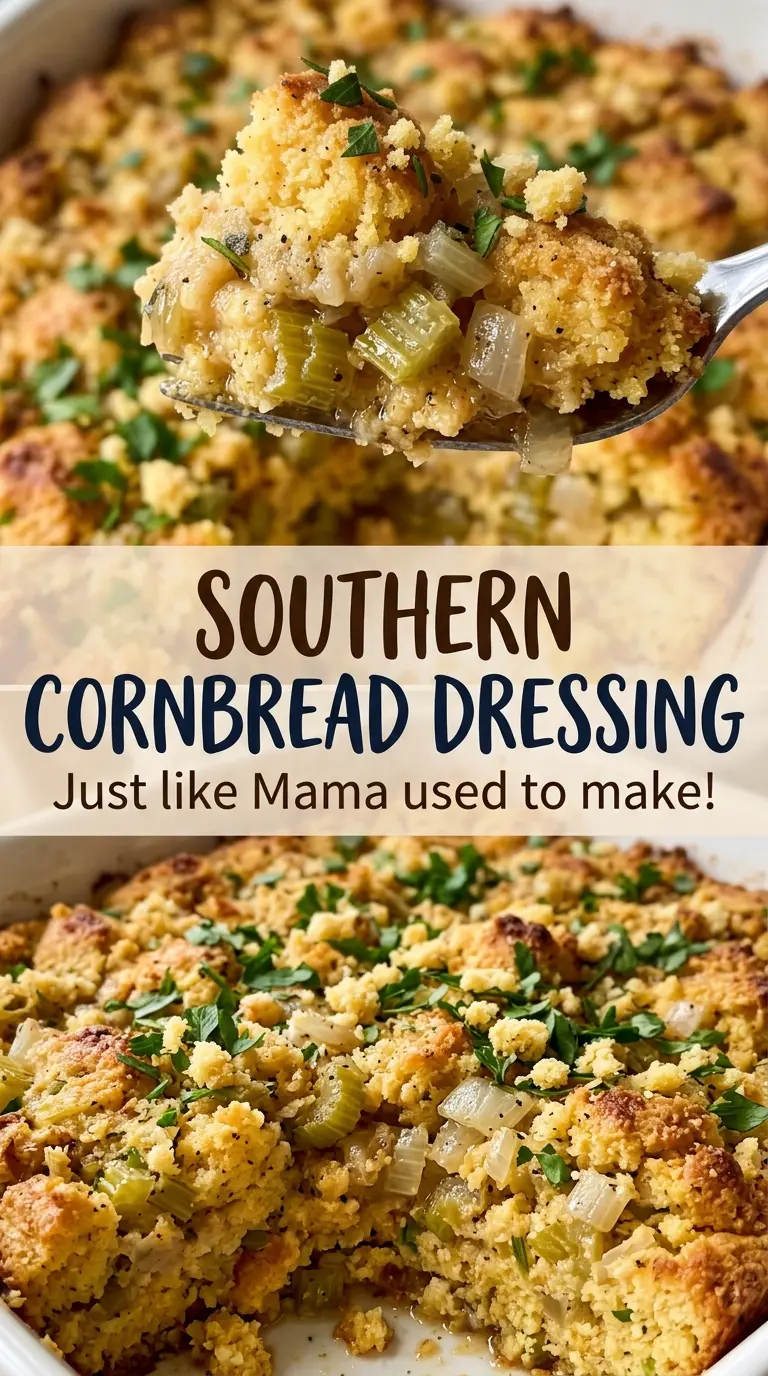
The two breads bring different things to the pan: crumbled cornbread gives every bite its corn flavor, while white bread cubes help the mixture hold its shape. I bake them briefly at a low temperature before adding the broth, then let eggs bring the dressing together in the oven. Sage and poultry seasoning give it a familiar savory note, and the top gets a little color after the foil comes off. The finished dressing is tender through the middle with a lightly browned top.
Kitchen Note
Let the cornbread cool completely before you crumble it. If it’s still warm, it’s softer and harder to break into pieces without compressing it.
Save this Southern cornbread dressing for a holiday table or Sunday supper: two kinds of bread, softened vegetables, and a savory sage finish.
Why This Dressing Uses Two Kinds of Bread, Not Just Cornbread
All-cornbread dressing sounds like the most direct route, but the two-bread combination gives this pan a more balanced texture. Cornbread brings its distinctive crumb and flavor; the white bread cubes add a softer, more familiar bite and help the mixture hold together once the broth and eggs are stirred in. Neither has to carry the whole dish on its own.
That difference is especially useful when you serve the dressing. A pan made only with fine crumbs can become dense as it bakes, while large pieces of bread alone won’t give you the same cornbread character. Here, the crumbled cornbread and cubes stay distinct enough to make each forkful interesting, but the broth and eggs bind them into one sliceable dressing. Keep the bread pieces recognizable as you mix, rather than mashing everything into a paste.
What the Cornbread, White Bread, and Broth Each Bring
- Cornmeal and flour — The cornmeal gives the homemade cornbread its flavor and crumb, while all-purpose flour helps it bake into a cohesive square you can crumble. Baking powder lifts the batter; measure it accurately so the cornbread isn’t overly dense.
- Buttermilk, eggs, and butter — Buttermilk brings moisture and a mild tang to the cornbread. Eggs help the batter set, and melted butter adds richness. Use unsalted butter so the measured kosher salt remains the main seasoning control.
- Day-old white bread — Its mild flavor lets the cornbread and seasonings stand out, and its cubes add a softer texture to the finished dressing. Day-old bread is already less moist than fresh bread, which helps it take in the broth without starting out soggy.
- Low-sodium chicken broth and eggs — Broth moistens the dried breads, and whisked eggs help the mixture set as it bakes. Low-sodium broth leaves room for the salt added separately instead of making the dressing too salty before it reaches the oven.
- Onion, celery, sage, and poultry seasoning — Finely chopped vegetables soften evenly in the skillet, adding aromatic flavor throughout the dressing. Rubbed sage supplies the characteristic earthy note, while poultry seasoning rounds it out; freshly ground black pepper gives the seasoning a little edge.
From Homemade Cornbread to a Set, Golden Dressing
Bake the cornbread until the center is set
Heat the oven to 400°F and grease an 8-inch square baking pan. Whisk the cornmeal, flour, baking powder, and part of the salt in a large bowl; in another bowl, whisk the buttermilk with two eggs and melted butter. Stir the wet mixture into the dry ingredients just until combined, then bake for 20–25 minutes. Look for a golden top and a toothpick that comes out clean from the center.
Dry the crumbled cornbread and bread cubes
Once the cornbread has cooled completely, crumble it onto a rimmed baking sheet and add the white bread cubes. Reduce the oven to 300°F and bake the breads for 20–25 minutes, stirring once. They should feel dry to the touch when you move them around the sheet. Transfer them to a large bowl, then raise the oven to 350°F and grease a 9×13-inch baking dish.
Soften the vegetables and moisten the breads
Melt the remaining butter in a 12-inch skillet over medium heat. Add the finely chopped onion and celery and cook for 8–10 minutes, stirring occasionally, until softened; stir in the sage, poultry seasoning, and black pepper. Add the vegetables to the bread mixture. Whisk the broth with the remaining eggs and salt, pour it over the breads, and mix until evenly moistened without crushing the pieces.
Bake covered, then brown the top
Transfer the mixture to the prepared baking dish and cover it with foil. Bake for 25 minutes, then remove the foil and bake for another 20–25 minutes. The center should be set and reach 160°F; if the middle still looks loose, give it more time in the oven rather than serving it early. Rest the dressing for 10 minutes before serving so it can settle for serving.
Three Ways to Change the Texture or Adapt the Bread
Make it gluten-free
Replace the all-purpose flour with a cup-for-cup gluten-free flour blend and use gluten-free white bread cubes. Choose gluten-free versions of the baking powder, poultry seasoning, and broth as well. The crumb may be a little more delicate, but the same two-bread balance and baking method still apply.
Keep the bread pieces distinct
For a more rustic texture, crumble the cornbread into uneven, generous pieces and leave the white bread as cubes. You’ll notice more contrast between the two breads in each serving, with the cornbread flavor coming through in larger bites.
Aim for a more uniform crumb
Break the cooled cornbread into smaller crumbs and cut the white bread into smaller cubes before drying. The finished dressing will feel more cohesive and less varied from bite to bite, though you’ll lose some of the larger soft pieces.
Storage and Reheating
- Refrigerator: Keep leftovers covered in the refrigerator for 3–4 days. The dressing will soften as it sits.
- Freezer: Freeze cooled portions in airtight containers for up to 3 months. The texture may be softer after thawing.
- Reheating: Cover the dressing and warm it in a 350°F oven until the center reaches 165°F. Leaving it uncovered the whole time can dry the surface before the middle is hot.
Questions That Come Up When Making Cornbread Dressing
Southern Cornbread Dressing
Ingredients
Equipment
Method
- Heat the oven to 400°F.
- Grease an 8-inch square baking pan.
- Whisk the cornmeal, flour, baking powder, and 1 teaspoon of the salt in a large bowl.
- In a separate bowl, whisk the buttermilk, 2 eggs, and 4 tablespoons of melted butter.
- Stir the wet ingredients into the dry ingredients just until combined.
- Pour the batter into the prepared pan.
- Bake for 20–25 minutes, until golden and a toothpick inserted in the center comes out clean.
- Cool completely.
- Reduce the oven to 300°F.
- Crumble the cornbread onto a rimmed baking sheet and add the bread cubes.
- Bake for 20–25 minutes, stirring once, until the bread is dry to the touch.
- Transfer the bread mixture to a large bowl.
- Increase the oven to 350°F.
- Grease a 9x13-inch baking dish.
- Melt the remaining 6 tablespoons butter in a 12-inch skillet over medium heat.
- Add the onion and celery and cook for 8–10 minutes, stirring occasionally, until softened.
- Stir in the sage, poultry seasoning, and black pepper.
- Add the vegetables to the bread mixture.
- Whisk the broth with the remaining 2 eggs and 1 teaspoon salt.
- Pour the broth mixture over the bread and mix until evenly moistened.
- Transfer the mixture to the prepared baking dish and cover with foil.
- Bake for 25 minutes.
- Remove the foil and bake for 20–25 minutes more, until the center is set and reaches 160°F.
- Let the dressing rest for 10 minutes before serving.