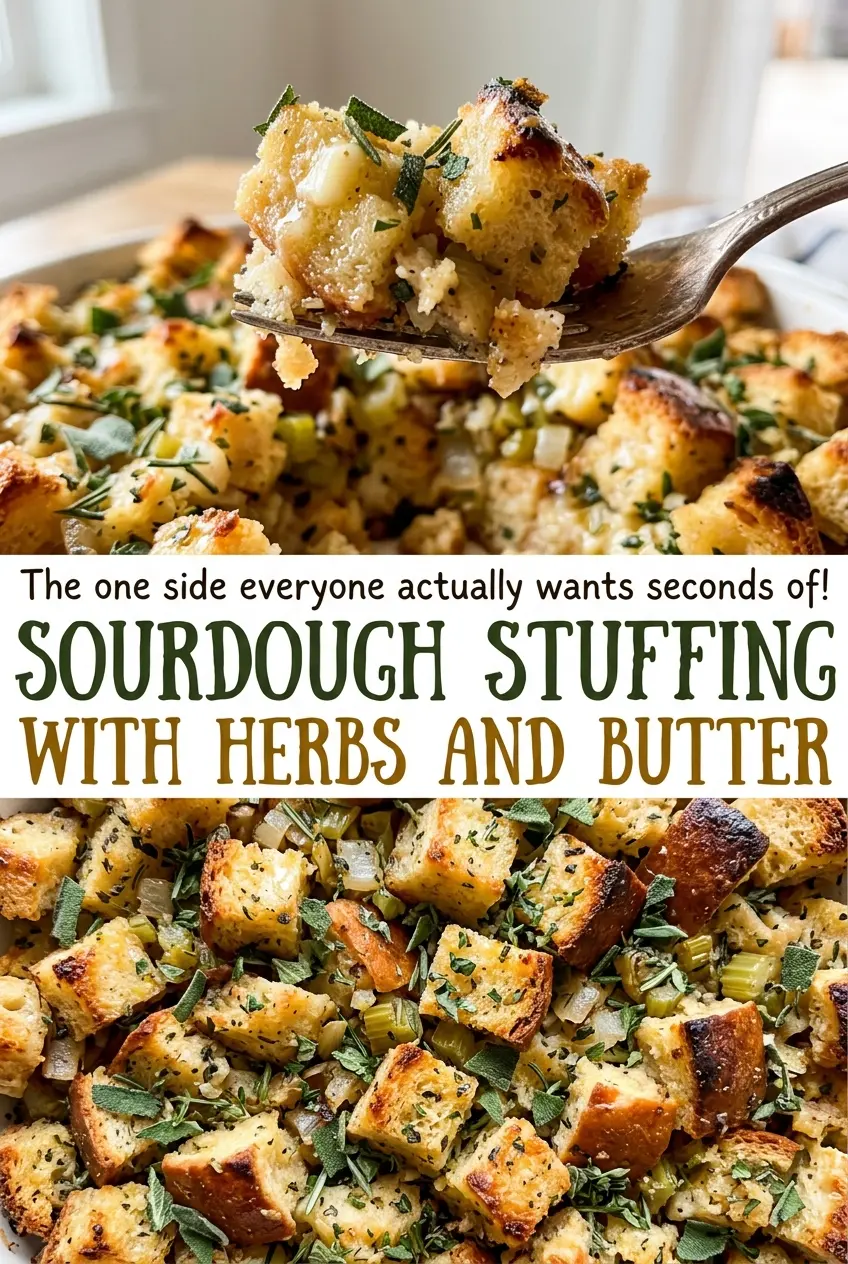
The bread cubes need a little time in the oven before they ever meet the butter; if they go into the bowl soft, the broth has nowhere to go but the bottom of the dish. I learned to let the edges turn dry and lightly crisp, not browned, and that changes the whole pan. This sourdough stuffing with herbs and butter bakes up tender through the middle with a golden top instead of collapsing into a wet, heavy layer. Sourdough brings a mild tang that holds its own against the sweet onion and celery, while butter carries the fresh herbs through every bite.
The finished stuffing has enough structure to scoop neatly, but it’s still soft inside. The herbs smell fresh rather than grassy because they spend just a minute in the warm butter before meeting the bread. This generous pan serves ten, and its mix of savory herbs and buttery sourdough tastes familiar without falling flat. A crisp edge, a tender center, and a little lift from the sourdough make each spoonful worth settling in for.
Kitchen Note
Toss gently once the broth and eggs go in. Stop when the cubes look evenly moistened; stirring hard after that can break the bread into a dense, pasty layer.
Save this sourdough stuffing with herbs and butter for a crisp-topped, tender-centered holiday side.
Why Sourdough Needs to Be Dry Before It Meets the Broth
Sourdough brings more than a tangy note to stuffing: its crumb gives the finished dish a hearty structure. But a loaf that feels firm on the counter can still hold plenty of moisture inside. When damp bread meets broth, that extra moisture leaves less room for the cubes to take in the seasoned liquid evenly. You can end up with a soggy bottom and dry patches above it.
Drying the cubes first gives them a head start. They absorb the broth and egg mixture without immediately losing their shape, so the center bakes into a tender, cohesive layer instead of a paste. The goal isn’t toast-colored bread or crunchy croutons. Lightly crisp, dry cubes are ready to soak up the broth, and the sourdough’s flavor still comes through after baking. This balance between moisture and structure is what makes a pan that scoops cleanly while staying soft in the middle.
How the Bread, Butter, and Herbs Shape Every Bite
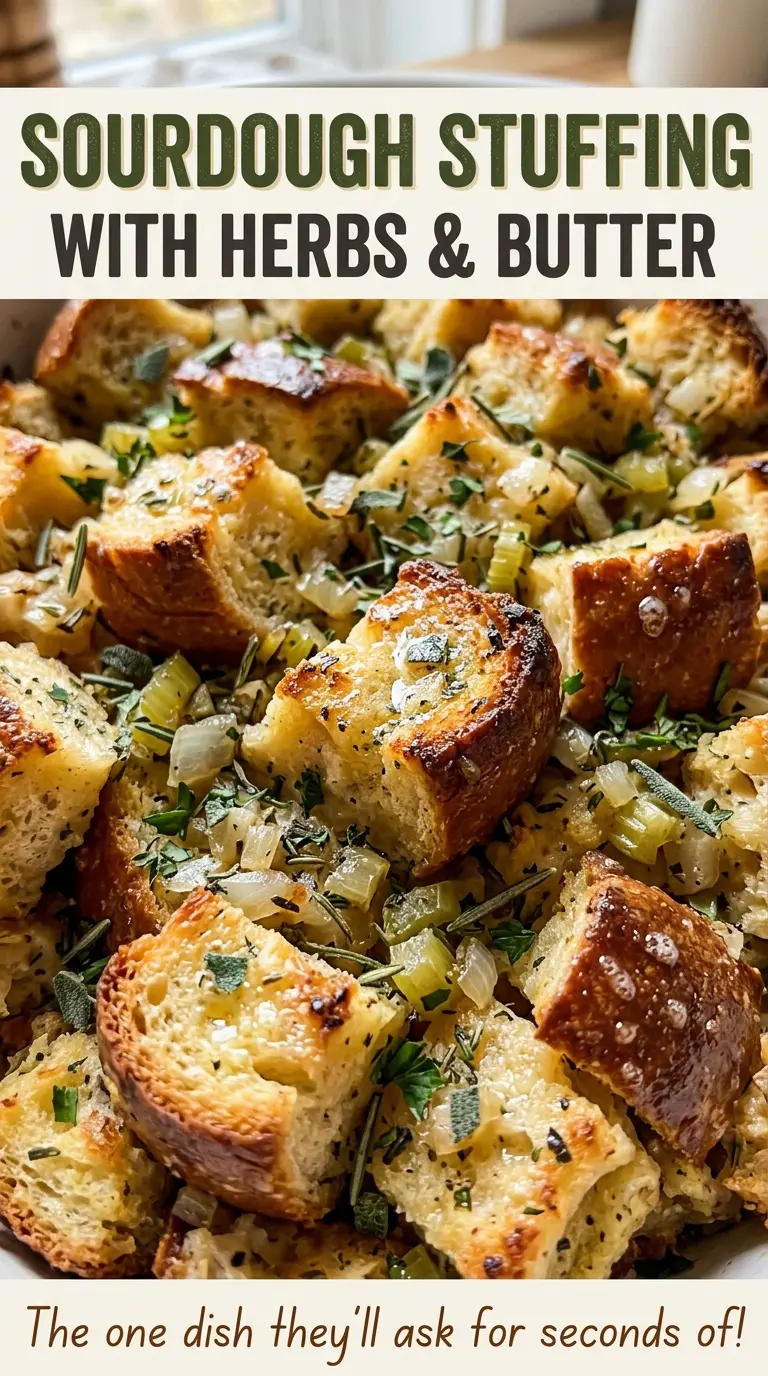
- Sourdough bread — Choose a loaf with a sturdy crumb that can hold its shape after it’s moistened. The bread’s tang brings a subtle contrast to the rich butter and savory herbs; a softer loaf can make the finished stuffing less structured.
- Unsalted butter — Butter carries the onion, celery, and herbs and gives the top its rich, browned finish. Unsalted butter lets you control the seasoning alongside the low-sodium broth and kosher salt.
- Onion and celery — Finely chopping both helps them soften evenly and spread throughout the bread instead of leaving large, crunchy pieces. They add the familiar savory-sweet base without competing with the herbs.
- Fresh parsley, sage, thyme, and rosemary — The blend gives the stuffing its herbal character: parsley keeps it bright, while sage, thyme, and rosemary bring deeper, woodsy notes. Fresh herbs are worth using here because their aroma blooms in the butter.
- Low-sodium chicken broth and eggs — Broth moistens and seasons the cubes, while eggs help the baked center hold together. Low-sodium broth keeps the final seasoning from becoming too salty once the butter and herbs are folded in.
Building the Stuffing in Four Stages
Dry the Bread Without Browning It
Heat the oven to 300°F and divide the 3/4-inch bread cubes between two rimmed baking sheets. Bake for 25–35 minutes, stirring the cubes and rotating the pans halfway through. Look for bread that feels dry with edges that are lightly crisped, rather than deeply browned. The exact time depends on how moist the loaf was to start, so use the texture as your cue.
Soften the Vegetables in Butter
Raise the oven to 350°F and grease a 9×13-inch baking dish with 1 tablespoon of butter. Melt the remaining 8 tablespoons in a 12-inch skillet over medium heat, then add the finely chopped onion and celery. Cook for 8–10 minutes, stirring occasionally, until the vegetables have softened. If they’re still firm and sharp-smelling, give them more time before adding the herbs.
Coat the Bread and Add the Liquid
Stir the parsley, sage, thyme, and rosemary into the skillet and cook for 1 minute, just until fragrant. Add the butter and vegetable mixture to the dried bread and toss to distribute it. In a medium bowl, whisk the chicken broth with the eggs, kosher salt, and black pepper, then pour it over the bread. Toss gently until the cubes are evenly moistened, with no pool of liquid sitting in the bottom of the bowl.
Bake Covered, Then Brown the Top
Transfer the mixture to the prepared dish and cover it tightly with foil. Bake for 30 minutes, then remove the foil and bake for another 20–25 minutes, until the top is golden and the center reaches 165°F. If the top is browning but the center hasn’t reached temperature, cover the dish again to slow the browning while it finishes. Let the stuffing rest for 10 minutes before serving so the center can settle.
Three Practical Ways to Adapt This Stuffing
Make It Gluten-Free with Gluten-Free Sourdough
Use 1 1/2 pounds of gluten-free sourdough bread in place of the regular sourdough and cut it into the same 3/4-inch cubes. Gluten-free loaves can have a more delicate crumb, so handle the cubes gently when you add the liquid. You’ll keep the tangy character, though the stuffing may be a little less springy.
Use Plant-Based Butter for a Dairy-Free Pan
Replace the unsalted butter with an equal amount of unsalted plant-based butter, divided in the same way. A firm, stick-style option works well for greasing the dish and softening the vegetables. The herbs will still perfume the stuffing, but the buttery flavor may be less pronounced.
Make It Vegetarian with Vegetable Broth
Swap the low-sodium chicken broth for the same amount of low-sodium vegetable broth. The bread, eggs, and herbs still make a cohesive stuffing, while the broth gives it a slightly lighter, less meaty flavor. Taste the broth before using it so you know how much seasoning it brings.
Storage and Reheating
- Refrigerator: Store covered in an airtight container for 3–4 days. The top will soften as it sits, while the center stays tender.
- Freezer: Freeze cooled portions in airtight, freezer-safe containers for up to 3 months for best quality. Thaw in the refrigerator before reheating.
- Reheating: Reheat covered in a baking dish until hot throughout, then uncover briefly to refresh the top. Reheating uncovered the whole time can dry out the edges before the center warms.
Questions That Come Up When Baking Sourdough Stuffing
Sourdough Stuffing with Herbs and Butter
Ingredients
Equipment
Method
- Heat the oven to 300°F.
- Divide the bread cubes between 2 rimmed baking sheets and bake for 25–35 minutes, stirring and rotating the pans halfway through, until the cubes are dry and lightly crisped.
- Increase the oven temperature to 350°F and grease a 9x13-inch baking dish with 1 tablespoon of the butter.
- Transfer the dried bread cubes to a large bowl.
- Melt the remaining 8 tablespoons butter in a 12-inch skillet over medium heat.
- Add the onion and celery and cook for 8–10 minutes, stirring occasionally, until softened.
- Stir the parsley, sage, thyme, and rosemary into the skillet and cook for 1 minute.
- Add the herb mixture to the bread cubes and toss to combine.
- Whisk the broth, eggs, salt, and pepper in a medium bowl.
- Pour the broth mixture over the bread and toss gently until evenly moistened.
- Transfer the stuffing to the prepared baking dish and cover tightly with foil.
- Bake for 30 minutes.
- Remove the foil and bake for 20–25 minutes, until the top is golden and the center reaches 165°F.
- Let the stuffing rest for 10 minutes before serving.