When the broth and eggs hit the bread cubes, a quick toss makes the difference between stuffing that bakes up evenly and pockets that stay dry. I learned not to rush that part: turn the cubes from the bottom of the bowl until they’re all lightly moistened, then get the mixture into the baking dish.
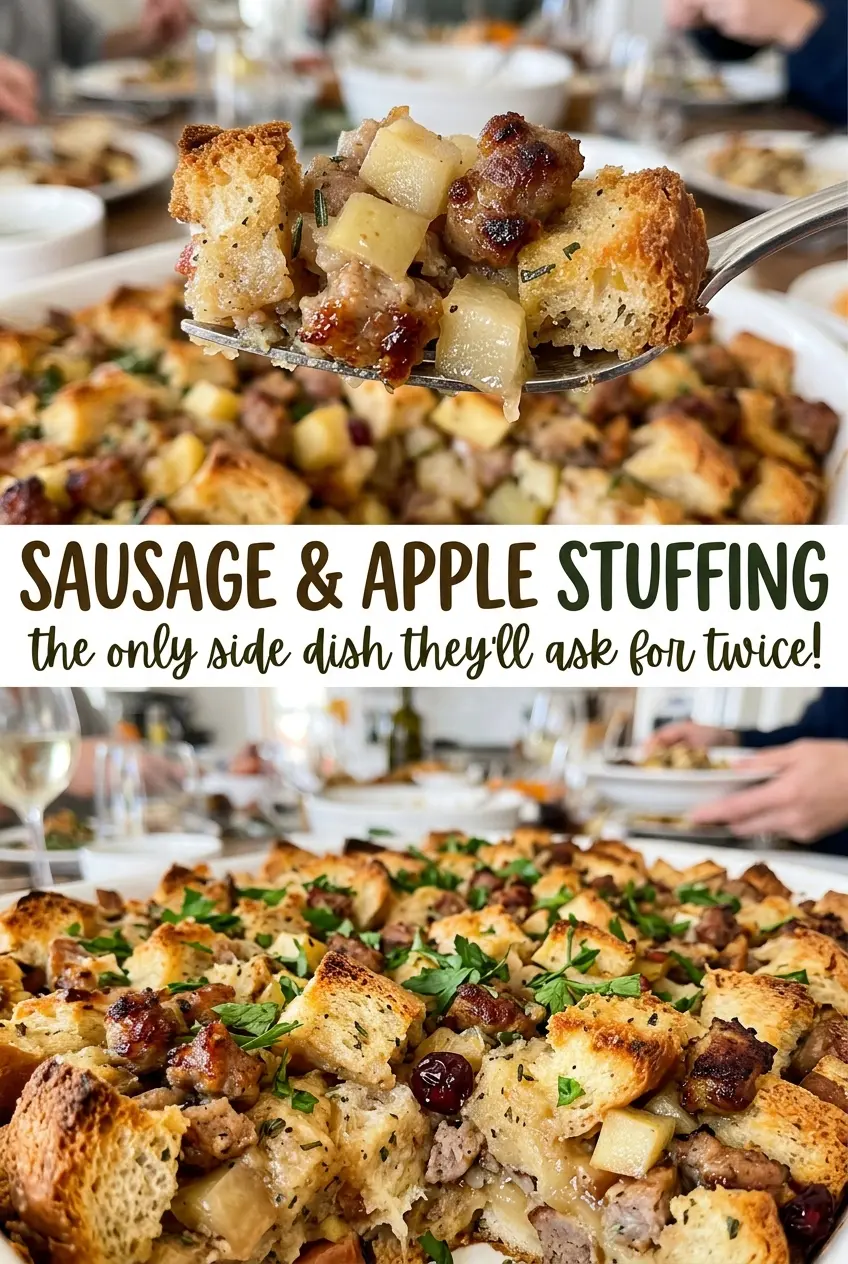
This sausage and apple stuffing balances browned pork with tender vegetables and apple, while sage and thyme give it the familiar savory flavor. The two-stage bake is what I like about this casserole version. Foil keeps the center from drying out first; uncovering the dish at the end gives the top time to crisp. You get soft, savory stuffing underneath with a browned crust on top.
Kitchen Note
The apple should be just tender, not collapsing into the onion and celery. Give it about 3 minutes in the skillet, then stop while the pieces still hold their shape.
Save this sausage and apple stuffing for its browned, crisp top and savory pork-and-apple center.
Why the Covered-Then-Uncovered Bake Gives You Two Textures
A stuffing casserole has a tricky job: the center needs time to set, but the top shouldn’t spend the whole bake drying out. Covering the dish tightly for the first part of baking traps moisture around the bread cubes. That gives the broth-and-egg mixture time to bind everything without leaving the exposed surface hard before the middle is hot.
Then the foil comes off. The surface dries and browns while the center finishes cooking, so the top turns crisp instead of staying soft under a lid. Keep the foil snug for the covered portion, and don’t skip the uncovered finish just because the edges look done. A browned top and a center that has reached temperature are both part of the result; the edges alone won’t tell you whether the middle is ready.
This sequence also explains why I use a 9×13-inch baking dish rather than piling the mixture into a smaller, deeper pan. The stuffing has room to spread, giving the heat and uncovered finish access to more surface area. Each serving gets some crisp top and some tender middle.
The Bread Cubes and Eggs Are What Make This More Than Sausage and Vegetables
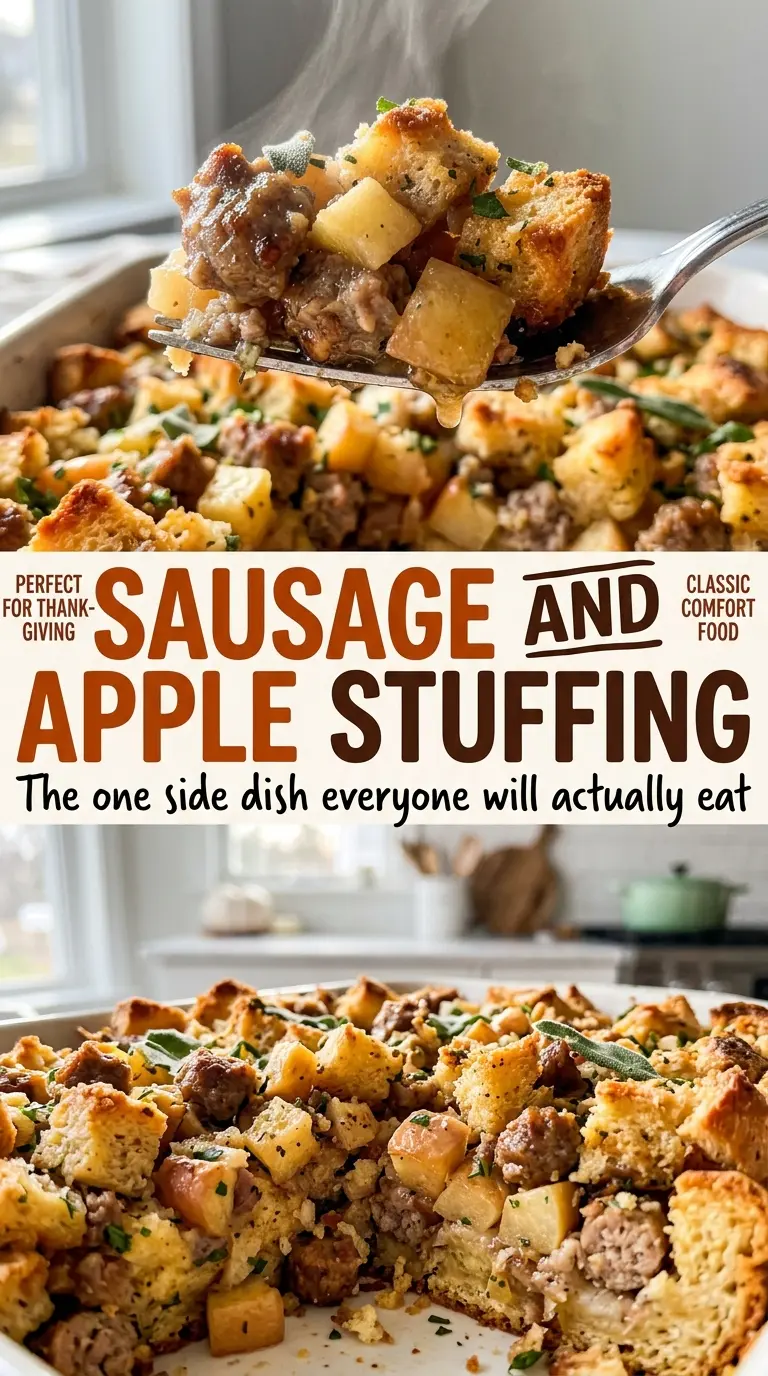
- Plain dried bread cubes — Their dry surface can absorb the broth without starting out waterlogged. Choose unseasoned cubes so the sage, thyme, sausage, and salt stay in balance. Fresh, soft bread isn’t an equal swap here unless it’s dried first.
- Bulk pork sausage — Sausage brings seasoning and browned, savory bits throughout the casserole. A familiar grocery-store bulk sausage works well; there’s no need to seek out a specialty brand. The slotted spoon lets the meat go into the bowl while leaving some drippings behind for the vegetables.
- Apple, onion, and celery — These give the stuffing its contrast: a little sweetness from the apple and a tender vegetable base. Dice them into pieces that are small enough to toss evenly with the bread. A firm apple holds its shape better as it cooks than a soft, mealy one.
- Sage and thyme — Dried herbs season the whole casserole without adding extra moisture. Check that your dried herbs still smell fragrant when you rub a little between your fingers; herbs that have been open for ages tend to taste faint.
- Chicken broth and eggs — The broth moistens the cubes, while the eggs help the mixture set as it bakes. Whisk them together before pouring so the egg is distributed through the liquid rather than landing in one spot.
Build the Stuffing in the Skillet, Then Let the Oven Finish It
Brown the Sausage Without Losing the Drippings
Heat a 12-inch skillet over medium heat and cook the bulk pork sausage, breaking it into small pieces as it browns. Look for browned crumbles with no pink remaining; the sausage should reach 160°F. Transfer it with a slotted spoon to a large bowl, leaving about 1 tablespoon of drippings in the skillet. Those drippings give the onion and celery a savory start without making the finished stuffing greasy.
Soften the Vegetables Before Adding the Apple
Add the butter, diced onion, and diced celery to the skillet. Cook, stirring occasionally, for 6 to 8 minutes, until the vegetables have softened rather than browned hard at the edges. Stir in the diced apple, sage, thyme, salt, and pepper, then cook for about 3 minutes. The apple should be just tender; if it turns mushy in the skillet, it will lose its shape in the casserole.
Toss Until the Bread Is Evenly Moistened
Add the dried bread cubes to the bowl with the sausage, then scrape in all of the vegetable mixture. Toss so the sausage, apple, onion, and celery are distributed before adding liquid. In a medium bowl, whisk the chicken broth and eggs together, pour them over the bread mixture, and toss again until the cubes are evenly moistened. Check the bottom of the bowl as you toss; dry cubes often hide there.
Bake Covered First, Then Crisp the Top
Heat the oven to 350°F and coat a 9×13-inch baking dish with nonstick cooking spray. Transfer the mixture to the dish, cover it tightly with foil, and bake for 30 minutes. Uncover and continue baking for 20 to 25 minutes, until the top is crisp and the center reaches 165°F. Let the casserole rest for 10 minutes before serving so it settles and is easier to scoop.
Simple Swaps That Keep the Stuffing’s Texture in Balance
Use gluten-free dried bread cubes
Replace the plain dried bread cubes with the same amount of gluten-free dried bread cubes. Choose a plain variety rather than a heavily seasoned one, and check the texture as you toss; different brands absorb liquid at different rates. The flavor stays close to the original, though the finished stuffing may be a little more delicate.
Choose hot bulk pork sausage for more heat
Swap the mild bulk pork sausage for hot bulk pork sausage and keep the rest of the ingredients the same. The peppery sausage adds warmth throughout the casserole, so the apple and herbs won’t taste quite as sweet and gentle. Brown it in the same way, breaking it into small pieces as it cooks.
Pick a tart apple for a sharper contrast
A firm tart apple, such as Granny Smith, works in place of the apple called for here. It gives each bite a brighter edge against the rich sausage and butter, while still holding its shape through the skillet cooking and bake. Keep it cored and diced so the pieces mix evenly into the bread.
Storage and Reheating
- Refrigerator: Store covered leftovers for 3 to 4 days. The crisp top softens as the stuffing sits, while the center stays tender.
- Freezer: Freeze cooled portions in an airtight container for up to 3 months for best quality. Thaw in the refrigerator before reheating; the bread will be softer than when freshly baked.
- Reheating: Warm covered in a 350°F oven until hot throughout, then uncover briefly if you want to bring back some crispness. A microwave is quick for a single portion, but it won’t restore the browned top.
Questions I Get Asked About This Sausage and Apple Stuffing
Sausage and Apple Stuffing
Ingredients
Equipment
Method
- Preheat the oven to 350°F.
- Coat a 9x13-inch baking dish with nonstick cooking spray.
- In a 12-inch skillet over medium heat, cook the pork sausage, breaking it into small pieces, until browned with no pink remaining and it reaches 160°F.
- Transfer the sausage to a large bowl with a slotted spoon, leaving about 1 tablespoon of drippings in the skillet.
- Add the butter, onion, and celery to the skillet and cook, stirring occasionally, until the vegetables soften, 6 to 8 minutes.
- Stir in the apple, sage, thyme, salt, and pepper and cook until the apple is just tender, about 3 minutes.
- Add the bread cubes to the bowl with the sausage, scrape in the vegetable mixture, and toss to combine.
- Whisk the broth and eggs in a medium bowl.
- Pour the broth mixture over the bread mixture and toss until evenly moistened.
- Transfer the mixture to the prepared dish and cover tightly with foil.
- Bake for 30 minutes.
- Uncover and bake until the top is crisp and the center reaches 165°F, 20 to 25 minutes.
- Rest for 10 minutes before serving.