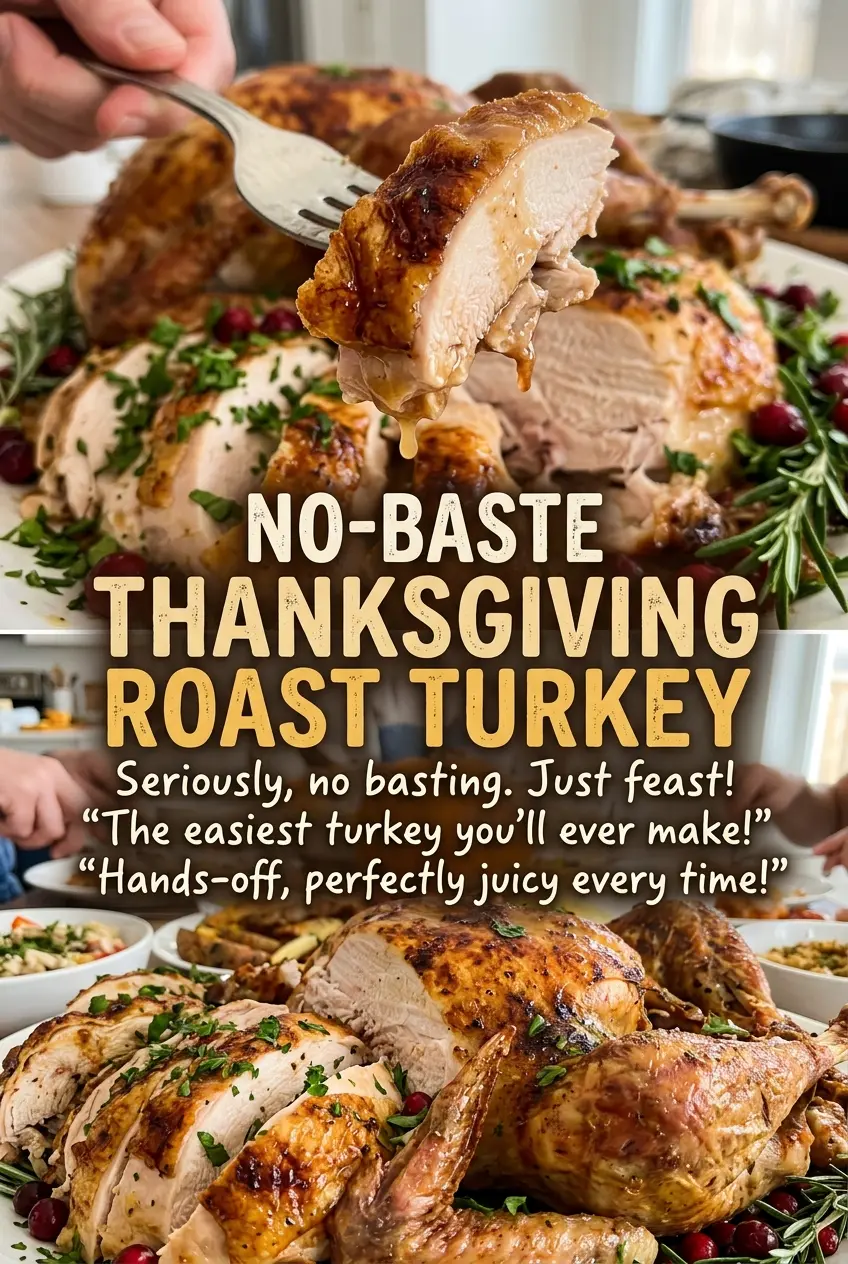
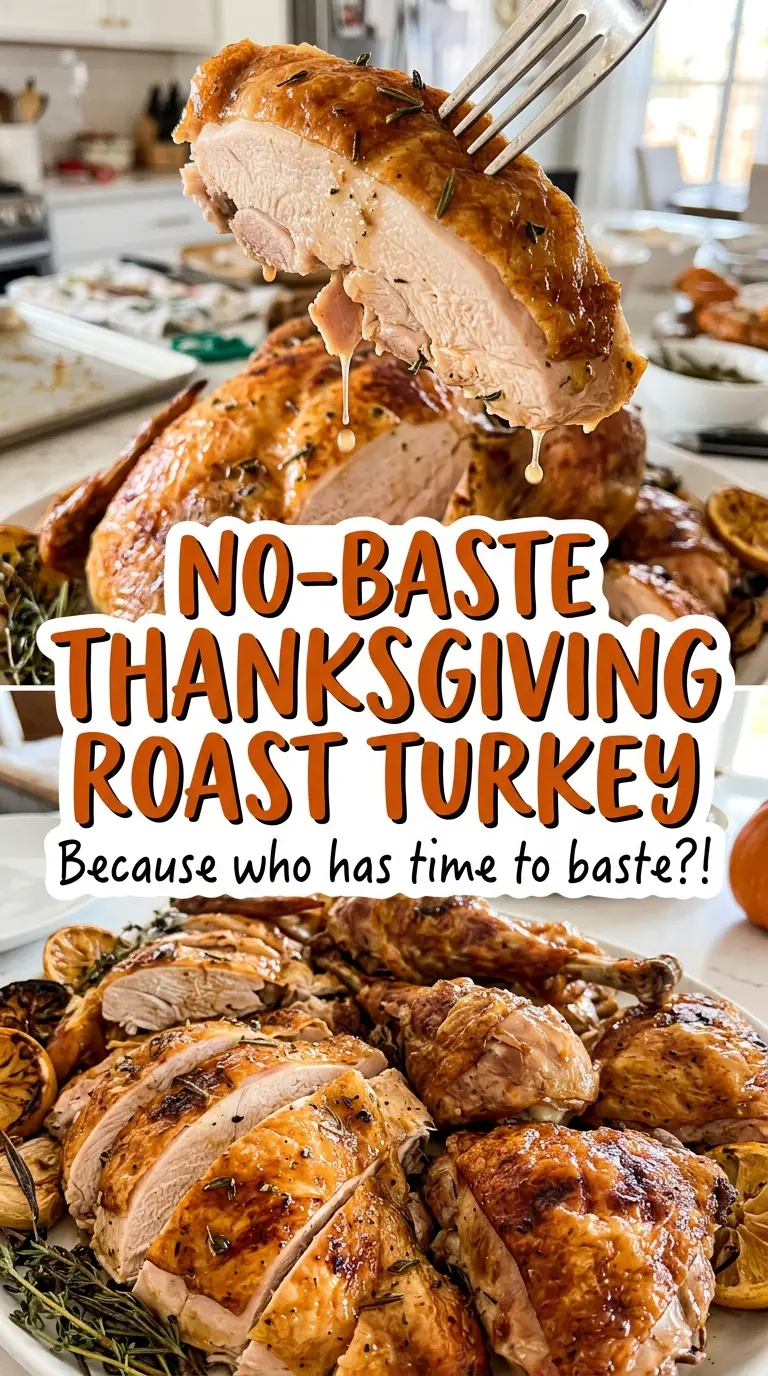
The skin is already turning golden, and the roasting pan is still sitting undisturbed in the oven. That’s the part I like most about this no-baste Thanksgiving roast turkey: once it’s in, there’s no opening the door every half hour to spoon juices over the top. The bird gets a long, steady roast, and I can use that time to finish the rest of the meal.
What makes the no-baste approach work is the prep before roasting. Salt goes over the whole turkey, under the breast skin, and inside the cavity, then the bird rests uncovered in the refrigerator for 12 to 24 hours. That gives the surface time to dry and the seasoning time to reach beyond the skin. Herb butter goes on just before roasting, so the turkey comes out with fragrant, browned skin and meat that’s seasoned throughout.
The cavity holds onion, lemon, and celery for gentle aroma, while the rack keeps the turkey lifted in the pan. It’s a straightforward roast, but those few details make the carving board worth waiting for.
Kitchen Note
Tuck the wing tips underneath before the turkey goes into the oven. They’re thin and exposed when left sticking out, so folding them close to the body helps keep them from getting ahead of the rest of the bird.
Save this no-baste Thanksgiving roast turkey for a holiday dinner with golden herb butter skin and no mid-roast basting.
Why This Turkey Can Brown Without a Single Baste
Basting sounds like the surest way to keep a turkey moist, but it doesn’t send moisture down through the skin and into the meat. It mainly wets the surface. With this method, an uncovered rest in the refrigerator dries the skin before the bird goes into the oven, giving it a better chance to brown instead of staying damp. The butter adds richness at the surface; it isn’t a reason to keep opening the oven.
There’s a second benefit to leaving the oven closed: the heat stays steady during a long roast. Every time the door opens, heat escapes, and the turkey has to keep cooking while the oven recovers. Here, the salt does the early seasoning work, and the herb butter goes on once, right before roasting. The result is a calmer roast with fewer interruptions and skin that can turn golden without being repeatedly coated in pan juices.
This approach depends on starting with an unbrined turkey. A bird that has already been salted or injected is a different starting point, and layering the measured salt on top could leave it unpleasantly salty. Check the label before you shop, especially if the package uses terms like “enhanced” or “self-basting.”
What the Turkey, Salt, and Herb Butter Each Bring
- Unbrined turkey — Start with a fully thawed bird that hasn’t been treated with added salt. A 12- to 14-pound turkey fits the roasting time here; a larger bird won’t necessarily finish on the same schedule.
- Diamond Crystal kosher salt — Its flakes are lighter and less dense than table salt, so changing salt types by volume can throw off the seasoning. Stick with the specified kind for this measured dry brine rather than making a straight volume swap.
- Unsalted butter — Softened butter spreads under the breast skin and across the outside without adding more salt than intended. Good-quality butter is pleasant here, but an everyday unsalted butter works well; it should be soft enough to mix smoothly with the herbs.
- Fresh thyme and rosemary — Their woodsy aroma stands up to the long roast and pairs naturally with the garlic. Fresh herbs give the butter a brighter, more fragrant character than dried herbs.
- Onion, lemon, and celery — These go in the cavity to lend the roasting turkey a light aromatic note. Cut the lemon into wedges and the celery into short pieces so the aromatics fit easily inside.
The Prep and Roast: From Dry-Brined Skin to Carving Board
Dry the Bird and Salt It Ahead
Pat the turkey thoroughly dry with paper towels, including inside the cavity; water left on the skin works against the dry surface you want. Sprinkle the salt evenly over the outside, inside the cavity, and beneath the breast skin. Set the turkey uncovered in the refrigerator for 12 to 24 hours. Don’t cover it—the exposed surface is part of the method.
Mix the Herb Butter While the Oven Heats
About 45 minutes before roasting, take the turkey out of the refrigerator and heat the oven to 325°F. Stir the softened butter with the black pepper, chopped thyme, chopped rosemary, and minced garlic until the mixture looks evenly flecked with herbs. If the butter is too cold to spread, it can tug at the skin rather than glide over it. Keep the mixture soft and easy to work with.
Coat the Turkey and Set Up the Pan
Rub the herb butter over the turkey and beneath the breast skin, spreading it as evenly as you can. Put the quartered onion, lemon wedges, and celery pieces into the cavity. Set the turkey breast-side up on a rack in a 16×13-inch roasting pan, then tuck the wing tips underneath. That rack-and-pan setup keeps the bird raised above the bottom of the pan as it roasts.
Roast Uncovered and Let the Thermometer Decide
Roast uncovered without basting for 3 to 3 3/4 hours. If the breast becomes deeply browned before the turkey is done, tent it loosely with foil; a loose tent shields the surface without wrapping the whole bird. Check the thickest part of the breast and the innermost thigh with a thermometer, taking care not to touch bone. The turkey is done when both spots read at least 165°F.
Rest Before You Carve
Transfer the turkey to a carving board and tent it loosely with foil. Let it rest for 30 minutes before carving so the roast has time to settle after cooking. Keep the foil loose rather than pressing it against the browned skin. Then carve and serve while the meat is warm.
Three Flavor Changes That Still Suit a No-Baste Roast
Use Sage in Place of Thyme
Swap the chopped fresh thyme for the same amount of chopped fresh sage in the herb butter. Sage gives the turkey a deeper, more savory aroma, while rosemary and garlic keep the seasoning familiar.
Make the Herb Butter Dairy-Free
Use an equal amount of unsalted, stick-style plant-based butter in place of the dairy butter. Choose one that softens and spreads like butter; softer tub spreads can be harder to work under the skin and may brown differently.
Trade the Lemon for Orange
Put orange wedges in the cavity instead of the lemon wedges. The citrus aroma will be softer and slightly sweeter, while the onion and celery stay in place.
Storage and Reheating
- Refrigerator: Refrigerate leftover turkey within 2 hours and keep it in a covered container for 3 to 4 days. The skin will lose its crispness as it chills.
- Freezer: Freeze carved turkey in airtight portions for up to 2 to 3 months for best quality. Thaw it in the refrigerator before reheating.
- Reheating: Warm sliced turkey covered in a low oven or in the microwave until steaming hot throughout. A spoonful of reserved pan juices helps keep the meat from drying; reheating uncovered for too long can make the slices tough.
Questions That Come Up Before the Turkey Goes in the Oven
No-Baste Thanksgiving Roast Turkey
Ingredients
Equipment
Method
- Pat the turkey dry with paper towels, including inside the cavity.
- Sprinkle the salt evenly over the turkey, including inside the cavity and under the breast skin.
- Refrigerate the turkey uncovered for 12 to 24 hours.
- About 45 minutes before roasting, take the turkey out of the refrigerator.
- Heat the oven to 325°F.
- Stir the butter, pepper, thyme, rosemary, and garlic together in a small bowl.
- Rub the herb butter over the turkey and under the breast skin.
- Put the onion, lemon, and celery in the cavity.
- Set the turkey breast-side up on a rack in a 16x13-inch roasting pan and tuck the wing tips underneath.
- Roast uncovered without basting for 3 to 3 3/4 hours, tenting the breast loosely with foil if it becomes deeply browned.
- Check that a thermometer reads at least 165°F in the thickest part of the breast and innermost thigh, without touching bone.
- Transfer the turkey to a carving board and tent loosely with foil.
- Rest for 30 minutes before carving.