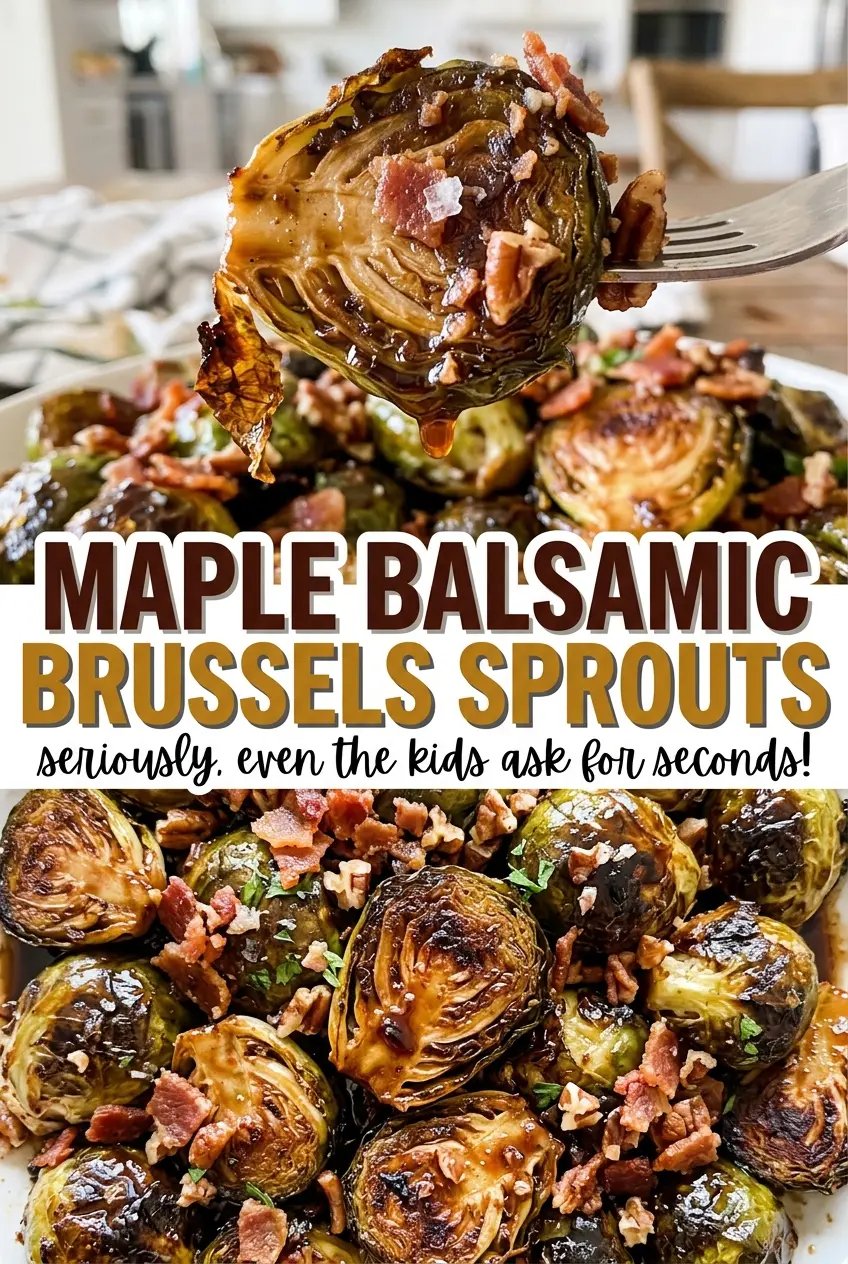
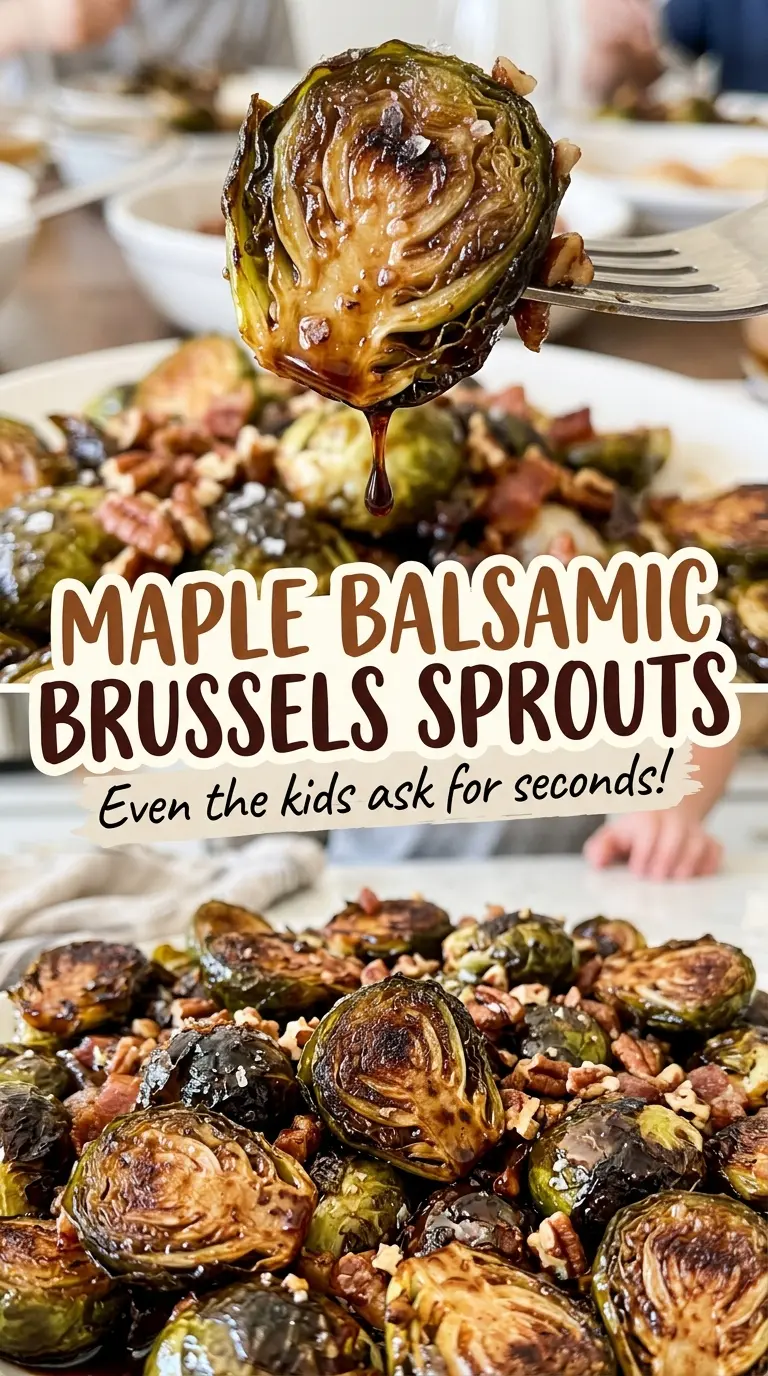
The cut faces are the first thing I check when the baking sheet comes out: they should be browned where they touched the pan, while the centers are tender enough for a fork. When they’re pale, the sprouts often taste steamed instead of roasted. Keeping them in one layer gives them room to brown, and a quick toss with maple and balsamic at the end brings the sharp, sweet finish that makes these Maple Balsamic Brussels Sprouts work.
I like this method because the glaze never has to roast alongside the vegetables. Maple syrup can scorch in a hot oven, and balsamic vinegar can turn sharp and sticky if it reduces too far. Instead, the sprouts roast simply with olive oil, salt, and pepper; the vinegar and maple get whisked together separately and added after the pan comes out.
The result is a tender center, browned edges, and a light coating that clings without hiding the sprouts’ own flavor. It’s a straightforward side dish, but the timing of that last toss makes a noticeable difference.
Kitchen Note
The finished sprouts should have a thin sheen, not a puddle of glaze in the bottom of the bowl. Keep tossing while they’re hot so the balsamic-maple mixture coats the cut sides instead of settling in one spot.
Save these Maple Balsamic Brussels Sprouts for a side with browned edges and a bright, lightly sweet glaze.
Why the Cut Side Needs to Touch the Pan for These Brussels Sprouts
Brussels sprouts brown where they make direct contact with the hot baking sheet. Setting them cut side down gives each half a broad, flat surface to roast against the pan, which builds color and a deeper, more rounded taste without needing a separate searing step. If the pieces are scattered on their rounded sides, you lose that useful contact.
Space matters just as much as orientation. A crowded pan traps moisture between the vegetables, so the sprouts soften before their edges have a chance to brown. Arrange them in one layer with a little breathing room; if the pan is packed tightly, use another rimmed baking sheet rather than piling them up. Quartering the largest sprouts helps them cook more evenly alongside the smaller halves.
Look for distinct brown patches, not blackened edges. The goal is a tender inside and a caramelized surface, not a long roast that dries out the smaller pieces while the largest ones catch. That contrast is what gives the simple balsamic glaze something savory to balance.
What the Maple and Balsamic Each Bring to the Glaze
- Brussels sprouts — Choose firm, compact sprouts without yellowing or loose outer leaves. The smaller ones tend to roast more quickly, so quarter notably large sprouts to keep the pieces closer in size. They don’t need to be fancy; fresh, firm sprouts from the regular produce section are a good fit.
- Olive oil — It helps the sprouts roast and brown rather than dry out. A standard everyday olive oil is fine here; a delicate finishing oil won’t bring much that you’ll notice under the glaze. Avocado oil works as a neutral-tasting substitute in the same amount.
- Balsamic vinegar — Its acidity keeps the maple from making the finished dish taste one-note sweet. A regular grocery-store balsamic is plenty; save an especially aged, syrupy bottle for a dish where its nuance won’t be tossed with roasted vegetables. Other vinegars will make a sharper, less rounded glaze.
- Pure maple syrup — Use real maple syrup for its clean sweetness and pourable texture. Pancake syrup is usually a different, thicker product with a more pronounced sweet flavor, so it won’t give the glaze the same balance. No specialty grade is needed.
How to Roast the Sprouts Before the Maple Goes In
Heat the oven and prepare the sprouts
Heat the oven to 425°F and line a rimmed baking sheet with parchment paper. Trim and halve the Brussels sprouts, quartering any large ones so the pieces roast at a similar pace. Keeping the cut surfaces broad and flat gives them a good place to brown once they’re on the pan.
Coat and arrange in one layer
Toss the sprouts with olive oil, kosher salt, and black pepper until the cut surfaces and outer leaves are lightly coated. Spread them cut side down across the prepared sheet. Avoid stacking or crowding the pieces, since trapped moisture works against the browning you want.
Roast until browned and fork-tender
Roast for 20 to 25 minutes, checking for browned surfaces and tenderness when pierced with a fork. The exact point within that window depends on the size of the sprouts, so use color and texture along with the clock. If a fork meets a firm center, give them a little more time; if the edges are getting too dark, take the pan out rather than leaving the smaller pieces to overcook.
Whisk and toss with the glaze
While the sprouts roast, whisk the balsamic vinegar and pure maple syrup together in a small bowl. Transfer the hot sprouts to a serving bowl when they’re done, pour the glaze over them, and toss to coat. Adding it after roasting preserves the fresh sweet-tart taste instead of cooking the syrup down on the pan.
Small Glaze Changes That Shift the Sweet-Tart Balance
A sharper, less-sweet finish
For a more pronounced vinegar tang, use 2½ tablespoons balsamic vinegar and 1 teaspoon pure maple syrup. You’ll get a lighter sweetness and a more assertive tart finish, so this version is a good fit if you prefer the sprouts’ roasted flavor to lead.
A sweeter, rounder glaze
Use 1½ tablespoons maple syrup with the same amount of balsamic vinegar for a softer sweet-tart balance. The glaze will taste sweeter and cling a little more, while the vinegar still keeps it from feeling heavy.
A lower-sugar version
Reduce the maple syrup to 1 teaspoon and keep the balsamic vinegar unchanged. The glaze will be less sweet and a little more tart, but the smaller amount still rounds off the vinegar without turning this side dish into a sugary one.
Storage and Reheating
- Refrigerator: Store leftovers in an airtight container for 3 to 4 days. The sprouts soften in the fridge, and the glaze loses some of its fresh, bright edge.
- Freezer: Freezing isn’t recommended. Thawed Brussels sprouts tend to turn soft, and the glaze won’t restore their roasted texture.
- Reheating: Spread leftovers on a baking sheet and warm them in a 375°F oven until hot. A microwave works in a pinch, but it softens the sprouts further; avoid reheating them until the glaze bubbles and darkens.
Questions That Come Up Before the Sprouts Go in the Oven
Maple Balsamic Brussels Sprouts
Ingredients
Equipment
Method
- Heat the oven to 425°F.
- Line a rimmed baking sheet with parchment paper.
- Toss the Brussels sprouts with the olive oil, kosher salt, and black pepper.
- Spread the Brussels sprouts cut side down in a single layer on the baking sheet.
- Roast for 20 to 25 minutes, until browned and tender when pierced with a fork.
- Whisk the balsamic vinegar and maple syrup together in a small bowl.
- Transfer the hot Brussels sprouts to a serving bowl.
- Pour the glaze over the Brussels sprouts.
- Toss to coat.