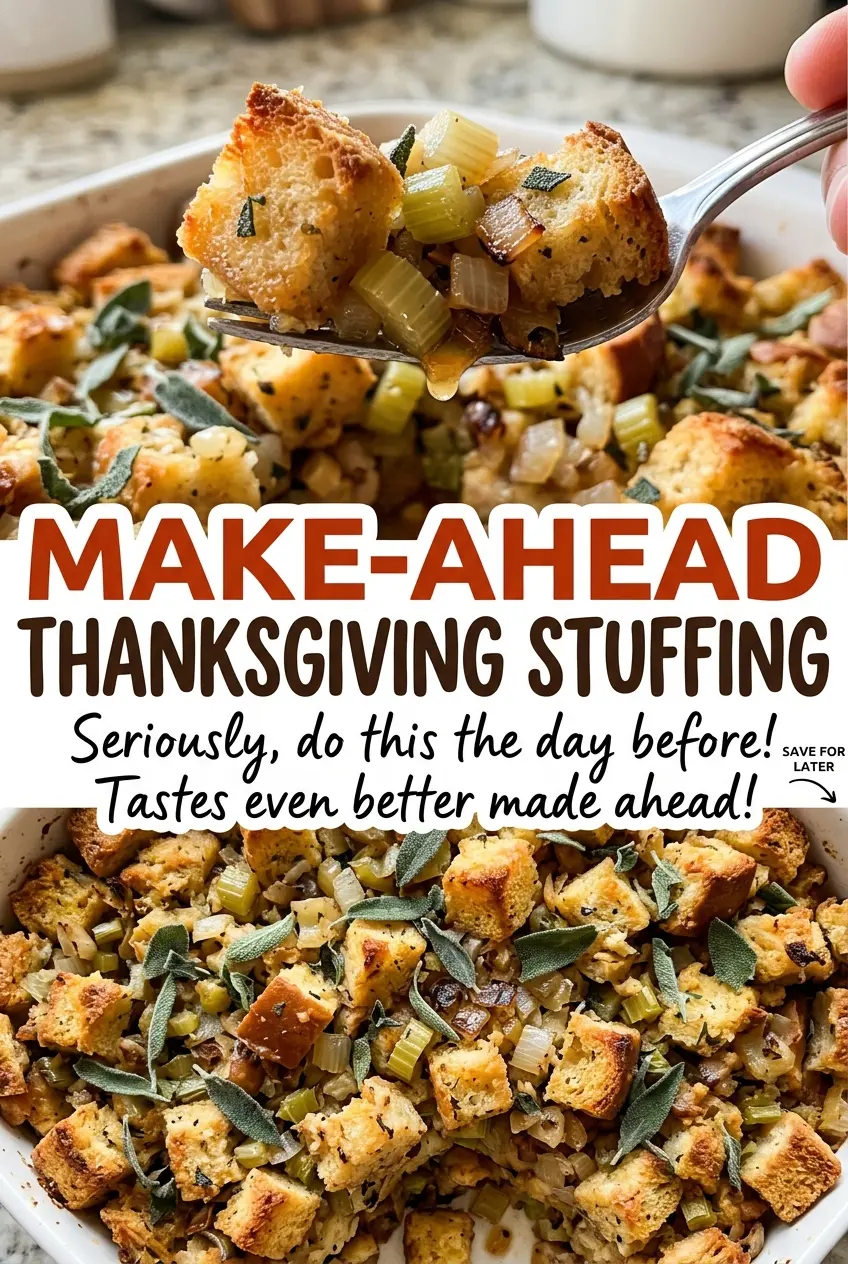
The bread cubes should feel dry and crisp before they ever meet the broth. That’s what keeps Make-Ahead Thanksgiving Stuffing from turning heavy and gummy after a night in the refrigerator. I like that the hands-on work happens early: the vegetables get softened, everything is tossed together, and the baking dish waits covered until it’s time for the oven.
Drying the bread first gives it room to take in the broth and eggs without collapsing. The butter-softened onion and celery bring savory flavor through every bite, while sage and thyme make the whole pan smell like stuffing should. After baking, the top turns golden and the center stays tender, with enough structure to scoop neatly onto the plate.
Kitchen Note
Let the onion and celery cool for the full 10 minutes before they go in with the bread. That little pause keeps the vegetables from warming the mixture before the broth and eggs are added, so everything coats the cubes evenly.
Save this make-ahead Thanksgiving stuffing for its golden top, tender center, and easy day-ahead prep.
The Drier the Bread, the Better the Stuffing Holds Its Shape
Bread that still feels soft inside is already carrying moisture, and it has less room left for the broth and eggs. Once those cubes are soaked and chilled, the center can bake up dense instead of tender. Drying them in the oven first gives the bread a firm, crisp surface and a drier interior that can absorb the savory liquid without losing its shape.
This matters especially in a make-ahead stuffing. The bread sits with the broth mixture before baking, so it needs enough structure to hold together through that rest. A sturdy loaf also gives you distinct, soft cubes after baking rather than a uniform, bread-pudding-like texture.
Think of the first oven time as setting up the texture, not browning the bread for serving. You’re looking for cubes that are crisp and dry all the way through, not deeply toasted. Once they reach that point, they can take on the broth, butter, and seasonings without turning to paste.
The Bread and Broth Choices That Set the Texture
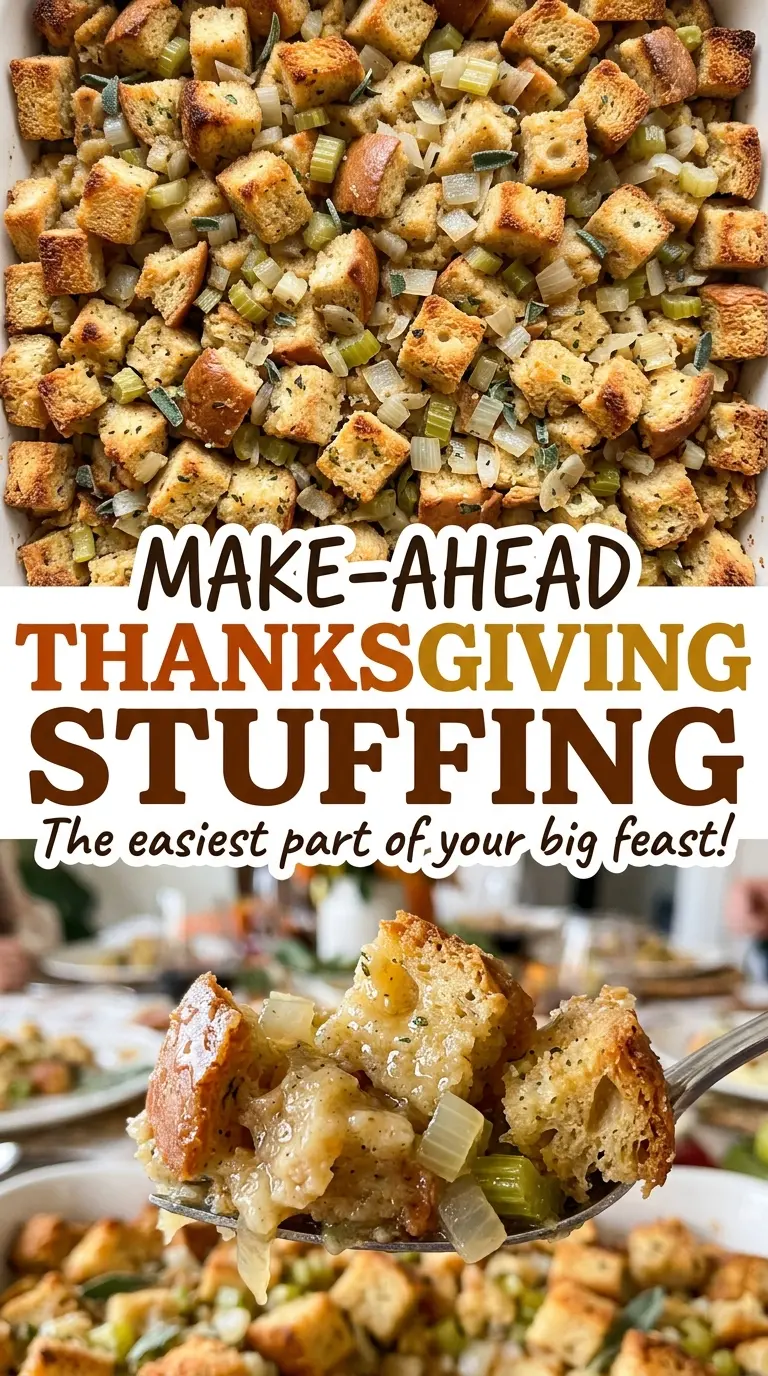
- Sturdy white bread — A loaf with a substantial crumb stays in cubes when it absorbs the egg-and-broth mixture. Fresh bread works because the oven dries it; cut the pieces evenly so they dry at the same rate. There’s no need for an expensive loaf here—the drying step does the important work.
- Unsalted butter — Butter carries the onion, celery, and dried herbs through the stuffing, and unsalted butter lets the measured kosher salt stay in control. A standard grocery-store butter is fine; use it melted so the vegetables soften evenly in the skillet.
- Yellow onion and celery — These build the savory base and provide little tender bites among the bread. Choose firm vegetables and chop them finely, as larger pieces take longer to soften and can stand out in the finished texture.
- Dried sage and thyme — Dried herbs give the stuffing its familiar warm, earthy flavor and disperse easily through the butter-softened vegetables. Check that they still smell fragrant when crumbled; herbs that have been open for ages taste muted.
- Low-sodium chicken broth and large eggs — The broth moistens the bread, while the eggs help bind the mixture as it bakes. Low-sodium broth keeps the seasoning from getting too salty; choose a familiar grocery-store brand rather than a heavily seasoned broth. Use large eggs so the mixture has the intended binding strength.
From Crisp Cubes to a Golden, Set Center
Dry the Bread Until Crisp
Heat the oven to 300°F and spread the half-inch bread cubes on a large rimmed baking sheet. Bake for 35–45 minutes, tossing once, until the cubes feel dry and crisp rather than soft in the middle. If they still bend or feel damp, they need more time in the oven. Let them cool before moving on so they stay crisp until the liquid is added.
Soften the Onion and Celery in Butter
Melt the butter in a 12-inch skillet over medium heat, then add the finely chopped onion and celery. Cook for 8–10 minutes, stirring occasionally, until the vegetables have softened. You want them tender, not browned; if the edges are getting dark, lower the heat. Stir in the sage, thyme, salt, and pepper, then take the skillet off the heat.
Moisten the Bread Evenly
Put the cooled bread cubes in a large bowl and add the cooled vegetables. Whisk the broth and eggs together before pouring them over the bread, then toss until there are no dry pockets hiding underneath. The cubes should look evenly moistened, not coated in a puddle of liquid. Transfer the mixture to a 9×13-inch baking dish coated with nonstick cooking spray.
Bake Covered, Then Brown the Top
Cover the dish tightly and refrigerate for up to 24 hours. When you’re ready to bake, heat the oven to 350°F and bake the chilled stuffing covered for 45–55 minutes. Uncover and bake for 15–20 minutes, until the center reaches 165°F and the top is golden. Let it rest for 10 minutes before serving so the stuffing settles and scoops cleanly.
Three Swaps for Different Tables and Tastes
Make It Gluten-Free
Replace the sturdy white bread with sturdy gluten-free white bread and cut it into the same half-inch cubes. Dry the cubes until crisp before mixing; gluten-free loaves can have a more delicate crumb, so toss gently once the broth and eggs go in. The finished stuffing may be a little less springy, but it still has the same savory, herb-seasoned center.
Make a Vegetarian Pan
Use 3 cups of low-sodium vegetable broth in place of the chicken broth. It keeps the bread moist and the texture intact, with a lighter savory flavor and no poultry taste. Keep the rest of the ingredients and method the same.
Give the Herbs a Woodsy Twist
Use 1 teaspoon dried rosemary in place of the dried thyme. Rosemary brings a piney, more pronounced herbal note alongside the sage, so this version tastes a little bolder without changing the texture or baking method.
Storage and Reheating
- Refrigerator: Store baked leftovers in an airtight container for 3–4 days. The bread softens as it sits, but the flavor stays savory.
- Freezer: Freeze cooled portions in airtight packaging for up to 2 months for best quality. Thaw overnight in the refrigerator before reheating.
- Reheating: Cover and warm in a 350°F oven until steaming hot throughout; uncover near the end if you want to crisp the top again. Leaving it uncovered the whole time can dry the bread before the center warms.
The Questions That Come Up Before the Stuffing Goes in the Oven
Make-Ahead Thanksgiving Stuffing
Ingredients
Equipment
Method
- Heat the oven to 300°F.
- Spread the bread cubes on a large rimmed baking sheet.
- Bake for 35–45 minutes, tossing once, until dry and crisp, then let cool.
- Melt the butter in a 12-inch skillet over medium heat.
- Add the onion and celery and cook for 8–10 minutes, stirring occasionally, until softened.
- Stir the sage, thyme, salt, and pepper into the skillet.
- Remove the skillet from the heat and let the vegetables cool for 10 minutes.
- Put the bread cubes in a large bowl and add the cooled vegetables.
- Whisk the broth and eggs together.
- Pour the broth mixture over the bread and toss until evenly moistened.
- Coat a 9x13-inch baking dish with nonstick cooking spray.
- Transfer the stuffing to the dish and cover tightly.
- Refrigerate for up to 24 hours.
- Heat the oven to 350°F.
- Bake the covered, chilled stuffing for 45–55 minutes.
- Uncover and bake for 15–20 minutes, until the center reaches 165°F and the top is golden.
- Let the stuffing rest for 10 minutes before serving.