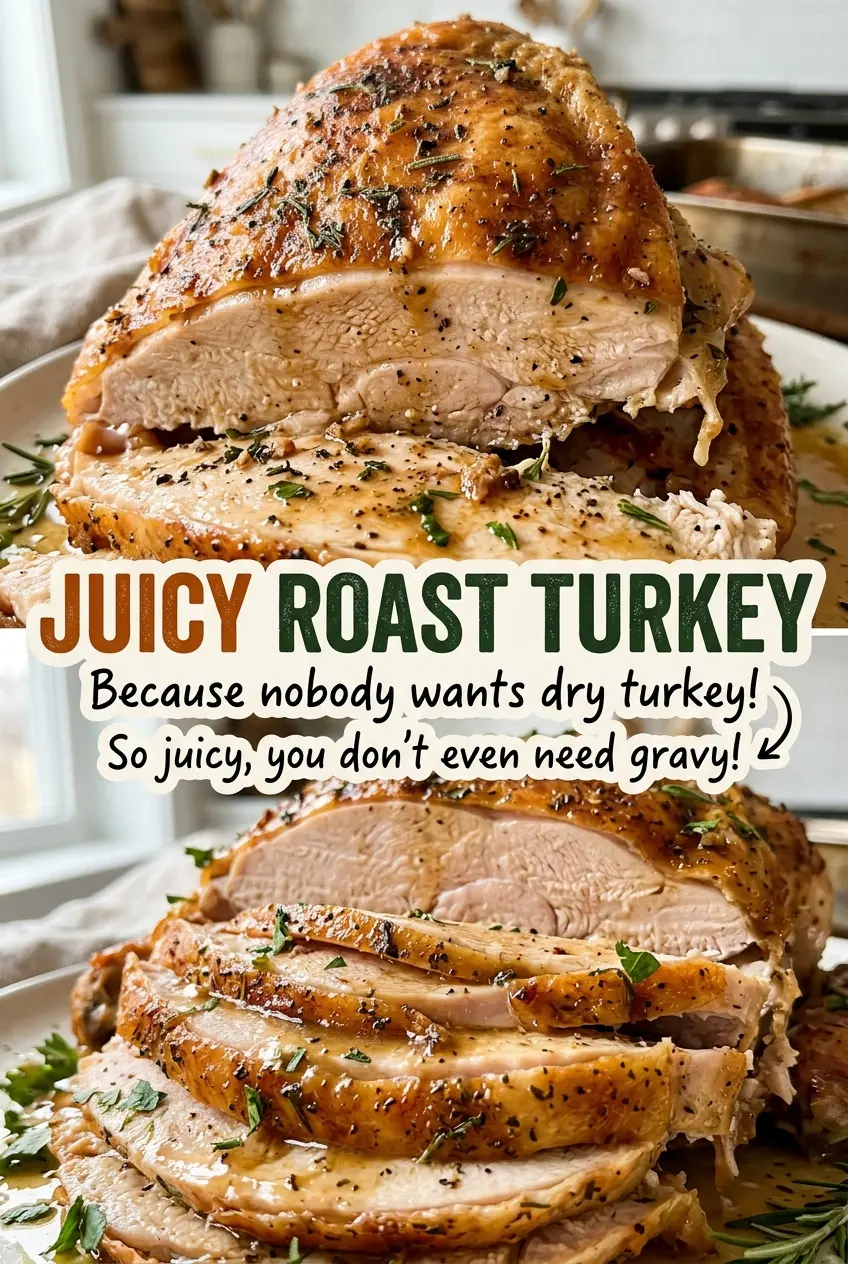
The skin is the first clue when a roast turkey comes out of the oven: if it’s dry and evenly browned, you’re already off to a good start. For this Juicy Roast Turkey, I salt the bird ahead and leave it uncovered in the refrigerator, then roast it with sage butter and a little chicken broth in the pan. That advance step takes planning, but not much hands-on time.
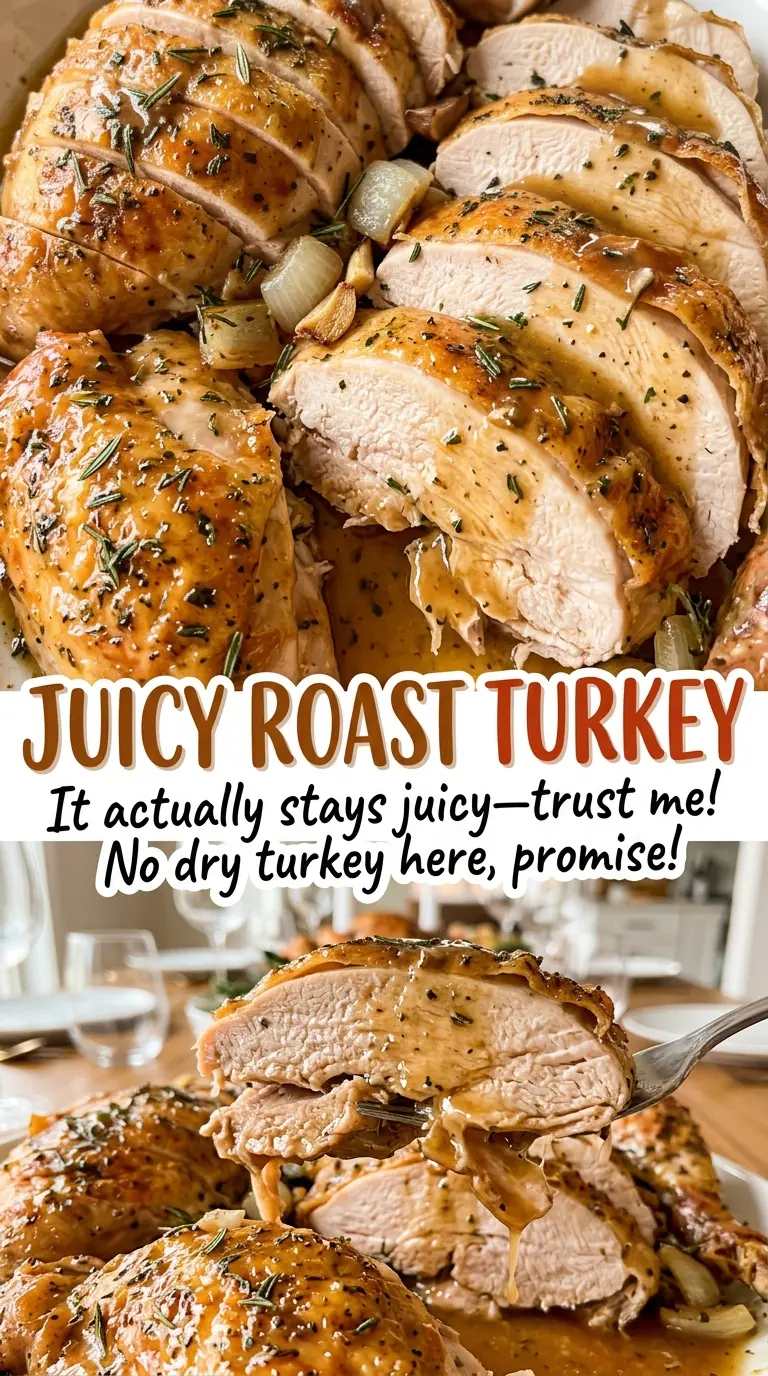
Softened butter goes both under the breast skin and over the outside, so the sage and pepper are spread across the bird instead of sitting in one spot. The turkey roasts breast side up at a steady 325°F, and a thermometer—not the clock alone—tells you when both the breast and thigh are ready. After a proper rest, the meat carves cleanly and stays moist, with golden skin and a gentle sage aroma.
Kitchen Note
Keep the lemon, onion, garlic, and thyme in the cavity loose rather than packing them tightly. They’re there to perfume the roast, not to turn the bird into a stuffed turkey.
Save this Juicy Roast Turkey for its sage butter, golden skin, and make-ahead dry brine.
The Uncovered Fridge Rest Is What Sets This Turkey Apart
Salting the turkey ahead does more than season the outside. As it sits, the salt draws a little moisture to the surface, dissolves into it, and then works back into the meat. That gives the seasoning time to spread instead of leaving the skin tasting salty while the center stays bland. The uncovered rest also lets the outside dry. A damp surface has to shed moisture before it can brown, so starting with drier skin gives the oven a better chance to color it.
Keep the bird breast side up on a rimmed tray, uncovered, for the full 12 to 24 hours. Refrigerate it at 40°F or below, and don’t rinse it before roasting; rinsing can spread raw poultry juices around the sink without improving the turkey. Patting it dry before the salt goes on, then again before the butter, is enough. This is a dry brine, not a soak, and the payoff is seasoning that reaches beyond the surface with less wetness on the skin.
Why the Sage Butter and Low-Sodium Broth Matter
- Whole turkey — A fully thawed bird in the listed size range roasts within the timing given and gives the thermometer a fair reading. Remove the giblets and neck before salting so the cavity is ready for the aromatics.
- Morton kosher salt — The salt seasons the meat during the refrigerator rest. Crystal size varies among salt brands, so the specified type matters when measuring by volume.
- Unsalted butter — Softened butter blends easily with the pepper and sage, then spreads under the skin and across the outside. Unsalted butter also lets the measured salt do the seasoning.
- Fresh sage and black pepper — Chopped fresh sage gives the butter its woodsy aroma, while black pepper adds a mild bite. Fresh sage has a brighter, more distinct scent than dried herbs.
- Lemon, onion, garlic, and thyme — These aromatics add fragrance inside the cavity as the turkey roasts. Use fresh produce that feels firm; the lemon’s peel and garlic’s cut surface release aroma as they warm.
- Low-sodium chicken broth — The broth sits beneath the roasting rack and catches the turkey drippings. Low-sodium broth keeps the pan liquid from becoming overly salty as it concentrates during roasting.
Roast at 325°F Until Both Temperature Checks Are Right
Salt the Bird and Let the Surface Dry
Pat the thawed turkey dry, then rub the kosher salt over the skin and inside the cavity. Set it breast side up on a rimmed tray and refrigerate it uncovered for 12 to 24 hours. The skin should feel dry to the touch when it’s ready to roast, rather than slick with moisture. If it still feels damp, pat it dry again before adding the butter.
Mix the Butter and Season the Cavity
Set the oven rack in the lower third and preheat the oven to 325°F. Stir the softened butter with the black pepper and chopped sage until the mixture is even. Pat the turkey dry again, gently loosen the skin over the breast, and spread about half the butter underneath; rub the rest over the outside. Put the lemon, onion, garlic, and thyme in the cavity.
Set the Turkey Above the Broth
Pour the chicken broth into a roasting pan and set a roasting rack in the pan. Place the turkey breast side up on the rack, keeping it above the liquid rather than sitting in it. The rack supports the bird and lets the heat circulate around the outside. Check that the pan is stable before sliding it into the oven.
Roast, Check Both Areas, and Rest
Roast uncovered for 3 to 3 3/4 hours. If the breast becomes deeply browned before the turkey is ready, tent the breast loosely with foil. Check the thickest part of the breast and the innermost part of the thigh with a thermometer, keeping the tip away from bone; both should read 165°F. Transfer the turkey to a cutting board and let it rest for 30 minutes before carving.
Three Small Changes for Different Tables
A Gluten-Free Pan
Use a low-sodium chicken broth labeled gluten-free in place of the broth. The turkey keeps the same savory pan base, while the broth choice suits a gluten-free table.
Leave Out the Sage
Skip the chopped sage in the butter and keep the black pepper. The butter still coats the turkey, but the roast tastes simpler and less herbal.
A Milder, Less-Citrusy Cavity
Leave out the lemon and keep the onion, garlic, and thyme. You’ll lose the bright citrus aroma and get a more savory scent from the cavity aromatics.
Storage and Reheating
- Refrigerator: Refrigerate carved turkey in shallow airtight containers within 2 hours; it keeps for 3 to 4 days. The skin softens after storage.
- Freezer: Freeze carved portions in airtight freezer-safe packaging for 2 to 6 months for best quality. Thaw them in the refrigerator before reheating.
- Reheating: Warm covered slices with a little pan broth in the oven or microwave until steaming hot, reaching 165°F. Leaving the slices uncovered for too long dries them out.
The Questions That Come Up Before the Turkey Goes in the Oven
Juicy Roast Turkey
Ingredients
Equipment
Method
- Pat the turkey dry and rub the salt over the skin and inside the cavity, then set it breast side up on a rimmed tray and refrigerate uncovered for 12 to 24 hours.
- Set an oven rack to the lower third of the oven and preheat the oven to 325°F.
- Stir the softened butter, black pepper, and chopped sage together in a small bowl.
- Pat the turkey dry again and gently loosen the skin over the breast.
- Spread about half the butter mixture under the skin and the rest over the outside.
- Place the lemon, onion, garlic, and thyme sprigs loosely in the cavity.
- Pour the chicken broth into a roasting pan, set a roasting rack in the pan, and place the turkey breast side up on the rack.
- Roast uncovered for 3 to 3 3/4 hours, tenting the breast loosely with foil if it becomes deeply browned, until a thermometer reads 165°F in the thickest part of the breast and the innermost part of the thigh without touching bone.
- Transfer the turkey to a cutting board and rest for 30 minutes before carving.