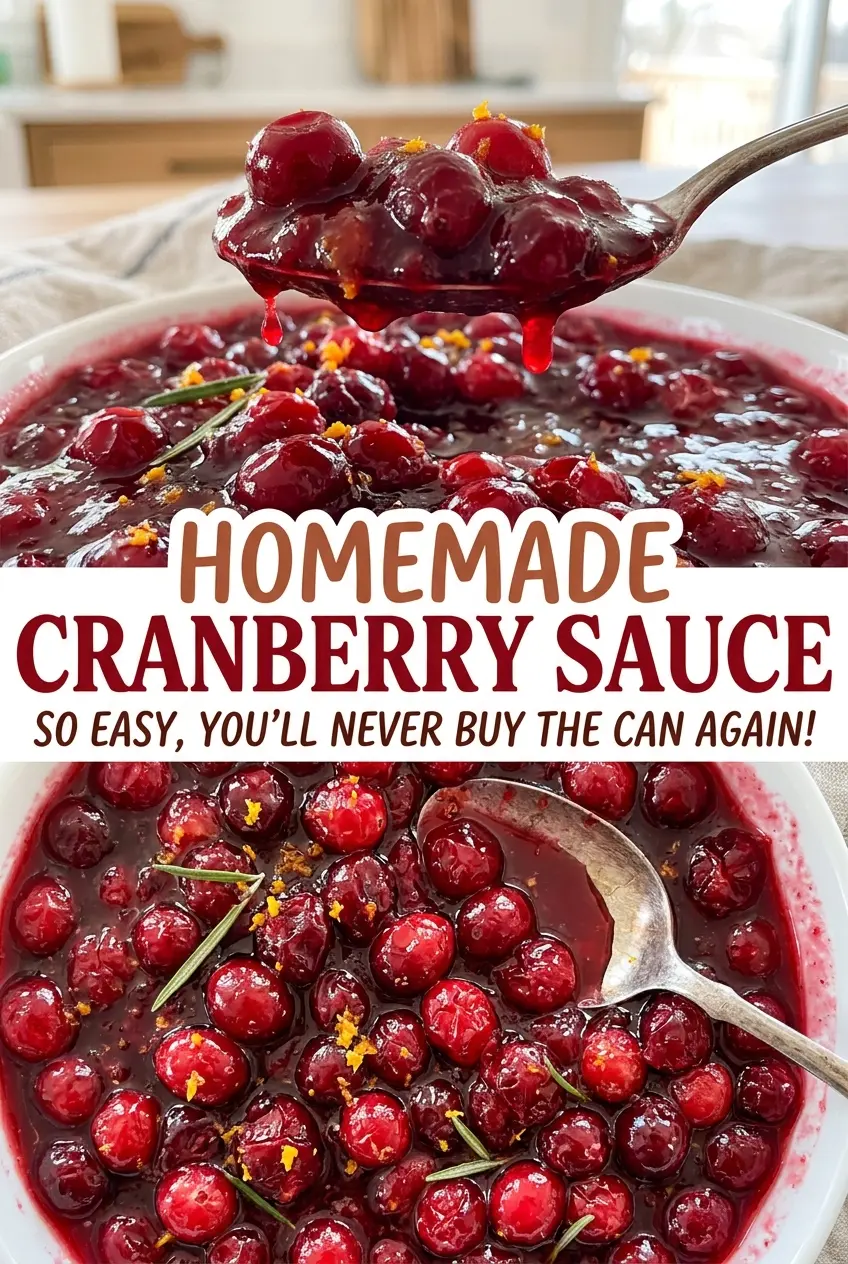
When the cranberries first hit the pot, they bob in a thin syrup and the whole thing looks more like fruit floating in water than sauce. Then the skins begin to pop, the liquid turns ruby-colored, and the berries soften into something you can spoon. I make this homemade cranberry sauce when I want that tart-sweet side without opening a can, and one batch serves eight from a single saucepan.
The part that changed how I judge it is what happens after the heat is off. The sauce is still loose when it first comes off the stove, but it thickens as it cools. Dissolving the sugar in water first also gives the cranberries an even syrup to cook in. The finished sauce keeps some berry texture and has enough tartness to balance a rich meal.
Kitchen Note
Pick through the cranberries while they’re still dry, before rinsing them. A stray stem or soft berry is much easier to spot before everything is bubbling in the saucepan.
Save this homemade cranberry sauce for a tart, ruby-red side that comes together in one saucepan and thickens as it cools.
Why the Sugar Goes Into the Water Before the Cranberries
It’s worth giving the sugar its own moment in the saucepan. Granulated sugar dissolves into the water before the cranberries release their juice, so the berries cook in a smooth syrup rather than sharing the pot with undissolved crystals. Stir as the mixture heats and watch for the grains to disappear; a clear, even syrup is the starting point for a balanced sauce.
This order also makes the texture easier to read. Once cranberries are in the pan, their skins split and their juices color the syrup, so it’s harder to tell whether a little graininess came from sugar that never dissolved. The berries bring their own tartness and natural pectin, so the sauce doesn’t need to become a firm jelly on the stove. It should start to thicken while simmering, then continue to set as it cools. Most berries will burst, but the sauce can still have a few pieces of fruit rather than turning completely smooth.
The Cranberries Bring the Tartness and the Structure
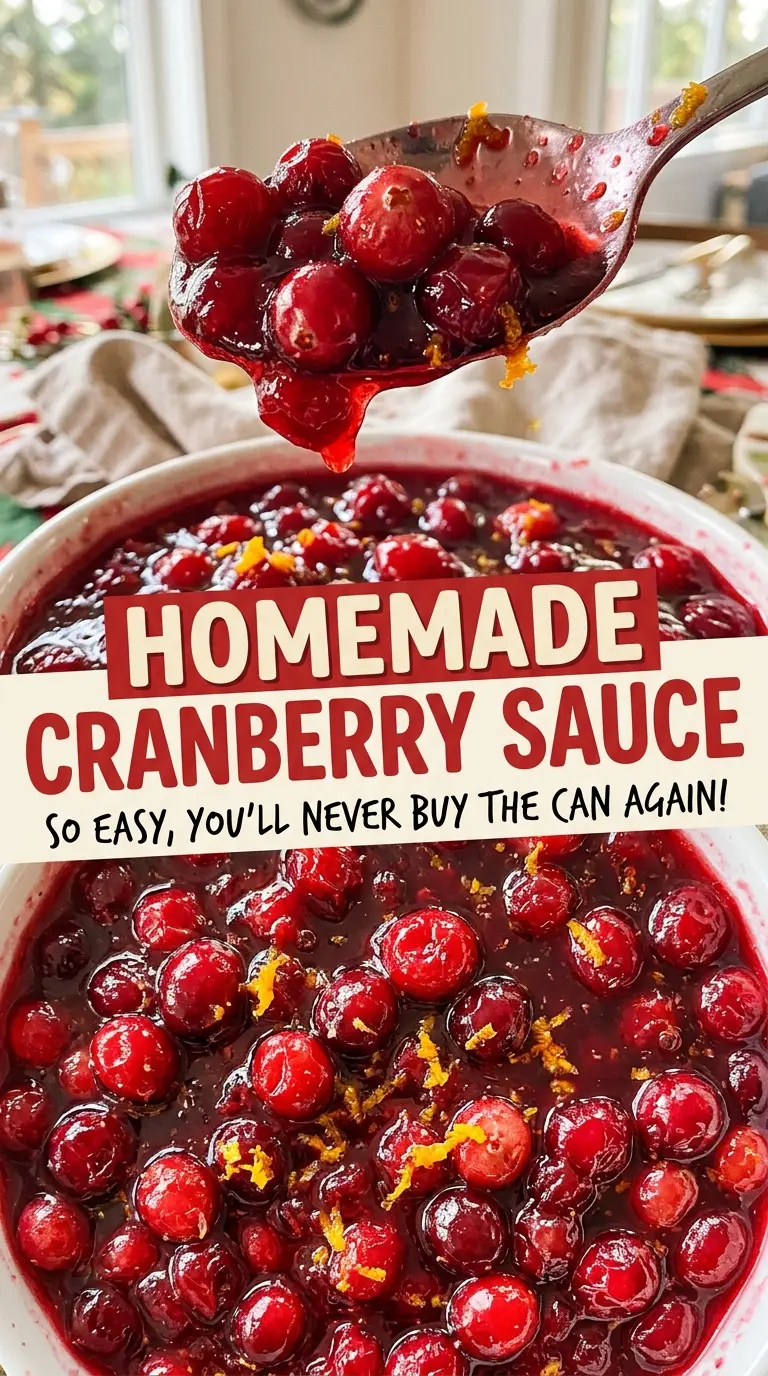
- Cranberries — Fresh and frozen berries both work here; choose berries without visible mold or a mushy, deteriorating texture. Pick through and rinse them before cooking. Frozen cranberries are a useful option when fresh ones aren’t in good shape, and either choice brings the sharp flavor and natural pectin that help this sauce thicken. There isn’t another berry that reproduces the same tartness and familiar cranberry character in this simple formula.
- Granulated sugar — It sweetens the berries and dissolves cleanly into the water, giving the sauce its syrupy base. A one-to-one volume swap with light brown sugar works if you want a deeper, molasses-like note and a darker color; the cranberry taste will be less bright. There’s no need to seek out a specialty sugar for the original version.
- Water — Water gives the sugar a liquid in which to dissolve before the fruit goes in, without adding another flavor. Ordinary tap water is fine if it tastes good to drink. Keeping it plain lets the cranberries stay at the center of the sauce.
From Clear Syrup to Spoonable Cranberry Sauce
Dissolve the Sugar in the Water
Combine the sugar and water in a 2-quart saucepan over medium-high heat. Stir as the mixture comes to a boil, which takes about 3 to 5 minutes, and continue until the sugar dissolves. The liquid should look clear rather than cloudy with visible crystals. Don’t rush past that cue; the syrup is the base the cranberries will cook in.
Simmer Until Most of the Berries Burst
Stir in the cranberries and bring the mixture back to a boil. Reduce the heat to medium-low and simmer for 10 to 12 minutes, stirring occasionally. You’ll hear berries pop as their skins split, and the liquid will become red and thicker around the fruit. Stop when most cranberries have burst and the sauce is beginning to thicken; it doesn’t need to look fully set in the pan.
Let the Sauce Set as It Cools
Remove the saucepan from the heat and let the sauce cool for at least 30 minutes. The berries and syrup will look looser while hot than they will once cooled, so don’t keep cooking in an attempt to get a finished, chilled texture over the burner. As it cools, the sauce thickens into a spoonable consistency. Transfer it to a serving dish once it’s no longer hot, or cool it in the saucepan.
Three Small Changes That Shift the Sauce
Add a fresh orange note
Stir finely grated zest from one orange into the sauce after taking it off the heat. The citrus aroma brightens the cranberry flavor without adding the extra liquid that orange juice would bring.
Give it a gentle cinnamon warmth
Add one cinnamon stick when the cranberries go into the saucepan, then remove it before serving. It lends a soft spice note without hiding the fruit’s tartness; ground cinnamon is harder to remove and can make the sauce look cloudy.
Make a less-sweet batch
Use 3/4 cup granulated sugar instead of the full cup for a sharper, less sweet sauce. It will have a little less syrupy body, but the cranberries will still soften and help the mixture thicken.
Make-Ahead and Holding
- Refrigerator: Store covered in an airtight container and use within 3 to 4 days. The sauce will be firmer when cold.
- Freezer: Freeze in an airtight, freezer-safe container for up to 2 to 3 months. Thaw it in the refrigerator before serving.
- Serving: Keep the sauce chilled until serving. Discard it if it has been at room temperature for more than 2 hours, or more than 1 hour when the temperature is above 90°F.
Cranberry Sauce Questions That Come Up at the Stove
Homemade Cranberry Sauce
Ingredients
Equipment
Method
- Combine the sugar and water in a 2-quart saucepan and bring to a boil over medium-high heat, stirring until the sugar dissolves, about 3 to 5 minutes.
- Stir in the cranberries and return the mixture to a boil, then reduce the heat to medium-low and simmer for 10 to 12 minutes, stirring occasionally, until most of the cranberries have burst and the sauce begins to thicken.
- Remove the pan from the heat and let the sauce cool for at least 30 minutes; it will thicken as it cools.