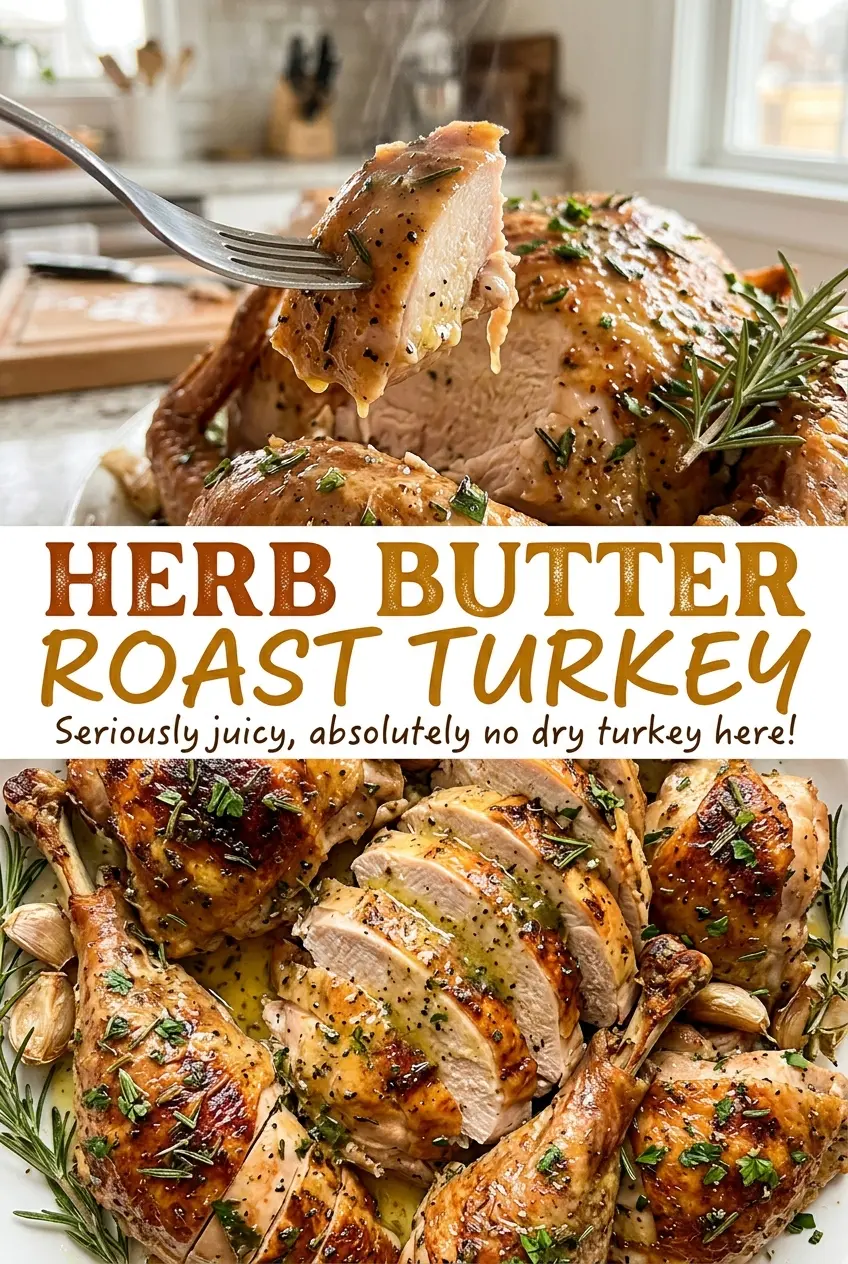
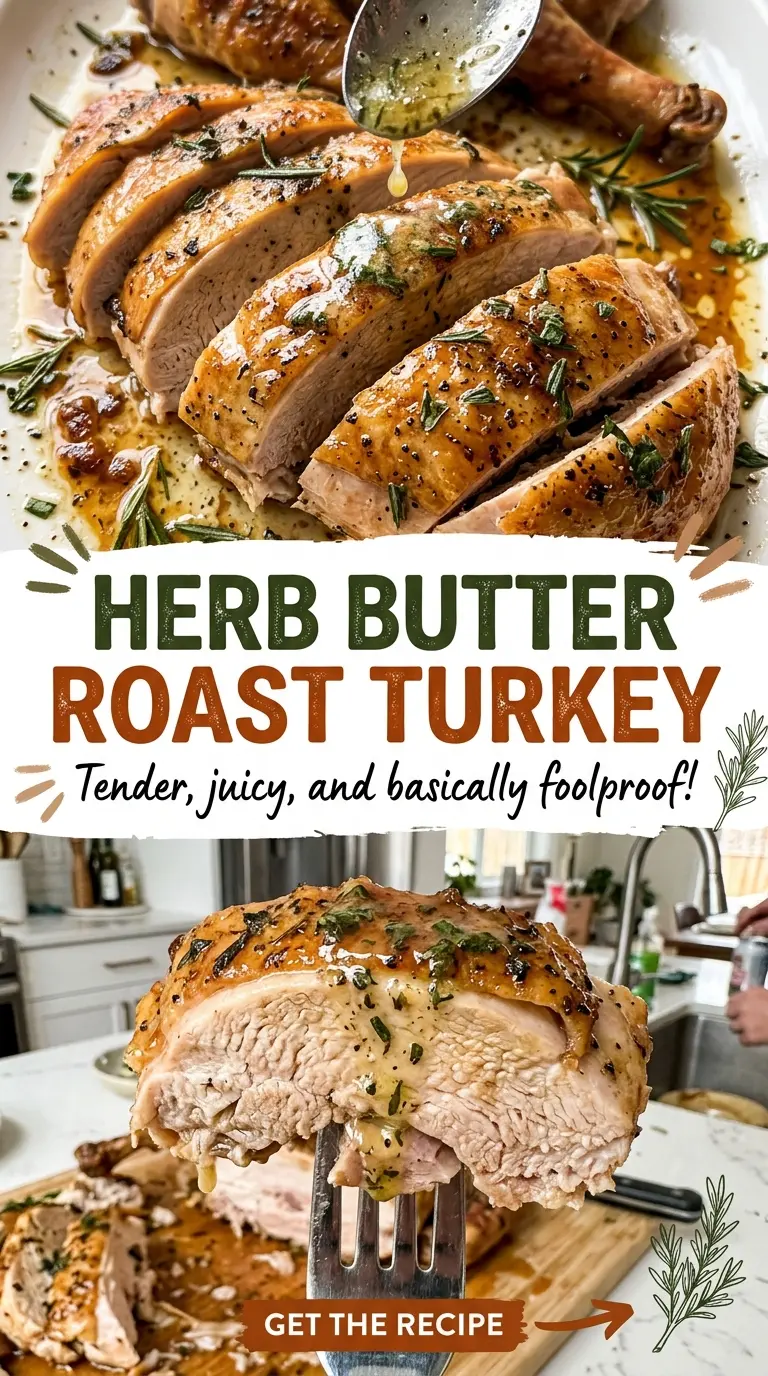
The kitchen starts smelling like rosemary and garlic well before the turkey is done, and the skin turns a deep golden brown as the butter melts over it. I tuck some of the herb butter under the breast skin, where it can season the meat directly, then spread the rest over the outside. That simple split is what makes this Herb Butter Roast Turkey taste herby all the way through instead of just on the surface.
A whole turkey has plenty of room for small mistakes to show up: the breast can brown before the thighs finish, and a rushed carving can send the juices straight onto the cutting board. I keep the oven at 325°F, use a thermometer in both the breast and thigh, and give the bird its full resting time. Onion, lemon, and thyme scent the cavity while the turkey roasts, leaving the carved slices buttery and fragrant.
Kitchen Note
Use butter that’s softened enough to smear but hasn’t melted. Melted butter runs off the skin more easily, while softened butter stays manageable as you work it under the breast skin.
Save this Herb Butter Roast Turkey for a centerpiece with crisp, golden skin and fresh herbs tucked into every slice.
Why This Turkey Gets Aromatics in the Cavity, Not Bread Stuffing
The onion, lemon, and thyme inside this bird are there to perfume it as it roasts. They add a gentle aroma without packing the cavity full, so the turkey can cook on the schedule that fits its size. That distinction matters because bread stuffing changes how heat moves through the center of a whole bird. It also needs its own doneness check, which can make timing the turkey less straightforward.
Keep the cavity aromatics loose rather than pressing them tightly together. Their job is to release fragrance, not to become a side dish or a bed for the turkey. The cut onion and lemon soften as they roast, while the thyme contributes a woodsy note that pairs naturally with the herb butter. If you want stuffing with the meal, cook it separately; that way you can judge the turkey on its own terms and carve it when the breast and thigh are ready.
What the Fresh Herbs and Butter Bring to This Roast
- Unsalted butter — Butter carries the chopped herbs and garlic, and its richness works beneath the skin as well as across the outside. Unsalted butter keeps the recipe’s kosher salt in control; a basic store-brand butter is fine here.
- Parsley — Fresh parsley gives the mixture a clean, green note. Choose leaves that look lively rather than wilted, and chop them finely so they’re easy to spread through the butter.
- Rosemary and thyme — These fresh herbs bring the woodsy, savory character that holds up alongside a large roast. The stems can be removed before chopping; use the chopped leaves in the butter and reserve the separate thyme sprigs for the cavity.
- Garlic — Freshly minced cloves spread through the butter more evenly than large chunks, which could leave concentrated bites. Fresh garlic is the best fit here; there isn’t a listed substitute that gives the same fresh, savory flavor.
- Whole turkey — A thawed 12- to 14-pound bird fits the roasting time and method here. Remove the neck and giblets before seasoning, and choose a bird that’s fully thawed rather than trying to make up for ice in the cavity during roasting.
- Onion and lemon — These go inside the turkey to provide aromatic lift, not a heavy stuffing. Standard yellow onion and an ordinary fresh lemon work well; there’s no need to seek out a specialty variety.
- Kosher salt and black pepper — Kosher salt seasons the butter mixture, and black pepper adds a mild bite. Freshly ground pepper has a brighter aroma, but pre-ground pepper works if that’s what you have.
- Water — The water goes into the roasting pan beneath the turkey. Tap water is all you need; it helps keep the pan from becoming completely dry as the bird roasts.
How to Roast a 12- to 14-Pound Turkey Without Guessing
Mix the Herb Butter Until Even
Stir the softened butter with the parsley, rosemary, chopped thyme, garlic, kosher salt, and black pepper in a medium bowl. Keep mixing until the herbs and seasonings are distributed throughout instead of sitting in separate pockets. The finished mixture should look flecked with herbs from edge to edge. If you see a thick clump of garlic or herbs, stir again before you start seasoning the bird.
Dry, Fill, and Tie the Bird
Heat the oven to 325°F and set a rack in a large roasting pan. Pat the thawed turkey dry with paper towels after removing the neck and giblets if needed; damp skin makes it harder to spread the butter evenly. Put the quartered onion, lemon, and thyme sprigs in the cavity, then tuck the wing tips behind the turkey and tie the legs together with kitchen twine. Set the bird up breast-side up so it’s ready to receive the butter.
Season Beneath the Skin and Over It
Carefully work about half of the herb butter under the breast skin, spreading it across the meat without tearing the skin. Rub the remaining butter over the outside of the bird so the surface is coated. Take a moment to distribute it rather than leaving one thick patch on top. The under-skin layer seasons the breast directly, while the outside layer flavors and browns the skin.
Roast, Check Both Areas, and Rest
Pour the water into the roasting pan, then roast the turkey for 3 to 3 3/4 hours. If the breast is browning too quickly, cover it loosely with foil while the rest of the turkey continues cooking. Check the thickest part of the breast and the innermost part of the thigh without touching bone; both need to register 165°F before you remove the bird. Transfer it to a cutting board, tent loosely with foil, and let it rest for 30 minutes before carving.
Three Ways to Shift the Herb Butter Without Changing the Roast
Make the Rosemary More Pronounced
Shift the fresh-herb balance toward rosemary and away from parsley, keeping the overall amount of chopped herbs the same. The butter will taste more piney and savory, with less of parsley’s green freshness. Keep the other ingredients and roasting method unchanged.
Lean Into Thyme
Give the chopped thyme a larger share of the herb mixture and reduce the parsley by the same amount. The result is earthier and a little more woodsy, while keeping the total chopped herbs steady so the butter still spreads easily over the turkey.
Give the Cavity a Brighter Lemon Note
Cut the quartered lemon into smaller pieces before putting it in the cavity with the onion and thyme. The extra cut surfaces release a brighter citrus aroma as the turkey roasts, though the lemon itself is still an aromatic rather than a side to serve.
Storage and Reheating
- Refrigerator: Refrigerate carved leftovers within 2 hours and keep them in airtight containers for 3 to 4 days. Chilled turkey firms up, especially the breast meat.
- Freezer: Freeze carved portions in airtight freezer-safe packaging for up to 3 months for best quality. Smaller portions thaw and reheat more evenly than a large block.
- Reheating: Put portions in a covered baking dish with a splash of water and warm in a 325°F oven until steaming hot throughout. Leaving the turkey uncovered for the whole reheating time can dry the edges before the center is warm.
Questions That Come Up While Roasting This Turkey
Herb Butter Roast Turkey
Ingredients
Equipment
Method
- Stir together the softened butter, parsley, rosemary, chopped thyme, garlic, kosher salt, and black pepper in a medium bowl until evenly combined.
- Heat the oven to 325°F.
- Set a rack in a large roasting pan.
- Remove the turkey’s neck and giblets if needed, then pat the turkey dry with paper towels.
- Put the onion, lemon, and thyme sprigs in the cavity.
- Tuck the wing tips behind the turkey and tie the legs together with kitchen twine.
- Spread about half of the herb butter under the breast skin.
- Rub the remaining butter over the outside of the turkey.
- Set the turkey breast-side up on the rack and pour the water into the roasting pan.
- Roast for 3 to 3 3/4 hours, loosely covering the breast with foil if it browns too quickly.
- Check the temperature in the thickest part of the breast and the innermost part of the thigh without touching bone.
- Remove the turkey when both register 165°F, continuing to roast as needed.
- Transfer the turkey to a cutting board and tent loosely with foil.
- Rest for 30 minutes before carving.