When your fingers reach under the turkey skin, it’s easy to worry that one wrong move will tear it. Go slowly and the skin loosens enough to tuck garlic butter underneath, where it can season the breast instead of sitting only on top. That small bit of care is what makes this garlic butter turkey breast worth preparing by hand.
I keep the seasoning simple: softened butter, minced garlic, fresh thyme, salt, and pepper. The breast roasts skin-side up, and the butter on the outside turns fragrant as it melts over the surface. After a proper rest, the meat is ready to carve into tender slices with garlic and thyme in every bite.
Kitchen Note
Loosen the skin with your fingers a little at a time rather than pulling hard at one spot. If it feels tight, ease your fingers along the surface until the skin lifts; rushing is what makes it tear.
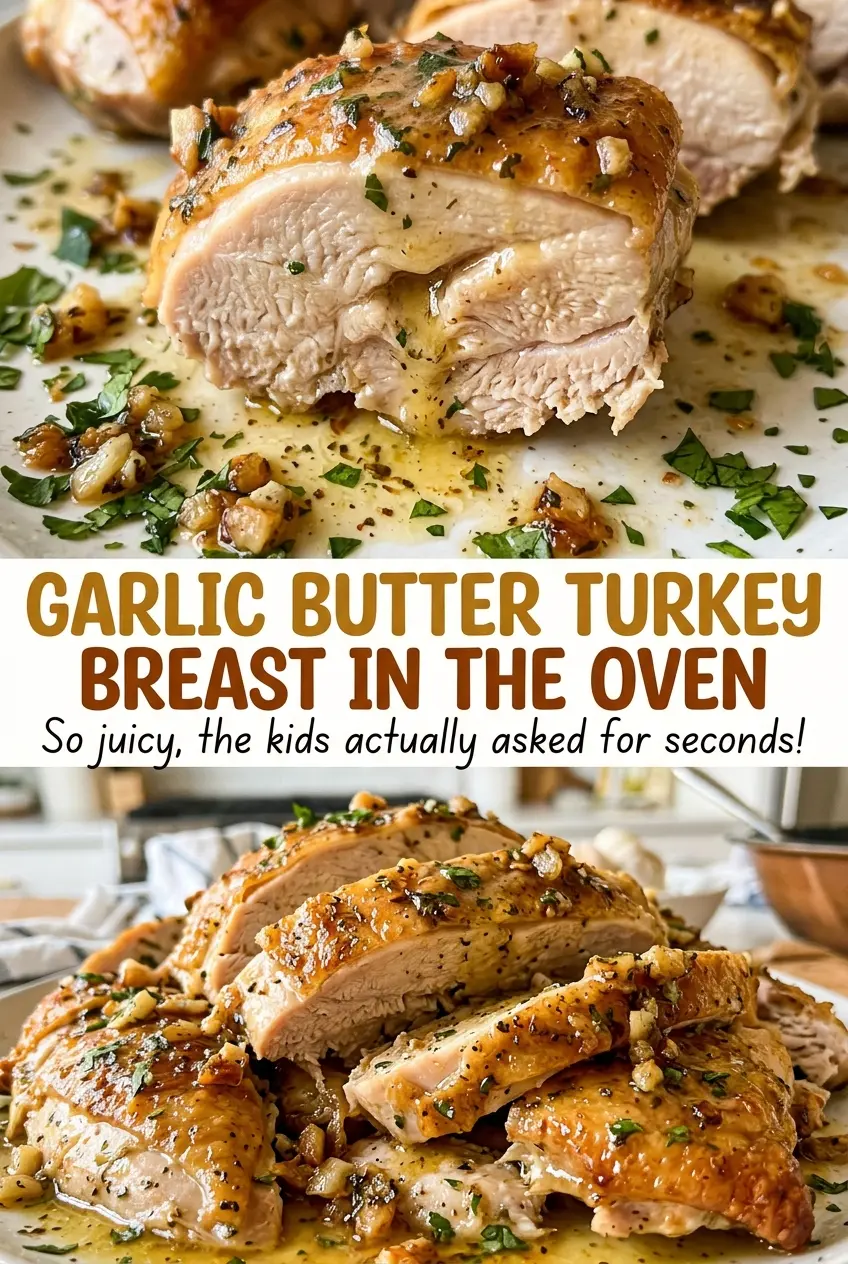
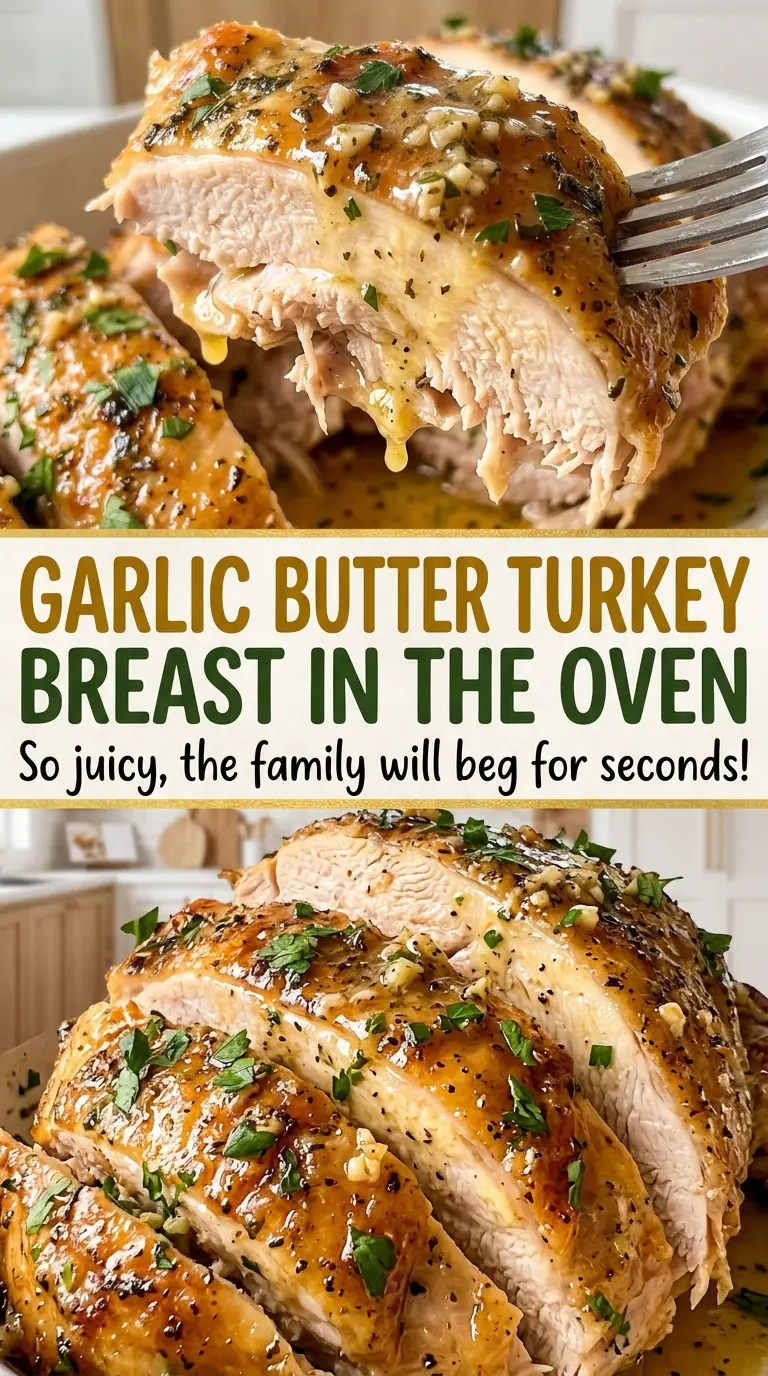
Save this garlic butter turkey breast for a roast with savory garlic-thyme butter tucked under the skin and spread over the top.
Why Some of the Garlic Butter Belongs Under the Skin
Butter spread only over the skin can season the outside, but the skin keeps much of that mixture from reaching the meat. Tucking most of it underneath puts the garlic, thyme, and butter in closer contact with the breast itself. The smaller portion on top still coats the skin, so both surfaces get seasoned.
That split matters with a large, lean cut like turkey breast. The butter under the skin melts as the breast roasts, while the outside layer helps carry the minced garlic and herbs across the surface. Don’t try to make a perfectly even blanket under every inch of skin; an even spread across the accessible breast area is enough. The goal is two layers of seasoning, not a thick cap of butter on top.
It also gives you a useful visual check before the pan goes into the oven: most of the butter should be tucked beneath the skin, with a thinner coating visible on the outside. If all the mixture stays on top, the breast will still roast, but the seasoning won’t be distributed in the same way.
What the Turkey, Butter, and Thyme Each Bring
- Bone-in turkey breast — The bone gives the breast structure as it roasts, and the skin gives you a place to spread the outside butter. Start with it fully thawed and with the giblets removed; a partly frozen center makes even roasting harder to judge.
- Unsalted butter — Softened butter blends smoothly with the minced garlic and herbs and is easy to spread under the skin. Unsalted butter also lets the kosher salt remain the seasoning you control. Use softened, not melted, butter so the mixture stays workable.
- Fresh garlic — Minced cloves bring a sharper, fresher garlic taste than a dried seasoning. Mince them finely so larger pieces don’t collect in one patch of butter or drag against the skin as you spread it.
- Fresh thyme — Chopped fresh thyme gives the butter a green, woodsy aroma. If you don’t have fresh thyme, use 1 teaspoon dried thyme in place of 1 tablespoon fresh; dried leaves are more concentrated, so the smaller amount keeps them from dominating.
- Kosher salt and black pepper — They round out the butter without burying the garlic and thyme. Freshly ground black pepper has a livelier aroma, but ordinary ground pepper works when that’s what you have.
How to Roast the Breast Without Guessing at Doneness
Dry the Skin and Set the Oven
Heat the oven to 325°F with a rack in the middle position. Pat the fully thawed turkey breast dry all over with paper towels; damp skin makes it harder to spread butter evenly. Check that the giblets have been removed before seasoning. Keep the breast on a tray or board while you make the butter mixture.
Mix the Garlic-Thyme Butter
Stir the softened butter, minced garlic, chopped thyme, kosher salt, and black pepper together in a small bowl. Mix until the herbs and garlic are distributed through the butter rather than sitting in a pile. If the butter is too firm to stir, give it a little time to soften; melted butter won’t hold the same spreadable texture. You’re looking for a soft paste that will cling to the skin.
Season Beneath and Over the Skin
Carefully loosen the skin over the breast with your fingers, then spread about two-thirds of the butter mixture underneath it. Work the butter across the breast instead of pressing it all toward the opening. Spread the remaining mixture over the outside of the skin. If a little butter smears unevenly, smooth it out gently rather than tugging at the skin.
Roast on the Rack and Check the Thickest Part
Set the turkey breast skin-side up on a rack in a 9×13-inch roasting pan. Roast for 1 hour 45 minutes to 2 hours 30 minutes, checking the thickest part of the breast with a thermometer and keeping the tip from touching bone. The turkey is ready when that reading reaches 165°F. Don’t rely on the color of the skin or the clock alone; breast sizes vary within the range, and the thermometer gives you the useful answer.
Rest Before You Carve
Transfer the turkey to a cutting board and loosely tent it with foil. Let it rest for 20 minutes before carving so the juices have time to settle back into the meat. Keep the foil loose rather than wrapping the breast tightly. Carve across the breast into slices and spoon any juices on the board over the meat.
Two Ways to Adapt the Garlic Butter
Make It Dairy-Free with Stick-Style Plant Butter
Replace the unsalted butter with the same amount of softened, stick-style dairy-free butter. Choose a firm baking-style product rather than a soft tub spread, which tends to contain more water and can be harder to work under the skin. The garlic and thyme still season the turkey, though the butter flavor and browning may differ slightly.
Keep All the Butter on the Outside
For a simpler prep, skip loosening the skin and spread all of the garlic-thyme butter over the outside. The meat won’t be seasoned from beneath the skin in the same way, but the surface still gets the full butter mixture. Spread it gently so the skin stays intact.
Storage and Reheating
- Refrigerator: Store carved turkey in an airtight container for 3 to 4 days. The skin softens after chilling, while the meat stays convenient for leftovers.
- Freezer: Freeze carved portions in airtight, freezer-safe packaging for up to 3 months for best quality. Thaw in the refrigerator before reheating.
- Reheating: Warm slices covered in the oven or microwave until steaming hot. Reheat only what you plan to eat; repeated heating dries the lean breast meat.
Questions That Come Up While Roasting Turkey Breast
Garlic Butter Turkey Breast in the Oven
Ingredients
Equipment
Method
- Heat the oven to 325°F with a rack in the middle position.
- Pat the turkey breast dry with paper towels.
- In a small bowl, mix the butter, garlic, thyme, salt, and pepper until combined.
- Carefully loosen the skin over the breast with your fingers.
- Spread about two-thirds of the butter mixture under the skin, then spread the rest over the outside.
- Set the turkey breast, skin-side up, on a rack in a 9x13-inch roasting pan.
- Roast for 1 3/4 to 2 1/2 hours, until a thermometer inserted into the thickest part of the breast without touching bone reads 165°F.
- Transfer the turkey to a cutting board and loosely tent it with foil.
- Let it rest for 20 minutes before carving.