A turkey can look beautifully bronzed on top and still taste bland through the breast, especially when the seasoning stays on the skin. Dry brining solves that without filling the refrigerator with a bucket of liquid. This method seasons a fully thawed, unbrined turkey beneath the skin and gives the surface time to dry before roasting.
I like how little hands-on work it takes: salt the turkey, leave it uncovered in the refrigerator, then butter it before it goes into the oven. The long chill does the seasoning while you get on with the rest of the meal, and the dry skin browns more readily than damp skin. At the table, the meat is savory throughout and the skin has a deep, roasted color.
Kitchen Note
Set the turkey on a rack over a rimmed baking sheet for its refrigerator rest, rather than directly on a plate. The rack lets air reach the underside, and the sheet catches any drips.
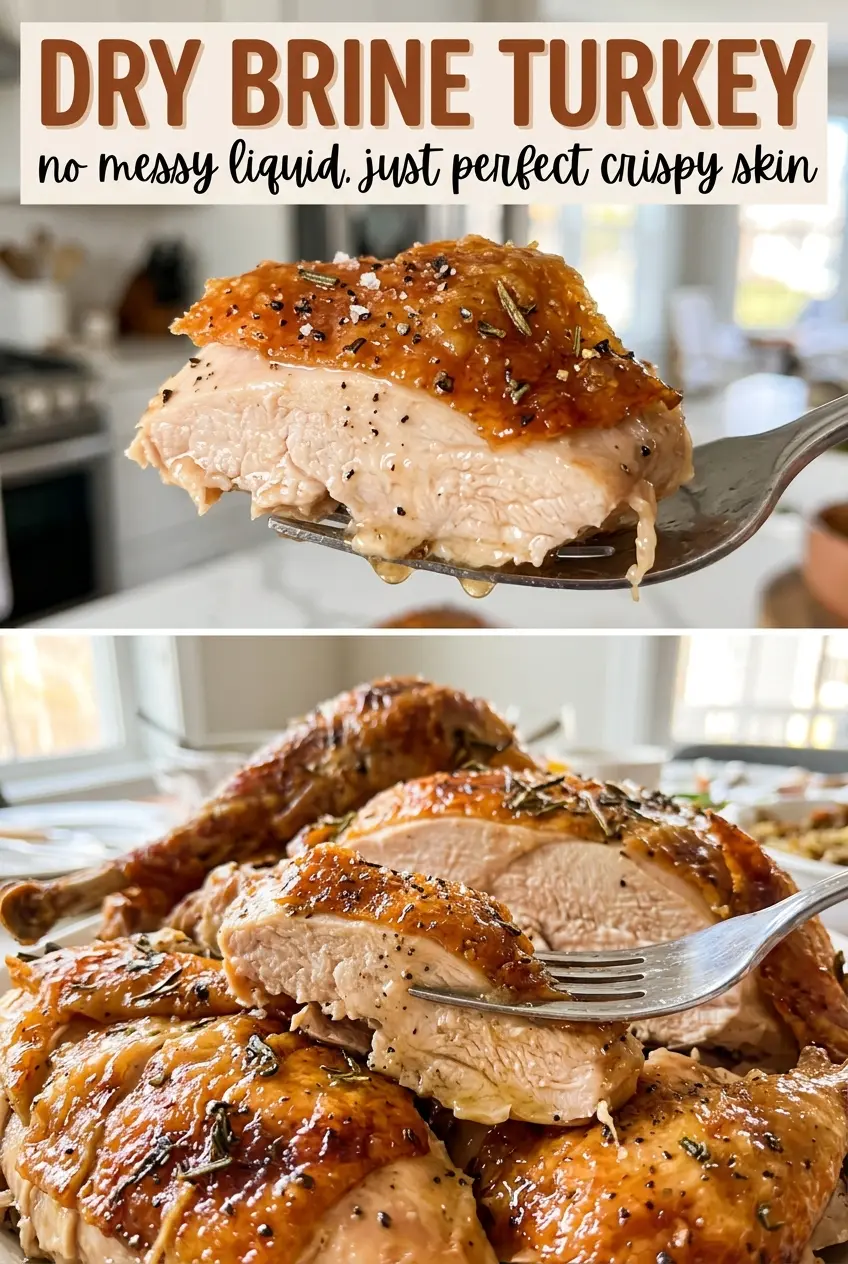
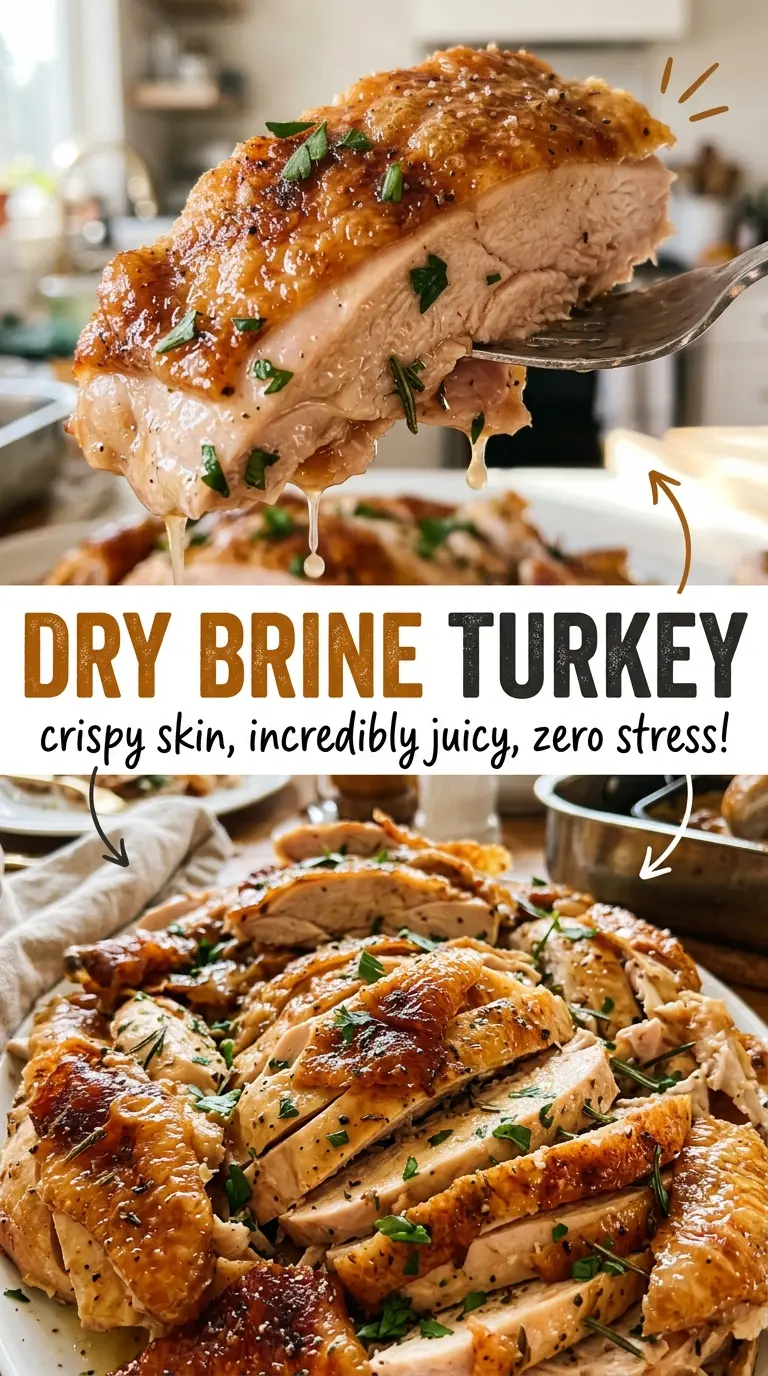
Save this dry brine turkey for a deeply seasoned roast with browned skin and a simple, make-ahead refrigerator rest.
Why the Uncovered Chill Helps the Skin Brown
Dry brining seasons the meat and changes the surface in a way a wet soak doesn’t. As the salt sits on the turkey, it draws out moisture; that moisture dissolves the salt, and the seasoned liquid is gradually drawn back into the meat. Putting salt beneath the breast and thigh skin gives it direct contact with the meat instead of asking it to work through the skin.
The other half of the method happens in the refrigerator. Leaving the turkey uncovered allows surface moisture to evaporate, so the skin isn’t starting out damp when it reaches the oven. Damp skin has to lose that extra moisture before it can brown, which can leave it pale while the meat cooks. A long, uncovered rest helps the skin roast more evenly, though the oven still needs time to do its work. This is why I don’t cover the turkey during its brine.
What the Turkey, Salt, and Butter Each Bring
- Whole turkey — Start with a fully thawed bird that hasn’t been pre-brined or injected with a salt solution. A bird that’s already salted can end up too salty after this long rest. Removing the giblets and neck leaves the cavity ready for seasoning.
- Diamond Crystal kosher salt — Its large, light flakes are easy to spread over the skin and beneath it. Salt is doing the main seasoning here, so use the specified type rather than swapping in another salt measure for measure; different crystals pack differently by volume.
- Unsalted butter — Softened butter spreads beneath the breast skin without needing to melt it first, and it helps the outside brown as the turkey roasts. Unsalted butter also keeps the seasoning in your control. If your butter is cold and firm, give it time to soften before you start coating the bird.
- Black pepper — Pepper adds a gentle, savory bite to the buttered skin. Freshly ground pepper has a livelier aroma, but ordinary ground black pepper works well here too.
How to Dry-Brine and Roast the Turkey Without Guesswork
Season beneath the skin, not just on top
Pat the fully thawed turkey dry, then gently loosen the skin over the breast and thighs. Rub the salt evenly over the outside, beneath the loosened skin, and inside the cavity. Set it breast-side up on a rack over a rimmed baking sheet, then refrigerate it uncovered for 24 to 48 hours. If the skin tears while you loosen it, work carefully around the opening rather than pulling hard; the goal is to make room for the salt, not remove the skin.
Butter the turkey just before roasting
Heat the oven to 325°F and place a rack in a roasting pan. Set the turkey breast-side up on the rack, then spread softened butter beneath the breast skin and over the outside. Season the skin with black pepper. Softened butter should smear easily; melted butter runs off more readily, so let it soften before you begin.
Roast to temperature, watching the skin
Roast for 3 to 3 1/2 hours, checking the temperature after 2 3/4 hours. Insert a thermometer into the thickest part of the breast and the innermost part of the thigh, taking care not to touch bone; each spot should reach 165°F. Check both areas separately, since one can finish before the other. If the skin browns too quickly, tent it loosely with foil so it can keep roasting without darkening as fast. Don’t rely on skin color alone to judge whether the meat is cooked through.
Rest before carving
Transfer the roasted turkey to a carving board and let it rest for 30 minutes before carving. That pause gives the juices time to settle instead of running out as soon as you cut into the breast. Use the resting time to get the carving board and serving pieces ready, then carve when the full rest is over.
Two Simple Ways to Adapt This Dry-Brined Turkey
Make It Dairy-Free by Leaving Out the Butter
Omit the butter for a dairy-free version; no replacement ingredient is needed. The turkey will have less buttery richness and may brown differently, but the salt and pepper still season it. Keep the rest of the method the same.
Leave the Pepper Off for a Milder Finish
Skip the black pepper if you want the turkey’s seasoning to stay simple or prefer a milder skin. The salt still does the seasoning work, while the butter gives the outside its familiar roasted richness.
Storage and Reheating
- Refrigerator: Refrigerate leftover turkey in covered, shallow containers within 2 hours and use it within 3 to 4 days. The meat firms up as it chills.
- Freezer: Freeze leftover portions in airtight packaging for up to 2 to 6 months for best quality. Thaw them in the refrigerator before reheating.
- Reheating: Arrange slices in a covered baking dish and warm in a 325°F oven until the center reaches 165°F. Leaving the slices uncovered can dry them out before they’re hot through.
Questions That Come Up When Dry-Brining a Turkey
Dry Brine Turkey
Ingredients
Equipment
Method
- Pat the turkey dry and loosen the skin over the breast and thighs.
- Rub the salt evenly over the turkey, under the skin, and inside the cavity.
- Set the turkey breast-side up on a rack over a rimmed baking sheet and refrigerate uncovered for 24 to 48 hours.
- Heat the oven to 325°F and place a rack in a roasting pan.
- Set the turkey breast-side up on the rack, rub the softened butter under the breast skin and over the outside, and season the skin with black pepper.
- Roast for 3 to 3 1/2 hours, checking the temperature after 2 3/4 hours; the thickest part of the breast and the innermost part of the thigh should each reach 165°F without the thermometer touching bone.
- If the skin browns too quickly, tent it loosely with foil.
- Transfer the turkey to a carving board and rest for 30 minutes before carving.