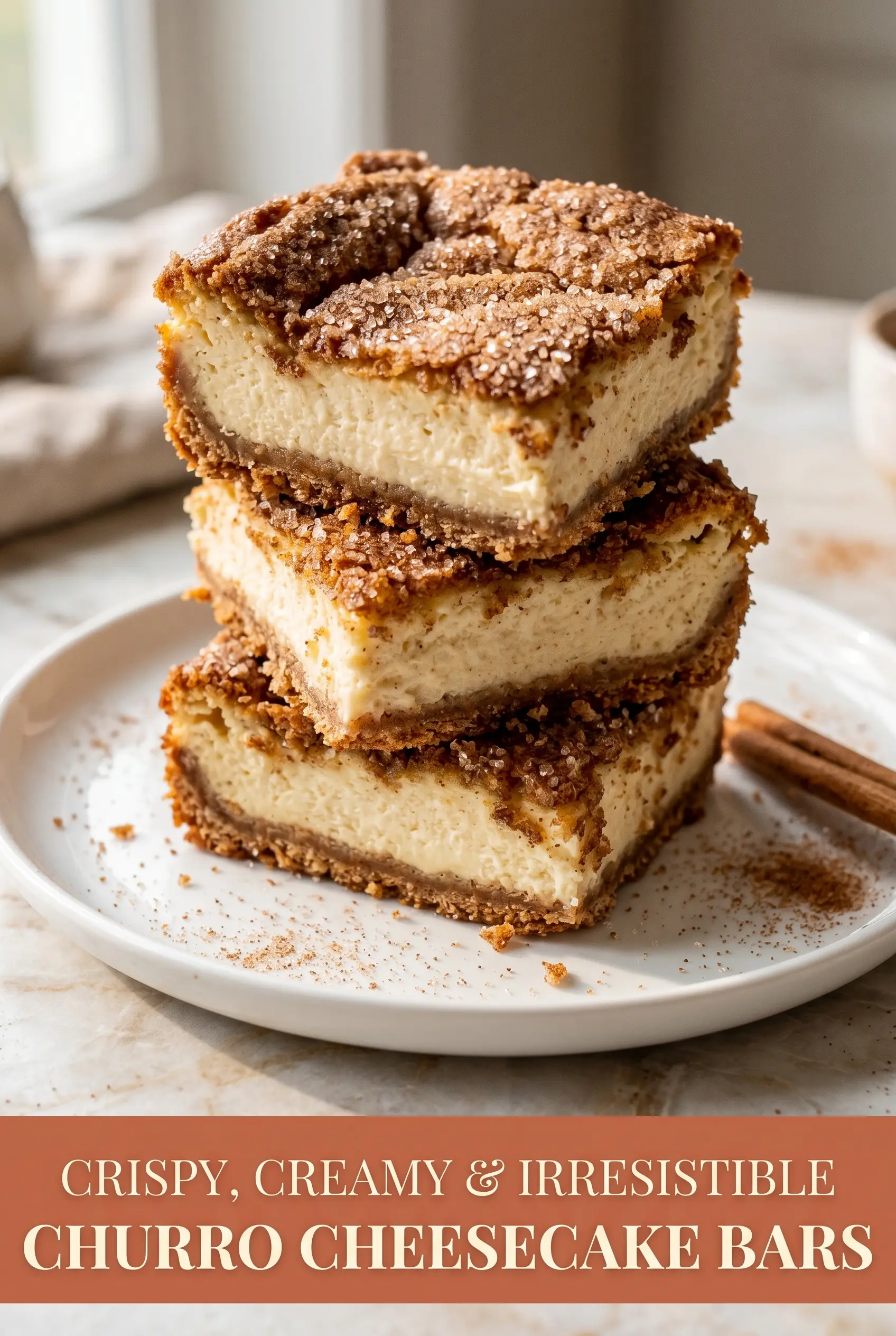
Churro cheesecake bars hit that sweet spot where the top bakes into a crisp cinnamon-sugar crust and the middle stays creamy, cool, and tangy. The crescent dough does the heavy lifting here, giving you a pastry-like bite without the work of rolling true dough from scratch. What you get is a pan of bars that slice cleanly once chilled, but still taste like something you’d tear into warm from the oven.
The key is keeping the cream cheese filling smooth and the dough seams sealed well enough that the layers stay distinct. If the cream cheese is cold, it won’t blend into that velvety layer and you’ll end up with little lumps in the center. And if the top dough has gaps, the filling can bubble up unevenly and make the bars harder to cut neatly.
Below, I’m walking through the little details that matter most: how to press the dough so it doesn’t leak, when the bars are actually ready to slice, and how to get that churro-style finish without overbaking the center.
The filling set up beautifully and the cinnamon topping baked into a crisp layer instead of getting soggy. I chilled them for 30 minutes before cutting and got neat squares that held together perfectly.
These churro cheesecake bars slice cleanly after chilling, with a crisp cinnamon top and a creamy center that stays set.
The Trick to Keeping the Cheesecake Layer Smooth Under the Crescent Dough
The filling in churro cheesecake bars looks simple, but it’s the part that decides whether the bars taste bakery-worthy or messy. Softened cream cheese beats into a smooth layer fast; cold cream cheese leaves tiny lumps that never fully disappear. The sugar helps the filling loosen just enough to spread, while the vanilla rounds out the richness so the bars taste like cheesecake, not just sweet cream cheese.
The other point that matters is the dough. Crescent dough is forgiving, but the seams still need to be pinched together or you’ll get weak spots where filling can peek through and the top layer can split as it bakes. A sealed base also helps the bottom bake into something sturdy enough to lift from the pan without collapsing.
- Cream cheese — Full-fat blocks give you the smoothest, most stable filling. Reduced-fat cream cheese tends to loosen more as it bakes, which can make the center softer and harder to slice cleanly.
- Crescent roll dough — Refrigerated dough keeps this recipe quick and gives you that soft, flaky shortcut crust. Puff pastry won’t behave the same way here; it bakes lighter and crispier, which changes the whole texture.
- Cinnamon — Fresh cinnamon makes the top smell and taste warm instead of dusty. If yours has been hanging around the pantry for years, replace it, because the topping depends on that spice standing out.
- Vanilla extract — This isn’t a background note. It softens the tang of the cream cheese and makes the filling taste more rounded and dessert-like.

Building the Layers So the Bars Bake Up Clean and Slice Well
Pressing the Bottom Crust
Lay the first sheet of dough into the pan and press it all the way into the corners so there aren’t thin spots along the edges. Pinch the seams together firmly, because any open line becomes a weak point once the filling goes in. A smooth, even base bakes more evenly and gives the bars enough structure to hold the creamy center.
Whipping the Filling
Beat the cream cheese, sugar, vanilla, and salt until the mixture looks silky and lightened in color. Stop as soon as it’s smooth; overmixing can make it too loose. If the filling still has a grainy texture, the cream cheese wasn’t soft enough before you started.
Finishing With Butter and Cinnamon Sugar
Brush the melted butter all the way to the edges, then shower the cinnamon sugar over the top in an even layer. The butter gives the topping something to cling to, and it helps the sugar bake into that crackly churro-style crust. If you leave dry patches, those spots won’t caramelize the same way and the top can look blotchy.
Cooling Before Cutting
Let the pan cool completely before you even think about slicing. The center firms up as it cools, and that’s what keeps the bars from oozing out in a mess. A short chill in the fridge makes the cleanest cuts, especially if you want square pieces instead of soft-edged dessert bars.
How to Adapt These Churro Cheesecake Bars Without Losing the Texture
Gluten-Free Shortcut
Use a gluten-free crescent-style dough or a gluten-free pie dough that you can press into the pan. The texture will be a little less flaky than standard crescent dough, but the creamy filling and cinnamon topping still carry the dessert. Bake until the top is set and golden, since gluten-free crusts sometimes need a few extra minutes to firm up.
Lighter Cream Cheese Filling
You can swap in Neufchâtel for part of the cream cheese if you want a slightly lighter bar. The filling will still set, but it won’t taste quite as rich and dense. Keep at least half the cream cheese full-fat so the texture doesn’t turn soft or watery.
Extra Cinnamon Sugar Finish
If you want a stronger churro flavor, add another tablespoon of cinnamon sugar right after the bars come out of the oven. The residual butter on top helps it stick. This gives the crust a deeper spice hit, but too much can make the surface taste gritty, so keep the layer light.
Storage and Reheating
- Refrigerator: Store covered for up to 5 days. The crust softens a little in the fridge, but the filling stays smooth and sliceable.
- Freezer: These freeze well. Cut into bars, wrap tightly, and freeze in a single layer before moving them to a container. Thaw in the fridge so the filling doesn’t sweat and turn tacky.
- Reheating: These are best served chilled or at room temperature, not hot. If you want to take the chill off, let a bar sit on the counter for 15 to 20 minutes. Microwaving makes the filling loose and the topping soggy.
Questions I Get Asked About These Bars
Churro Cheesecake Bars
Ingredients
Equipment
Method
- Preheat oven to 350°F (175°C) and lightly grease a 9×13-inch baking pan with non-stick spray, using a visual check that the pan surface looks evenly coated.
- Unroll one can of crescent roll dough and press it evenly into the bottom of the pan, pinching seams together to seal so there are no visible gaps.
- Beat the softened cream cheese with 3/4 cup granulated sugar, vanilla extract, and salt using a hand mixer until smooth and fluffy, about 2 minutes, then stop when the mixture looks lump-free and thick.
- Spread the cream cheese mixture evenly over the dough layer in the pan, smoothing the top so it reaches the corners.
- Unroll the second can of crescent roll dough and lay it carefully over the cream cheese layer, gently pressing the seams to seal for full coverage.
- Brush the melted butter evenly over the top layer of dough so the entire surface has a light, glossy sheen.
- Mix the remaining 1/4 cup granulated sugar with the ground cinnamon in a small bowl, then sprinkle it generously and evenly over the buttered dough.
- Bake for 28–32 minutes at 350°F (175°C), until the top is deeply golden brown and the edges are set, with a visible caramelized cinnamon crust.
- Remove from the oven and let cool completely in the pan for at least 1 hour, keeping it undisturbed until the center no longer jiggles.
- Refrigerate for 30 minutes for cleaner cuts, then chill until the bars feel firm to the touch.
- Slice into 12–16 bars and serve at room temperature or chilled, using a clean cut as the final visual cue.