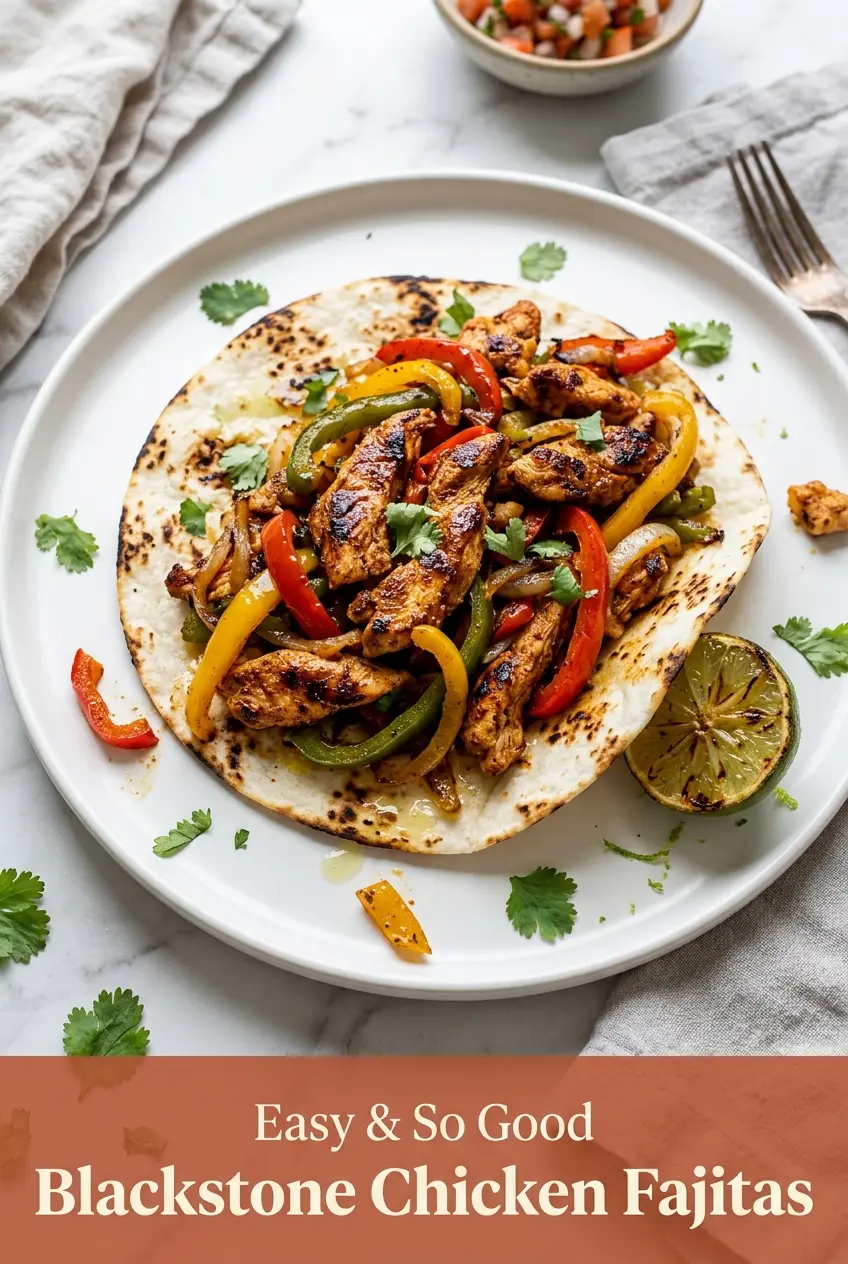
Blackstone chicken fajitas hit that rare sweet spot where dinner feels fast but still tastes like you worked for it. The chicken gets a smoky, lightly charred edge on the flat top, the peppers keep a little bite, and the onions turn soft and sweet without going mushy. Wrapped in a warm tortilla with a squeeze of lime, it’s the kind of meal that disappears as soon as it hits the table.
What makes this version work is the high, even heat of the griddle and the way the chicken is cut before it ever touches the surface. Thin strips cook quickly enough to stay juicy, and the vegetables can caramelize instead of steaming if you give them enough room. The spice mix is straightforward, but smoked paprika and cumin do a lot of the heavy lifting, especially once the lime juice wakes everything up at the end.
The biggest payoff here is timing. Once the chicken and vegetables are cooked, they get tossed together for just a minute so the flavors marry without losing that fresh, hot-off-the-griddle texture. Keep reading for the small griddle habit that keeps the chicken tender and the peppers nicely charred instead of soggy.
The chicken stayed juicy and the peppers got those perfect little charred edges without turning soft. I tossed everything with the lime at the end and the whole pan disappeared before I could even warm the second batch of tortillas.
Save these Blackstone chicken fajitas for the nights when you want smoky char, juicy chicken, and a skillet-style dinner with almost no cleanup.
Why the Chicken Stays Juicy Instead of Drying Out on the Griddle
The griddle can work against you if the chicken pieces are too thick or crowded together. When that happens, the surface cools down and the meat starts to steam before it has a chance to brown. Thin, even strips fix that problem fast. They cook through quickly, pick up color at the edges, and stay tender because they’re not sitting on the heat long enough to tighten up.
The other mistake is moving the chicken too soon. Let it sit long enough to develop a real sear on the first side, then flip it once and finish cooking. If the pieces are pale and rubbery, the heat wasn’t high enough. If they’re brown on the outside but still tough, they were probably overcooked by a minute or two.
- Thin chicken strips — These cook evenly and fast, which is the whole trick. Cut them against the grain if you can; the finished bites will feel more tender when you chew them.
- Smoked paprika — This gives the chicken that grilled, almost campfire-like depth even if your griddle is the only heat source. Regular paprika works in a pinch, but it won’t bring the same smoky edge.
- Lime juice — Add it at the end, not at the start. Early acid can tighten the chicken before it cooks, while a final squeeze brightens the whole pan and helps the vegetables taste more alive.
What the Seasoning and Vegetables Are Doing Here
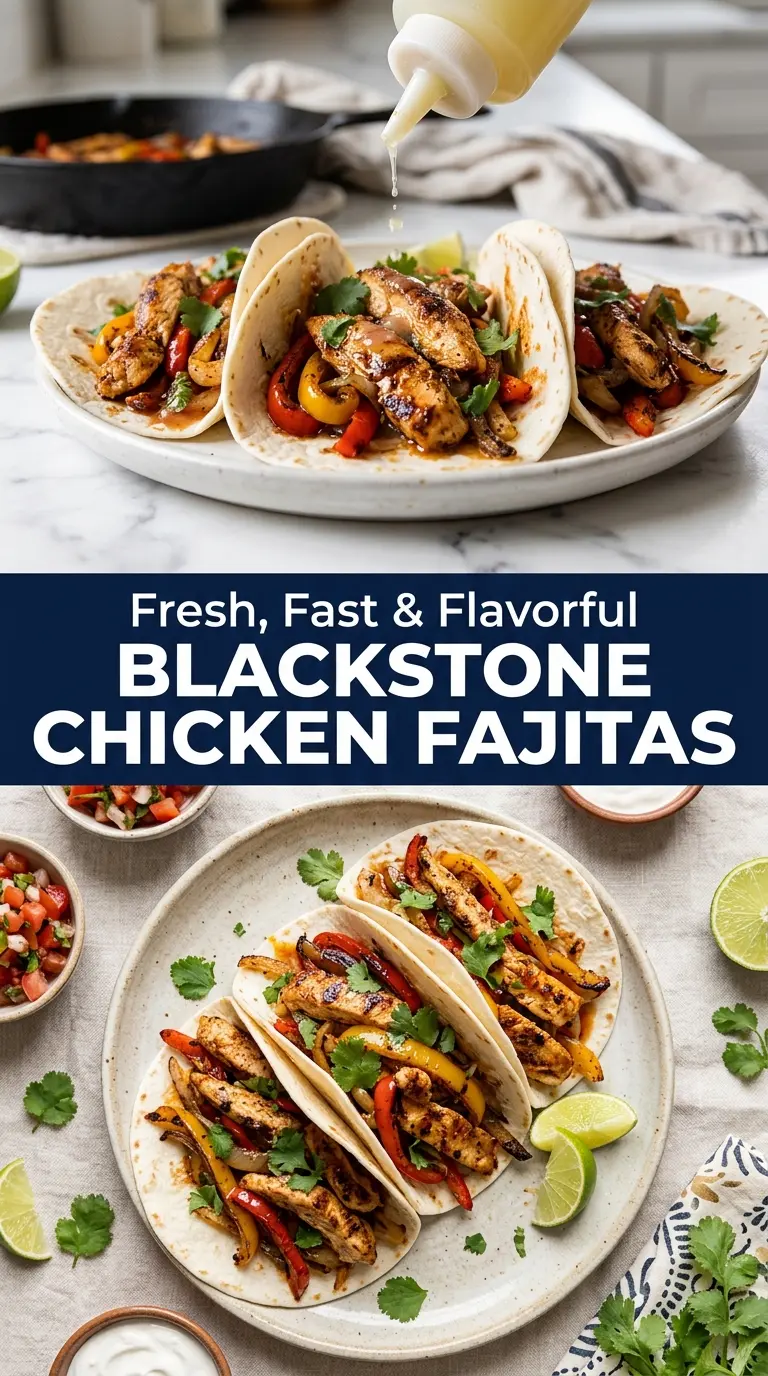
The seasoning blend is built to taste like fajitas without relying on a bottled mix. Chili powder and cumin give it backbone, garlic and onion powder round it out, and a little cayenne adds heat if you want it. If you skip the cayenne, the fajitas still have plenty of character; it’s there to sharpen the edges, not carry the dish.
The vegetables need enough oil to blister instead of dry out. Bell peppers bring sweetness and crunch, while the onion softens into something almost jammy around the edges. Use a yellow onion if you have it, because it turns sweet on the griddle faster than a sharper white onion. Flour tortillas give you the softest wrap, but corn tortillas work well if you want a more pronounced corn flavor and a slightly sturdier bite.
- Olive oil — Just enough oil keeps the peppers and chicken from sticking and helps the spices cling. You don’t need a lot; too much oil pushes the vegetables toward frying instead of charring.
- Bell peppers — Use a mix of colors for sweetness and visual contrast. They all cook the same way, so choose the ones that look freshest, not the ones that seem most “authentic.”
- Yogurt or sour cream — If you’re topping the fajitas with something creamy, plain Greek yogurt gives you tang with a little more body. Sour cream is richer, but either one cools the spice nicely.
The Hot-Top Timing That Gets the Best Char
Preheating Until the Surface Really Sizzles
Give the Blackstone a full preheat over medium-high heat so the surface is genuinely hot before anything goes on it. If the griddle is only lukewarm, the peppers will give off liquid and sit there softening instead of browning. You want an immediate sizzle the moment the chicken and vegetables hit the metal. That sound is your cue that the heat is doing the work for you.
Cooking the Vegetables on One Side of the Griddle
Spread the peppers and onions out so they’re not piled on top of each other. They need contact with the hot surface, not a mound of heat trapped in the middle. Stir them occasionally, but leave them alone long enough to pick up those browned edges. If they start looking watery, the pan is crowded or the heat dropped too low.
Letting the Chicken Brown Before You Turn It
Place the seasoned chicken on the other side and leave it alone for the first few minutes. That first pause builds color and helps the outside stay slightly crisp. Flip once the underside has a deep golden sear and the pieces release cleanly from the griddle. Cook until the centers reach 165°F; anything much beyond that and the chicken starts losing its juiciness.
Finishing With Lime and Bringing It All Together
Toss the chicken and vegetables together for just a minute with the lime juice. This is long enough to coat everything and pull the flavors together, but short enough to keep the peppers from going limp. The finish should taste bright, smoky, and fresh all at once. Serve immediately in warm tortillas before the steam softens the char.
Three Ways to Adjust These Fajitas Without Losing the Point
Dairy-Free Fajita Toppings
Skip the sour cream or yogurt and use avocado, salsa, or a handful of fresh cilantro instead. You’ll lose the cool tang, but the fajitas stay balanced because the lime and char already bring plenty of brightness.
Make It Chicken Thighs Instead
Boneless thighs work well if you want a slightly richer, juicier result. They take a minute or two longer than breasts and can handle a little more browning without drying out, so they’re forgiving if your griddle runs hot.
Gluten-Free Tortilla Swap
Use corn tortillas and warm them right on the griddle for a few seconds per side. They’ll be a little smaller and less pliable than flour tortillas, but the flavor works beautifully with the smoky chicken and peppers.
Turn It Into a Fajita Bowl
Serve the chicken and vegetables over rice, cauliflower rice, or shredded lettuce instead of tortillas. This keeps all the same flavor and gives you a lower-carb option, with the lime and toppings pulling everything together.
Storage and Reheating
- Refrigerator: Store the chicken and vegetables in an airtight container for up to 4 days. The peppers soften a little more as they sit, but the flavor stays strong.
- Freezer: The cooked chicken freezes better than the vegetables. If you want to freeze it, cool it completely and freeze the chicken separately for up to 2 months; the peppers will lose too much texture to be worth freezing.
- Reheating: Reheat in a skillet over medium heat until hot, or use the microwave in short bursts if you’re in a hurry. Don’t blast it on high heat, or the chicken dries out and the peppers turn limp before the center is warm.
Answers to the Questions Worth Asking
Blackstone Chicken Fajitas
Ingredients
Equipment
Method
- Preheat your Blackstone griddle over medium-high heat for 5 minutes until the surface is very hot, with a light sheen of oil. This helps the vegetables char instead of steam.
- Add 1 tbsp olive oil to the griddle and spread the sliced peppers and onions across one side. Cook for 5–7 minutes, stirring occasionally, until softened and lightly charred at the edges.
- In a large bowl, toss the chicken strips with olive oil, chili powder, smoked paprika, garlic powder, onion powder, cumin, cayenne, salt, and pepper until evenly coated. Make sure every strip is speckled with seasoning.
- Add the seasoned chicken to the other side of the griddle and cook for 4–5 minutes without moving. Flip and cook another 3–4 minutes until internal temperature reaches 165°F and edges are nicely caramelized.
- Squeeze lime juice over both the chicken and vegetables, then toss everything together on the griddle for 1 minute. Look for the lime to quickly steam off and brighten the charred bits.
- Serve immediately in warm tortillas with desired toppings like fresh salsa, sliced avocado, Greek yogurt or sour cream, shredded cheese, fresh cilantro, and lime wedges. Keep the tortillas warm so they stay flexible.