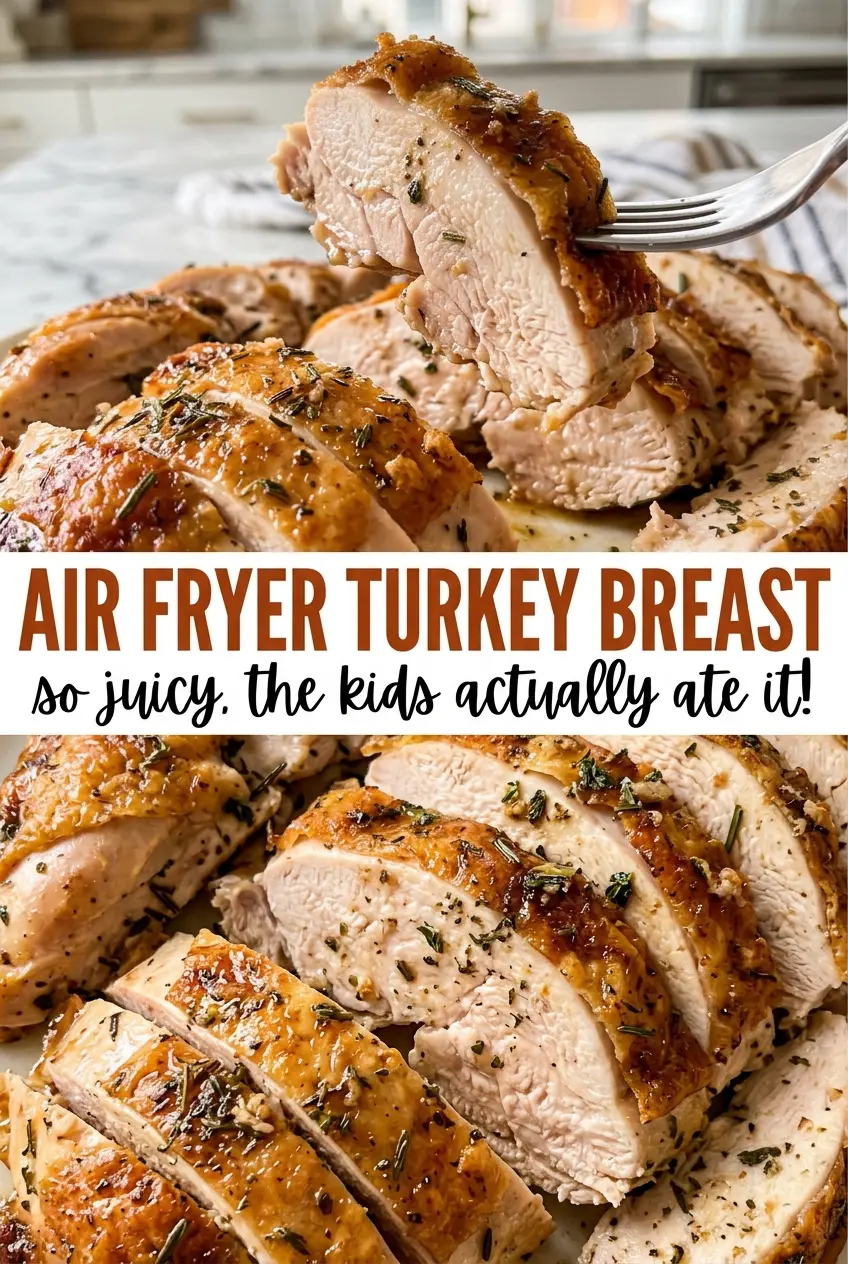
The skin can look beautifully browned while the thickest part of a turkey breast still needs more time. That’s why I rely on an instant-read thermometer rather than color alone. This air fryer turkey breast gives you a bone-in centerpiece without heating up the oven for hours, and the seasoning rub goes on both the skin and the meat beneath it.
I use a 6-quart air fryer and a thawed, skin-on breast, then turn it partway through cooking. Starting skin-side down and finishing skin-side up gives the exposed skin time in the moving heat, while checking the thickest part keeps the timing grounded in what’s happening inside the meat.
The rub is a simple mix of olive oil, garlic powder, paprika, black pepper, kosher salt, and dried thyme. After a short rest, the breast is ready to carve into tender slices with a savory, gently herby coating.
Kitchen Note
Give the turkey the full 15-minute rest under a loose foil tent before carving. Cutting in early sends more of the juices onto the board, and a loose tent keeps the breast warm without trapping as much steam against the skin.
Save this air fryer turkey breast for a golden-skinned centerpiece with a simple garlic, paprika, and thyme rub.
Why This Turkey Breast Gets Turned Halfway Through
A turkey breast isn’t a flat cut, and the skin and meat don’t need exactly the same treatment. Cooking it skin-side down first gives the meat time to cook while the skin rests against the basket. Turning it skin-side up for the longer second stretch exposes the skin to the air fryer’s moving heat, helping it brown as the center finishes.
The bone matters, too. It changes the shape and thickness of the breast, so a single spot on the surface can’t tell you whether the thickest meat is ready. Check that thickest section with an instant-read thermometer, keeping the probe away from the bone; a reading against bone can mislead you.
Use a thawed breast in the 2 1/2- to 3-pound range and a 6-quart air fryer for this timing. If the turkey crowds the basket, hot air has less room to move around it, and browning may be less even. The halfway turn is part of the method, not an optional flourish: it gives both the skin and the meat their time in the right position.
What the Turkey, Oil, and Rub Each Bring to the Basket
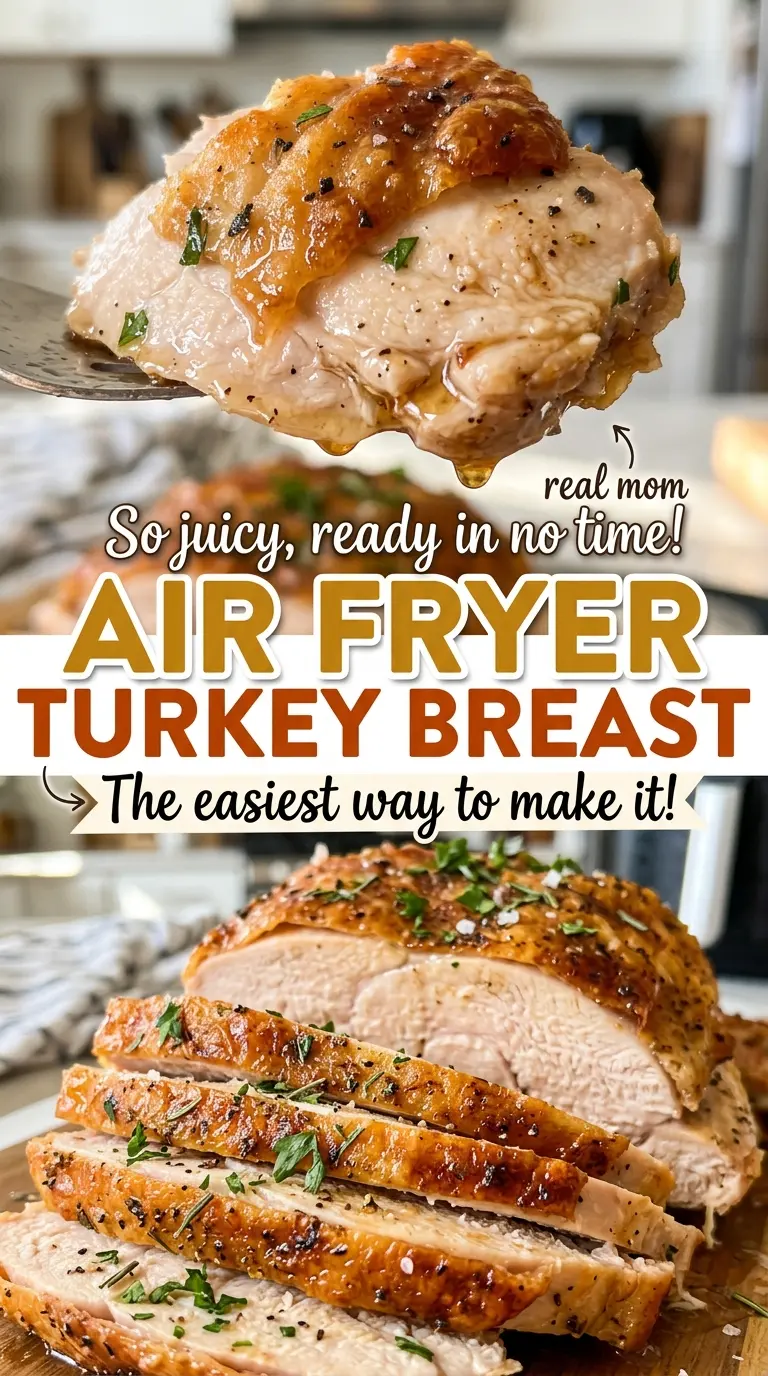
- Bone-in, skin-on turkey breast — The bone-in cut is the one this cooking time is designed around, and the skin gives the rub a surface to cling to as it browns. Choose a fully thawed breast in the stated size range; a boneless breast cooks differently and isn’t a direct swap here.
- Olive oil — Oil helps the seasonings spread over the skin and beneath it instead of falling off in dry patches. A standard olive oil works well; there’s no need for an expensive finishing oil. If you need a substitute, use the same amount of a neutral cooking oil.
- Kosher salt and black pepper — Salt seasons the meat beyond its surface, while pepper adds a mild bite to the rub. Kosher salt crystals vary by brand, so measure the listed amount rather than replacing it with an unmeasured pinch.
- Garlic powder — Its fine texture distributes through the oil and sticks to the turkey. Use garlic powder rather than garlic salt, which would add extra salt to the rub.
- Paprika — Paprika lends warm color and a mellow, sweet pepper note without making the turkey hot. Regular paprika is a good fit; there’s no need to seek out a specialty version.
- Dried thyme — Dried thyme gives the rub an earthy herbal note that holds up during cooking. Keep it dry and crumble it between your fingers as you mix if the leaves are in large pieces.
The Air Fryer Timing That Keeps the Skin and Center on Track
Preheat and Dry the Turkey
Preheat a 6-quart air fryer to 350°F for 5 minutes. While it heats, pat the thawed turkey breast dry with paper towels, including the skin and the exposed sides. A damp surface steams before it browns, so take a moment to blot away visible moisture. Keep the skin intact as you handle the breast.
Work the Seasoning Over and Under the Skin
Stir together the olive oil, kosher salt, black pepper, garlic powder, paprika, and dried thyme. Rub the mixture across the outside of the turkey and beneath the skin, where it can season the meat directly. Use your fingers to loosen the skin gently rather than tearing it. Spread the mixture as evenly as you can so one patch doesn’t end up heavily coated while another is bare.
Turn the Breast for the Second Cook
Set the turkey breast in the air fryer basket skin-side down and cook at 350°F for 20 minutes. Turn it skin-side up, then cook for 25 to 40 minutes more. Check the thickest part with an instant-read thermometer without touching the bone; it should reach 165°F. If the skin is already deeply browned, don’t use its color as a stand-in for the thermometer reading.
Rest Before Carving
Transfer the cooked breast to a cutting board and tent it loosely with foil. Let it rest for 15 minutes before carving. The loose tent holds warmth without pressing against the browned skin. Use a steady carving knife and work carefully around the bone to make even slices.
Three Simple Ways to Adjust the Seasoning
A More Paprika-Forward Rub
For a rounder, warmer seasoning, shift a little of the black pepper toward the paprika while keeping the olive oil, salt, garlic powder, and thyme in the rub. The turkey stays savory, but the paprika’s mild sweetness and color become more noticeable.
A More Herb-Led Turkey
Let the dried thyme stand out by increasing its share of the seasoning and easing back on the paprika. The result is more earthy and herbal, with less emphasis on the paprika’s color. Keep the salt and oil in the rub so the surface is still seasoned and coated.
A Lower-Sodium Rub
Use less kosher salt while leaving the garlic powder, pepper, paprika, thyme, and oil in place. The turkey will taste less salty and a little less rounded, but the other seasonings still give the meat a clear savory-herb flavor. Avoid replacing the kosher salt with garlic salt.
Storage and Reheating
- Refrigerator: Refrigerate leftovers within 2 hours and keep them for 3 to 4 days. Sliced breast meat may lose a little moisture as it chills.
- Freezer: Freeze carved portions in an airtight container or freezer bag for 2 to 6 months for best quality. Thaw in the refrigerator before reheating.
- Reheating: Reheat slices gently in the microwave in short bursts or in a covered oven-safe dish until hot throughout. Avoid prolonged high heat, which can dry out lean breast meat.
Questions That Come Up When Air Frying Turkey Breast
Air Fryer Turkey Breast
Ingredients
Equipment
Method
- Preheat a 6-quart air fryer to 350°F for 5 minutes.
- Pat the turkey breast dry with paper towels.
- Stir together the olive oil, salt, pepper, garlic powder, paprika, and thyme.
- Rub the mixture over the turkey and under the skin.
- Place the turkey breast skin-side down in the air fryer basket.
- Cook at 350°F for 20 minutes.
- Turn it skin-side up and cook for 25 to 40 minutes more, until the thickest part reaches 165°F on an instant-read thermometer without touching the bone.
- Transfer the turkey to a cutting board and tent loosely with foil.
- Rest for 15 minutes before carving.